What This Pulley Does on a Sand and Gravel Line
On a sand and gravel plant conveyor pulley, the job is simple to describe and demanding to execute: grip the conveyor belt, transfer torque, and keep the belt tracking through dust, grit, and variable loads. A crushing and screening circuit moves abrasive aggregate at high tonnage, so the pulley is one of the parts that decides how often the line stops. Buyers usually meet this component in two roles, as the drive pulley at the head end or as a tail pulley that returns the belt, and each role asks for a different balance of grip, wrap angle, and bearing protection.
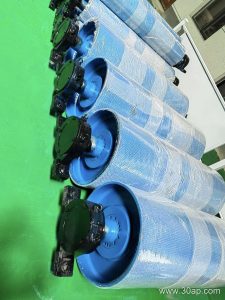
In a quarry or aggregate plant, a head pulley with rubber lagging is common because it must transmit power without slipping when the belt is damp or lightly loaded. A tail pulley often runs plain or with light lagging, since its main task is to support and guide the returning belt. The same hardware family also includes bend pulleys and take-up pulleys used to route the belt and maintain tension around the loop.
How the Assembly Is Built
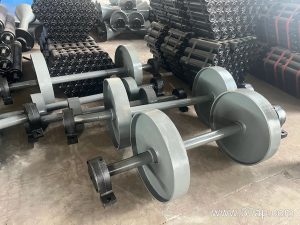
The core is a steel drum with dished or flat end plates, machined to run true at speed. The shaft is keyed or shrink-fitted into the hubs, and the whole assembly is balanced before it leaves the workshop. Bearing housings sit on a conveyor bracket at each end, and the bracket design determines how easily the pulley can be removed during maintenance.
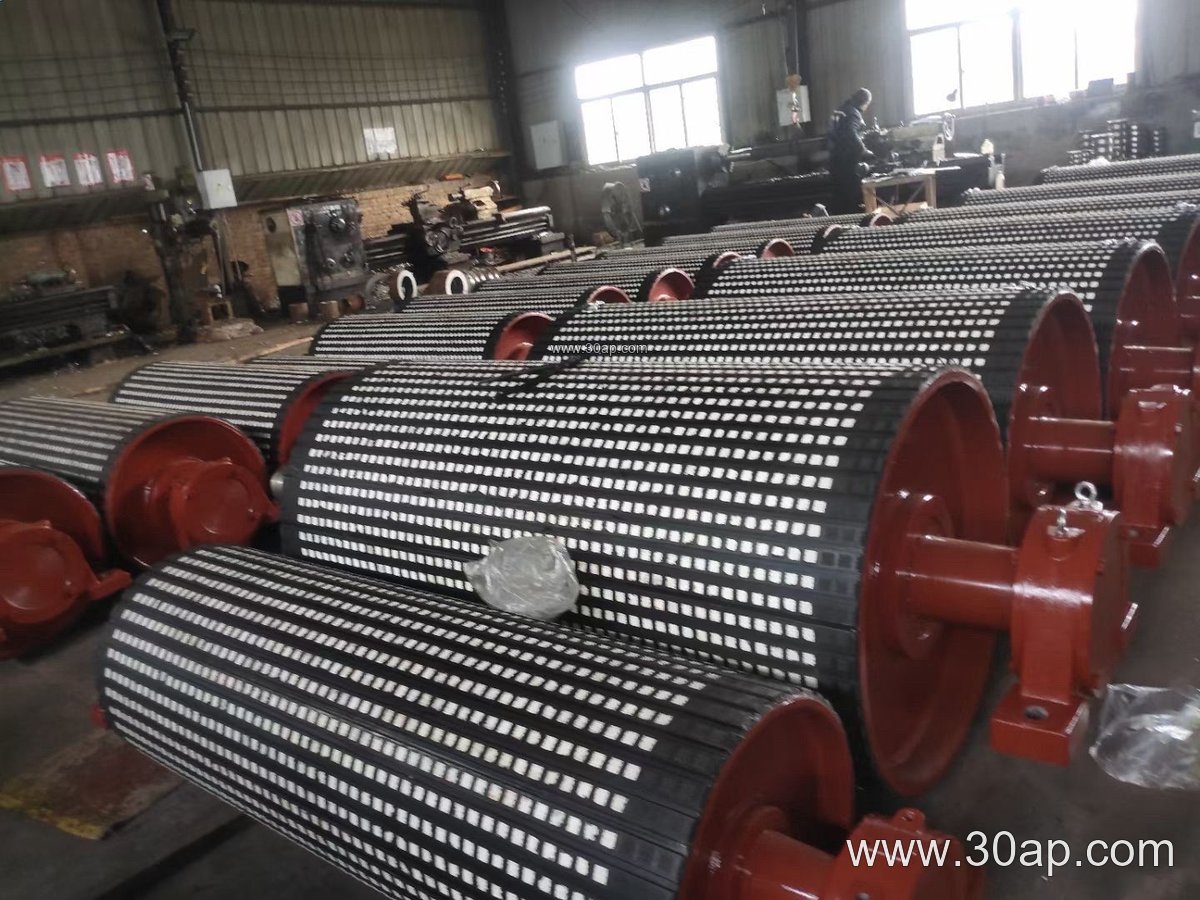
Surface treatment matters as much as the shell. Plain steel drums are economical, while lagged versions improve friction and protect the shell from abrasive wear. Common surface forms include plain, cast rubber, cold-bonded rubber, hot-vulcanized rubber, diamond lagging, herringbone lagging, and ceramic lagging, with lagging thickness often in the 8 to 20 mm range.
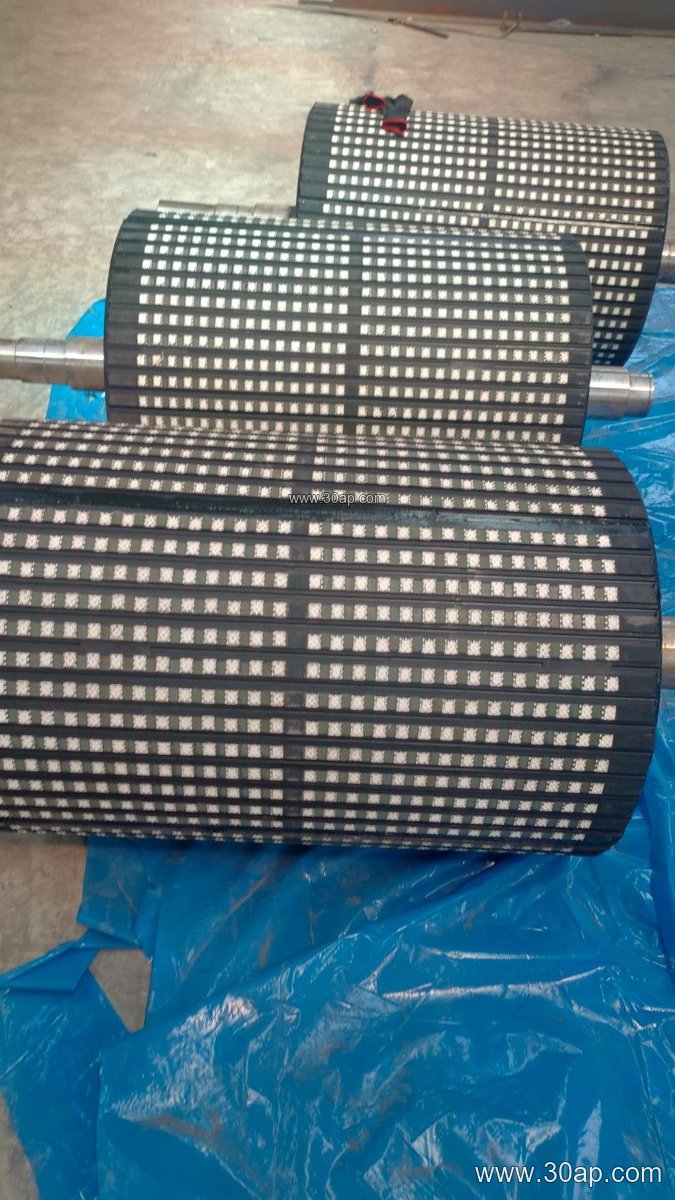
- Shell and end plates welded and machined for concentricity
- Shaft sized by torque and load, not by belt width alone
- Bearing selection matched to radial load and duty cycle
- Lagging bonded or vulcanized to suit wet or abrasive service
- Balancing and run-out checks before dispatch
Where It Fits in the Plant
The most common positions are the head or drive station, the tail, and the bend or take-up points along the return run. In a coal washing plant or a cement plant clinker line, the drive pulley often needs strong lagging for wet or dusty conditions, while a bend pulley may be plain because it only changes belt direction. In a power plant coal handling system or a port bulk terminal, the same logic applies, but the duty cycle is longer and bearing protection becomes the deciding factor.
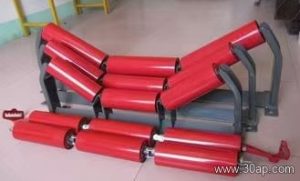
The pulley works together with the conveyor belt, idler rollers, and conveyor brackets. Misalignment at the pulley face is a frequent cause of edge wear, so installation accuracy deserves as much attention as the specification itself.
Common Reference Sizes
Belt widths from B400 to B2400 appear in aggregate and bulk handling work, and pulley diameters from about Ø200 to Ø1800 are used depending on torque, belt speed, and wrap angle. Face width is normally wider than the belt; for example, B800 often pairs with a face around 950 mm, and B1200 with roughly 1400 mm. These are reference values, not fixed rules, and final selection should follow the conveyor design.
| Belt width | Typical face width | Example diameter range |
|---|---|---|
| B500 | about 600 mm | Ø250 to Ø400 |
| B650 | about 750 mm | Ø315 to Ø500 |
| B800 | about 950 mm | Ø400 to Ø630 |
| B1000 | about 1150 mm | Ø500 to Ø800 |
| B1200 | about 1400 mm | Ø630 to Ø1000 |
| B1400 | about 1600 mm | Ø800 to Ø1250 |
| B1600 | about 1800 mm | Ø1000 to Ø1400 |
Shaft diameters commonly fall between Ø50 and Ø200, but the correct value is set by calculated torque and bearing load, not by belt width alone. Avoid assuming that one belt width can only match one pulley diameter.
What to Confirm Before Ordering
Start with the application: material, moisture, belt speed, and starting conditions. Then confirm the pulley position, because a drive pulley, a tail pulley, and a bend pulley are not interchangeable and carry different loads. Ask for the lagging type and thickness, the bearing style, and the bracket interface. Check that the face width, diameter, and shaft size are stated together with the duty class. For abrasive aggregate duty, rubber or ceramic lagging usually earns its cost back through longer belt life and fewer tracking problems.
Finally, plan the maintenance access. A pulley that can be inspected and replaced without cutting the belt saves hours on a sand and gravel plant where downtime is measured in lost tons.