What a Thick Conveyor Belt Is
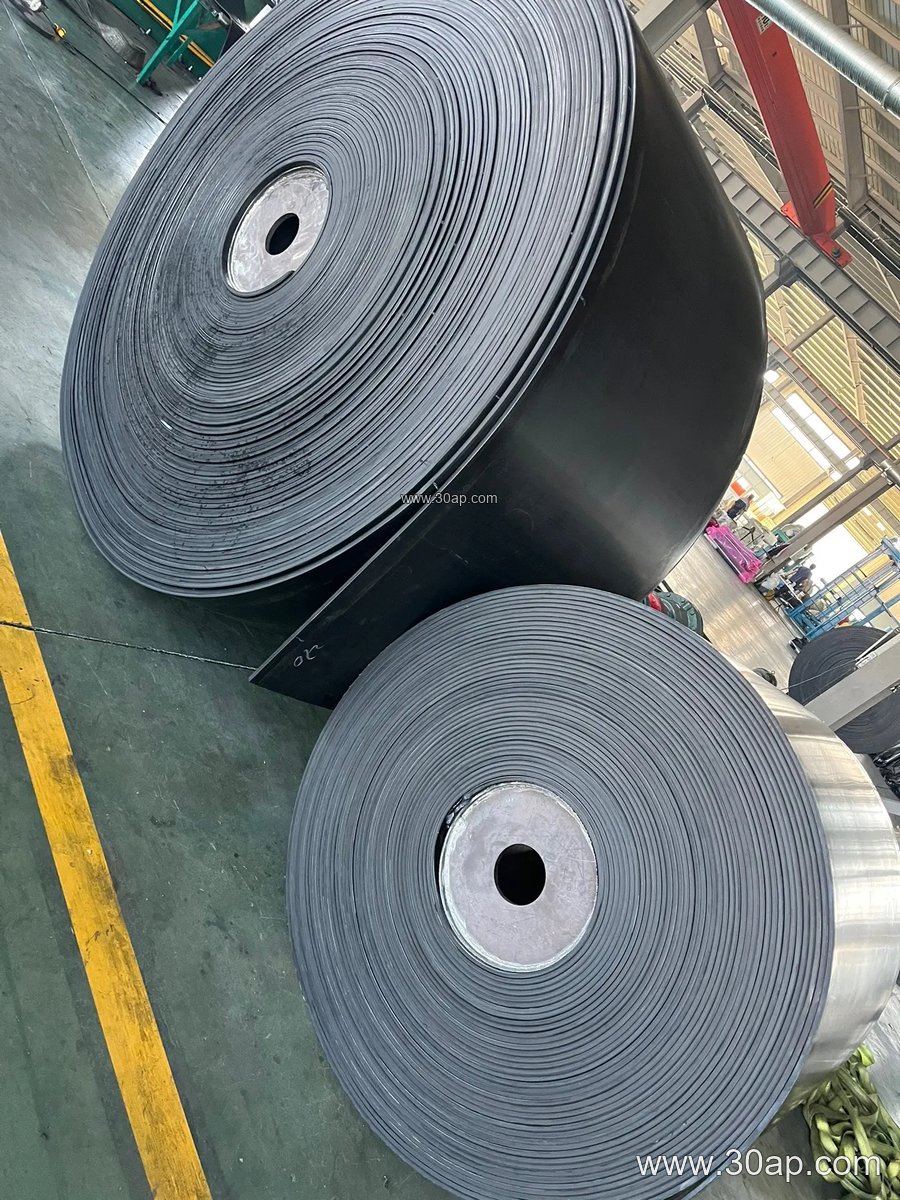
A thick conveyor belt is a heavy-gauge rubber belt built with a thicker cover, a stronger carcass, or both, so it can carry dense, sharp, or hot material without failing early. In practice, buyers meet this product as a heavy-duty conveyor belt for mines, cement works, power plants, steel mills, ports, and quarry or aggregate lines. The extra thickness is not decoration: it adds abrasion life on the top cover, improves resistance to impact at transfer points, and gives the splices and edges more material to work with.
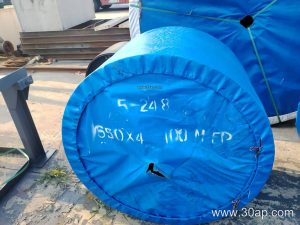
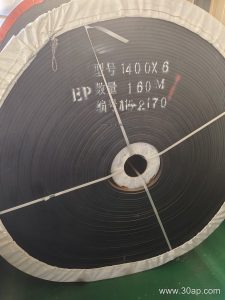
The keyword describes a build class rather than a single SKU. A thick belt may be a multi-ply fabric core conveyor belt, an EP rubber conveyor belt, or a steel cord conveyor belt, depending on tension and duty.
How the Belt Is Built
Most thick belts combine three layers of duty. The carcass carries tension. Fabric types use EP or NN plies; heavy lines use steel cords. The cover rubber protects the carcass from abrasion, heat, oil, or flame. Edge rubber and, where needed, breaker fabric round out the construction.
Common cover gauges for thick belt are 6+2 mm, 8+3 mm, and heavier builds; a 10 mm thick top cover is often quoted for primary crusher duty. Carcass plies usually run from 2 to 6 layers in fabric designs. These are reference values, not fixed rules, and each plant should confirm the build with its supplier.
Typical Specifications
The table below shows common strength grades and widths used when specifying a thick belt. Values are indicative and vary by manufacturer.
| Property | Common Range |
|---|---|
| Fabric strength grade | EP200, EP315, EP400, EP500, EP630, EP800, EP1000, EP1250 |
| Steel cord grade | ST1000, ST1250, ST1600, ST2000, ST2500 |
| Belt width | B650, B800, B1000, B1200, B1400, B1600, B1800, B2000 |
| Cover thickness | 5+2, 6+2, 8+3 mm, heavier on request |
| Carcass plies | 2 to 6 layers for fabric core |
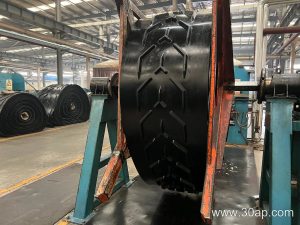
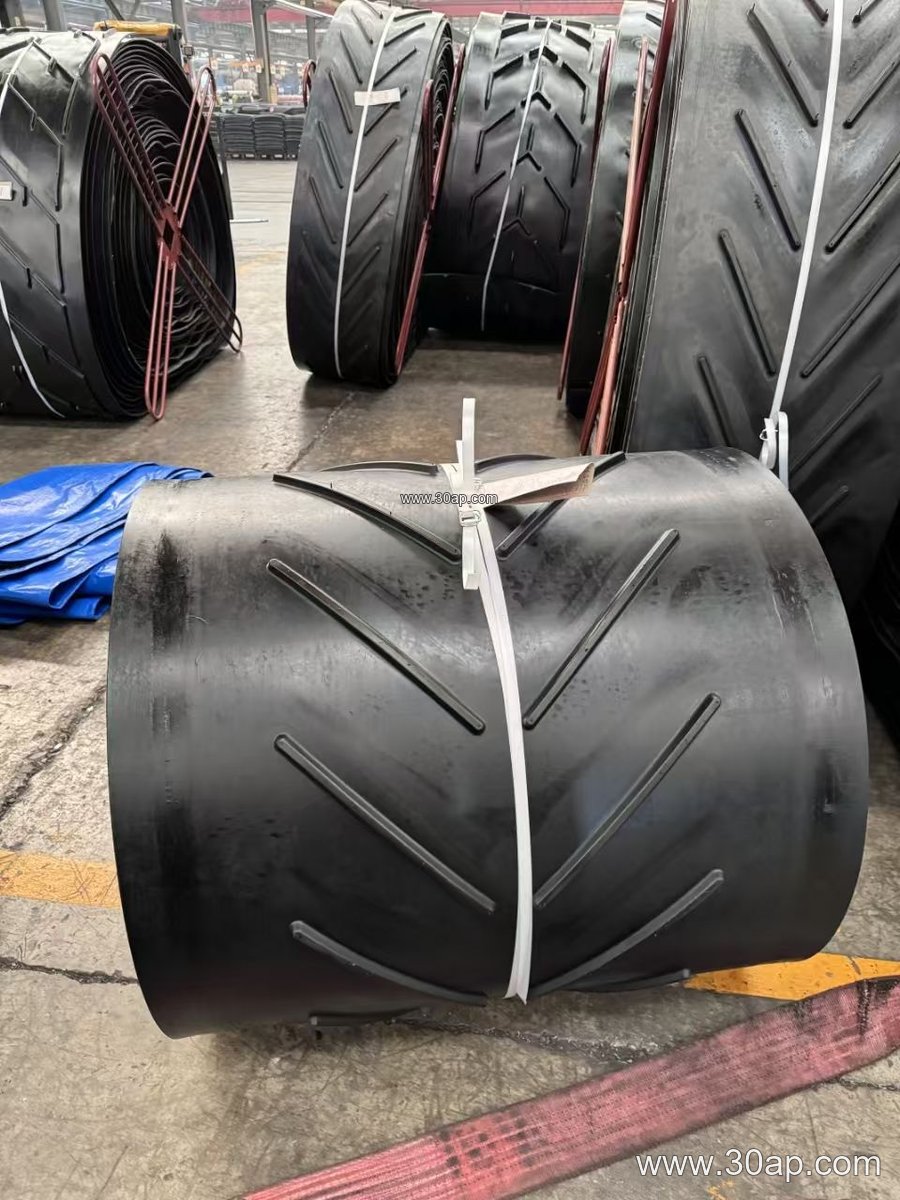
Surface forms such as chevron, corrugated sidewall, or skirted edges can be added to a thick base belt when the route is steep or material must be contained. These are options on the same product, not substitutes for it.
Where Thick Belts Earn Their Keep
Primary crushing stations in a quarry or sand making plant see lump sizes and drop heights that wear through thin covers quickly. A thick abrasion resistant conveyor belt holds up better there. Underground coal mining conveyor lines need flame retardant and anti-static properties in addition to thickness, often in PVG or PVC constructions. Iron ore, copper ore, and gold mining operations favor high strength conveyor belt designs with steel cord carcasses for long overland runs.
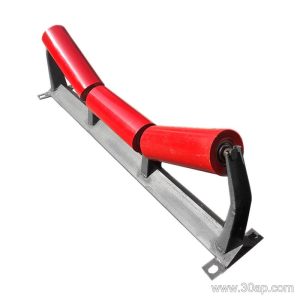
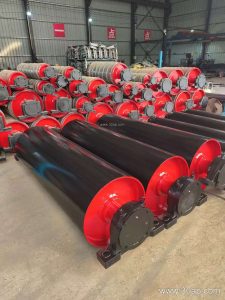
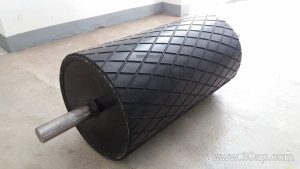
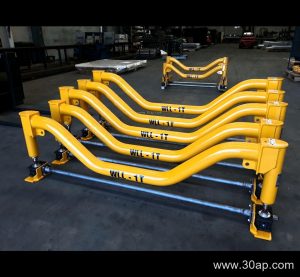
Cement plants use heat resistant conveyor belt grades near kilns and clinker coolers. Power plants handle coal with fire resistant and flame retardant belts. Ports and ship loading systems depend on wide, thick belts at 1800 mm or 2000 mm to move bulk material at high tonnage. The same belt usually runs over idler rollers, turns on a conveyor pulley, and is held by a conveyor bracket and frame, so belt thickness should be checked against pulley diameter and troughing geometry.
Selection Notes for Buyers
- Match cover grade to the real threat: abrasion, heat, oil, cold, or flame. One belt rarely covers all of them.
- Size the carcass by calculated tension, not by habit. A thick cover adds weight but does not add tensile strength.
- Check minimum pulley diameters for the chosen belt thickness; a thick belt needs a larger bend radius than a thin one, and belt width alone does not fix pulley size.
- Confirm splice method early. Steel cord belts and thick fabric belts have different splicing needs.
- Ask for the actual cover gauge and ply count in writing, because nominal thickness and delivered thickness can differ.
Care and Long Life
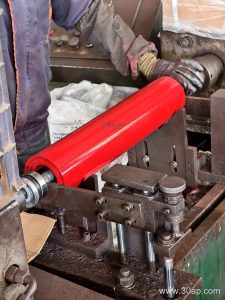
Thick belts last longest when the system around them is aligned. Worn idler rollers, misaligned conveyor pulleys, and loose skirt rubber cause edge damage and cover gouging that no cover thickness can survive. Inspect the loading point for impact bars and check that the belt tracks centrally. Store spare belting flat and shaded, and keep records of cover wear so replacement is planned rather than forced by a breakdown.
For more on matched belts, rollers, and pulleys, see the range at conveyorbeltingpro.com thick conveyor belt and the wider heavy-duty conveyor belt selection pages.