What a Diamond Grooved Lagged Pulley Does
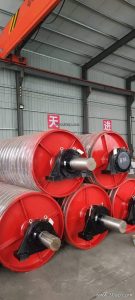
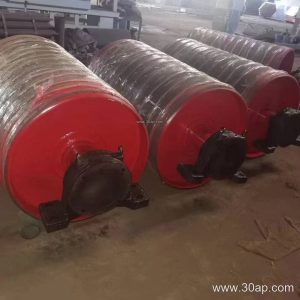
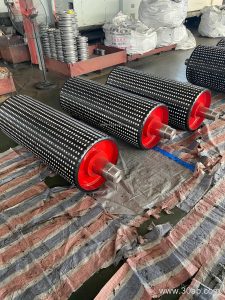
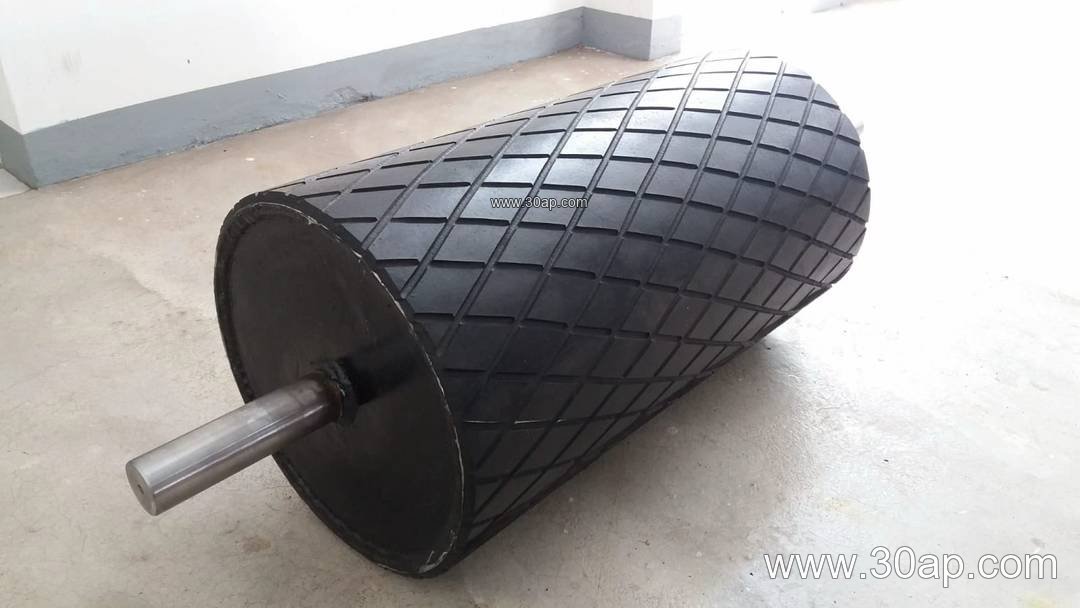
A diamond grooved lagged pulley is a conveyor pulley whose shell is covered with a rubber lagging cut into a diamond pattern. The grooves form small channels across the rubber surface, so water, fine dust and loose grit can escape instead of staying trapped between the belt and the drum. This keeps friction more consistent on drives that work in wet or dirty conditions. In many plants the same item is simply called a diamond lagged pulley or diamond rubber lagged drum, and those names refer to the same product.
The diamond pattern is a surface form, not a pulley type. It can be applied to a drive pulley at the head of a conveyor, and it may also appear on a bend or snub position where extra grip is useful. Drive, tail and bend pulleys are not interchangeable, so the duty of the pulley should always be confirmed before the lagging is specified.
How the Pulley Is Built
The core is usually a welded steel shell with end discs and a shaft, machined so the lagging sits evenly. Rubber is bonded to the shell either by hot vulcanisation or by cold bonding, then the diamond grooves are cut or moulded into the surface. Common lagging thicknesses are 8, 10, 12, 15 and 20 mm, with thicker covers chosen for high-torque drives or abrasive service.
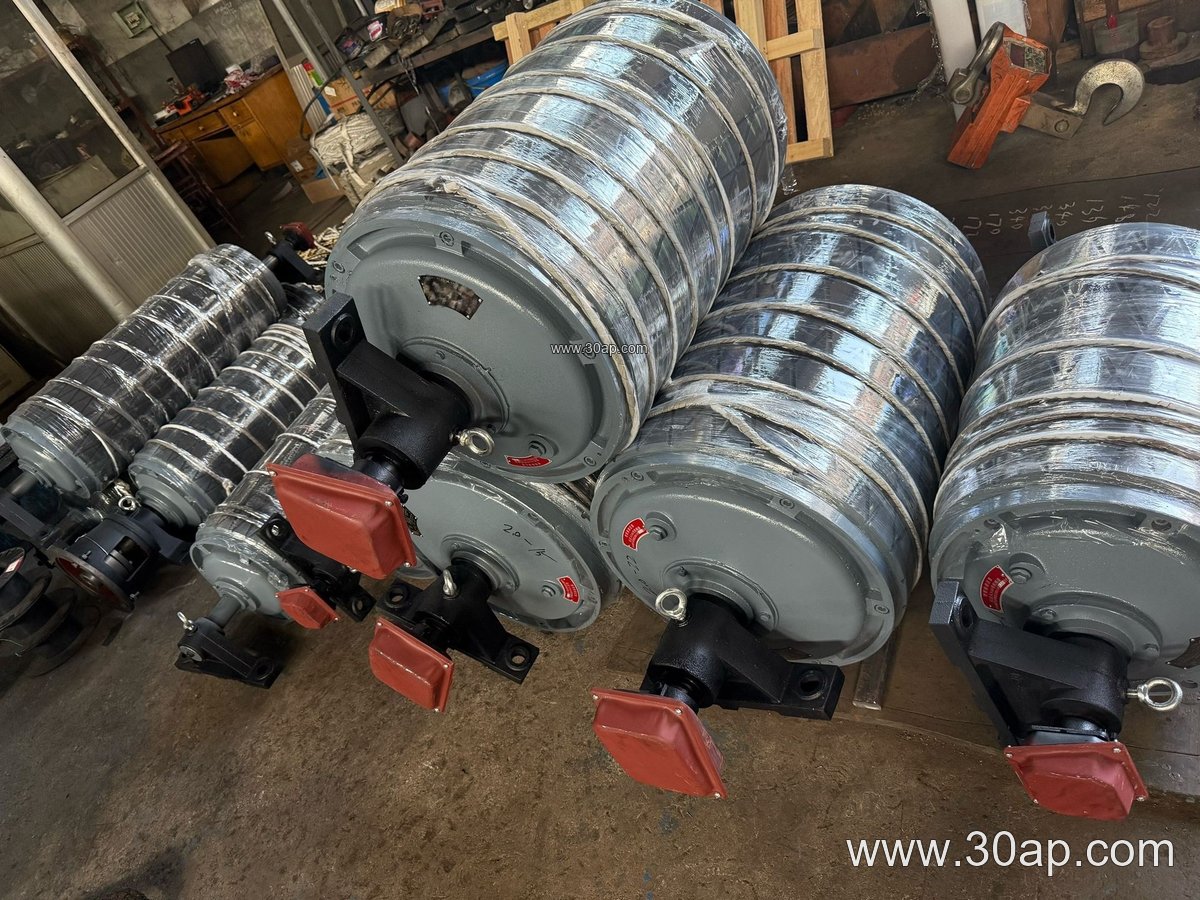
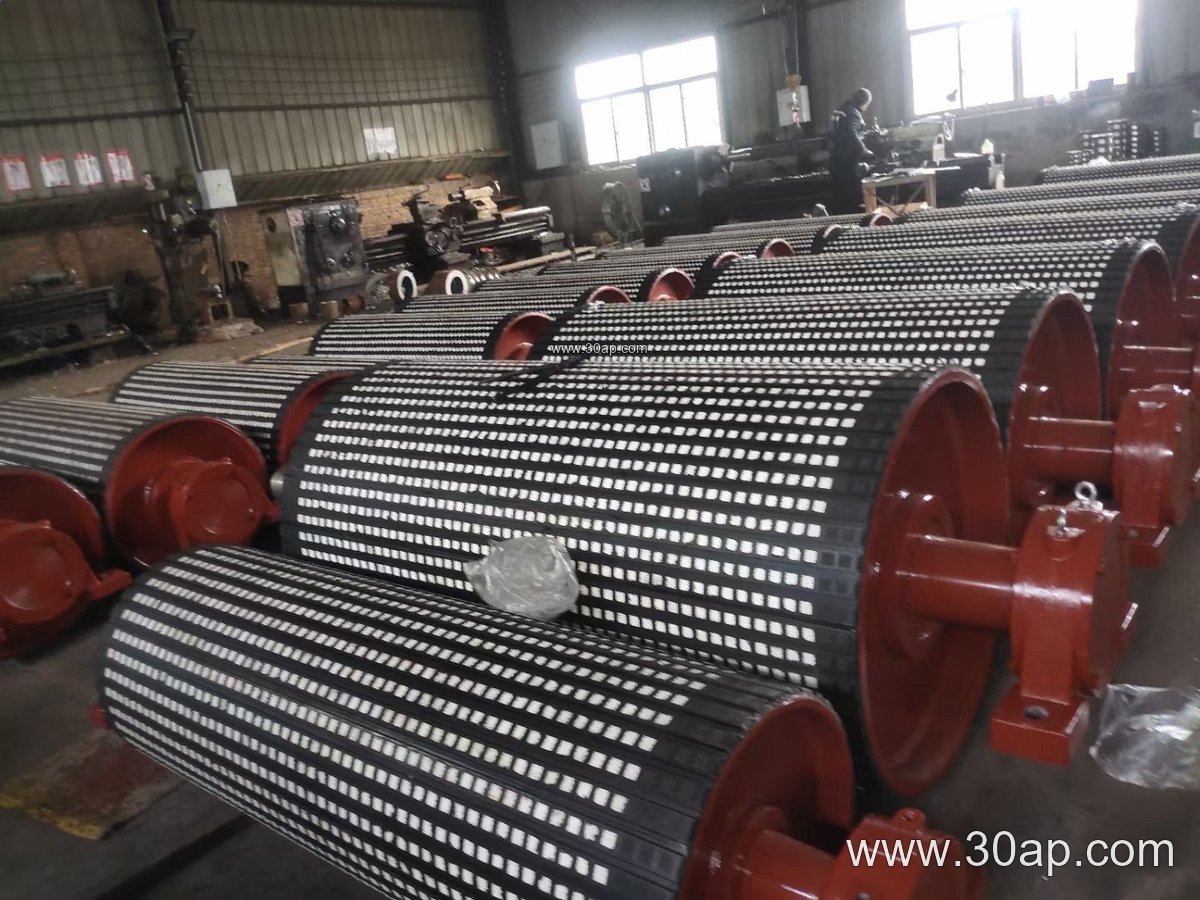
Diamond grooved lagging is often compared with plain flat rubber lagging. Flat rubber gives good grip on clean belts, while the grooved version drains better and resists polishing when the belt carries damp material. For very steep or high-tension drives, ceramic lagging may be considered instead, but the diamond rubber form remains a practical choice for general bulk handling.
Where It Fits in a Conveyor
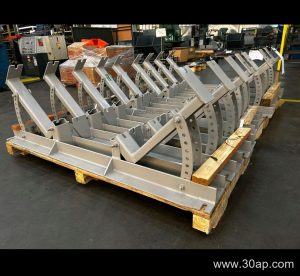
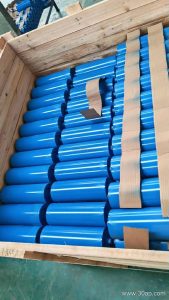
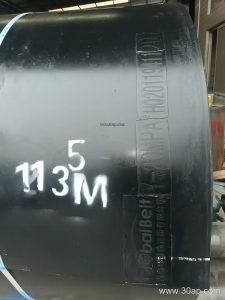
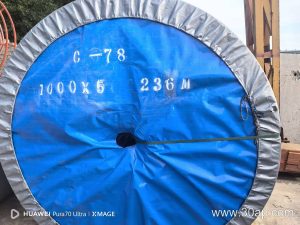
These pulleys are common in quarry and aggregate lines, cement plants, coal handling systems and power station coal yards. A typical installation pairs the pulley with a heavy-duty conveyor belt, a set of conveyor idler rollers and a rigid conveyor bracket frame. The pulley pulls the belt, the idlers support it, and the brackets hold everything in line.
- Primary crushing and screening plants handling rock and ore
- Cement clinker and limestone transport
- Coal mining and wash plant feed conveyors
- Port bulk terminals and stockyard conveyors
Because the diamond grooves shed water, the design suits washdown areas, tunnels with seepage and open yards exposed to rain. On conveyors carrying sticky clay or wet sand, the grooves also reduce the chance of material building up on the drum face.
Sizes and Matching to the Belt
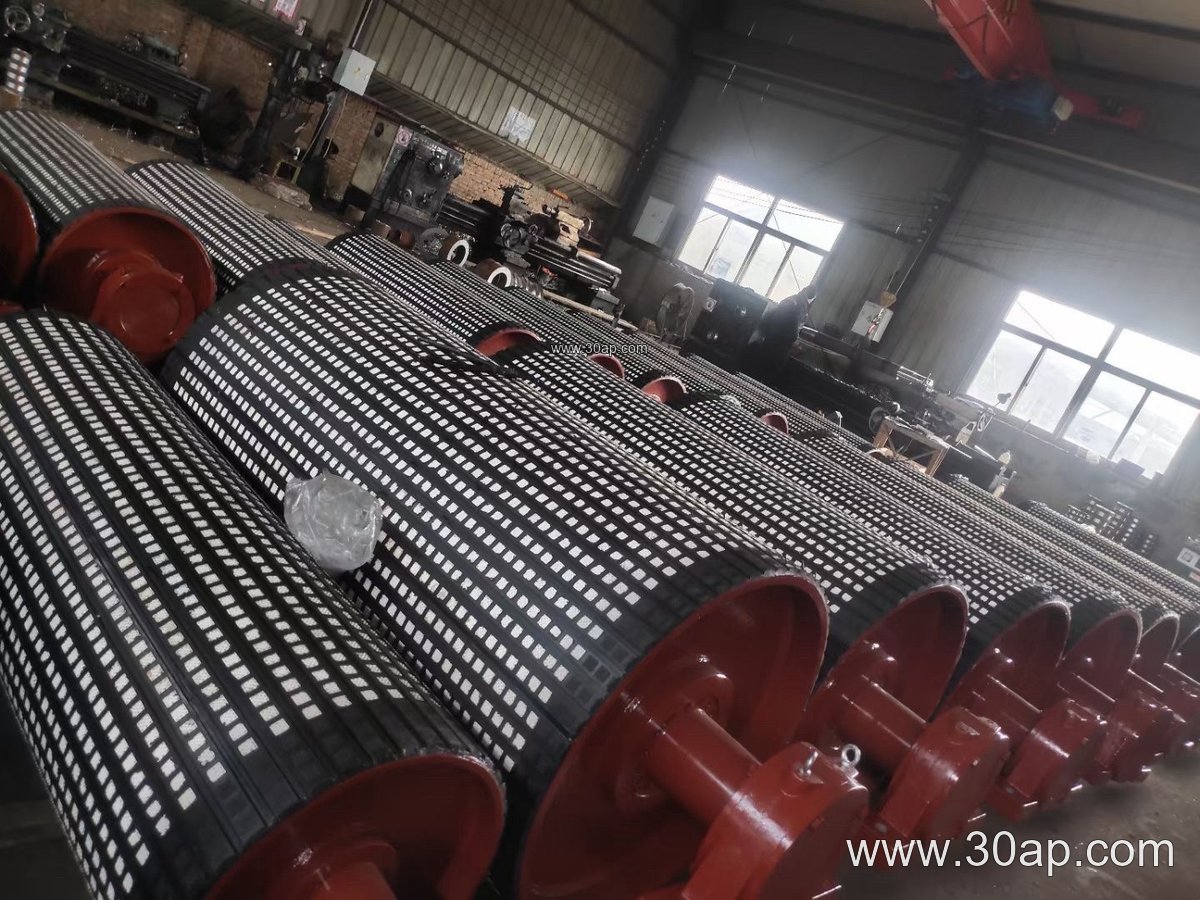
Pulley dimensions are selected from the belt width, the transmitted torque and the shaft load. Shell width is normally a little wider than the belt, for example a B800 belt around a 950 mm shell or a B1200 belt around a 1400 mm face. Diameter is chosen from belt tension and bend requirements, not from width alone, and shaft diameter follows the torque calculation rather than a fixed rule.
| Belt width | Typical shell face | Example diameter |
|---|---|---|
| B500 | about 600 mm | Ø320 to Ø500 |
| B650 | about 750 mm | Ø400 to Ø630 |
| B800 | about 950 mm | Ø500 to Ø800 |
| B1000 | about 1150 mm | Ø630 to Ø1000 |
| B1200 | about 1400 mm | Ø800 to Ø1250 |
| B1400 | about 1600 mm | Ø1000 to Ø1400 |
Bore and shaft sizes such as Ø80, Ø100, Ø120 or Ø160 depend on the drive design. A diamond grooved lagged pulley for a B1200 conveyor might be specified as B1200 × Ø1000 with 12 mm lagging, but the final figures should come from the conveyor designer.
Buying and Maintenance Notes
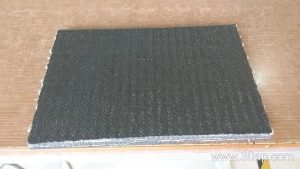
Ask for the lagging thickness, rubber hardness, groove depth and bonding method, since two pulleys with the same shell size can behave very differently. Check that the diamond pattern is cleanly formed and that the rubber edges are sealed. On site, inspect the lagging for glazing, cuts and groove blockage, and keep the belt tracking straight so the cover wears evenly. Pair the pulley with a suitable abrasion resistant conveyor belt and well-aligned idlers to get the longest service life from the lagging.
For buyers sourcing through a conveyor components supplier, matching the diamond grooved lagged pulley to the belt, the idler roller set and the bracket dimensions is as important as the pulley itself. Confirm the duty position, the belt width, the calculated torque and the environmental conditions before ordering, and the pulley will deliver steady traction through years of bulk material handling.