What the Carrying Idler Does on a Conveyor
A conveyor belt carrying idler is a roller assembly that supports the loaded run of the belt and holds it in a stable trough shape. It sits on the upper side of the conveyor frame, directly under the material, so it takes the weight of the belt plus the load while allowing the belt to travel with low rolling resistance. On bulk handling lines, the carrying idler is the part that shapes the belt into a trough, keeps the load centered, and protects the belt from sagging between support points.
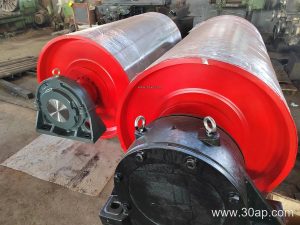
Because it is part of the upper carrying side, the carrying idler is not the same as a return idler under the empty belt, and it is not interchangeable with a drive pulley, tail pulley, or bend pulley. Those pulleys transmit power and change belt direction, while the carrying idler only supports and guides. On a typical conveyor in a quarry, cement plant, or power plant coal yard, there may be many carrying idlers between the tail and the head, but only one drive pulley and one tail pulley. Keeping this distinction clear helps buyers order the right parts.
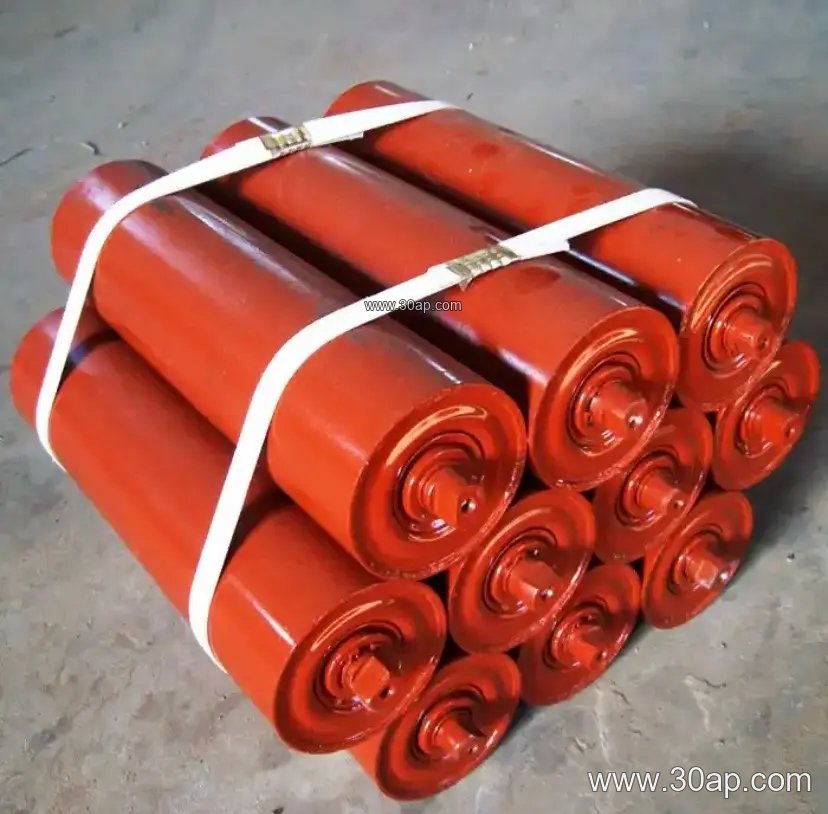
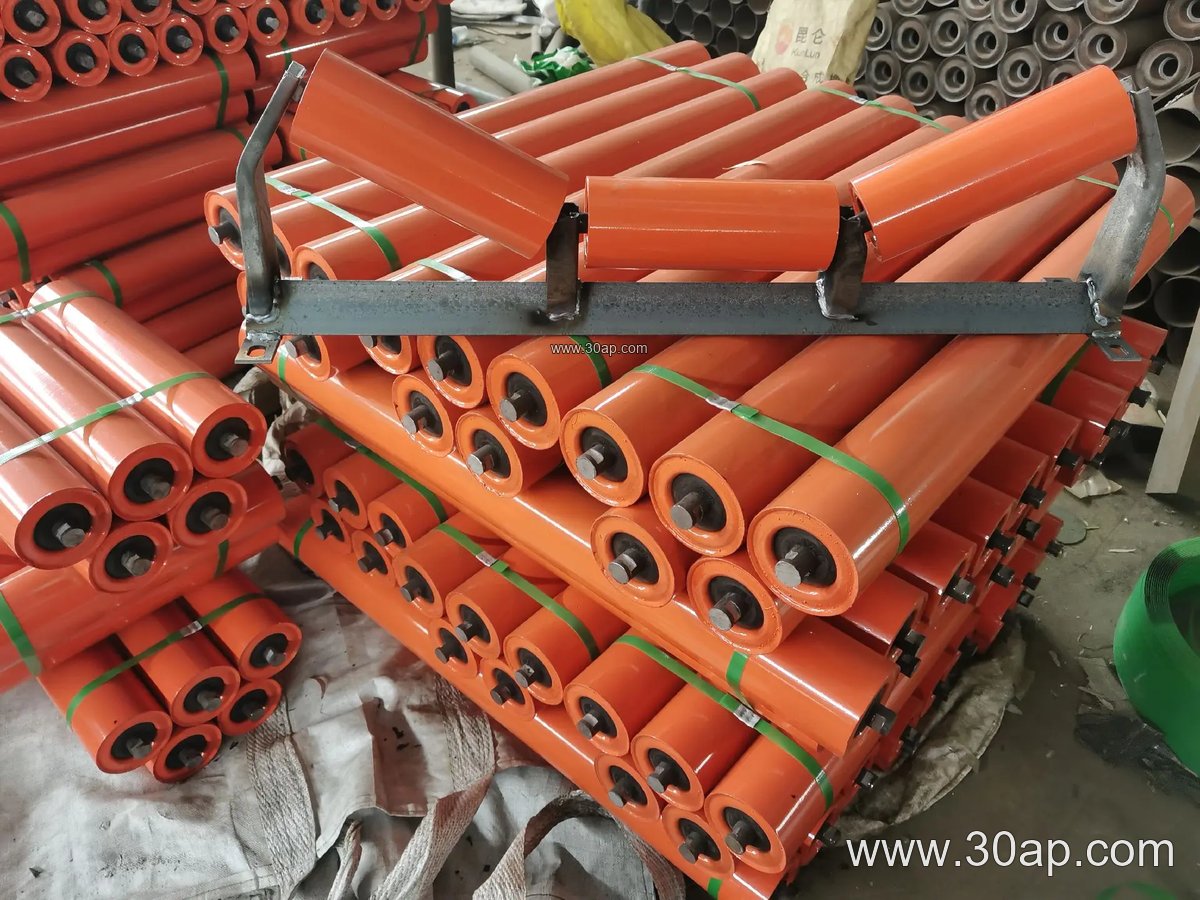
How a Carrying Idler Is Built
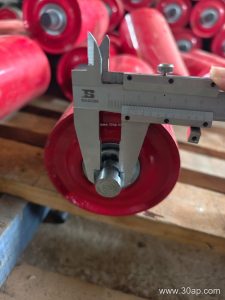
The main parts are the roller shell, the shaft, the bearing housing, and the sealing arrangement. The shell is usually a steel tube, and it may be plain steel, nylon coated, ceramic coated, or fitted with rubber rings for impact service. Bearings are commonly 6204, 6205, 6305, 6306, 6308, or 6310, but the bearing size must match the load and the shaft design, not just the belt width.
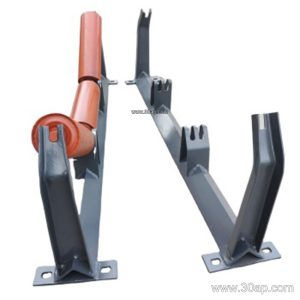
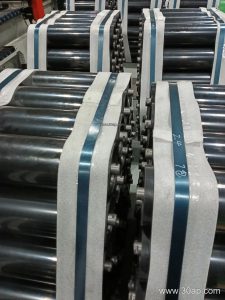
Carrying idlers are normally supplied as a set. A three-roll troughing set is the most common arrangement for bulk materials, with a center roll and two side rolls tilted at a trough angle. Two-roll and single-roll sets are also used for lighter or special duties. Roller diameters commonly range from Ø63 to Ø219 mm, and belt widths from B400 to B2400 mm, though the actual combination depends on the conveyor design, belt speed, load, and material characteristics.
Common Reference Data for Carrying Idler Sets
The table below gives typical reference values only. These are not fixed matches, and the final dimensions should always come from the conveyor design.
| Item | Common Reference |
|---|---|
| Roller diameter | Ø63, Ø76, Ø89, Ø102, Ø108, Ø127, Ø133, Ø159, Ø178, Ø194, Ø219 mm |
| Belt width | B400, B500, B650, B800, B1000, B1200, B1400, B1600, B1800, B2000, B2200, B2400 mm |
| Trough angle | 20°, 30°, 35°, 45° |
| Troughing set | Single roll, two roll, three roll |
| Bearing | 6204, 6205, 6305, 6306, 6308, 6310 |
| Roller surface | Steel tube, nylon, ceramic, rubber ring |
Where Carrying Idlers Are Used
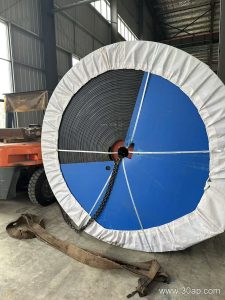
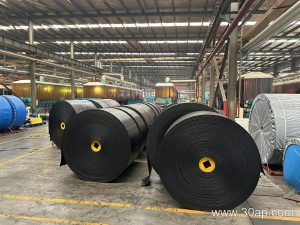
In a limestone quarry or aggregate line, carrying idlers support the belt that feeds a crusher and discharges screened stone. In a coal-fired power plant, they carry the coal stream from the yard to the boiler bunkers. The same component appears in cement plants, steel plants, port loading systems, and tunnel spoil handling. In these duties, the belt itself may be an EP conveyor belt, an NN conveyor belt, a steel cord conveyor belt, or a flame retardant conveyor belt for underground coal mining, and the carrying idler must match the belt width and load profile.
Selection Points for Buyers
- Match the trough angle to the material. A 20° or 30° set suits materials that should not spill easily, while 35° and 45° sets give a deeper trough for higher capacity. The trough angle affects how the belt sits and how the load is contained.
- Check the roller diameter against the belt speed and load. Larger diameters generally run cooler at high speed, but the shaft and bearing must still be sized for the actual load. Do not assume that one belt width matches one roller diameter.
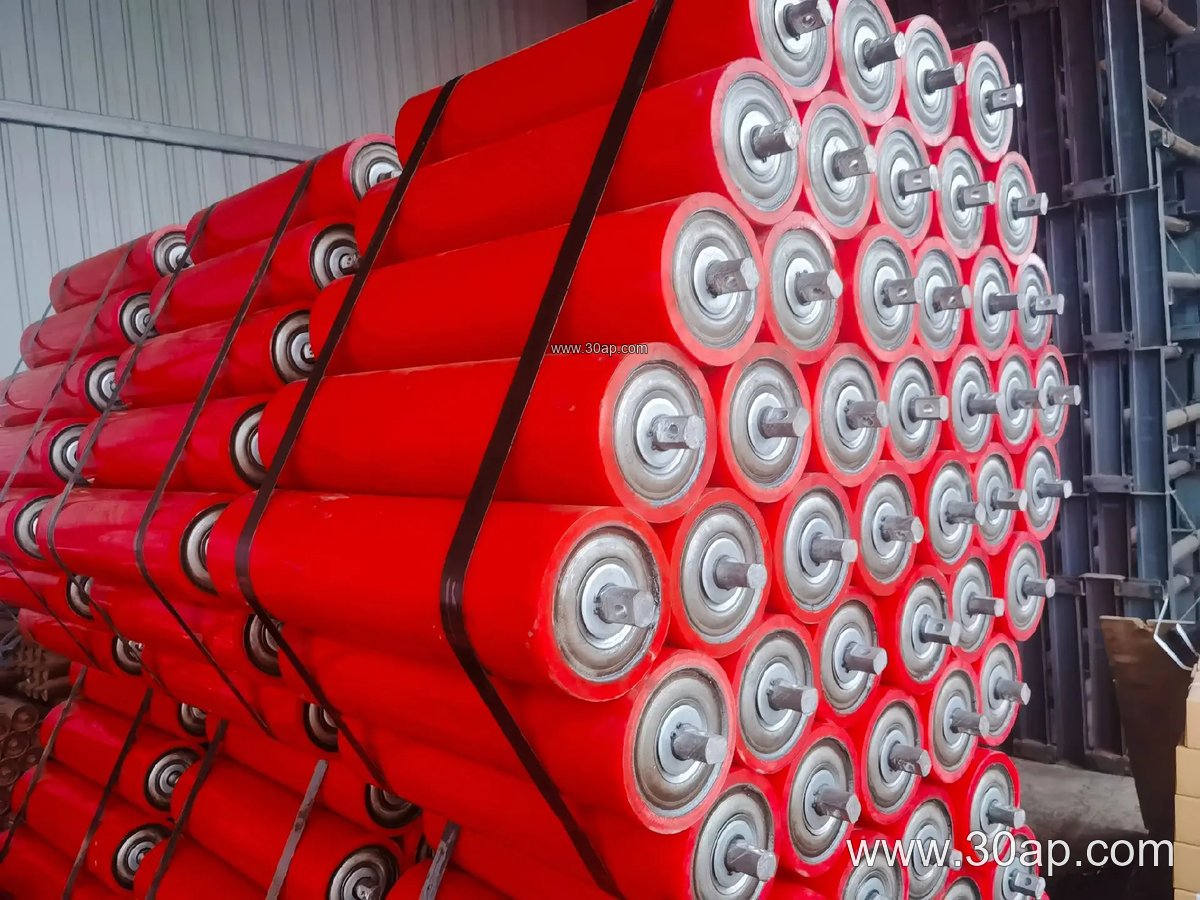
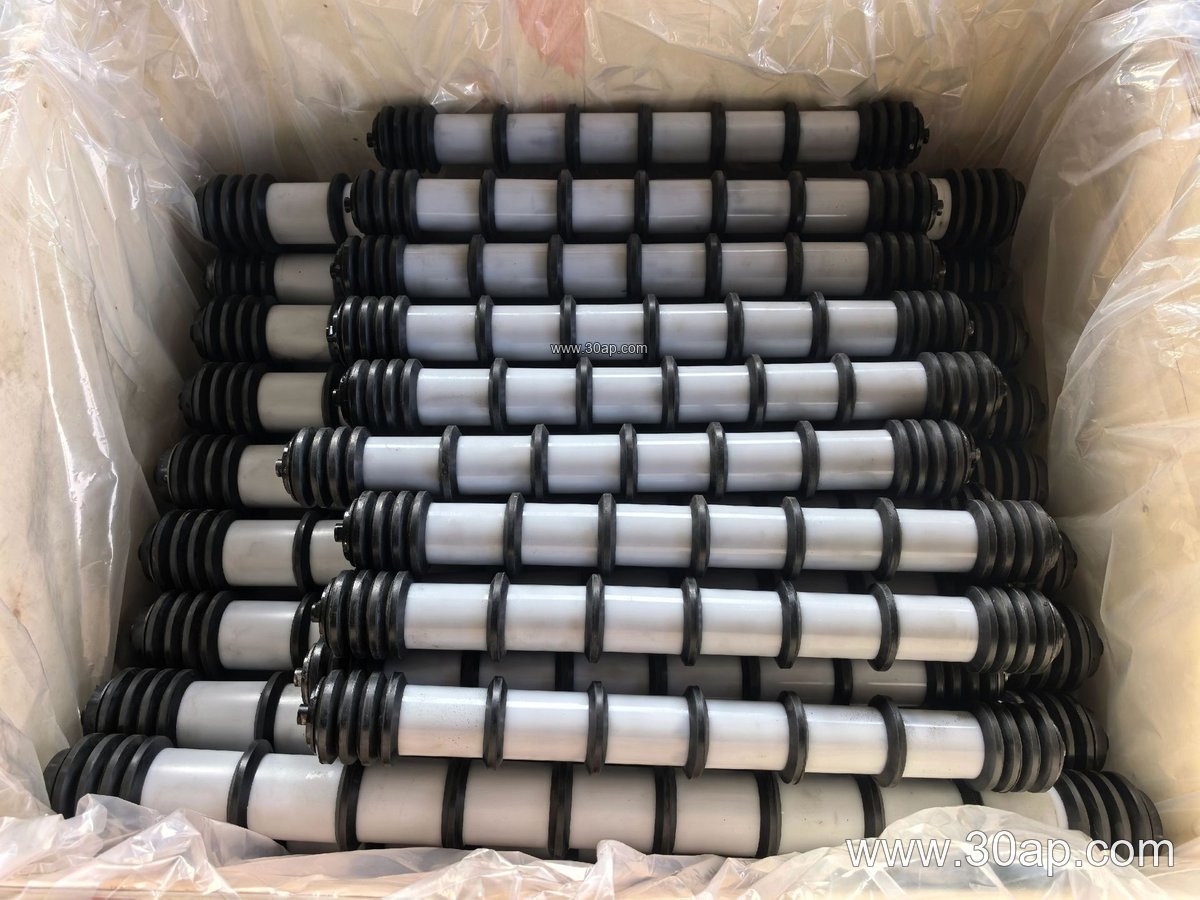
- Consider the surface. Rubber ring idlers are useful at impact points under a crusher discharge. Ceramic or nylon surfaces can help in abrasive service. Plain steel is common for general bulk handling.
- Look at the sealing and bearing. Dust and water are the main enemies of idler life. Good sealing and a properly selected bearing grade matter more than a single nominal size.
- Use transition and impact idlers where needed. At a transfer point, a buffer idler or rubber ring buffer idler may be placed under the impact zone, while a transition idler helps the belt change from flat to troughed without stress.
Maintenance and Buying Tips
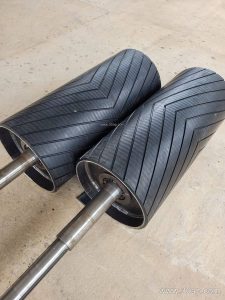
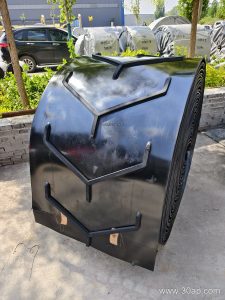
During operation, look for seized rollers, damaged seals, and worn shells. A carrying idler that stops turning can wear the belt cover quickly, especially on an abrasion resistant conveyor belt carrying ore or rock. Keep the frame and conveyor bracket clean so that material build-up does not misalign the set. When ordering, specify the belt width, trough angle, roll length, roller diameter, bearing size, and surface form. If the conveyor uses a chevron conveyor belt, corrugated sidewall belt, or pipe conveyor belt, mention it, because the idler layout may need to be adapted to the belt profile.
For a new project, buyers should ask for a drawing or data sheet showing the roll length for each position. On a three-roll set, the center roll and side rolls can have different lengths, so a single number is rarely enough. It is also worth confirming the shaft diameter from the conveyor design rather than guessing from the belt width. A well-chosen carrying idler keeps the belt tracking straight and reduces downtime in the quarry, the coal yard, and the cement kiln line.