What a Heavy-Duty Conveyor Bracket Does
A heavy-duty conveyor bracket is the structural support that holds the idler roller in the correct position under the conveyor belt. It carries the weight of the belt, the material being moved, and the roller itself, so its job is both load-bearing and alignment-related. In a quarry, a cement plant, or a power plant coal yard, the bracket is often the part that decides whether the belt tracks smoothly or wanders and wears on one side.
The same item is also called a heavy-duty conveyor support bracket or a heavy-duty idler bracket. These names describe the same product; they are not different components. Drive pulleys, tail pulleys, and bend pulleys are separate parts of the conveyor and are not interchangeable with this bracket.
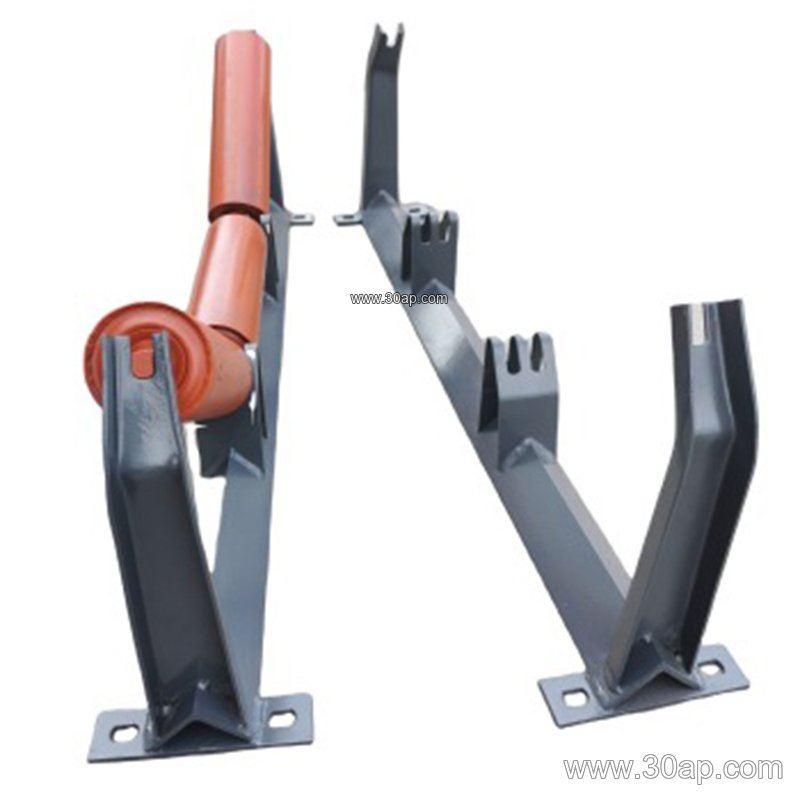
How It Is Built
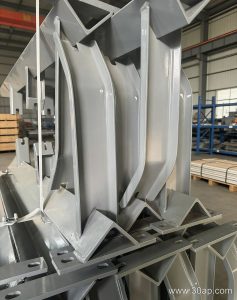
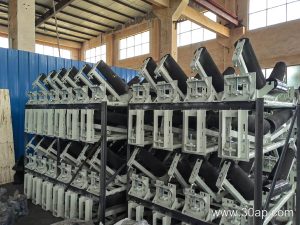
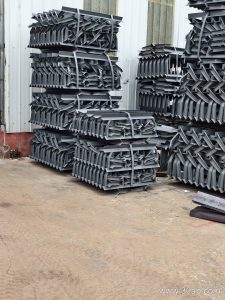
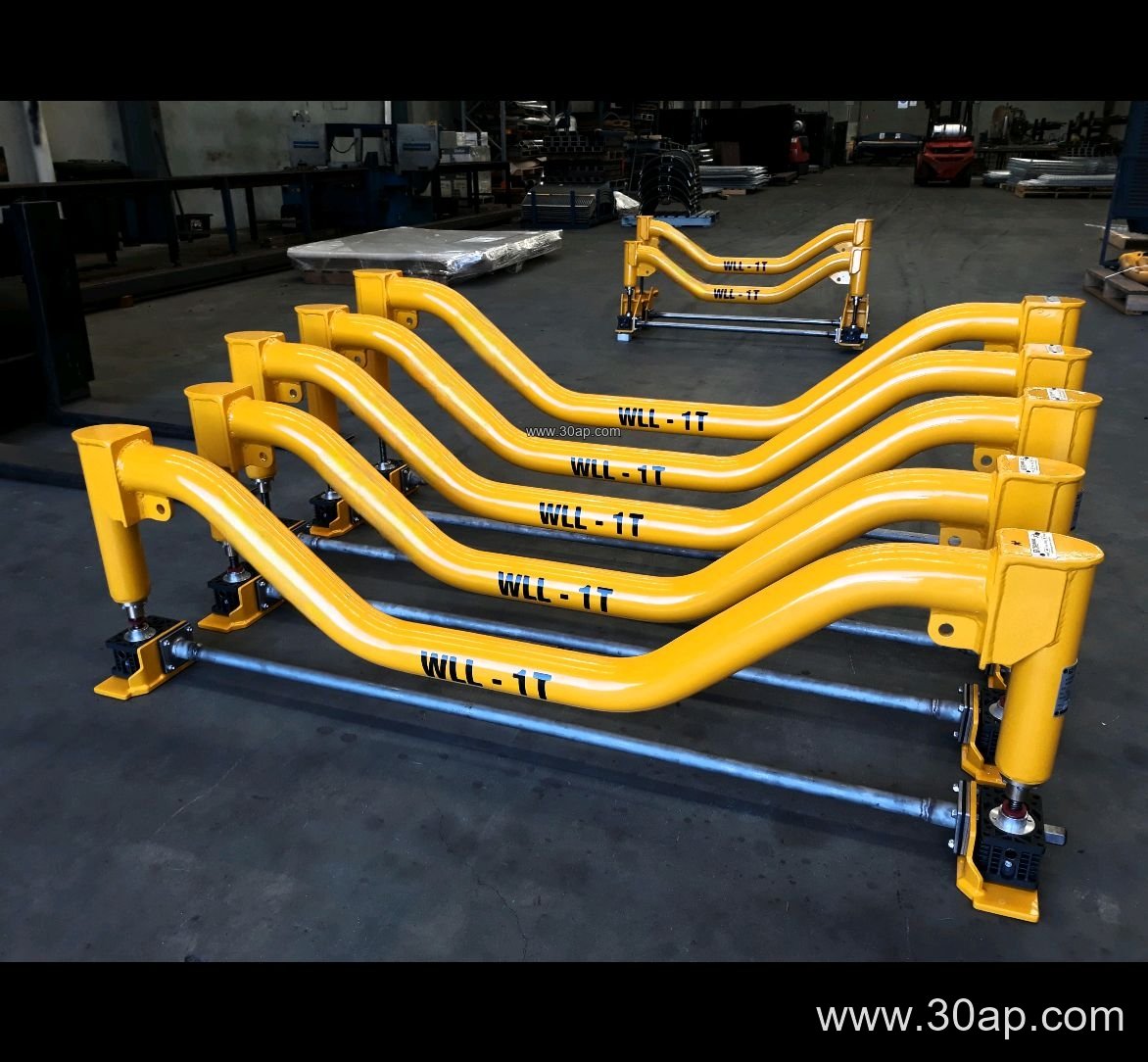
Most heavy-duty brackets are made from angle steel, channel steel, or folded steel plate. The choice depends on the load and the mounting method. A troughing bracket for the carrying side usually has three or more roller positions, often arranged at a trough angle. A return bracket on the lower run may be flat or V-shaped. Adjustable brackets allow the trough angle to be changed on site, which is useful when a belt needs fine tuning after installation.
Typical materials and base dimensions are shown below. These are common reference values, not fixed combinations, and final dimensions should follow the conveyor design.
| Item | Common Options |
|---|---|
| Material | Angle steel, channel steel, folded steel plate |
| Belt width B | B500, B650, B800, B1000, B1200, B1400, B1600, B1800, B2000 |
| Trough angle | 20°, 30°, 35°, 45°; adjustable brackets can move between these |
| Roller diameter | Ø89, Ø108, Ø133, Ø159, Ø194 |
| Forward tilt | About 1.5° to 2° in some designs |
Mounting hole spacing and crossbeam length change with belt width and trough angle. They should not be treated as a single fixed number. A bracket for a 1200mm wide belt with a 45° trough and Ø133 rollers is a different assembly from one for a 650mm belt at 30° with Ø89 rollers, even when both are called heavy-duty.
Where It Fits in the System
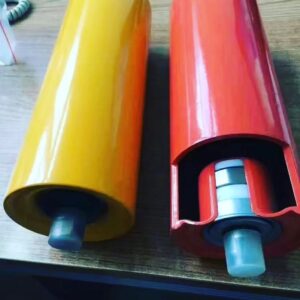
The bracket works together with the conveyor pulley, the idler roller, and the belt. On the carrying run, a troughing bracket sets the belt into a stable trough so bulk material stays centered. On the return run, a flat or V-return bracket supports the empty belt. Transition brackets near the head or tail help the belt change shape gradually, which reduces stress at the pulley.
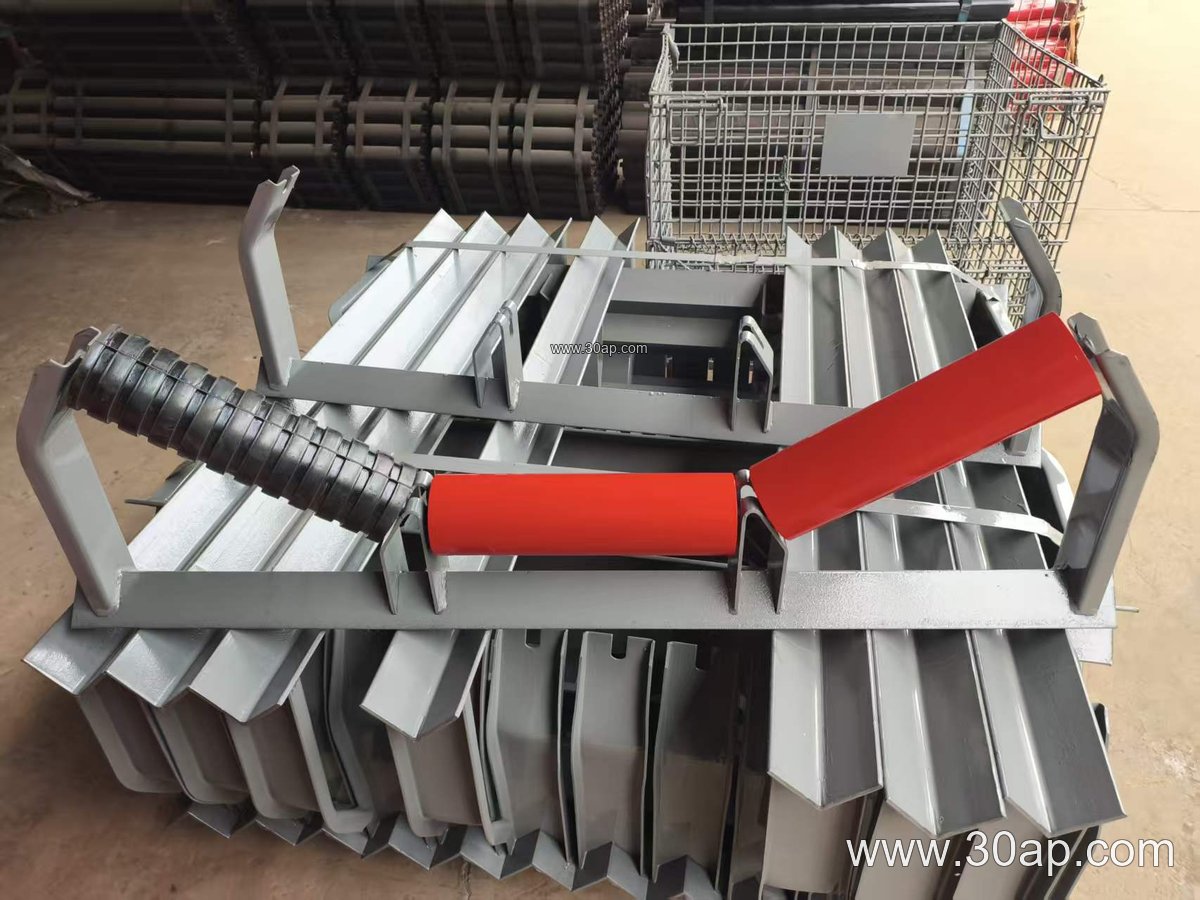
In a limestone mine or a crushing and screening line, impact and dust are constant, so brackets need enough stiffness to resist vibration. In a coal handling system, alignment matters because a misaligned belt can rub against the structure. The bracket is not the only factor, but it is a major one. A well-matched conveyor bracket keeps the rollers square to the belt path, which supports longer roller life and steadier tracking.
Heavy-duty brackets are also used in aggregate plants, iron ore handling, port ship loading, and tunnel spoil removal. In each case, the operating environment decides whether a fixed or adjustable design is better. Adjustable brackets are helpful during commissioning, while fixed brackets suit stable, well-defined layouts.
Buyer Checklist
- Confirm belt width, trough angle, and roller diameter before ordering; these three values define the bracket geometry.
- Decide between fixed and adjustable types. Adjustable units allow on-site correction of the trough angle, but fixed units are simpler where the design is already settled.
- Check the mounting hole pattern and crossbeam length against the existing conveyor frame, not just the belt width.
- Match the bracket material and finish to the site. Dust, moisture, and abrasive material affect the choice of steel and coating.
- Remember that the belt itself matters. A heavy-duty mining conveyor belt or a thick abrasion resistant conveyor belt may need a stiffer support than a light fabric belt.
The heavy-duty conveyor bracket is a small part of the total conveyor, but it sits at the point where belt, roller, and structure meet. Getting its dimensions and type right is a practical way to reduce tracking problems and downtime in quarries, coal plants, cement works, and similar bulk handling sites.