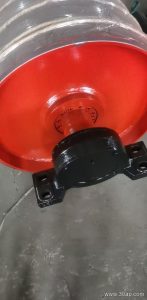
What a Single Drive Pulley Does
A single drive pulley is the one drum at the head of a conveyor that transmits motion to the belt, usually through a gearbox and motor mounted on one side. It is also called a single drum drive pulley, and in many plant layouts it works together with a tail pulley, bend pulleys and a set of idler rollers to keep the belt tracking and tensioned. In a cement plant, a quarry or a power plant coal yard, this head-end drum is the point where torque enters the system, so its diameter, lagging and shaft fit matter more than most people expect.
Construction and Surface Options
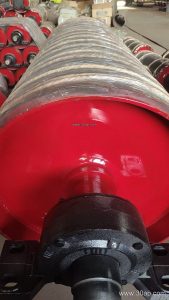
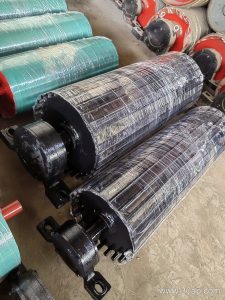
The drum body is normally a welded steel shell with end discs, a hub and a shaft keyed or shrink-fitted into place. The shell face may be plain, or it may carry lagging to raise friction between the drum and the conveyor belt. Common surface forms include plain face, hot vulcanized rubber, cold bonded rubber, diamond grooved lagging, herringbone lagging and ceramic lagging. Lagging thickness is often 8, 10, 12, 15 or 20 mm depending on the duty.
For a single drive pulley, the surface choice should follow the material and the environment. A dusty quarry line handling aggregate conveyor belt loads may benefit from grooved lagging that sheds fines, while a wet or oily transfer point may call for ceramic or diamond pattern. Rubber lagging is also used together with an abrasion resistant conveyor belt or a heavy-duty mining conveyor belt where slip would quickly damage the cover.
Where It Fits in the Conveyor
This drum is installed at the discharge end in most installations, so it is both the driving drum and the head or unloading pulley. That does not make it the same as a tail pulley or a bend pulley: a tail pulley turns freely at the loading end, and a bend pulley only changes belt direction. In a long overland line, a single drive pulley may be the only powered drum, while a second drum is added only when the required tension exceeds what one drum can grip.
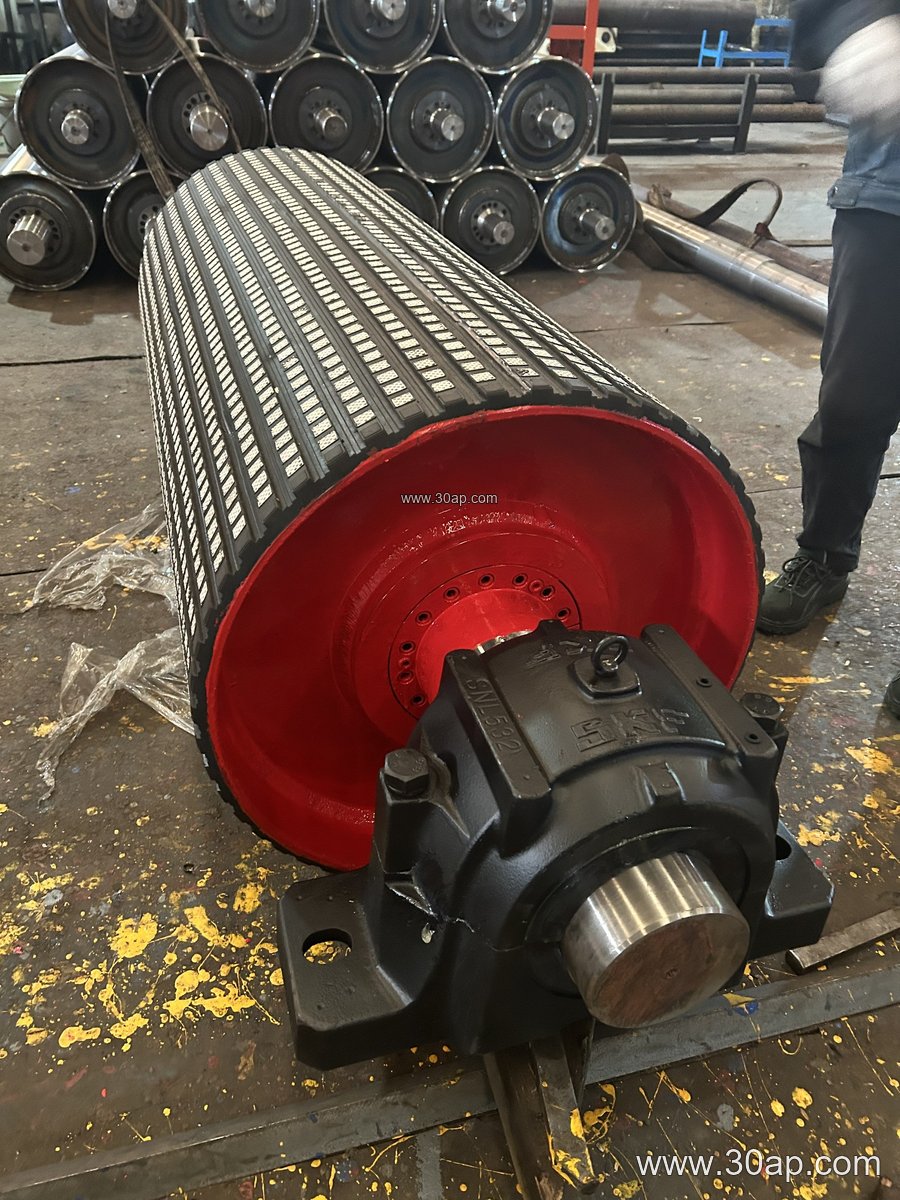
Typical sites include limestone mines, iron ore plants, sand and gravel lines, clinker handling in cement works, and coal conveying in power stations. In each case the drum is matched to the belt type, whether that is an EP conveyor belt, an NN conveyor belt, a steel cord conveyor belt or a flame retardant conveyor belt for underground coal mining conveyor duty.
Common Size References
The table below lists typical shell widths and diameters used in project planning. These are reference values, not fixed combinations; final sizing follows belt tension, wrap angle, shaft torque and the conveyor design.
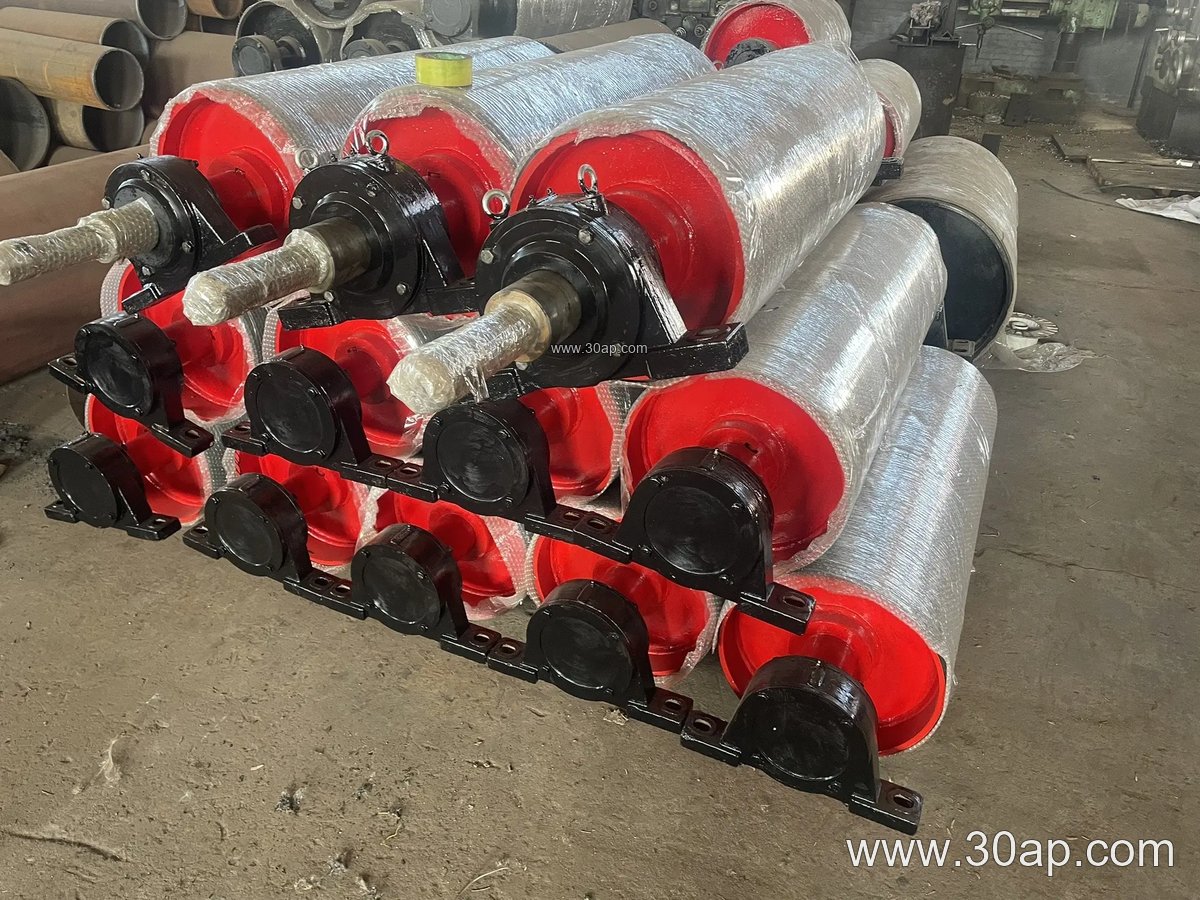
- B400: shell width about 500 mm, diameter Ø200 to Ø400
- B500: shell width about 600 mm, diameter Ø250 to Ø500
- B650: shell width about 750 mm, diameter Ø315 to Ø630
- B800: shell width about 950 mm, diameter Ø400 to Ø800
- B1000: shell width about 1150 mm, diameter Ø500 to Ø1000
- B1200: shell width about 1400 mm, diameter Ø630 to Ø1000
- B1400: shell width about 1600 mm, diameter Ø800 to Ø1250
- B1600: shell width about 1800 mm, diameter Ø800 to Ø1400
- B1800: shell width about 2000 mm, diameter Ø1000 to Ø1600
- B2000: shell width about 2200 mm, diameter Ø1000 to Ø1800
Shaft diameters commonly range from Ø50 to Ø200, but the shaft is selected from torque and bearing load, not from belt width alone. A B1200 x Ø1000 drum and a B800 x Ø500 drum are both realistic, and neither width locks the user to a single diameter.
What Buyers Should Check
Before ordering, confirm the belt width, the belt tension at the drive, the wrap angle and the lagging type. Ask whether the drum will run with a fabric core conveyor belt or a steel cord belt, because edge pressure and crown profile differ. Check the conveyor bracket and bearing housing dimensions so the drum fits the existing frame, and confirm that the shaft diameter matches the gearbox coupling. On a food grade conveyor belt or a pipe conveyor belt installation, the surface finish and cleaning requirements also affect the lagging choice.
For a single drive pulley, spare parts planning should include lagging strips, bearings and shaft keys. Inspect lagging wear and bolt tightness at each shutdown, and keep the drum aligned with the idler roller line to avoid edge damage to the belt. More conveyor pulley references are available at www.txconveyorbelt.com for plant engineers comparing drum and belt options.