What a Three-Roll Idler Set Does
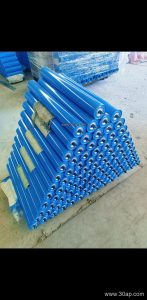
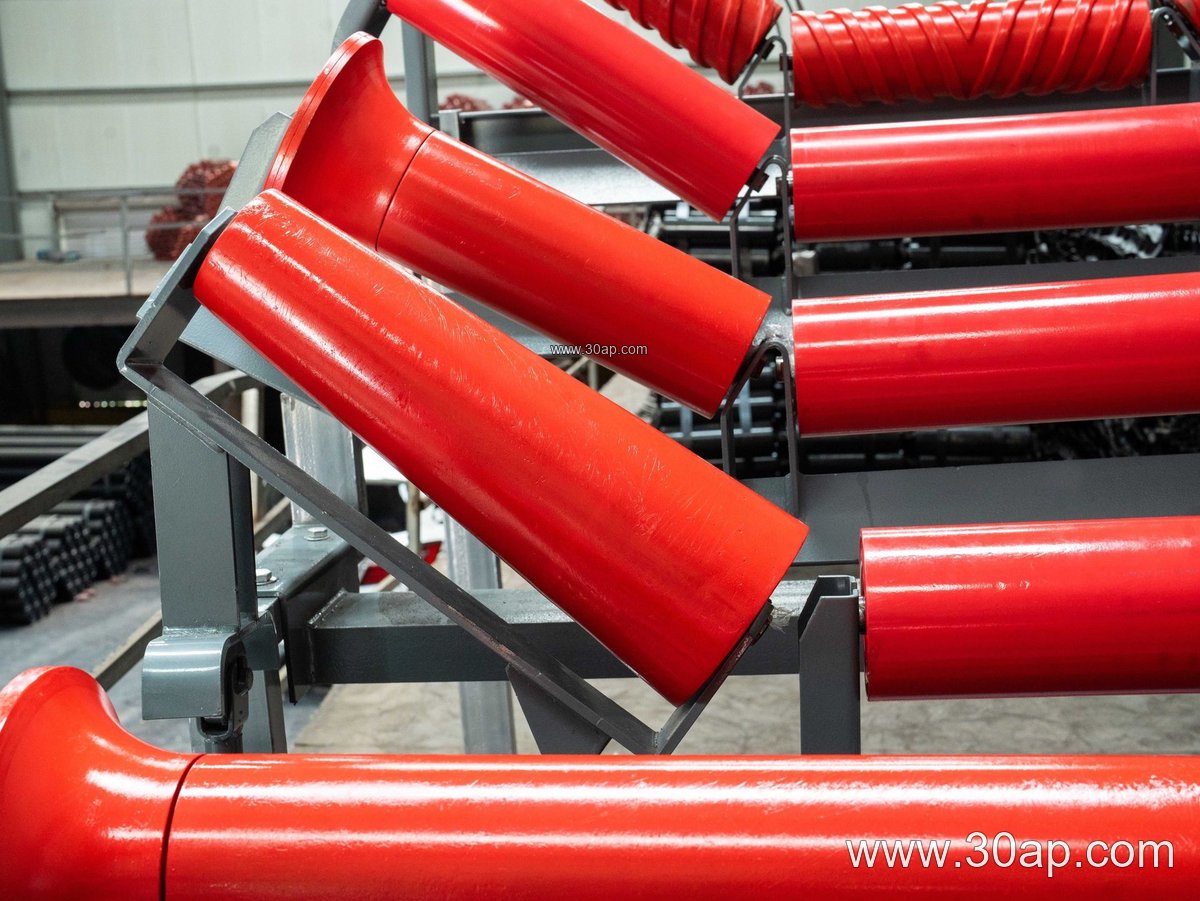
A three-roll idler set is the troughing assembly that supports the carrying side of a conveyor belt and shapes it into a shallow trough. Three rolls sit in one frame, usually with two side rolls angled upward and a center roll running flat or nearly flat. This arrangement keeps bulk material centered on the belt, reduces spillage and spreads load across a wider contact area than a single roller.
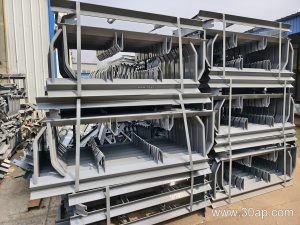
The set is a complete assembly, not just a single idler roller. It normally includes the three rolls, a rigid frame and shaft ends that lock into the conveyor bracket on each side of the stringer. Buyers often order these sets in matched quantities for a whole conveyor line, because uneven idler condition is a common cause of belt tracking problems.
How the Assembly Is Built
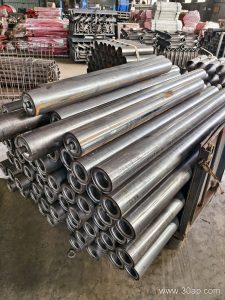
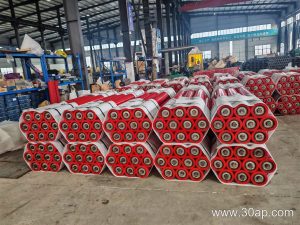
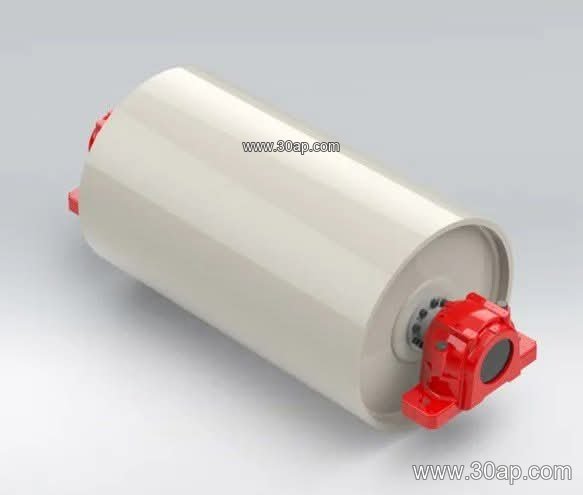
Each roll in the set is a steel tube fitted with bearing housings at both ends, sealed to keep out dust and water. Roll surfaces are commonly plain steel, but nylon, ceramic or rubber-ring versions exist for specific duties. Rubber rings, for example, are used where impact from large lumps is expected near a transfer point.
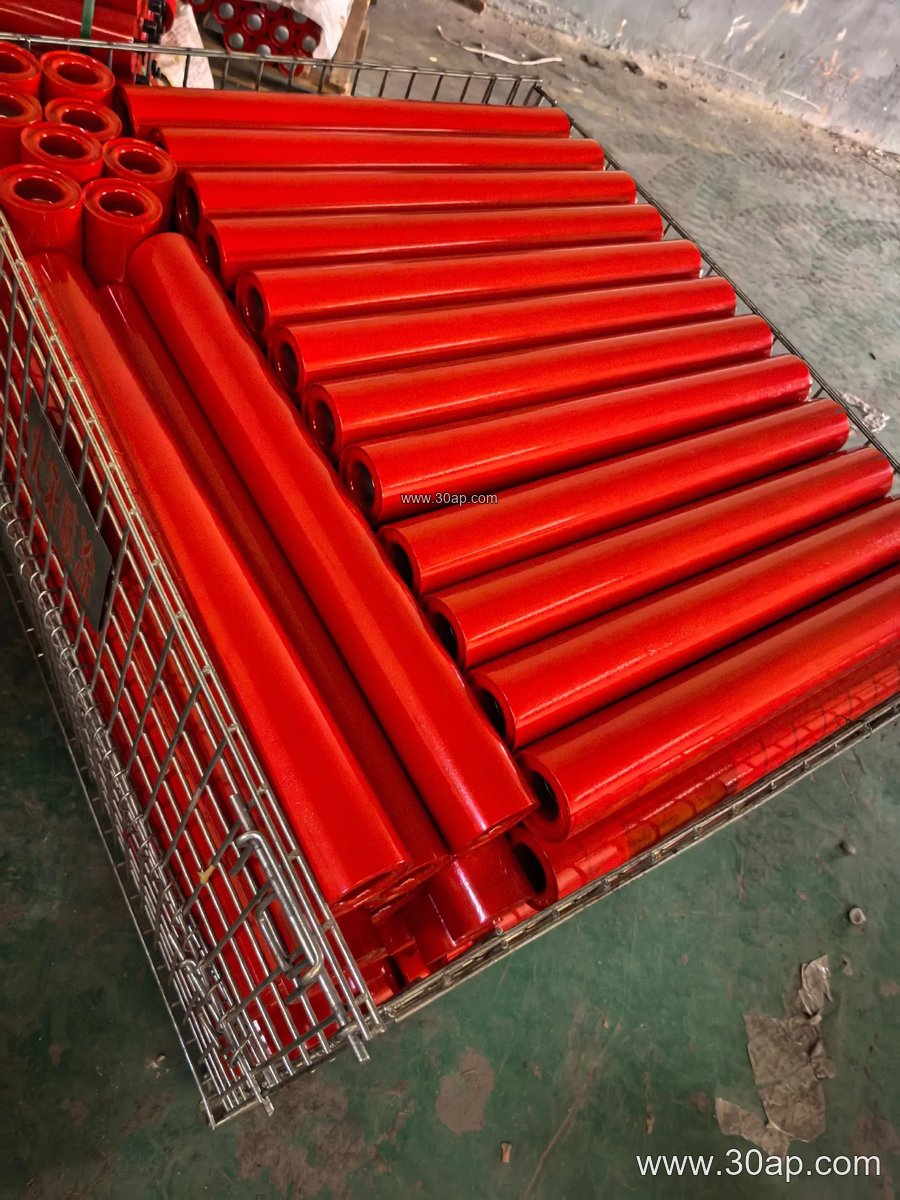
The trough angle is the key geometric feature of the frame. Common trough angles are 20, 30, 35 and 45 degrees. A deeper trough holds more material and suits higher capacities, while a shallower angle reduces belt stress and is easier on thin belts. Some frames are tilted forward by roughly 1.5 to 2 degrees to help the belt self-center, a detail worth confirming when ordering.
Roll diameter and roll length must match the belt width and the frame design. Typical roll diameters include Ø63, Ø76, Ø89, Ø102, Ø108, Ø127, Ø133, Ø159 and larger sizes for heavy duty work. Bearings are usually selected from common series such as 6204, 6205, 6305, 6306, 6308 and 6310; the correct bearing depends on load and speed, not on roll diameter alone.
Typical Dimensions and Reference Data
The table below shows common examples only. Side rolls and the center roll can differ in length, and final dimensions should always be confirmed against the conveyor design.
- B500: center roll around 200 mm
- B650: center roll around 250 mm
- B800: center roll around 315 mm
- B1000: center roll around 380 mm
- B1200: center roll around 465 mm
- B1400: center roll around 530 mm
- B1600: center roll around 600 mm
- B1800: center roll around 670 mm
- B2000: center roll around 750 mm
Belt width and roll diameter are separate decisions. A wider belt does not automatically dictate one specific roll diameter, and no single shaft size can be derived from belt width alone. The conveyor pulley at the head and tail, the belt speed and the material load all influence the final selection.
Where Three-Roll Sets Are Used
These troughing sets appear on the carrying run of nearly every bulk handling conveyor. In a limestone quarry or aggregate line, they support a heavy-duty mining conveyor belt moving crushed rock from the crusher to the screening plant. In a coal-fired power plant, they carry coal on a flame retardant conveyor belt along long galleries. Cement plants use them under clinker and raw meal belts, while port terminals rely on them for ship loading lines handling ore and grain.
The belt itself matters as much as the idlers. A steel cord conveyor belt, an EP conveyor belt or a multi-ply fabric core conveyor belt each behaves differently over the same trough angle, and an abrasion resistant conveyor belt may be needed where sharp material scuffs the surface. Matching the idler set to the belt type and the duty keeps wear even along the whole run.
Buyer Checklist
Before ordering, confirm the belt width, the required trough angle, the roll diameter and the frame fixing dimensions. Check whether the application calls for standard steel rolls or a cushioned variant near load points. Ask about sealing and bearing grade for dusty or wet conditions, and specify the roll surface if abrasive or sticky material is involved. For a complete conveyor, order idlers together with the conveyor pulley and conveyor bracket so that mounting heights align.
Maintenance is straightforward: inspect for seized rolls, worn shells and loose frames, and replace a complete three-roll idler set rather than mixing old and new rolls in one frame. Well-matched troughing sets keep the belt running true and extend the service life of the whole conveyor line.