What EP630 Conveyor Belt Means
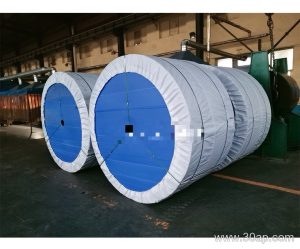
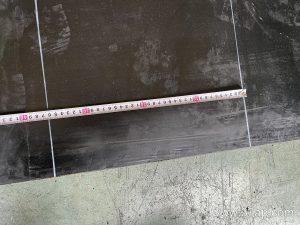
An EP630 conveyor belt is a heavy-duty rubber belt built on a polyester-nylon (EP) fabric carcass. The number 630 refers to its nominal tensile strength: roughly 630 newtons per millimeter of belt width. That places it in the mid-to-upper range of EP belts, above common EP400 or EP500 grades and below very high-tension constructions such as EP1000 or EP1250. In everyday plant language, the same product is often called an EP630 belt or a polyester-nylon 630 conveyor belt. These are accurate synonyms, not different belt types.
EP fabric combines polyester warp yarns with nylon weft yarns. Polyester limits stretch under steady load, while nylon absorbs impact and flexing. This balance makes the belt a practical choice for medium and long conveyors where both dimensional stability and troughability matter. The carcass is protected by rubber covers on the top and bottom, and the finished belt is vulcanized into a single, durable slab.
Construction and Common Specifications
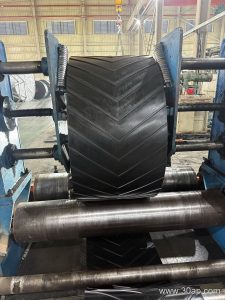
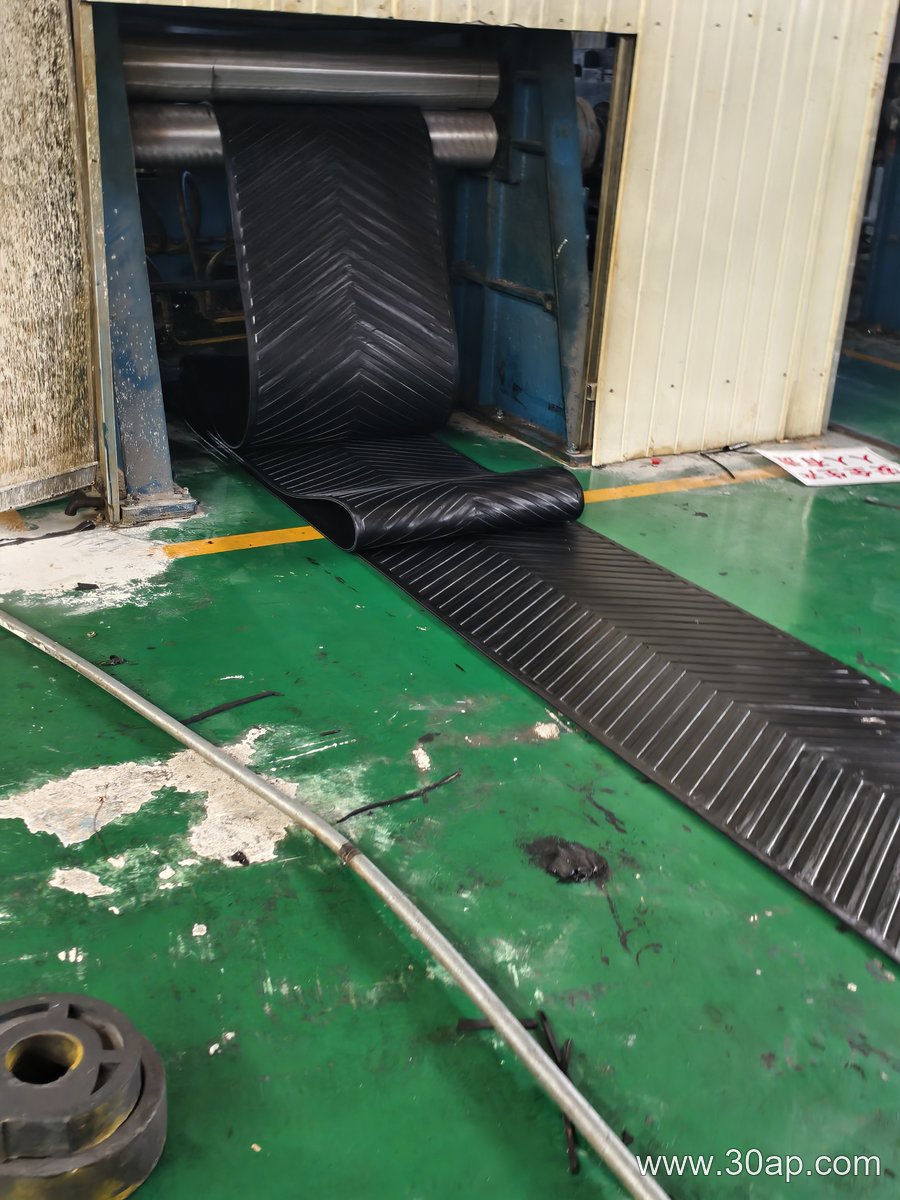
The carcass usually contains two to six fabric plies, with the ply count matched to the required strength and the pulley diameters on the conveyor. Cover rubber grade depends on the material being carried: abrasion-resistant, heat-resistant, oil-resistant, flame-retardant, antistatic, or cold-resistant compounds are all available. A buyer can also request a patterned surface, such as a chevron or herringbone profile, when the incline is steep enough to need extra grip.
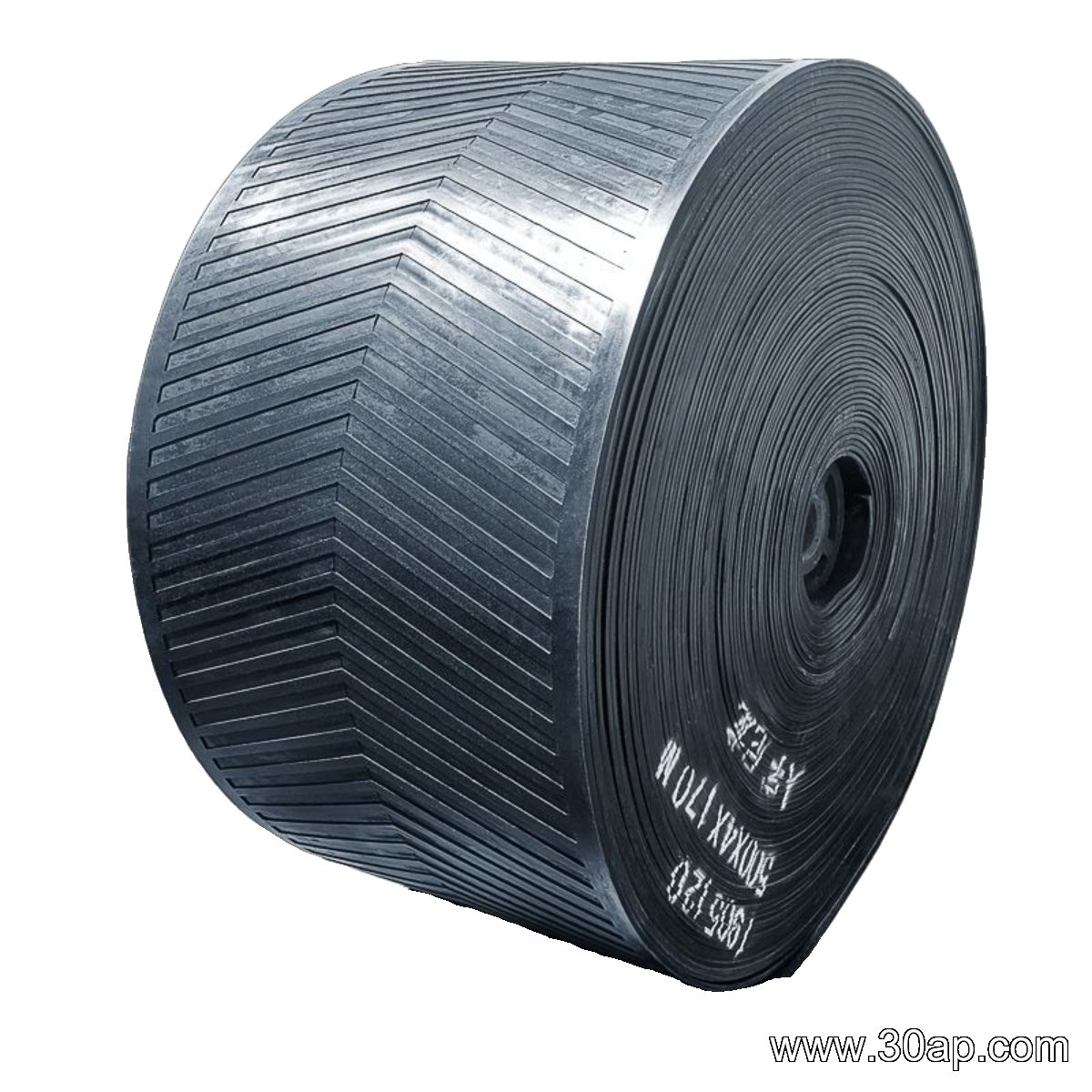
Widths commonly range from B500 up to B2000, although not every width is stocked for every strength class. Cover thickness is often quoted as a top-plus-bottom figure, for example 4+2 mm, 5+2 mm, 6+2 mm, or 8+3 mm. The table below shows representative reference values; final dimensions should always follow the conveyor design.
| Property | Typical reference |
|---|---|
| Strength grade | EP630 (630 N/mm) |
| Fabric plies | 2 to 6, selected by tension and pulley size |
| Belt width | B500, B650, B800, B1000, B1200, B1400, B1600, B1800, B2000 |
| Top cover | 3 mm to 8 mm, depending on duty |
| Bottom cover | 1.5 mm to 3 mm |
| Cover grades | Abrasion, heat, oil, flame, antistatic, cold, acid and alkali resistant |
These figures are common industry references, not a guarantee that any one supplier holds every combination in stock. Belt width and pulley diameter are separate design decisions: a wider belt does not automatically dictate one fixed pulley size, and shaft diameter must be calculated from the actual load and torque, never inferred from belt width alone.
Where EP630 Belts Are Used
This strength class suits aggregate plants, cement works, coal preparation, foundries, ports, and bulk terminals. It handles crushed stone, sand, gravel, clinker, ore, and similar abrasive loads. Because the EP carcass resists fatigue, the belt also performs well on conveyors with multiple loading points or moderate transition distances.
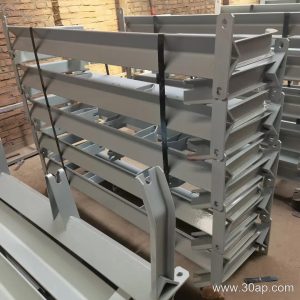
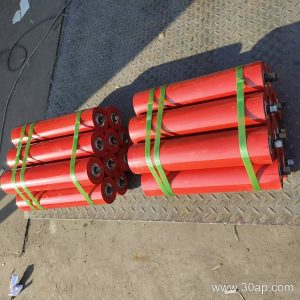
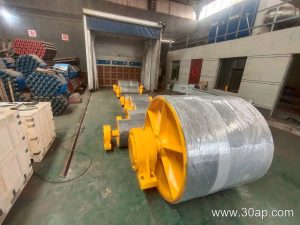
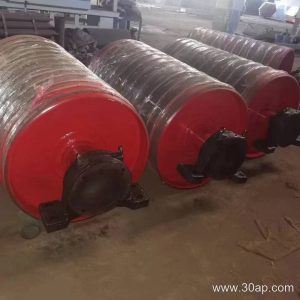
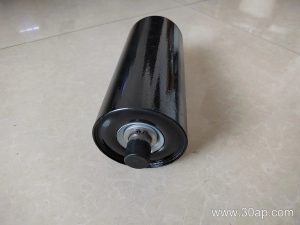
On the conveyor itself, the belt runs over idler rollers that support the load, wraps around a drive pulley that transmits motion, and returns over a tail pulley at the far end. Bend pulleys may appear in take-up or tensioning sections. These components are not interchangeable: a drive pulley, a tail pulley, and a bend pulley each perform a distinct job, and each has its own diameter and lagging requirements. The belt also sits within a frame supported by conveyor brackets, which keep the structure aligned and stable.
Selection and Maintenance Notes
Choosing an EP630 belt starts with the peak tension on the conveyor, not with the belt label alone. The designer checks the maximum working tension, the troughing angle, the pulley diameters, and the impact energy at the loading chute. If the calculated tension is lower, an EP400 or EP500 belt may be sufficient; if it is higher, a stronger grade such as EP800 or a steel-cord belt may be needed. Mentioning those alternatives is only a comparison — the EP630 remains the subject here.
Maintenance focuses on a few practical points:
- Keep the belt centered so it does not rub the structure or the idlers.
- Check that the drive pulley has enough lagging and that the tail pulley turns freely.
- Inspect splices and edges for cuts, ply separation, or cover wear.
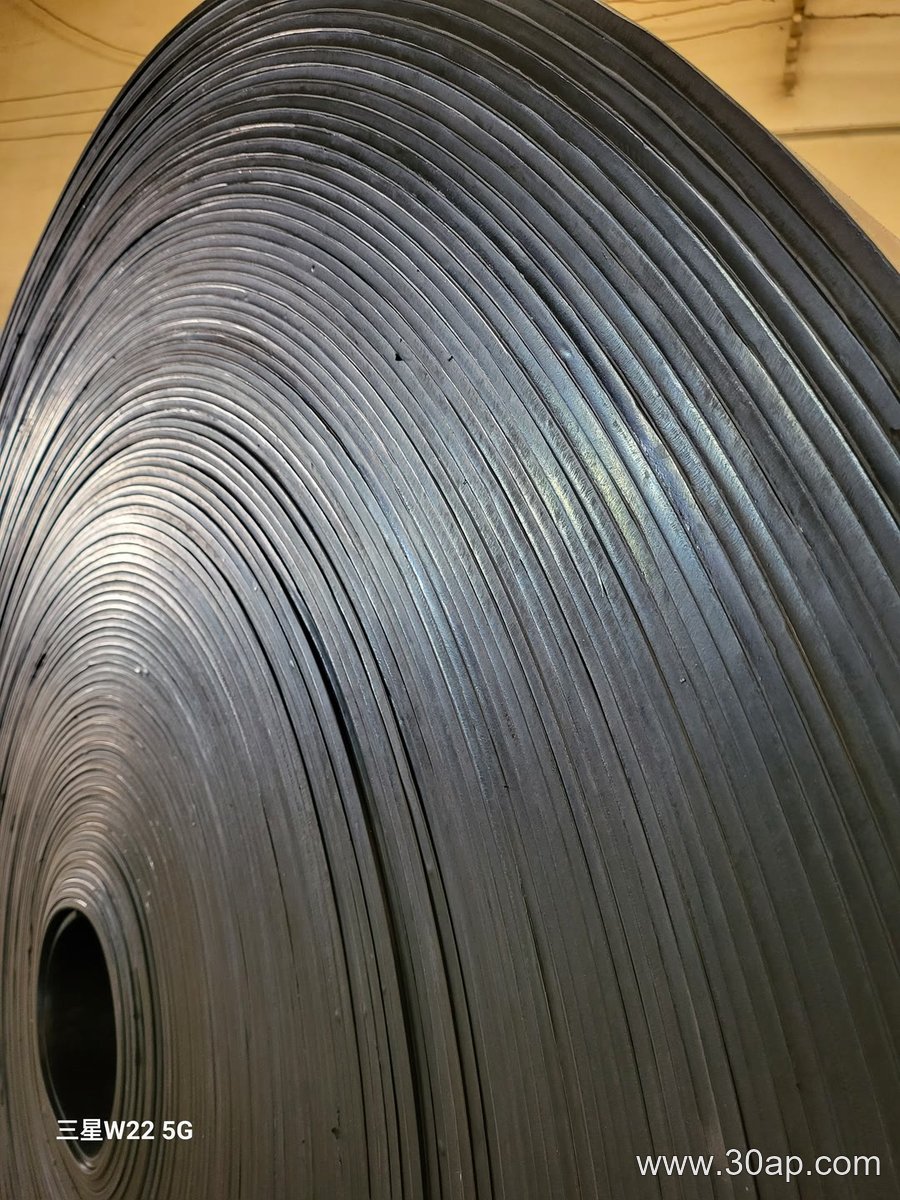
- Store spare belt in a dry, shaded place, away from oils and direct sunlight.
For a buyer, the key questions are simple: what tension does the conveyor actually develop, what material and temperature will the belt see, and what pulley diameters and trough angles are in place? With those answers, an EP630 conveyor belt can be specified with the right ply count, cover grade, and width for the job.