What a Metallurgical Conveyor Idler Does on the Line
A metallurgical conveyor idler is the rotating support that carries the belt and its load along a conveyor frame in metallurgical and heavy bulk handling service. In sinter plants, iron and copper ore yards, coke wharves, and steel mill material yards, these rollers sit under a continuously moving belt and take the weight of hot, abrasive, or damp material. The idler roller itself is a simple assembly, but its condition decides how much drag the drive must overcome, how long the belt lasts, and how often maintenance crews have to walk the line.
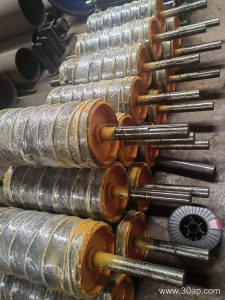
This article looks at how the roller is built, where it fits, and what to check before ordering. A metallurgical conveyor idler is not the same part as a conveyor pulley; drive, tail, and bend pulleys are separate assemblies with their own shaft, bearing housing, and lagging requirements, and they are never exchanged for idlers.
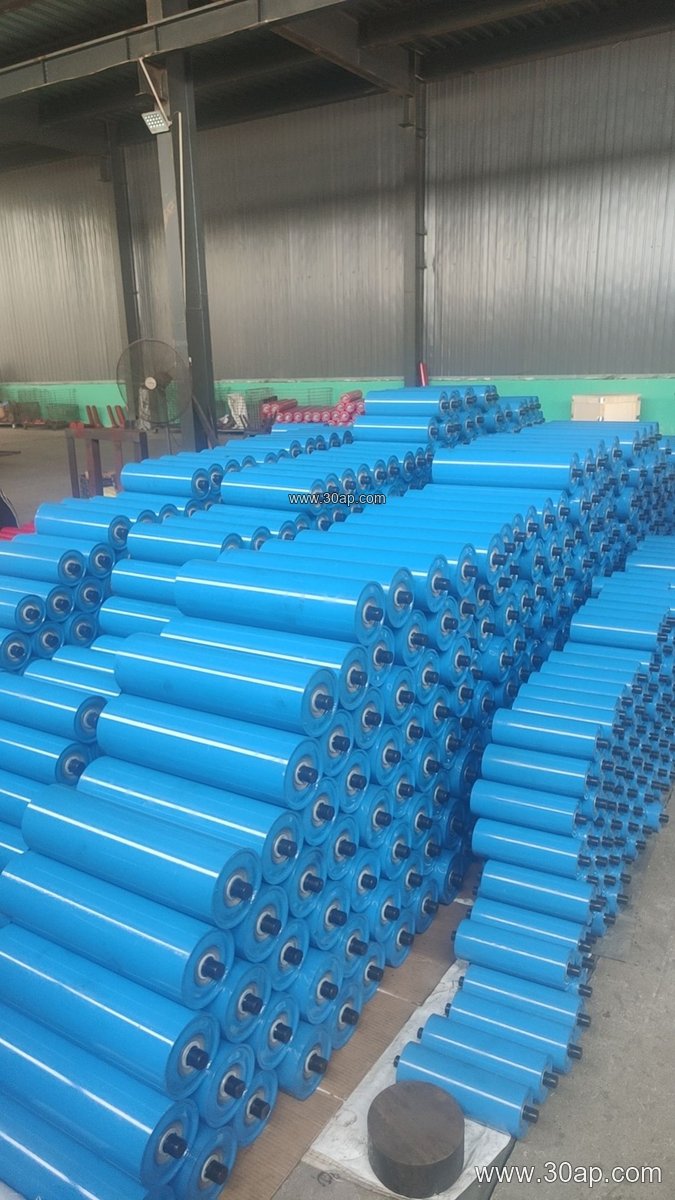
Construction Details That Matter
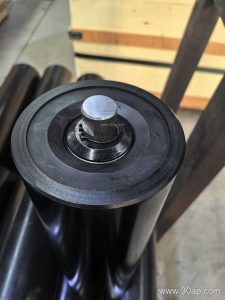
A typical idler roller combines a steel tube shell, pressed end caps, a shaft, and sealed bearings. The shell may be plain steel, nylon-coated, ceramic-faced, or fitted with rubber rings for impact absorption. Sealing is the quiet hero of the design: in sinter and coke service, fine dust and moisture attack bearings faster than load does, so labyrinth seals and grease retention get more attention than tube thickness.
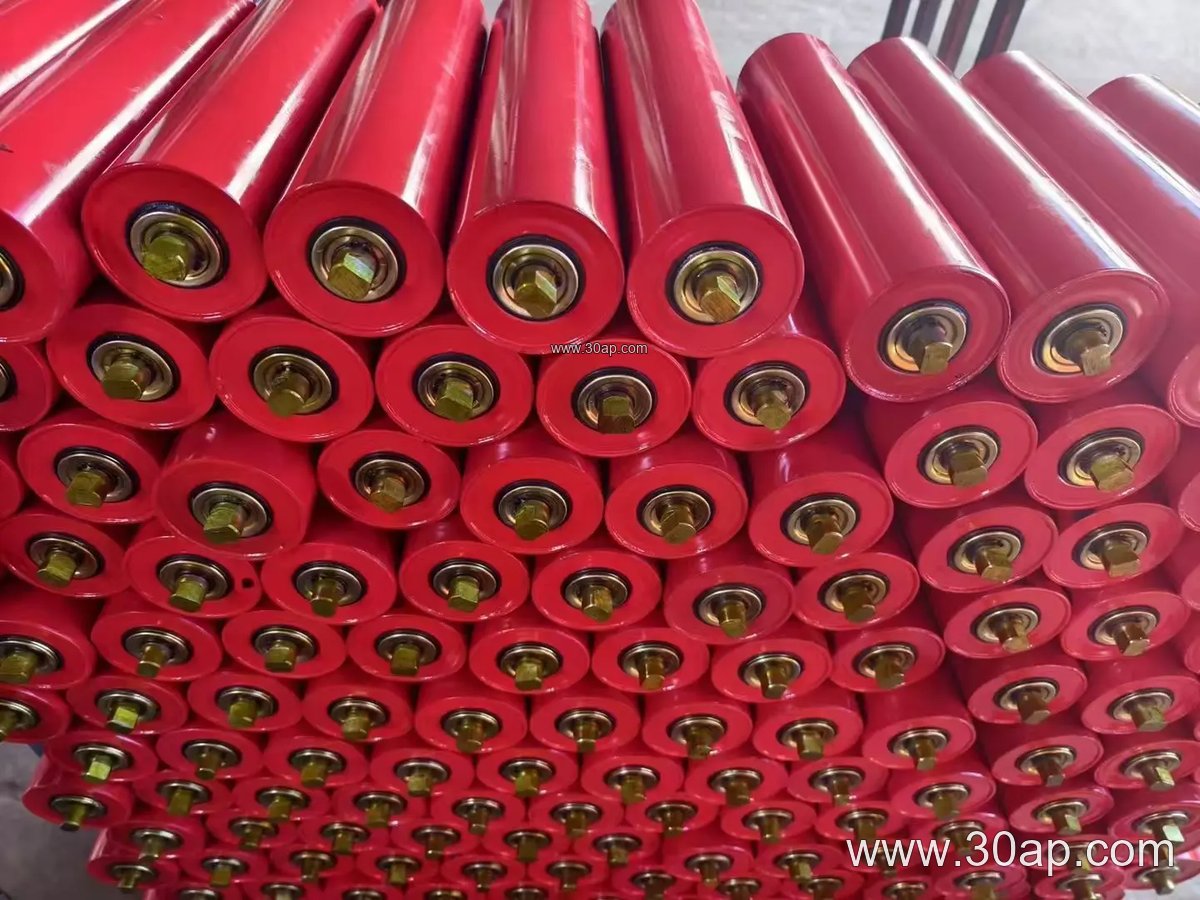
Common bearing sizes on metallurgical idlers include 6204, 6205, 6305, 6306, 6308, and 6310, selected by load and shaft design rather than by belt width alone. Roller diameters commonly range from Ø63 and Ø76 for light return runs up to Ø159, Ø178, Ø194, and Ø219 for heavy troughing positions. None of these values is a fixed match to a given belt; the conveyor designer sets the combination.
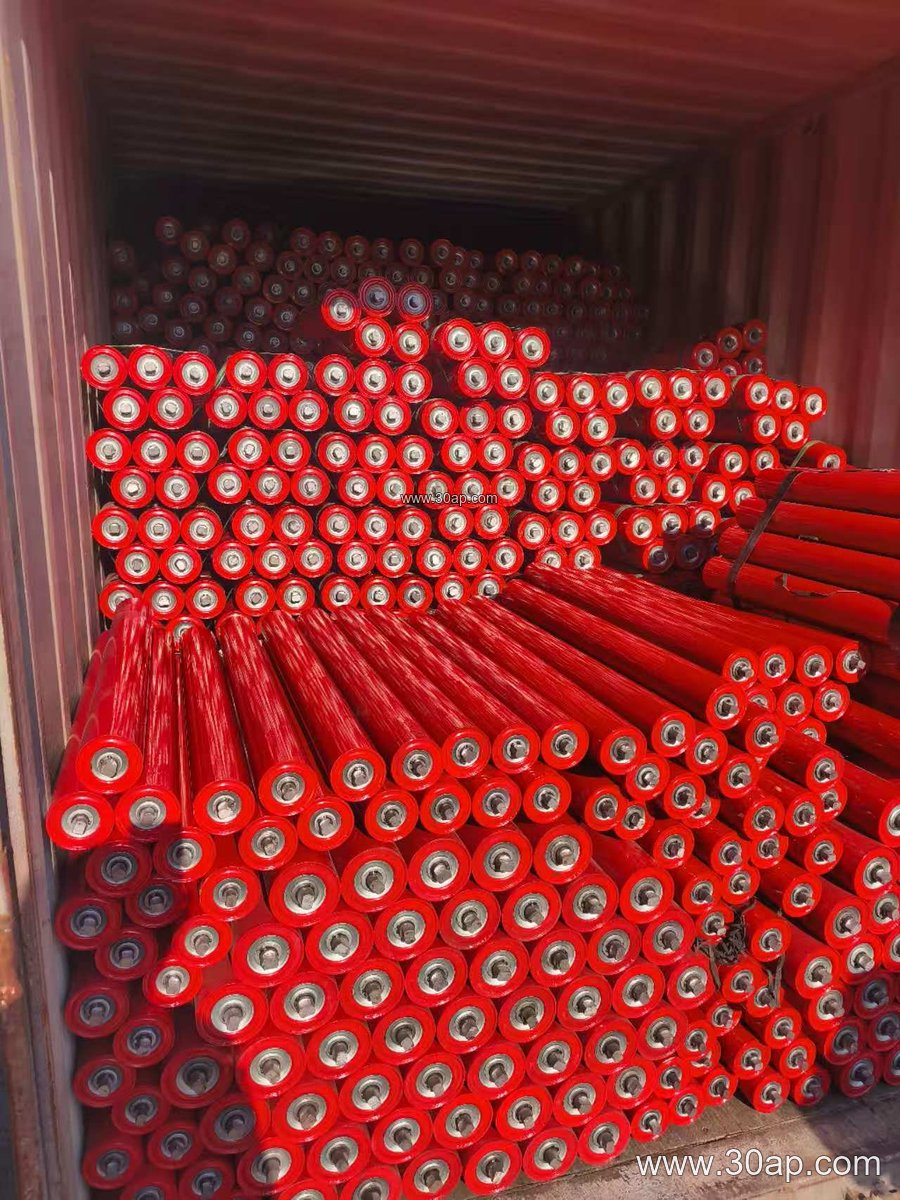
Where the Roller Sits in the Frame
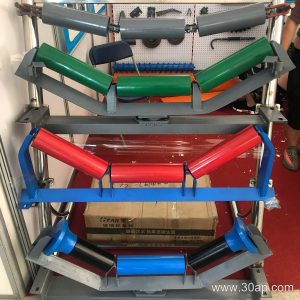
On the carrying side, three-roll troughing sets at 20, 30, 35, or 45 degrees form the familiar trough that keeps bulk material centered. Transition idlers ease the belt from flat to troughed profile near pulleys. On the return side, flat and V-return rollers support the empty belt, while self-aligning and friction-aligning types correct tracking on long runs. Impact idlers with rubber rings belong under transfer chutes and crusher discharges, where lumps drop with force.
Roller length follows belt width, trough angle, and roll arrangement. In common three-roll troughing practice, a B500 belt might use roughly 200 mm rolls, B800 about 315 mm, B1000 about 380 mm, B1200 about 465 mm, and B1400 about 530 mm. Side rolls and center rolls can differ, so these are examples for orientation, not a purchase rule. Frame brackets should be checked against the same drawing.
Matching the Idler to the Material and the Belt
Metallurgical duty is rarely gentle. Sinter and coke carry heat; ore carries sharp edges; washed coal carries moisture. A heat resistant conveyor belt, an abrasion resistant conveyor belt, or a flame retardant conveyor belt may run on the same frame, and each imposes different expectations on roller seals and shell wear. Where the line handles sized ore over long distances, a steel cord conveyor belt or a heavy-duty EP conveyor belt may be used, and the idler load rating should follow the actual belt tension and material weight rather than a nominal table.
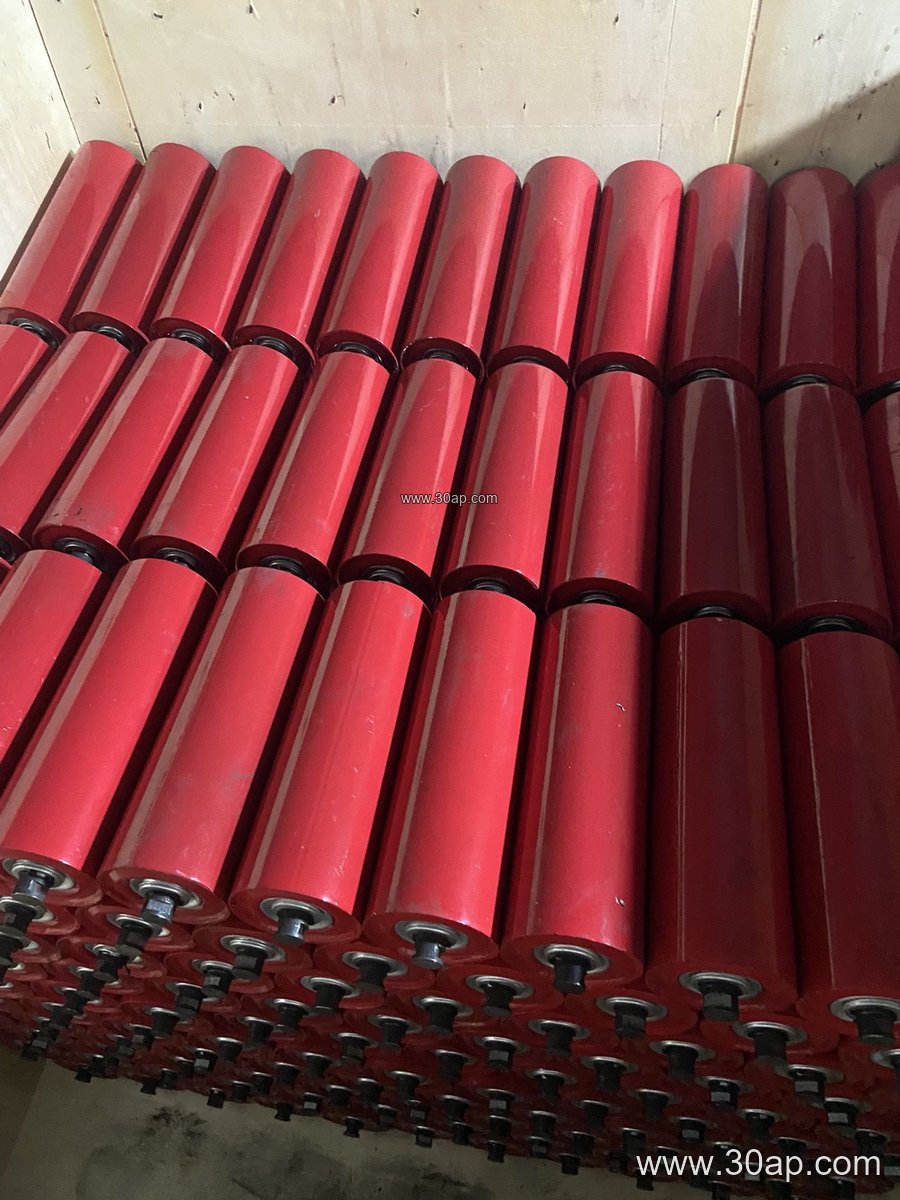
In a coal preparation plant or a power station coal yard, flame retardant and anti-static properties of the belt matter; the idlers themselves should be specified for dust-tight sealing and easy replacement. In a quarry or aggregate line feeding a crusher, impact idlers and rubber-ring rollers reduce shock loading at the transfer point. For sticky or wet material, self-cleaning spiral rollers can limit buildup. Buyers often compare troughing idlers with return rollers and with conveyor brackets at the same time, because a mismatched bracket or a worn roller surface causes belt edge damage that looks like a belt fault.
Specification Checklist Before Ordering
- Belt width and trough angle, with the actual frame drawing if available.
- Roll diameter and shell material for each position: carrying, return, impact, aligning.
- Bearing size and sealing class suited to dust and moisture levels.
- Roll length per roll position, confirmed against the bracket spacing.
- Operating temperature and any chemical exposure from the material.
- Replacement access, since roller changes on a sinter or coke line are usually done in short windows.
Well-chosen metallurgical conveyor idlers keep the belt running straight, hold power draw steady, and push roller replacement into planned shutdowns instead of emergency stops. For related conveyor components such as belt and pulley assemblies, the same drawing-led approach pays off.