What a Carrying Idler Does on a Conveyor
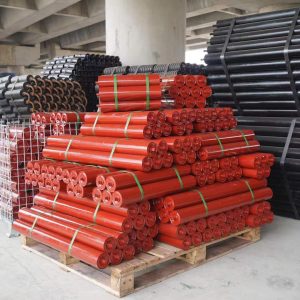
A conveyor belt carrying idler is the roller set under the loaded side of the belt. It supports the belt and the material on it, keeps the belt in a stable trough shape, and lets the belt travel with low rolling resistance. In a typical bulk handling line, these rollers sit between the loading point and the discharge pulley, often in long repeating groups. On a quarry conveyor or a cement plant transfer line, a worn or misaligned carrying idler shows up quickly as belt sag, spillage, or edge wear.
The term is specific: a carrying idler supports the load-carrying run. It is not a return idler, not a bend pulley, and not a drive pulley. When specifying or replacing one, keep the position and duty clear so the correct roller group is supplied.
How the Roller Is Built
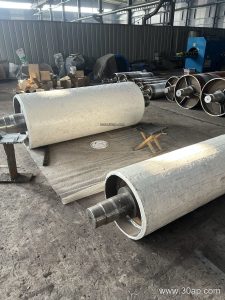
Most carrying idlers share a simple structure: a steel tube shell, a shaft, bearing housings at each end, and a sealing arrangement. The shell may be plain steel, nylon-coated, ceramic-covered, or fitted with rubber rings. Seals matter in dusty conditions such as a coal handling system at a power plant or a crushing and screening line, where fine grit attacks bearings.
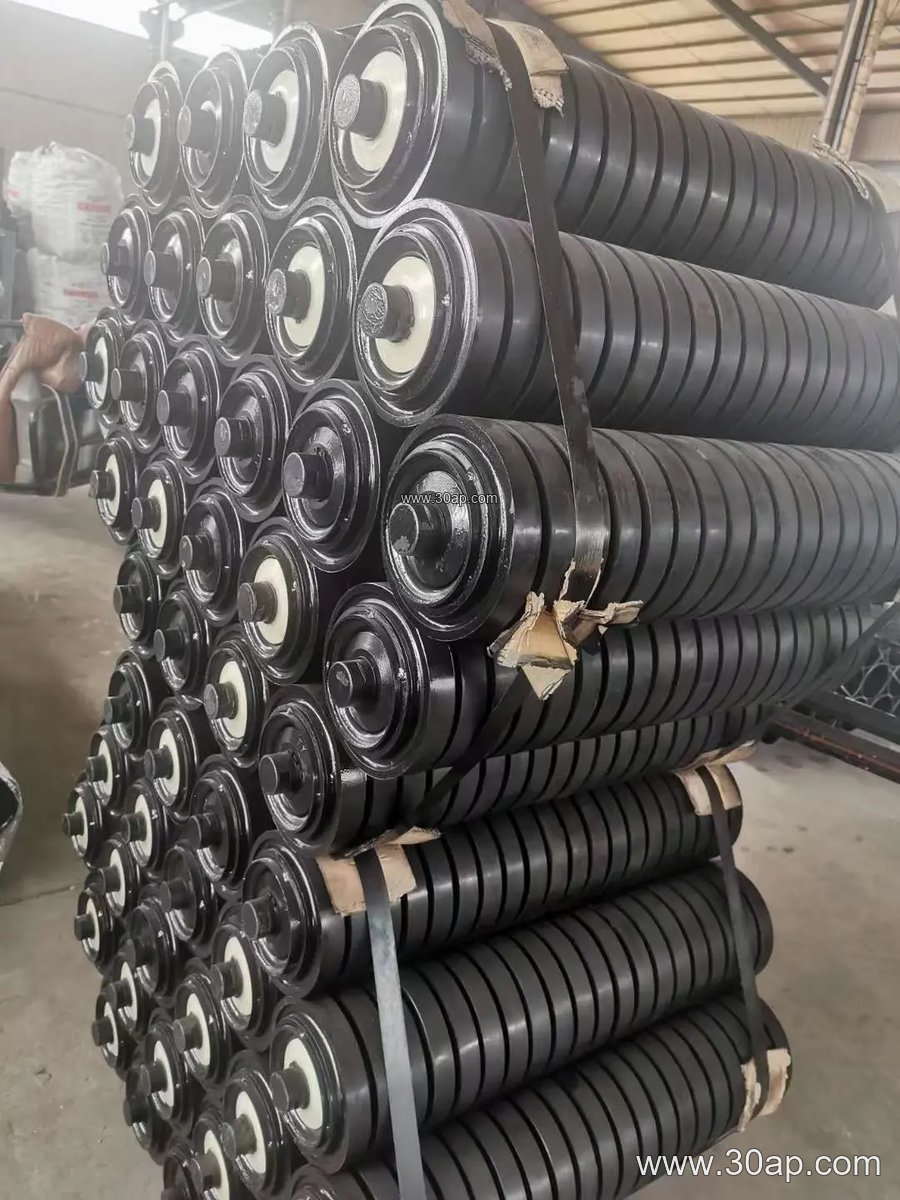
Common roller diameters include Ø89, Ø108, Ø127, Ø133, and Ø159 mm, with larger sizes used on heavy-duty mining conveyors. Bearings are typically 6204, 6205, 6305, 6306, 6308, or 6310, selected by load and shaft design rather than by belt width alone. Roller length follows the belt width, trough angle, and frame type; for example, a three-roll trough set on a B1000 belt often uses a roll length near 380 mm, while B1400 may use about 530 mm. These are common references, not fixed pairings.
Trough, Transition and Impact Positions
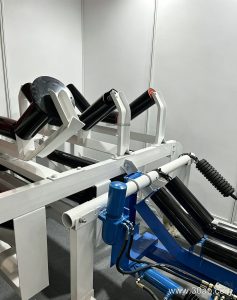
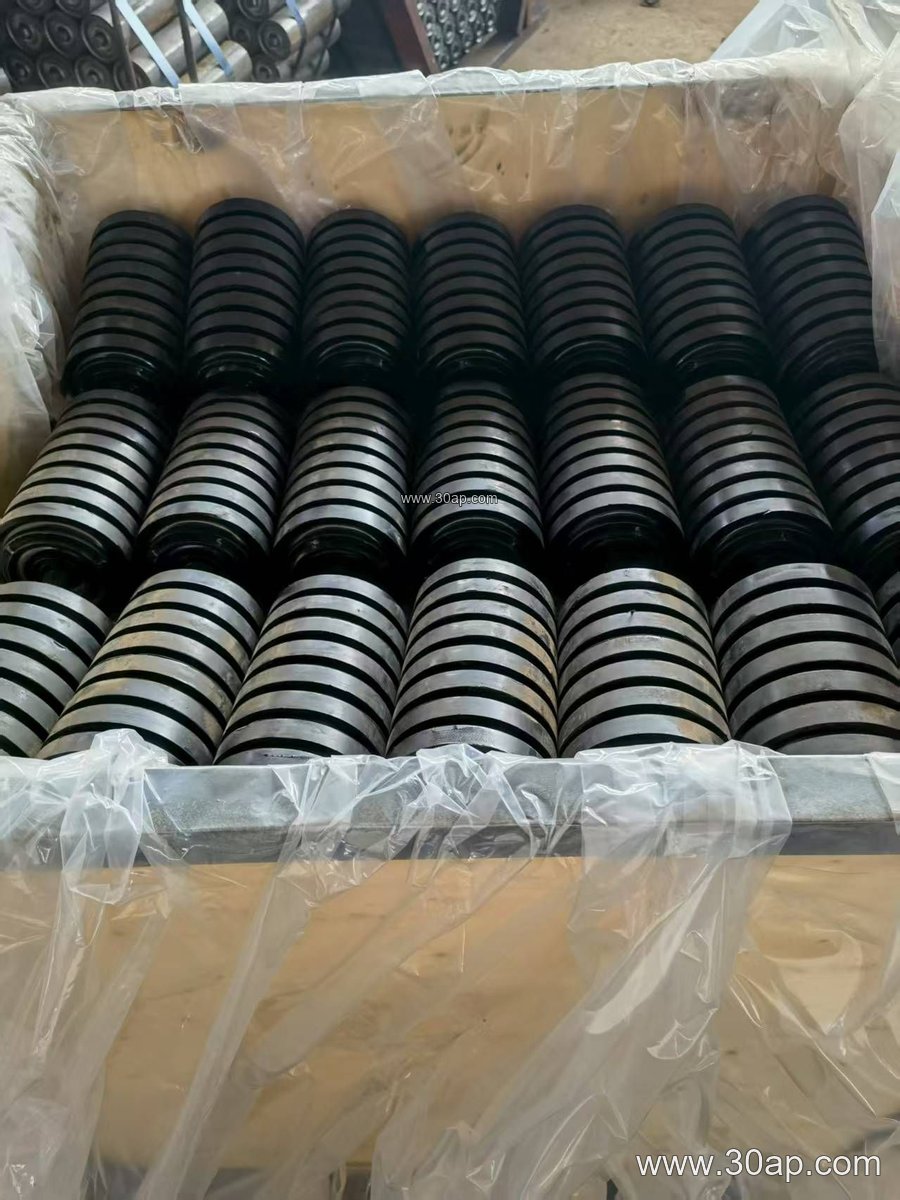
The most familiar form is the three-roll troughing set, usually at 20, 30, 35, or 45 degrees. A two-roll set or a single-roll arrangement may appear in narrower or special frames. Near the tail and discharge, transition idlers gradually change the belt from flat to troughed, reducing edge stress. At the loading point, impact idlers with rubber rings absorb the drop energy from rock, ore, or clinker.
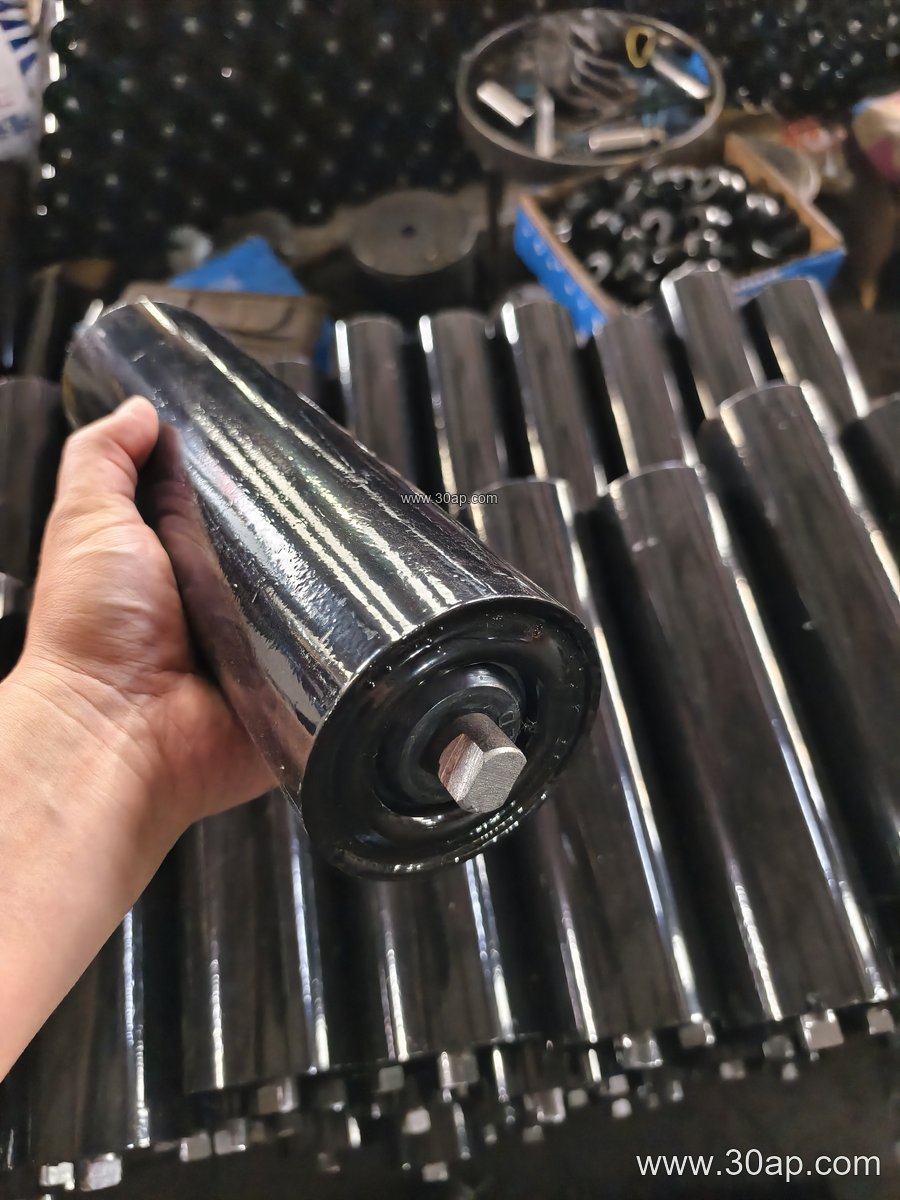
Self-aligning types, including friction and tapered designs, help correct belt drift on long runs. They are still carrying idlers, but their function is guidance rather than pure support. A forward tilt of about 1.5 to 2 degrees is sometimes used to assist tracking; this is a design detail, not a universal rule.
Where These Idlers Are Used
Carrying idlers appear wherever a conveyor moves bulk material. In an iron ore or copper ore operation, heavy-duty rollers handle abrasive lump feed. In a limestone quarry or aggregate conveyor line, three-roll trough sets keep the belt profile steady through long inclines. Coal mining conveyors and underground coal mining systems rely on flame retardant belts and robust idlers that tolerate dust and moisture. Cement plants, steel plants, and port ship loading conveyors also use them continuously.
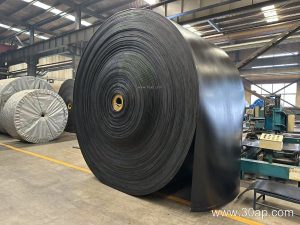
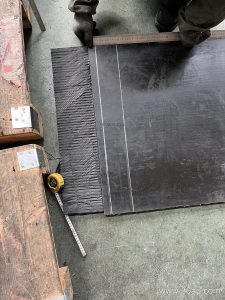
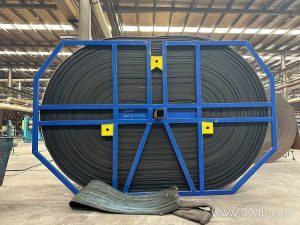
The belt itself may be an EP conveyor belt, an NN conveyor belt, or a steel cord conveyor belt, depending on tension and distance. A rubber conveyor belt with a chevron or corrugated sidewall profile may need particular frame clearance, so check roller height and roll length together with the belt construction.
Buyer Checklist
- Confirm position: carrying, transition, impact, or self-aligning.
- State belt width, such as B800, B1200, or B1600, and trough angle.
- Give roller diameter and required roll length, not just the belt size.
- Describe the material: abrasive rock, coal, cement, or hot clinker.
- Specify bearing size only if the existing shaft and housing require it.
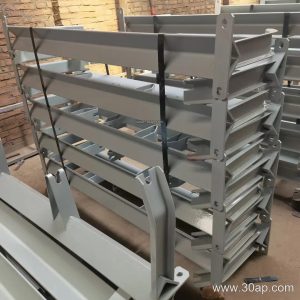
- Check frame and bracket dimensions so the new set fits the conveyor bracket.
For replacement work, measure the existing roller, shaft end, and frame opening. A carrying idler that fits the bracket but has the wrong roll length can misalign the belt. Matching the idler to the conveyor pulley layout and belt type avoids repeated downtime.
Maintenance Notes
Inspect for seized rollers, worn shells, and material build-up. A noisy bearing or a roller that no longer turns freely increases belt drag and can damage the belt cover. Keep the loading area clean so fines do not pack around the idler. On a quarry conveyor belt or a coal conveyor, regular inspection of the carrying idlers is often more effective than waiting for a failure.
For sourcing, describe the duty and dimensions clearly, and ask for the roller drawing. A well-matched conveyor belt carrying idler keeps the belt centered, protects the belt cover, and supports steady material flow from the load point to the discharge pulley.