What a Four-Roll Trough Idler Is
A four-roll trough idler is a carrying idler assembly that supports the conveyor belt with four rolls arranged in a trough profile. Compared with the more common three-roll trough set, it adds one more roll to share the load, which can be useful when the belt is wide, the material is heavy, or the conveyor runs under continuous high tonnage. In a coal mining conveyor or an iron ore handling line, this extra roll can reduce the load on each individual idler roller and help maintain a stable belt line. The same product is also called a four-roll troughing idler, and both names describe the same assembly.
How the Assembly Is Built
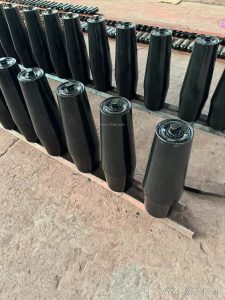
The typical four-roll trough idler consists of four idler rollers mounted on a common frame or bracket set. The outer rolls are inclined to form the trough, while the inner rolls sit closer to the center. Roll diameters commonly range from Ø89 to Ø159, and larger sizes such as Ø178 or Ø194 may appear in heavy-duty mining conveyor systems. Roll length changes with belt width and trough angle, so a B800 conveyor belt and a B1400 conveyor belt will not use the same roll dimensions. Bearings are usually selected from common series such as 6205, 6305, or 6308, but the bearing choice should follow the actual load and speed calculation rather than a fixed rule.
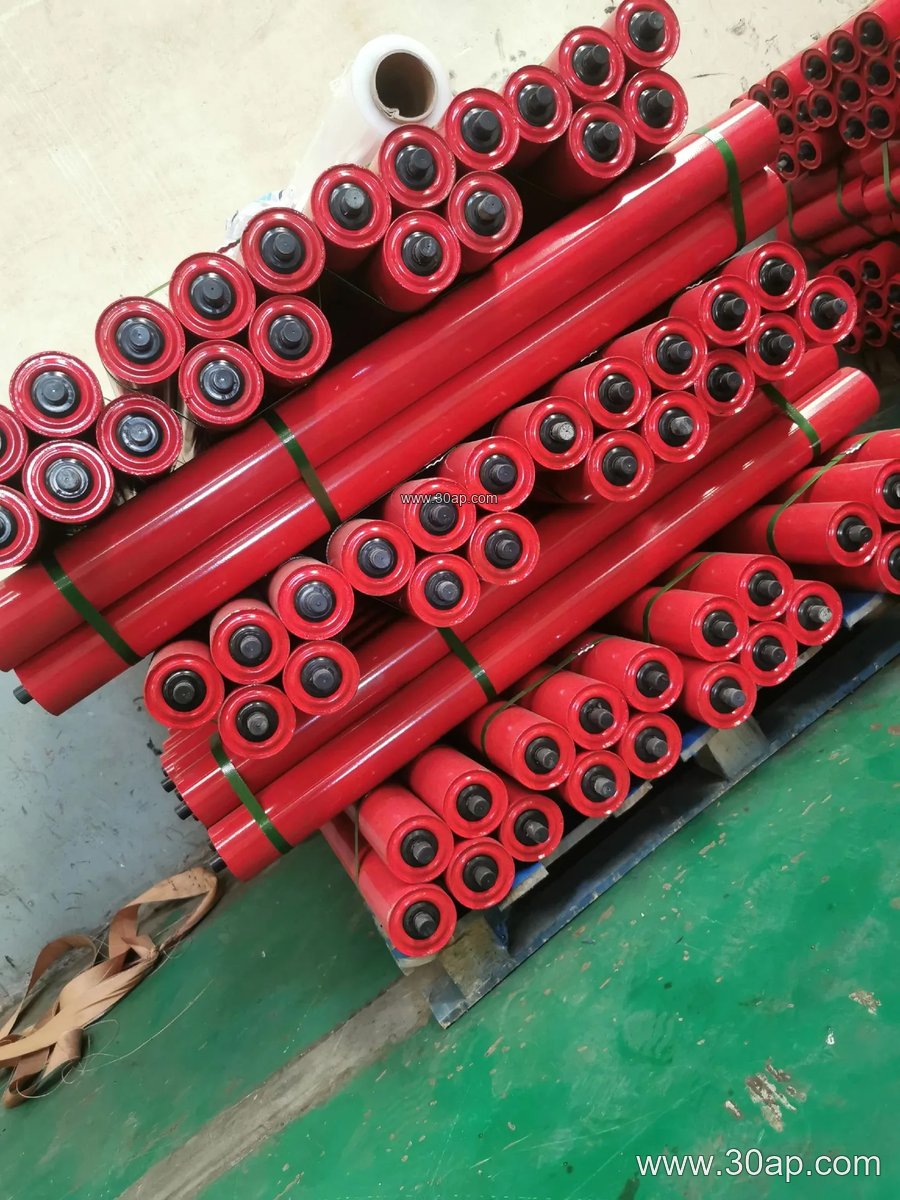
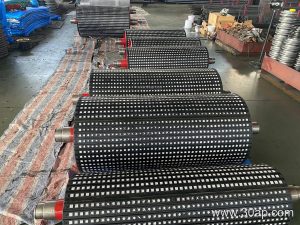
The roll surface can be steel tube, nylon, ceramic, or rubber ring. Rubber rings are often used where impact and abrasion are concerns, such as a crusher conveyor or a quarry conveyor belt line. The frame and brackets should be checked for corrosion protection, especially in a coal preparation plant or a port conveyor exposed to moisture and dust.
Where It Fits in a Conveyor
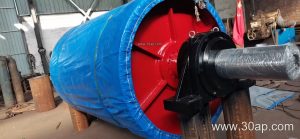
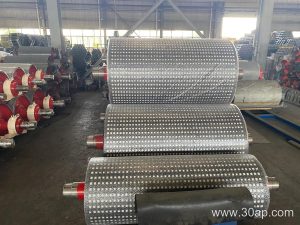
Four-roll trough idlers are normally placed on the carrying side of the conveyor, especially in the middle section where the belt is fully loaded. They are not a replacement for drive pulleys, tail pulleys, or bend pulleys; those are separate components with different functions. A four-roll trough idler may be considered when a three-roll trough set does not provide enough support or when the belt width and material load require better distribution. In a cement plant or a power plant coal handling system, it can help keep the belt profile steady and reduce spillage risk.
Key Parameters to Review
Buyers should review the following parameters together rather than treating any one value as a universal match. The table below lists common reference ranges; final values should be confirmed by design calculation and supplier data.
| Parameter | Common Reference | Notes |
|---|---|---|
| Roll diameter | Ø63, Ø76, Ø89, Ø102, Ø108, Ø127, Ø133, Ø159, Ø178, Ø194, Ø219 | Selected by load, speed, and belt width |
| Belt width | B400, B500, B650, B800, B1000, B1200, B1400, B1600, B1800, B2000, B2200, B2400 | Roll length varies with width and trough angle |
| Trough angle | 20°, 30°, 35°, 45° | Affects material containment and belt contact |
| Roll surface | Steel tube, nylon, ceramic, rubber ring | Choose for abrasion, impact, and build-up conditions |
| Bearing | 6204, 6205, 6305, 6306, 6308, 6310 | Not fixed to one roll diameter |
Buyer Checklist for Four-Roll Trough Idlers
- Confirm the actual belt width and trough angle before selecting roll length; do not assume one roll size fits all belts.
- Check the load rating and bearing selection for the conveyor’s tonnage and speed.
- Match the roll surface to the material: rubber ring for impact, ceramic or nylon for abrasion and build-up.
- Verify bracket dimensions and mounting holes against the existing conveyor frame.
- For coal mining conveyor or underground coal mining conveyor applications, review flame retardant and anti-static requirements for the belt and related components.
- In a quarry conveyor or aggregate conveyor line, pay attention to dust sealing and roll end clearance.
Four-roll trough idlers are a practical choice when a standard three-roll arrangement needs more support. They work alongside the conveyor belt, conveyor pulley, and conveyor bracket system, but they remain a distinct carrying idler type. For heavy-duty mining conveyor belts, a properly selected four-roll trough idler can contribute to smoother operation and longer roll service life.