What a Dual Drive Pulley Does on a Conveyor
A dual drive pulley is a conveyor pulley that transmits torque through two independent drive connections, either two motors acting on the same pulley shell or two drive stations working together at the head of the conveyor. In practice, the term is used for head pulleys configured with dual drive inputs, and it is also applied to tandem drive arrangements where a second pulley shares the pulling duty. The purpose is straightforward: spread the drive torque across two points so the pulley, shaft, and gearbox interfaces carry less stress per connection.
This is a drive pulley, not a tail pulley or a bend pulley. Those components guide or tension the belt, while the dual drive pulley is where power enters the conveyor. Mixing these roles up leads to the wrong specification, so keep the duty clear from the start.
Construction and Torque Path
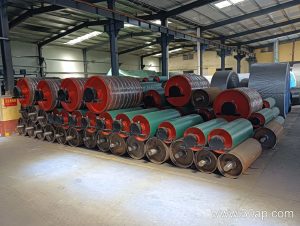
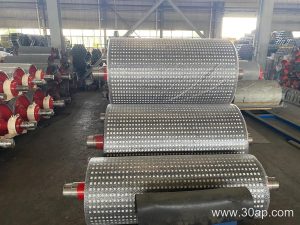
The shell is usually a rolled steel cylinder with welded end discs and a hub on each side. For dual drive designs, the shaft may run through the full shell or be split into two stub shafts, depending on the gearbox layout. Rubber lagging is common to raise friction against the conveyor belt, and the lagging can be plain, diamond grooved, or herringbone grooved. Common lagging thicknesses are 8, 10, 12, 15, and 20 mm, selected by the duty rather than by habit.
Torque travels from each drive coupling into the shaft, through the hub, and into the shell. Because two inputs share the load, the shaft diameter is chosen from the combined torque and the bearing reaction, not from belt width alone. Typical shaft sizes on larger units fall in the Ø100 to Ø200 range, but a smaller B800 duty may use a much lighter shaft. The design engineer confirms this with a torque and fatigue check.
Common Reference Combinations
The values below are reference points, not fixed pairings. A given belt width can be matched with more than one pulley diameter, and the final choice depends on belt tension, wrap angle, and space.
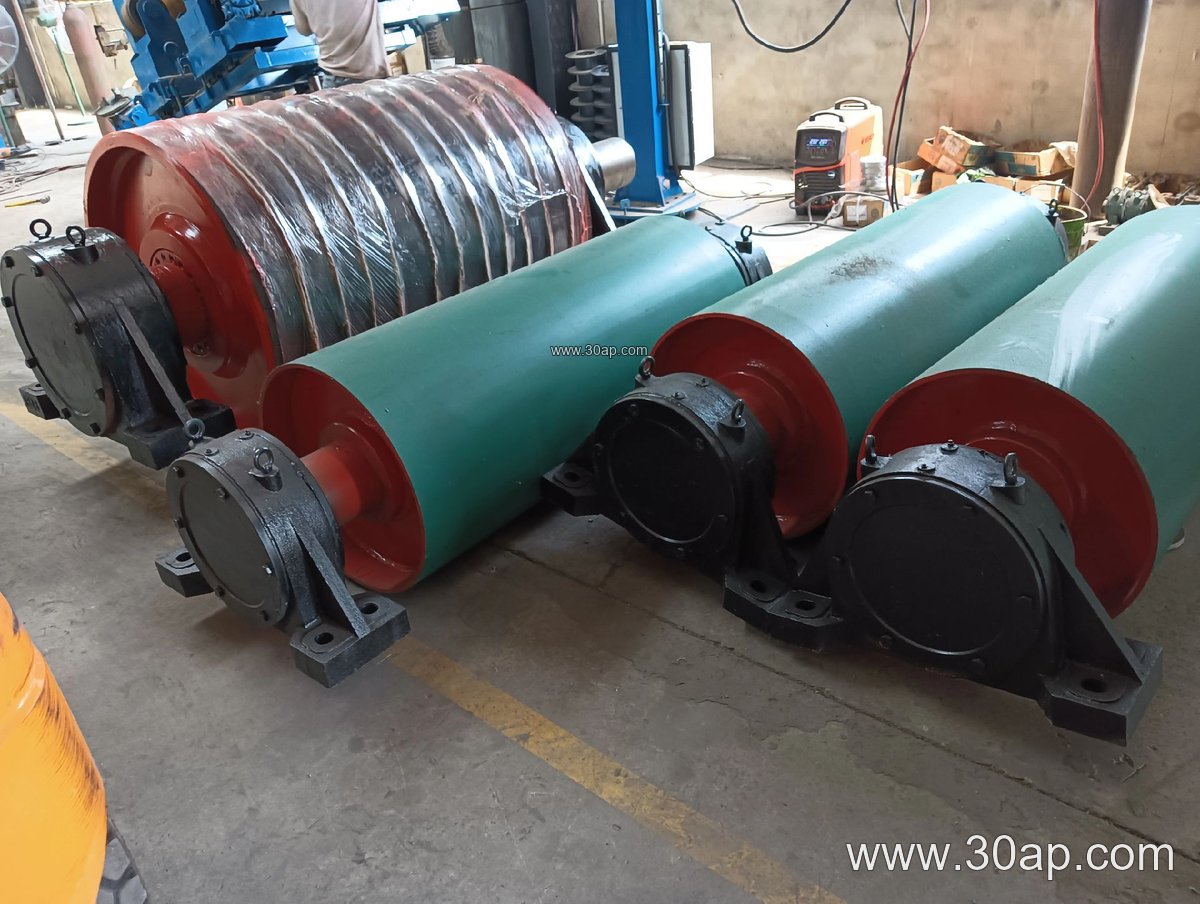
- B800 with Ø500 pulley, shell width around 950 mm
- B1200 with Ø1000 pulley, shell width around 1400 mm
- B1400 with Ø800 pulley, shell width around 1600 mm
- B1600 with Ø1250 pulley, shell width around 1800 mm
Face width normally exceeds belt width so the belt stays supported during slight misalignment. A B650 pulley often has about 750 mm of face, while a B2000 unit may reach 2200 mm. Read these as typical figures only.
Where Dual Drive Pulleys Are Used
Long or heavily loaded conveyors benefit most. In a limestone quarry, a dual drive head pulley can keep a wide belt moving without concentrating all torque in one gearbox. In a coal handling system feeding a power plant, the same arrangement helps manage starting loads on a loaded belt. Other suitable settings include iron ore terminals, cement clinker lines, and aggregate plants where the belt carries dense material uphill.
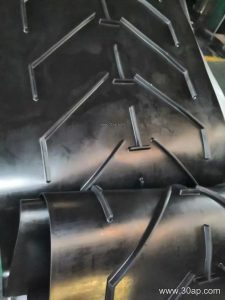
The pulley must work with the right belt. A steel cord conveyor belt tolerates high tension and suits long dual drive runs, while an EP conveyor belt or NN conveyor belt is common on medium-duty lines. Abrasion resistant conveyor belt grades protect the belt cover when the material is sharp, and a flame retardant conveyor belt is specified where fire risk matters. The pulley lagging and the belt cover should be chosen together.
Selection Points for Buyers
Start with the drive power, belt speed, and the required wrap angle. These set the torque and the minimum pulley diameter. Then confirm the shaft size from the torque calculation, not from a rule of thumb tied to belt width. Check that both drive connections are rated for their share of the load, and that the gearbox mounting allows for alignment and thermal growth.
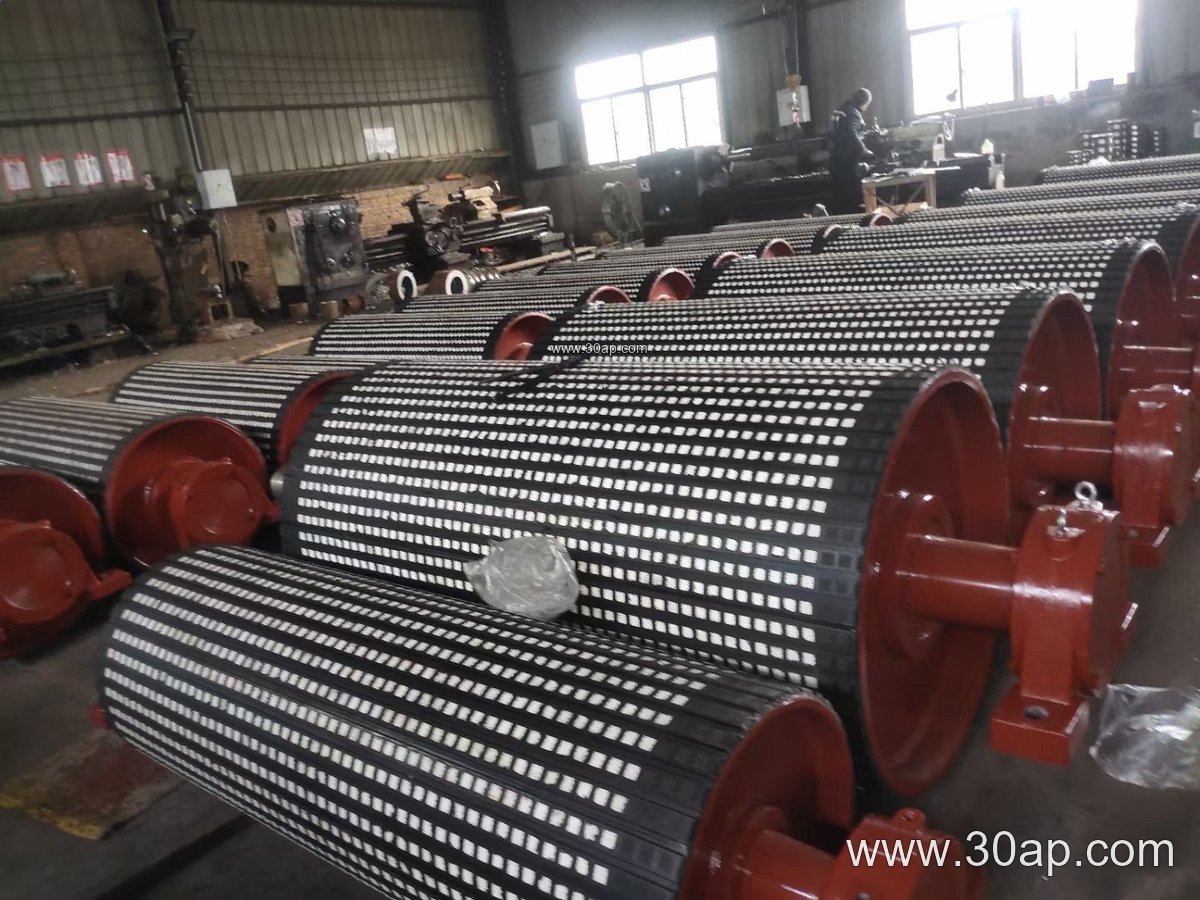
Lagging choice deserves attention. Diamond or herringbone grooving helps shed water and fines, while plain rubber gives even contact. Ceramic lagging is used where slip is a persistent problem, but it costs more and can wear the belt cover faster if the belt is not suited to it. Ask for the lagging thickness in writing.
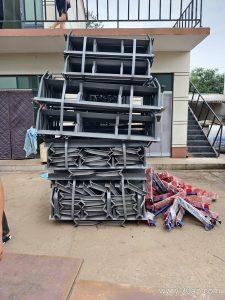
Also check bearing type, sealing for dusty service, and the method of locking the shell to the shaft. A conveyor bracket that fits the bearing housing should be confirmed early, since a mismatch delays installation. Spare parts such as bearing housings and lagging sheets should be available before the conveyor goes into service.
Maintenance and Belt Interaction
Inspect lagging wear at each shutdown. Worn grooves reduce grip and can cause belt slip, which raises heat and shortens belt life. Check both drive couplings for wear and confirm that the two motors share load evenly; uneven sharing overloads one side. Keep the pulley face clean and verify that the belt tracks centrally, since a dual drive pulley amplifies any tracking error.
Pair the pulley with well-aligned idler roller sets and a square conveyor bracket frame. A conveyor pulley that runs true with a properly tensioned belt will deliver long service, while a misaligned one will wear lagging and belt edges quickly. The dual drive pulley is a load-sharing component, and it performs best when the whole conveyor is treated as one system.