What an Automatic Self-Aligning Idler Does
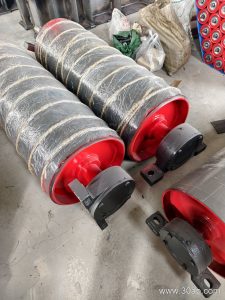
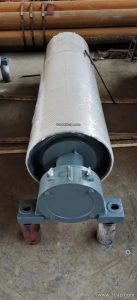
An automatic self-aligning idler is a carrying or return roller assembly that corrects belt drift without operator intervention. When a conveyor belt wanders toward one side of the structure, the angled rollers of this idler steer it back toward the centerline. Because the correction happens continuously as the belt moves, the assembly is often simply called a self-aligning roller or self-training idler. It is a distinct component from the drive pulley, tail pulley or bend pulley, and it should not be confused with them during specification or replacement planning.
The value is easiest to see on long runs. A slight misalignment at a transfer point, an unevenly loaded belt or a structure that has settled can push a belt against the frame. Left alone, the edge begins to fray and the belt may rub the structure. A well-placed self-aligning idler reduces that risk and protects the belt edge, which matters on expensive belting such as a steel cord conveyor belt or a heavy-duty mining conveyor belt.
How the Assembly Is Built
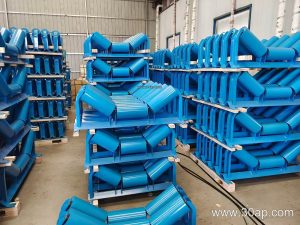
Most designs use two or three rollers mounted on a pivoting frame. The frame turns about a vertical axis, so any sideways force from a drifting belt produces a small steering response. Friction self-aligning idlers use contact with the belt to trigger movement, while conical self-aligning idlers use tapered roller ends to create a corrective force. Return-side versions are built around the same idea but are arranged to guide the bottom strand.
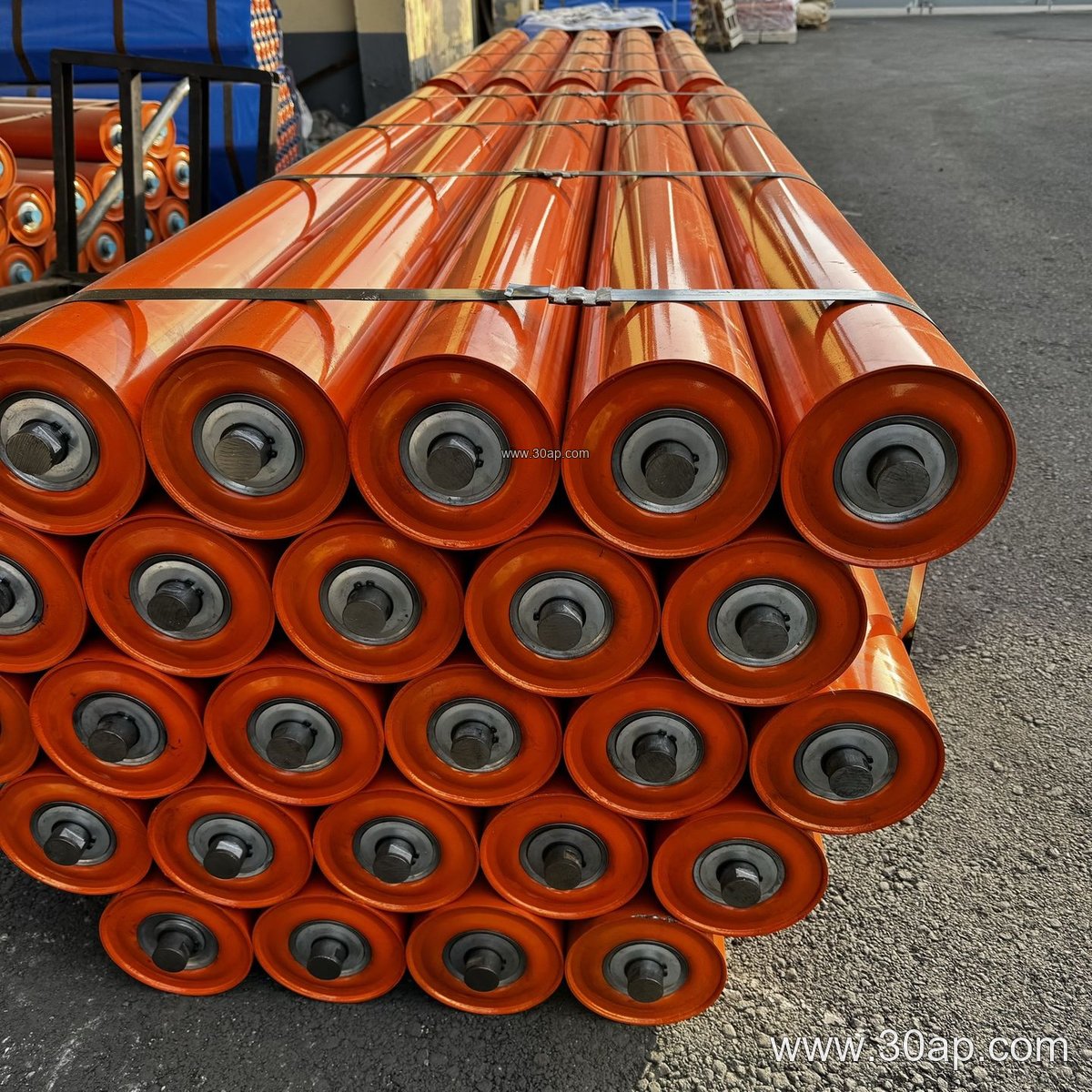
Typical construction details include:
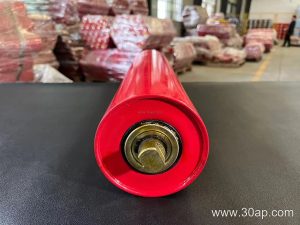
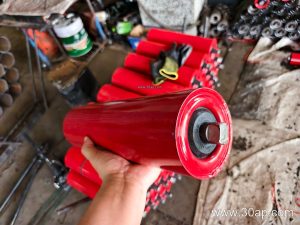
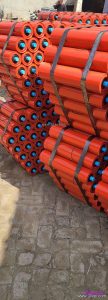
- Roller shell in steel tube, nylon or rubber-covered form, depending on the duty
- Sealed bearings in common sizes such as 6205, 6305 or 6308, selected by load and shaft design rather than by belt width alone
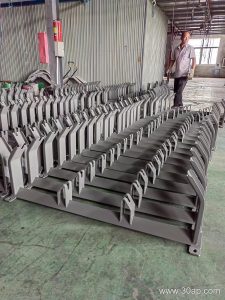
- A pivoting bracket that mounts to the conveyor bracket or frame
- Roll diameters commonly from Ø89 to Ø159, with larger sizes used on heavy conveyors
Roll length follows belt width, trough angle and the roller arrangement. For a three-roll troughing set, common roller lengths are roughly 250 mm for B650, 380 mm for B1000, 465 mm for B1200 and 600 mm for B1600. These are examples only; side rollers and center rollers can differ, and the final geometry is set by the conveyor design.
Where Self-Aligning Idlers Fit on a Conveyor
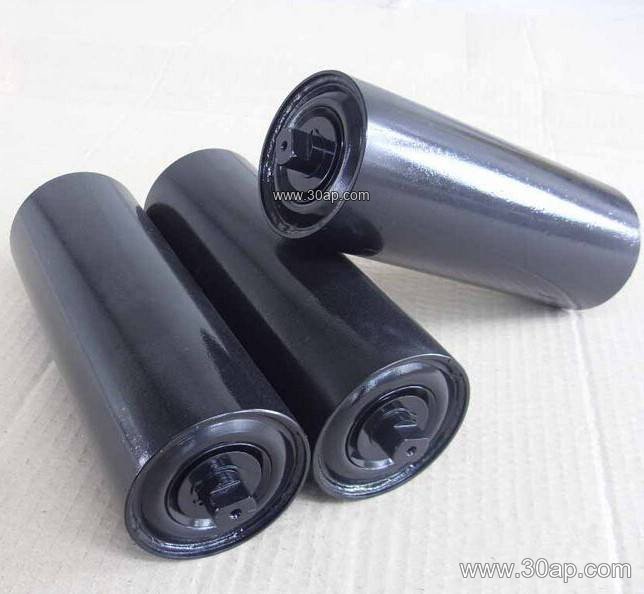
Placement matters as much as the hardware. Self-aligning idlers are usually installed at intervals along a long carry run, near the head and tail, after curves and at points where the belt is likely to drift. In a quarry or aggregate line, they help keep a fabric core conveyor belt centered through dusty, uneven loading. In a coal handling system, they support a flame retardant conveyor belt on the main haulage run. In a cement plant or power plant coal yard, they reduce edge wear on abrasive bulk material conveyor belts.
They also appear in tunnel spoil handling, iron ore and copper ore transport, and port ship-loading systems. The common thread is a long belt path where small corrections prevent larger problems.
Selection Points for Buyers
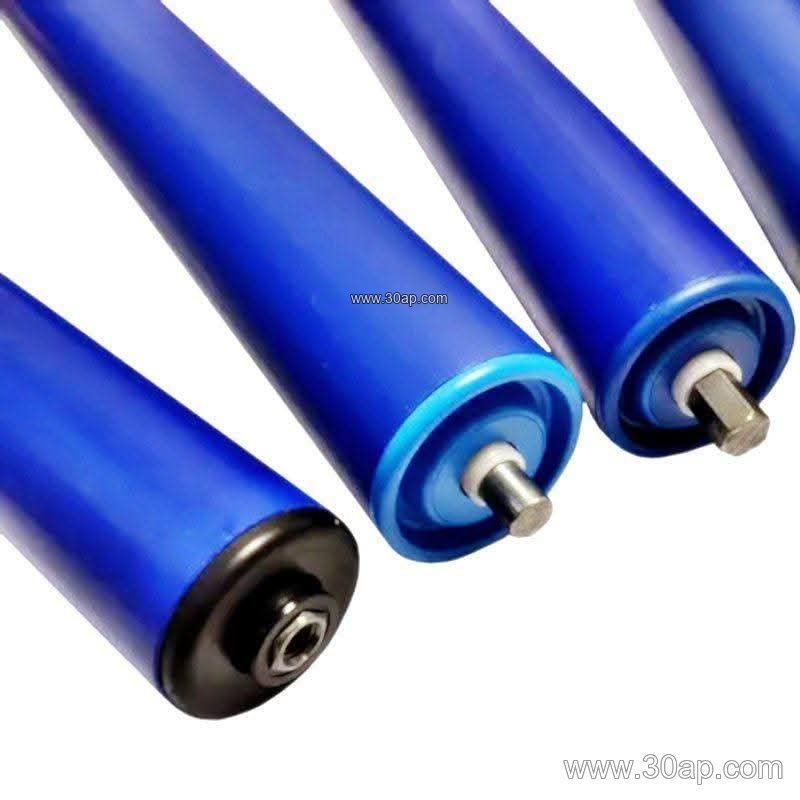
Buyers should match the idler to the belt, the load and the environment. Key questions include belt width, trough angle, roller diameter, shaft and bearing arrangement, and whether the location is dusty, wet or high temperature. A self-aligning idler on a 1200mm wide conveyor belt in a crusher circuit faces different loads than one on a light return run.
Also confirm the mounting interface. The pivot frame must fit the existing conveyor bracket, and the roller height must suit the adjacent troughing sets. For abrasive duty, rubber-covered or ceramic-faced rollers may last longer. For sticky material, a spiral or disc return roller may be considered as a comparison, but it does not replace the self-aligning function.
Installation and Maintenance
Install self-aligning idlers square to the belt centerline and check that the pivot moves freely. A frame that binds cannot correct drift. After startup, observe belt tracking through a full load cycle and adjust spacing if needed. Periodic checks should cover bearing condition, seal integrity, roller wear and frame freedom. Replacing a worn roller early is cheaper than replacing a damaged belt edge.
For consistent results, keep the whole conveyor in view: pulley alignment, belt splice quality and loading conditions all affect tracking. An automatic self-aligning idler is a reliable helper, but it works best as part of a well-maintained conveyor system.