What the Ceramic Lagged Pulley Does
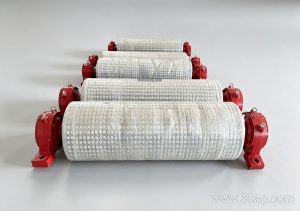
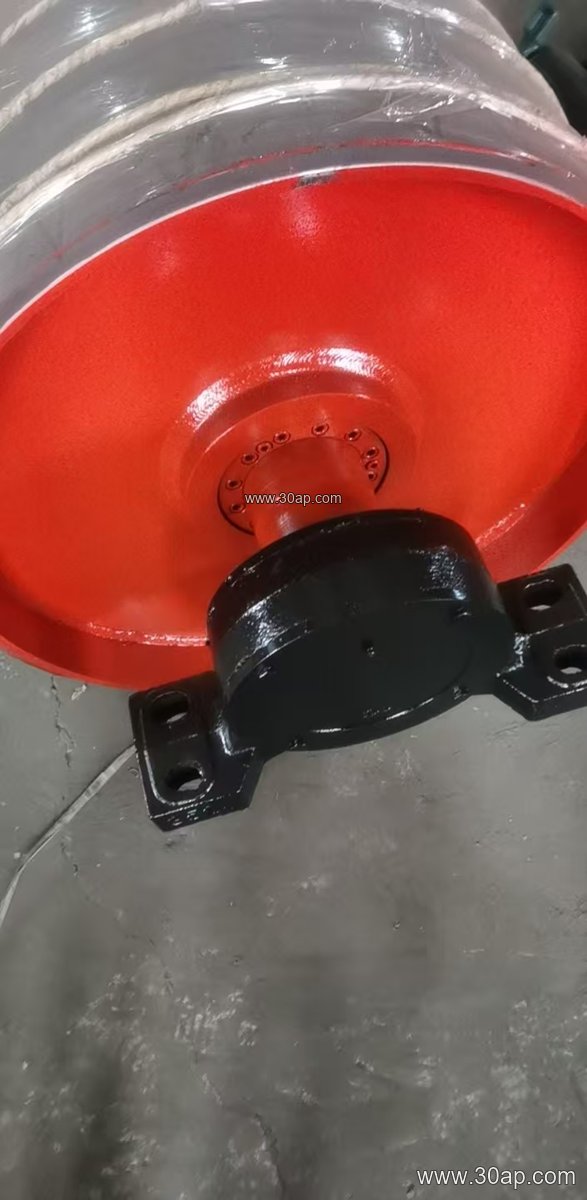
A wear-resistant ceramic lagged pulley is a conveyor pulley whose shell is covered with ceramic tiles set in a rubber or polymer backing. The ceramic studs sit slightly proud of the backing, so the belt rides on thousands of small, hard contact points instead of a smooth steel face. In a quarry, a limestone mine, or a crushing and screening line, that difference decides how often the drive pulley has to be re-lagged. The same product is also called a ceramic rubber lagged pulley or a ceramic-tiled conveyor pulley.
The pulley is usually a drive pulley at the head of the conveyor, but it can also appear as a tail pulley or a bend pulley where slip and abrasive dust are both present. Those positions are not interchangeable, and each one asks something different from the lagging.
How the Ceramic Surface Is Built
A plain steel shell is cleaned, primed, and covered with an uncured rubber layer. Ceramic tiles, typically 20 to 25 mm across and 8 to 12 mm thick, are pressed into the rubber in a staggered pattern. The assembly is then vulcanised in an autoclave so the rubber cures around the tile bases. Some designs bond tiles with cold-vulcanised adhesive instead, which suits on-site repair. Common lagging thicknesses are 8, 10, 12, 15 and 20 mm.
- Ceramic tiles provide the abrasion resistance; the rubber absorbs shock and keeps the tiles from cracking.
- Grooves between tiles let water and fine dust escape, which helps grip in wet conditions.
- Diamond or plain tile layouts are both available; the diamond pattern sheds material a little better.
- Tile edges should sit flush, with no raised corners that could cut into the belt cover.
A well-made ceramic lagged pulley holds its friction coefficient far longer than plain rubber lagging in gritty service. That matters where a heavy-duty mining conveyor belt carries sharp rock and the drive pulley would otherwise polish smooth within months.
Where It Fits in the Conveyor
The most common home is the head drive of an aggregate or ore conveyor. In a coal washing plant or a power plant coal yard, a ceramic lagged drive pulley keeps grip when the belt comes back damp. In a cement plant, clinker dust is fine and highly abrasive, and a smooth lagged pulley loses traction quickly. In a copper or iron ore operation, the combination of impact and abrasion makes ceramic lagging a practical choice for the primary drive.
At the tail end, a ceramic lagged tail pulley can reduce build-up of sticky material. As a bend pulley on a long overland route, it helps maintain wrap angle without belt slip. A conveyor pulley in any of these positions should be matched to the belt width and the actual torque, not chosen by habit.
Matching Pulley Size to the Belt
Shell width normally exceeds belt width so the belt is fully supported. Diameter is set by torque, belt tension and the allowable bend radius of the belt, so a given belt width does not lock in one diameter. The table below shows common pairings; treat them as reference, not fixed rules.
| Belt width | Typical shell face width | Common pulley diameter | Typical shaft diameter |
|---|---|---|---|
| B500 | about 600 mm | Ø250 to Ø400 | Ø60 to Ø80 |
| B650 | about 750 mm | Ø315 to Ø500 | Ø70 to Ø100 |
| B800 | about 950 mm | Ø400 to Ø630 | Ø80 to Ø120 |
| B1000 | about 1150 mm | Ø500 to Ø800 | Ø100 to Ø140 |
| B1200 | about 1400 mm | Ø630 to Ø1000 | Ø120 to Ø160 |
| B1400 | about 1600 mm | Ø800 to Ø1250 | Ø140 to Ø180 |
| B1800 | about 2000 mm | Ø1000 to Ø1600 | Ø160 to Ø200 |
Shaft diameter follows the calculated torque and bearing load. A B1200 pulley running a long incline may need a larger shaft than the same width on a short feeder. Combinations such as B800 × Ø500 or B1200 × Ø1000 are common starting points in design discussions, not universal specifications.
Buyer Checklist
- Confirm the pulley position: drive, tail, bend or take-up. Each has its own load case.
- State the belt type and tension. A steel cord conveyor belt and a multi-ply fabric core belt load the shell differently.
- Ask for the tile hardness and the bonding method, hot vulcanised or cold bonded.
- Check that lagging edges are chamfered and sealed against water ingress.
- Match the pulley to the conveyor bracket and bearing housing before ordering.
- Include the conveyor belt width, belt speed and motor power in the enquiry.
Ceramic lagging is not the answer everywhere. On a small, clean food-grade line, a plain or rubber-lagged pulley is simpler and cheaper. Ceramic earns its place where abrasion is the dominant wear mode and slip is costly.
Installation and Maintenance Notes
Keep the pulley face clean and check tile condition at each scheduled stop. A chipped tile exposes the rubber underneath, and once water and grit get behind the tiles the lagging can lift. Inspect the conveyor belt tracking at the same time; misalignment accelerates edge wear on both belt and lagging. Replace worn lagging before the shell itself is damaged. For a drive pulley on a heavy-duty mining conveyor, a spare ceramic lagged shell shortens downtime.
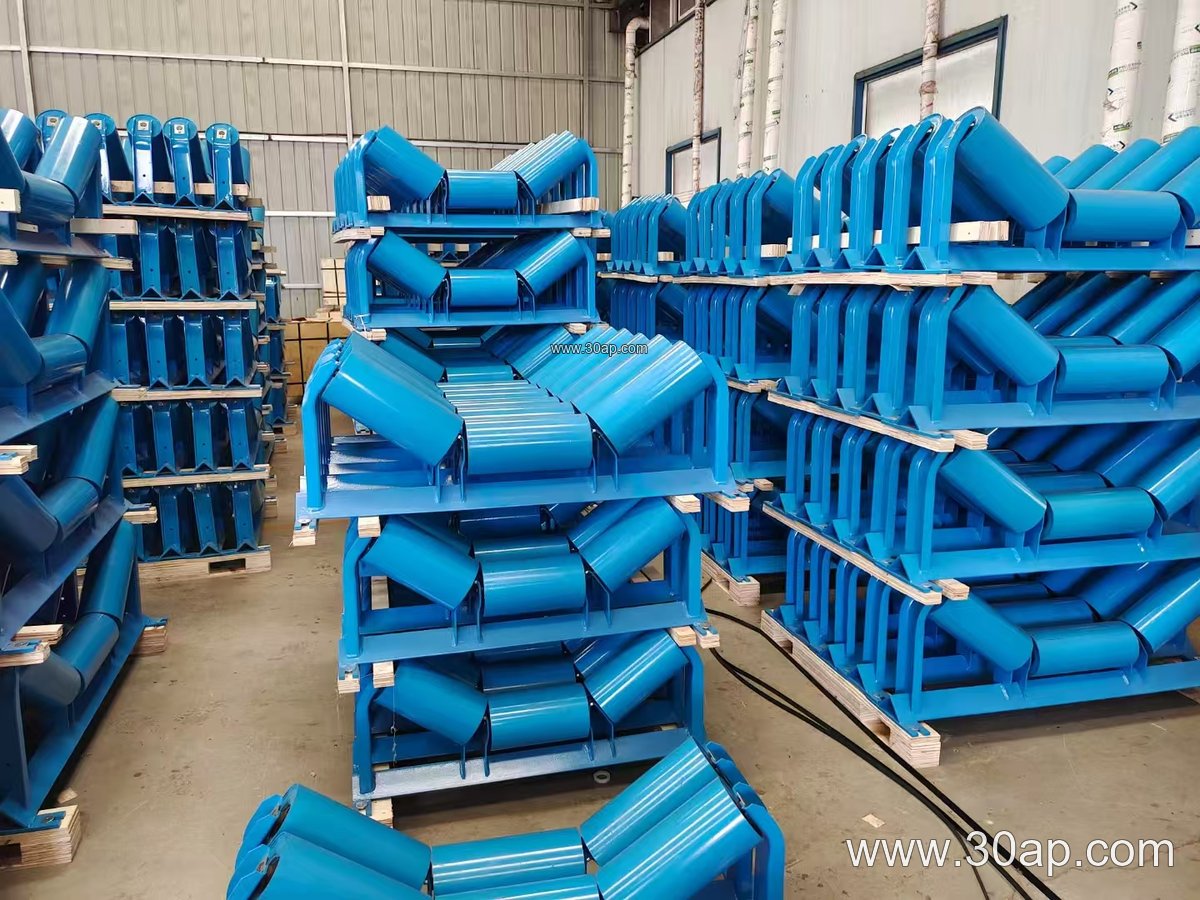
Related equipment such as the idler roller, conveyor bracket and the belt itself should be reviewed together, because pulley wear is rarely a single-part problem.