What a Self-Centering Idler Does on the Conveyor Line
Belt misalignment is one of the most common reasons a conveyor line is stopped for adjustment. A self-centering idler, also called a self-aligning idler or training idler, is a carrying or return roller assembly designed to steer the belt back toward the center of the frame when it starts to drift. Instead of relying on a maintenance team to re-square the structure, the idler uses the belt’s own movement to correct small tracking errors before they become edge damage or spillage.
These units are widely used in quarry conveying, iron ore handling, cement plant raw material lines, and power plant coal feed systems. Anywhere a conveyor belt runs long distances or carries uneven loads, a few training idlers placed at the right points can reduce downtime and extend belt life.
How the Self-Aligning Roller Is Built
A typical unit combines a roller frame with a pivot mechanism. The frame sits on a vertical shaft or a pair of pivot bearings mounted to the conveyor bracket, which lets the whole assembly rotate slightly in the horizontal plane. When the belt contacts the rollers off-center, friction pushes the frame around, and the angled rollers guide the belt back.
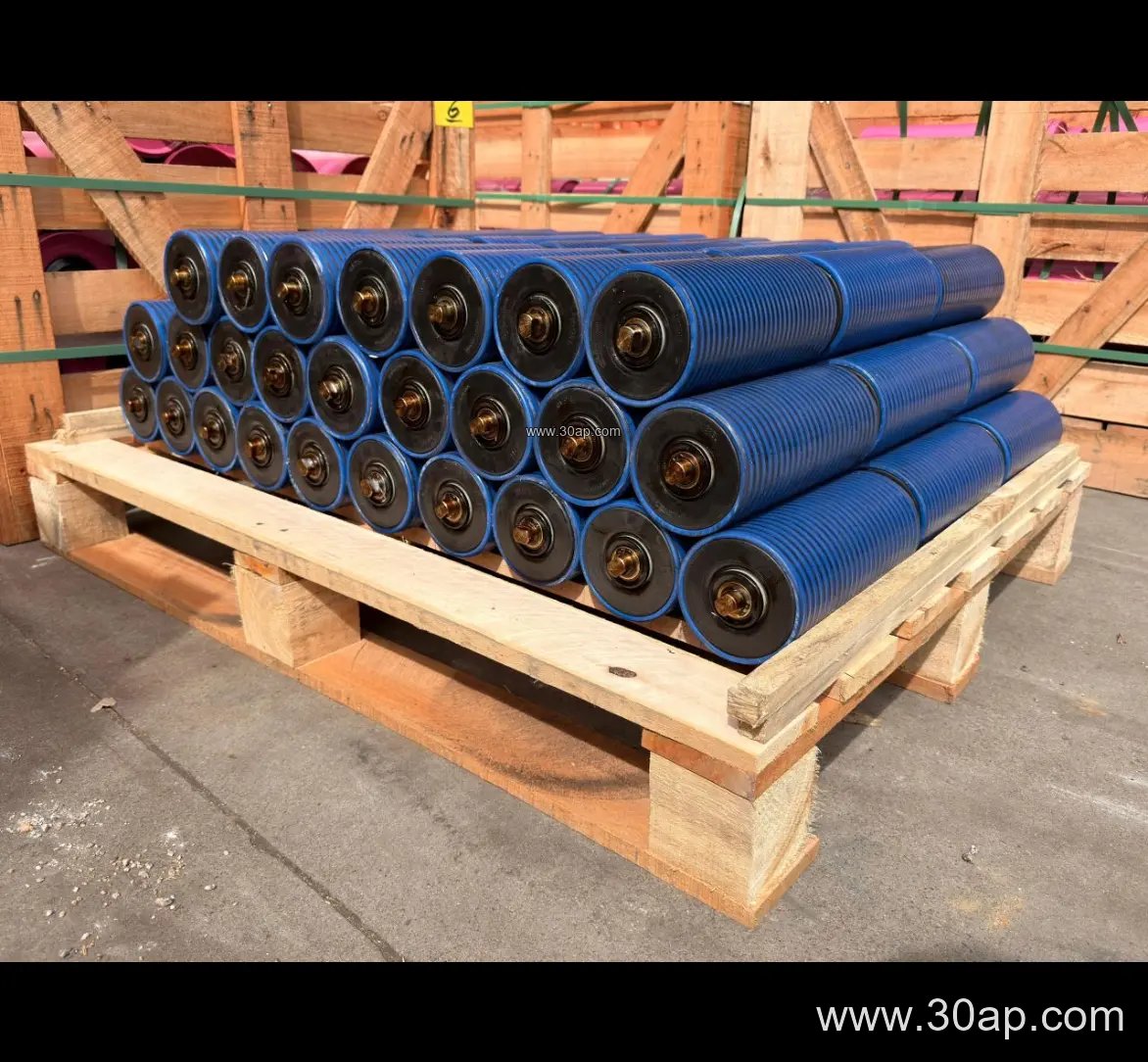
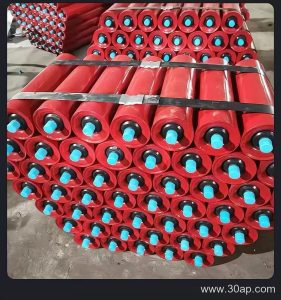
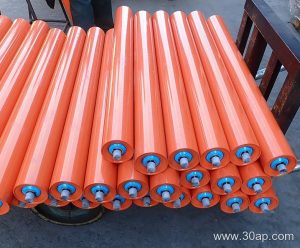
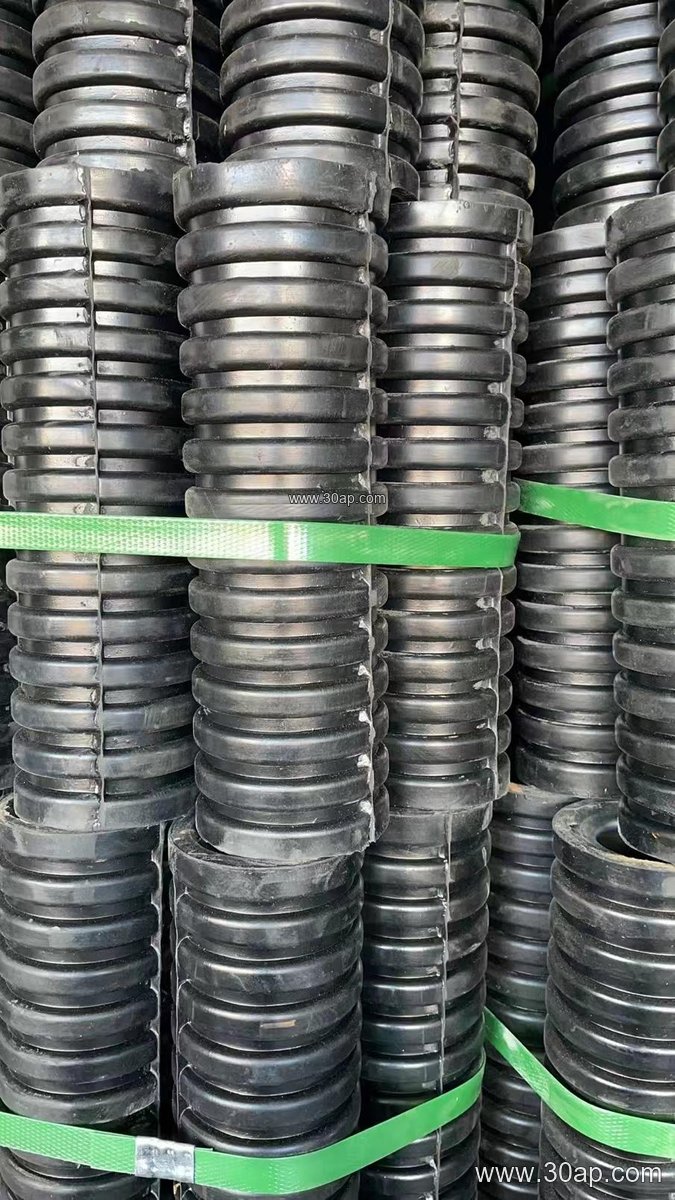
- Roller shell: usually steel tube, with nylon, rubber, or ceramic surfaces available for different wear conditions.
- Bearing housing: sealed bearing units such as 6204, 6205, 6305, 6306, or 6308 depending on roller diameter and load.
- Pivot and bracket: the mounting base that connects to the conveyor frame and allows the corrective swing.
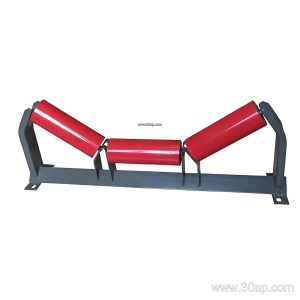
- Roller arrangement: some designs use two angled rollers in a V shape, others use a three-roller trough set or a pair of conical rollers.
Common roller diameters for training idlers include Ø89, Ø102, Ø108, Ø127, Ø133, and Ø159 mm, matched to belt width and load. A three-roll trough training set on a 1000 mm belt might use a center roll around 380 mm long with different side roll lengths, but the exact geometry is set by the conveyor designer rather than by a single rule.
Where Self-Centering Idlers Fit in the Conveyor Layout
Placement matters as much as the hardware. Training idlers are usually installed on the carrying side at intervals along the run, and on the return side where the belt has a tendency to wander. They are especially useful after a load point, on curves in the route, and on long overland sections where a fabric core conveyor belt or steel cord belt can drift gradually.
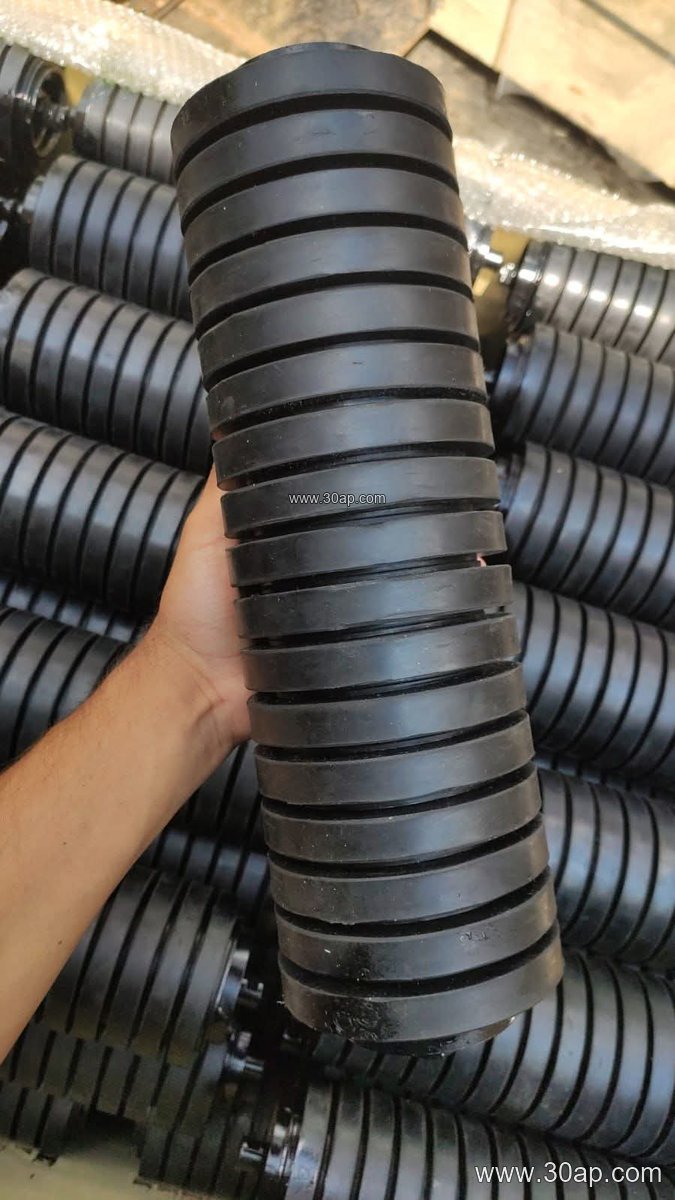
In a stone crushing line, a self-centering idler after the crusher discharge helps keep the belt centered despite uneven rock loading. In a coal mining conveyor, training rollers on the return strand reduce edge wear caused by sticky fines. For heavy-duty mining conveyor belts carrying abrasive ore, the roller surface and bearing seal quality have a direct effect on service life.
Reading the Roller and Belt Data Together
Buyers should match the idler to the belt width, trough angle, and load rather than choosing by roller diameter alone. The table below shows common reference values; these are typical examples, not fixed combinations.
| Parameter | Common Reference Values |
|---|---|
| Belt width | B500, B650, B800, B1000, B1200, B1400, B1600, B1800 |
| Roller diameter | Ø63, Ø76, Ø89, Ø102, Ø108, Ø127, Ø133, Ø159, Ø178 |
| Trough angle | 20°, 30°, 35°, 45° |
| Roller surface | Steel, nylon, ceramic, rubber ring |
| Bearing | 6204, 6205, 6305, 6306, 6308, 6310 |
For a B800 belt, a three-roll trough training set commonly uses rolls around 315 mm long, while a B1200 line may use about 465 mm rolls. Side rolls and center rolls can differ, and the final length is confirmed by the conveyor design. The training idler should also suit the belt type: an abrasion resistant conveyor belt on a quarry line may need a tougher roller surface than a smooth food grade belt in a packing plant.
Selection and Maintenance Notes for Buyers
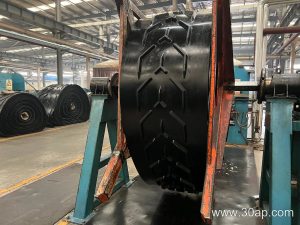
Ask for the pivot design, bearing seal class, and roller wall thickness, because these details separate a durable training idler from a short-lived one. Check that the mounting bracket matches the existing frame hole pattern, and confirm the roller diameter clears the belt and any skirt rubber. On a chevron conveyor belt or a corrugated sidewall belt, the training idler must be positioned where the cleats or ribs will not strike the roller frame.
Routine checks include free rotation of each roller, play in the pivot, and buildup of sticky material on the roller surface. A training idler that no longer swings freely cannot correct tracking. Keep spare rollers and bearing units on hand for critical lines in port terminals or sinter plants, where a stopped belt quickly backs up the process.
Used together with a well-aligned conveyor pulley and properly squared frame, a self-centering idler is a low-cost way to keep a conveyor belt running true. For more roller and belt guidance, visit beltconveyorparts.com and review the idler roller options for your line.