What a Food Grade Conveyor Belt Is
A Food Grade Conveyor Belt is a conveyor belt built for direct or indirect contact with food, beverages, and pharmaceutical ingredients. Unlike a standard Rubber Conveyor Belt used in a quarry or cement plant, the food-grade version focuses on cleanability, non-toxicity, and resistance to fats, oils, and frequent washdown. The belt surface must not transfer odour, taste, or harmful substances to the product, and the carcass must stay stable under repeated cleaning.
Buyers often describe this product as a hygienic conveyor belt or a food-contact belt. Those are equivalent names for the same item. It is not the same as a Chevron Conveyor Belt or a Corrugated Sidewall Conveyor Belt, which are separate designs for inclined or contained conveying.
Construction and Surface Options
The belt usually combines a fabric core with a food-compatible cover compound. Common carcass options include EP Conveyor Belt constructions and Multi-Ply Fabric Core Conveyor Belt builds, where the number of plies is chosen for the load and the pulley diameter. A Fabric Core Conveyor Belt is typical for bakery lines and packaged goods, while heavier wet processing may use a thicker cover.
Surface forms matter as much as the compound. Smooth covers suit general transport, while lightly textured or patterned surfaces help with wet or oily products. The cover is often white or light blue so that debris is easy to see. Belt edges may be sealed or stepped to reduce exposed fabric.
| Parameter | Typical Range |
|---|---|
| Belt width | B500, B650, B800, B1000, B1200 |
| Cover thickness | 3+1.5 mm, 4+2 mm, 5+2 mm |
| Carcass plies | 2 to 6 layers |
| Strength grades | EP200, EP315, EP400, EP500 |
| Surface | Smooth, lightly textured, anti-static |
These values are common references, not fixed rules. The final combination is set by the conveyor design, the product being carried, and the cleaning method.
Where It Fits in the Plant
Food processing lines use this belt from receiving through packing. It appears in bakeries, dairy plants, meat and poultry rooms, snack factories, and beverage bottling halls. It also serves in pharmaceutical blending and in facilities that handle sugar, flour, and cocoa.
The same plant may run several belt types side by side. A bulk intake line might use an Abrasion Resistant Conveyor Belt or a Flame Retardant Conveyor Belt for safety, while the filling room uses the food-grade belt. In a cement plant or a coal mining conveyor system, the priority is different: heat, abrasion, and flame resistance dominate, and a food-grade cover would not be appropriate there. Matching the belt to the zone is the key point.
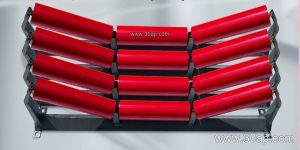
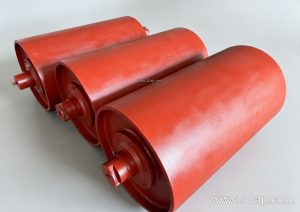
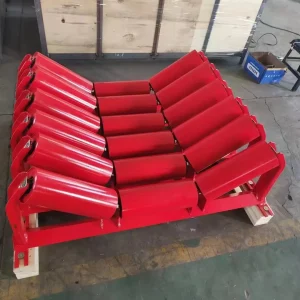
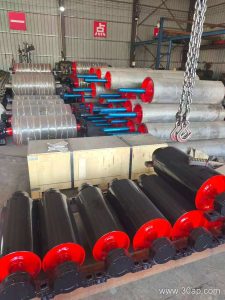
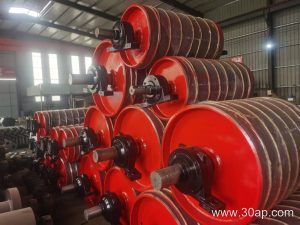
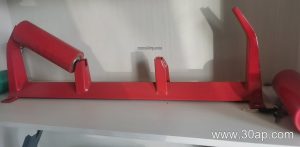
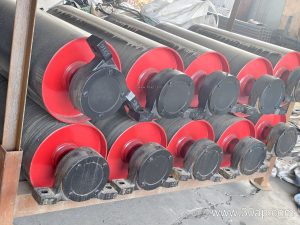
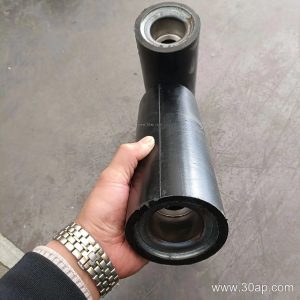
Supporting hardware matters too. A smooth-running idler roller, a properly aligned conveyor pulley, and a rigid conveyor bracket all help keep the belt tracking straight, which protects the edge and reduces contamination risk. Drive, tail, and bend pulleys each do a different job and are not interchangeable, so the belt specification should be checked against the actual pulley set.
Selection Points for Buyers
- Confirm the actual contact condition: dry, fatty, wet, hot, or frozen. A Cold Resistant Conveyor Belt may be needed in freezer rooms.
- Check oil and fat exposure. An Oil Resistant Conveyor Belt compound is often required for fried and baked goods.
- Review cleaning chemicals. Frequent caustic or acidic washdown may call for a chemical-resistant cover.
- Decide on an Endless Conveyor Belt if the line cannot tolerate a mechanical splice.
- Verify the pulley diameters and take-up travel before fixing the carcass and ply count.
- Consider static build-up in dry powder areas; an Anti-Static Conveyor Belt may be specified.
Do not assume that one belt width fits one pulley diameter. Width and pulley size are separate design decisions, and a 600mm belt and an 800mm belt may both run on similar pulleys if the carcass flexibility allows it. Ask the belt supplier for the minimum pulley recommendation for the chosen construction.
Maintenance and Everyday Care
Inspect the belt surface for cuts, gouges, and embedded debris at each shift change. Clean under the belt return path, since crumbs and grease collect there and can cause tracking faults. Check the idler roller for seized bearings and the conveyor pulley lagging for wear. A loose conveyor bracket or a misaligned pulley will shorten belt life faster than normal wear.
Store spare belts flat, away from sunlight and ozone sources. When splicing, use the method approved for the specific cover compound. For more details on matching belt width, cover grade, and support equipment, see the food grade conveyor belt reference pages and the conveyor belt product notes on the site.