What an Idler Bracket Does
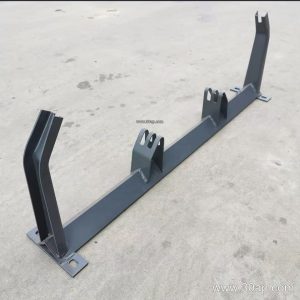
An idler bracket is the supporting hardware that holds a conveyor idler roller in its working position along the conveyor frame. It connects the roller shaft ends or bearing housings to the structure, fixing the angle, spacing and height of the roller relative to the moving belt. On a typical troughed carrying run, a set of brackets forms the cradle that gives the belt its trough shape, while return-side brackets keep the lower rollers steady under the returning belt.
Because the bracket carries the load transferred through the roller, it is a small part with a large influence on belt tracking, roller life and maintenance time. In a quarry, a cement plant or a coal handling system, a loose or misaligned bracket is often the root cause of a wandering belt or a noisy roller.
Construction and Common Forms
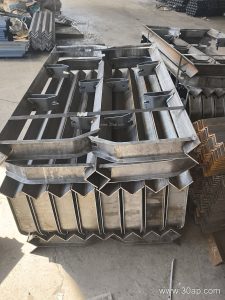
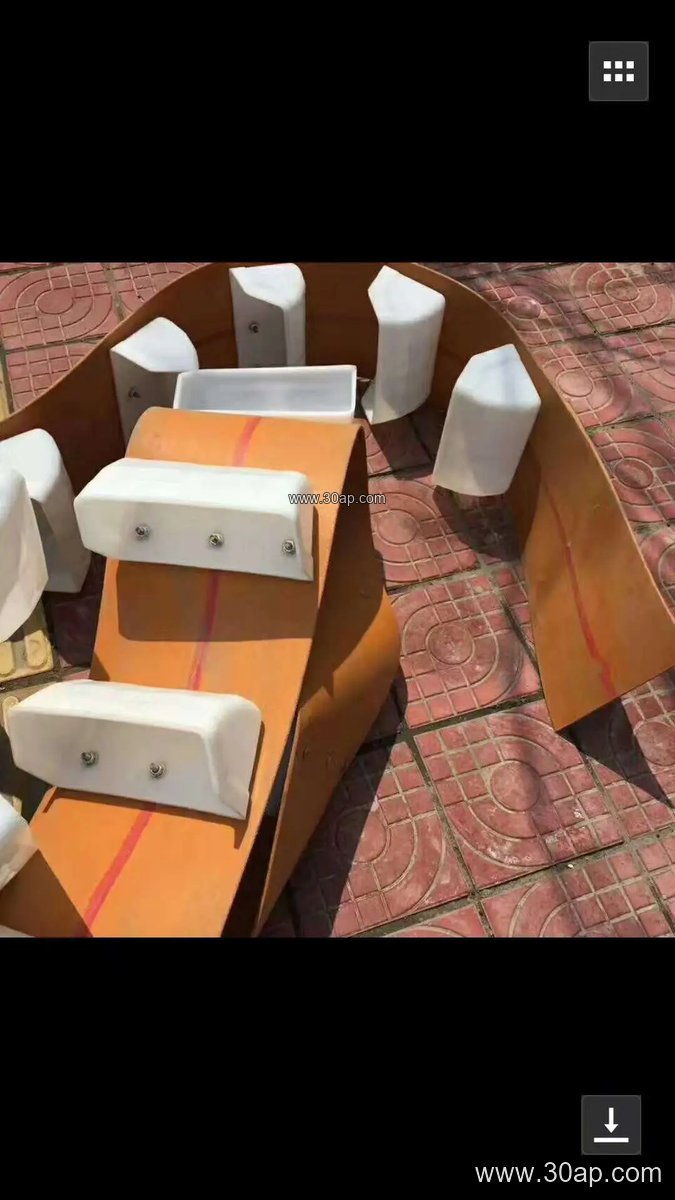
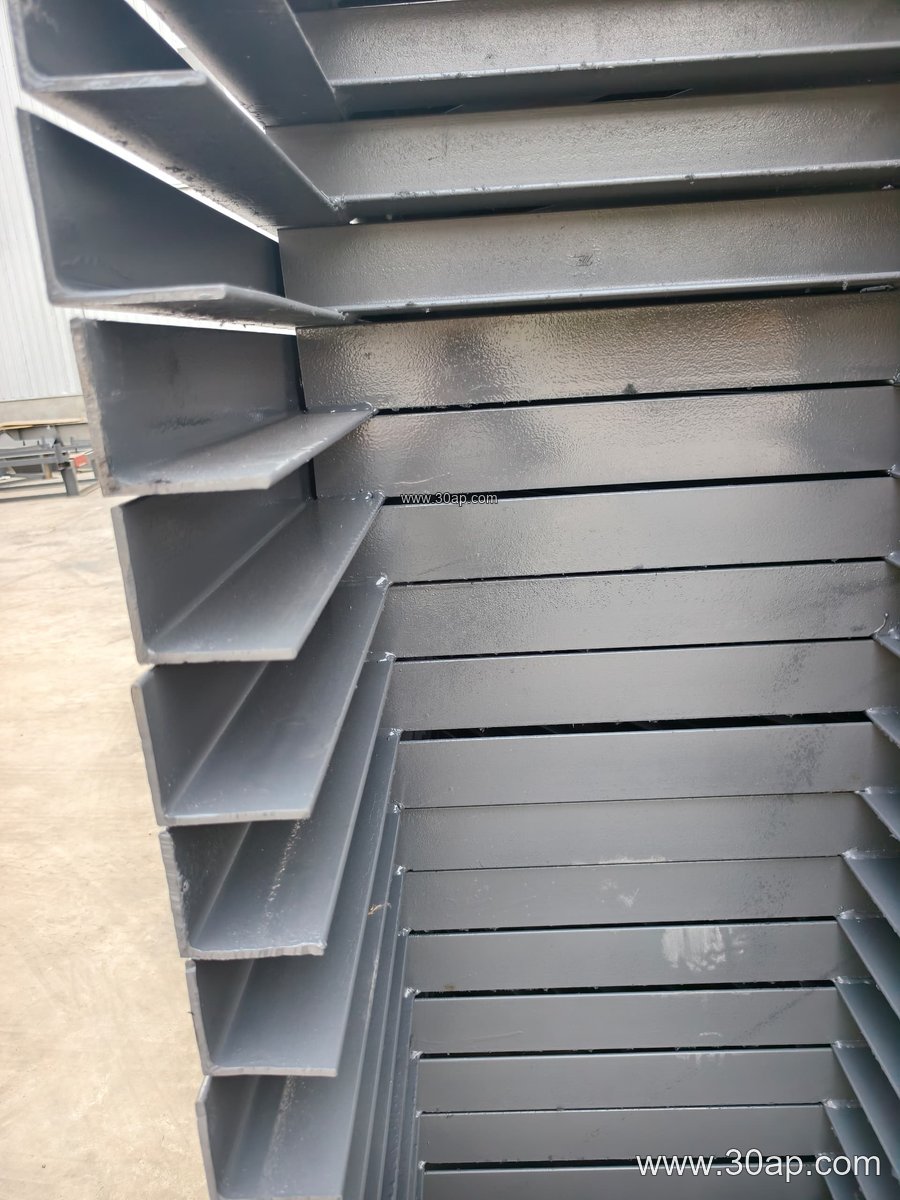
Most designs are welded or bolted assemblies made from angle steel, channel steel or folded steel plate. The frame usually includes mounting slots or holes so the roller position can be adjusted during installation. Surface treatment such as painting or galvanizing is common for outdoor and dusty service.
Bracket families differ mainly by where they sit and what they must do:
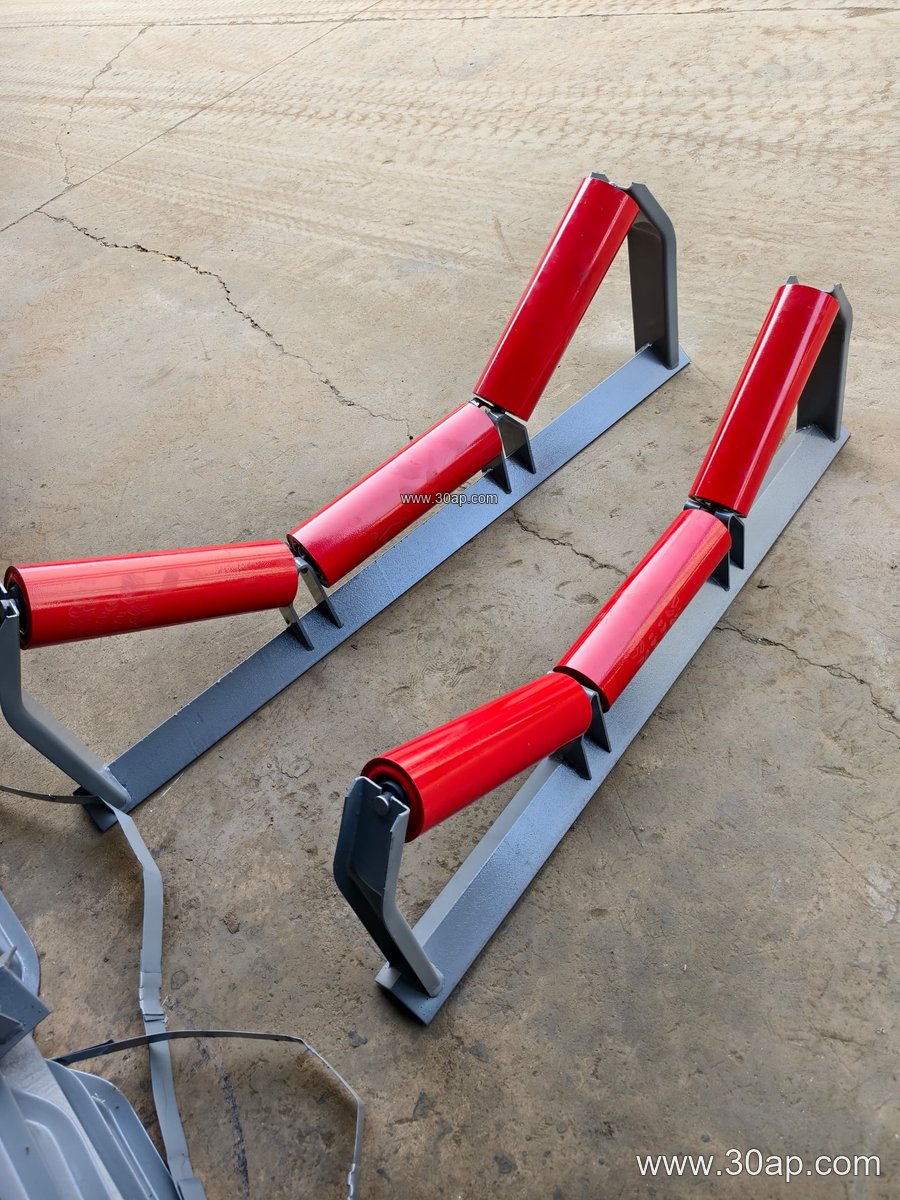
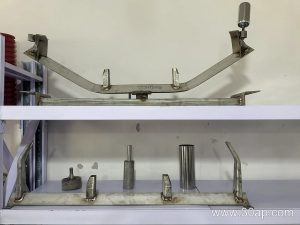
- Trough brackets and upper trough brackets support the carrying rollers and set the trough angle.
- Transition brackets ease the belt from flat to troughed profile near the tail pulley.
- Return brackets and V-return brackets carry the lower run.
- Impact brackets sit under loading points and are built to absorb shock.
- Self-aligning and forward-leaning brackets help correct belt drift.
- Adjustable brackets allow the trough angle to be set on site.
Matching the Bracket to Belt Width and Roller Diameter
Bracket selection starts with the belt width and the roller diameter, because the two determine the crossbeam length, the mounting hole spacing and the overall height of the assembly. Reference ranges often seen in catalogues include belt widths from B500 to B2200 and roller diameters such as Ø89, Ø108, Ø133, Ø159 and Ø194. Trough angles are commonly 20, 30, 35 or 45 degrees, and adjustable versions can be reset among these angles. Forward-leaning brackets are usually set at about 1.5 to 2 degrees.
The values below are reference examples only; actual hole spacing and beam length are confirmed by the conveyor design.
| Belt width | Typical trough angle | Typical roller diameter |
|---|---|---|
| B650 | 30 degrees | Ø89 |
| B800 | 35 degrees | Ø108 |
| B1000 | 35 degrees | Ø108 or Ø133 |
| B1200 | 45 degrees | Ø133 |
| B1400 | 35 or 45 degrees | Ø133 or Ø159 |
| B1600 | 35 or 45 degrees | Ø159 |
| B1800 | 35 or 45 degrees | Ø159 or Ø194 |
No single belt width locks the design to one trough angle or one roller size. A B1000 conveyor may run at 30 or 35 degrees depending on the material and capacity required, and the bracket must follow that decision. Avoid guessing a shaft diameter from belt width alone; the roller supplier’s shaft and bearing data govern the mounting detail.
Where These Brackets Are Used
Idler brackets appear wherever a belt conveyor moves bulk material. In an iron ore or limestone mine, heavy-duty brackets under the loading zone protect the belt and rollers from impact. In a power plant coal yard, flame retardant and anti-static belt grades are common, and the brackets must keep the trough stable through long runs and frequent starts. Sand and aggregate lines use them on crusher discharge and screening feed conveyors, where dust and vibration are constant.
The bracket also matters when the belt itself is demanding. A heavy-duty mining conveyor belt, an abrasion resistant conveyor belt on sharp rock, or a heat resistant conveyor belt near a cement kiln all rely on correct roller support to avoid edge damage and mistracking. The same applies to an EP conveyor belt or steel cord conveyor belt running at high tension: the bracket and frame must hold alignment under load.
Buyer Checklist
- Confirm belt width, trough angle and roller diameter before ordering, and ask for a drawing showing hole spacing.
- State the mounting method: bolted to the frame, welded, or hung from the structure.
- Choose fixed or adjustable brackets according to how much field tuning the installation needs.
- Match the material and finish to the environment, for example dusty quarry service or wet coal handling.
- Check that the bracket suits the roller end type actually supplied, rather than assuming interchangeability.
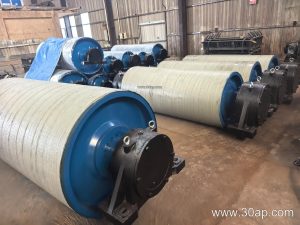
For related conveyor components, see the idler roller and conveyor pulley ranges at www.example.com/idler-bracket, and confirm belt data such as EP conveyor belt or flame retardant conveyor belt specifications with the belt supplier so brackets, rollers and belt work as one system.
Installation and Maintenance Notes
Align brackets to a string line before tightening, and recheck after the first few hours of running. Keep bolts tight, clear spilled material from the frame, and inspect for bent or cracked brackets after impact events. Replacing a worn bracket early is cheaper than replacing the roller and belt edge it damages.