What a Heavy-Load Conveyor Idler Does
In a belt conveyor, the heavy-load conveyor idler is the rotating support that carries the loaded belt and absorbs the daily punishment of abrasive, dense, or high-impact material. Unlike a standard idler used on a light-duty line, this roller is built with thicker walls, larger shaft diameters, and heavier bearing housings so it can keep the belt tracking smoothly when tonnes per hour climb. It is a consumable component, yet one that directly affects belt life, energy draw, and downtime. If you run a quarry, a cement plant, or a coal handling circuit, the difference between a standard roller and a heavy-load conveyor idler often shows up in bearing temperature and shell wear.
Construction Details That Matter
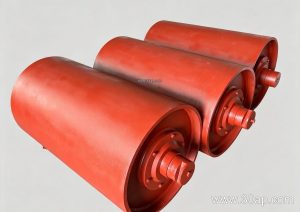
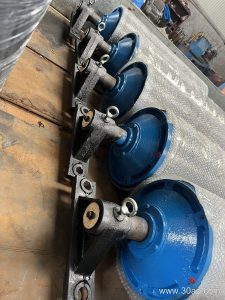
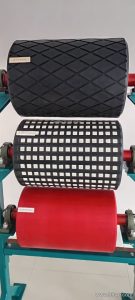
A typical heavy-duty idler roller uses a seamless steel tube shell, machined end caps, and a pressed or cast bearing housing. The shaft is usually mild steel with a corrosion-resistant finish, and the bearings are deep-groove ball or tapered roller types depending on load. Common bearing numbers include 6205, 6305, 6306, 6308, and 6310; the correct match depends on the shaft and housing design, not on belt width alone. Sealing is critical in dusty service, so many heavy-load idlers use a multi-stage labyrinth seal with grease retention. Roller surfaces may be plain steel, nylon, ceramic, or rubber rings for impact absorption. The rubber-ring version is often chosen at transfer points where lumps fall directly onto the belt.
Where These Idlers Are Used
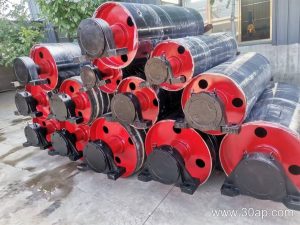
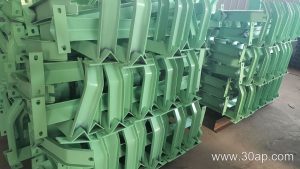
You will find heavy-load conveyor idlers in primary crushing circuits, sinter plants, port ship loaders, and underground coal mining sections. In a sand and gravel line, they sit under the main belt after the crusher, where the belt carries sharp rock at high tonnage. In a power plant coal yard, they support belts that run continuously and must resist coal dust and occasional washdown. The same roller design appears in limestone quarries and copper ore handling, often paired with an abrasion resistant conveyor belt or a steel cord conveyor belt for long overland runs. The idler does not work alone: it sits in a conveyor bracket or frame, and the belt is driven by a conveyor pulley at the head end. Matching the idler to the belt and the load profile is what keeps the whole system stable.
Common Types and Arrangements
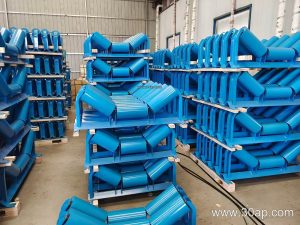
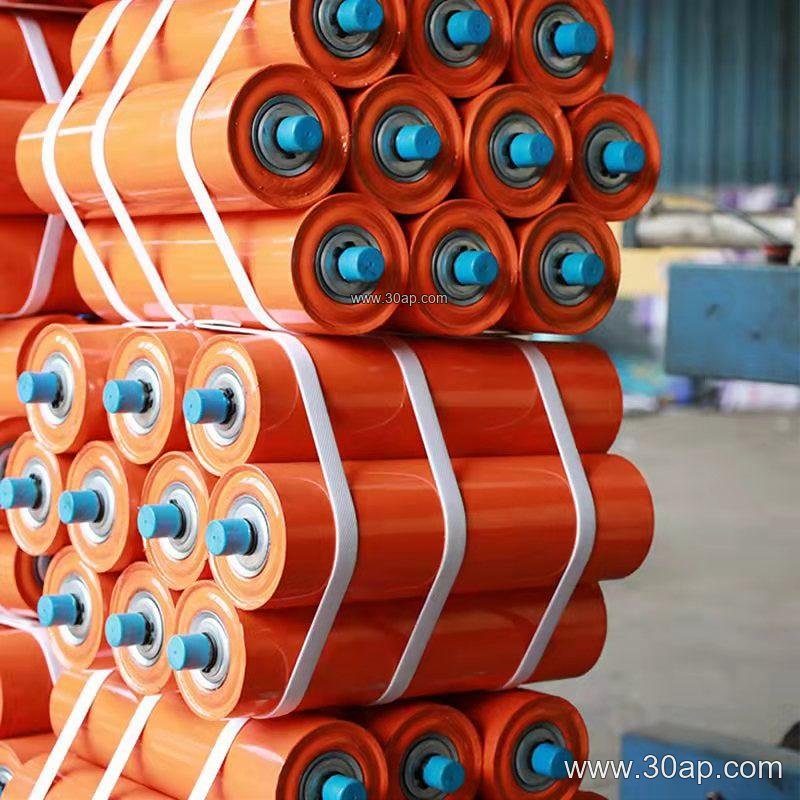
The heavy-load family includes troughing idlers, impact idlers, return idlers, and self-aligning idlers. Troughing sets are usually two- or three-roll designs with trough angles of 20, 30, 35, or 45 degrees. Return idlers can be flat or V-shaped to help center the belt. Transition idlers are used near pulleys to guide the belt from troughed to flat. For comparison, a spiral idler is sometimes used on the return side to shed sticky material, but it is a different subtype and not a replacement for the heavy-load troughing idler described here.
Typical Roller Diameter and Belt Width Reference
Roller diameter is selected from load, belt speed, and shaft strength. The following values are common references, not fixed rules.
| Roller Diameter (mm) | Belt Width Range (mm) | Typical Bearing |
|---|---|---|
| Ø89 | B500–B800 | 6204, 6205 |
| Ø108 | B650–B1000 | 6205, 6305 |
| Ø127 | B800–B1200 | 6305, 6306 |
| Ø133 | B1000–B1400 | 6306, 6308 |
| Ø159 | B1200–B1600 | 6308, 6310 |
| Ø178 | B1400–B1800 | 6310 |
| Ø194 | B1600–B2000 | 6310 |
For a three-roll troughing set, the roll length changes with belt width and trough angle. Common examples include about 200 mm for B500, 250 mm for B650, 315 mm for B800, 380 mm for B1000, 465 mm for B1200, 530 mm for B1400, 600 mm for B1600, and 670 mm for B1800. Side rolls and center rolls may differ, so always confirm the drawing.
Buyer Checklist
- Confirm the actual belt width, trough angle, and idler arrangement before ordering.
- Check the shaft diameter and bearing number against the load calculation, not just the belt width.
- Ask about seal type and grease interval for dusty or wet conditions.
- For impact zones, consider rubber-ring or impact idlers rather than standard troughing rolls.
- Verify that the idler fits the existing conveyor bracket and frame dimensions.
- Match the idler to the belt: a heavy-duty conveyor belt or a high abrasion resistant conveyor belt may need a larger roller and better sealing than a smooth general-purpose belt.
On long overland systems using an EP conveyor belt or a steel cord conveyor belt, idler spacing and roller quality have a direct effect on belt sag and power consumption. Whether the plant handles iron ore, cement clinker, or coal, the heavy-load conveyor idler is a small component with a large influence on conveyor reliability.