What a High-Friction Lagged Pulley Does
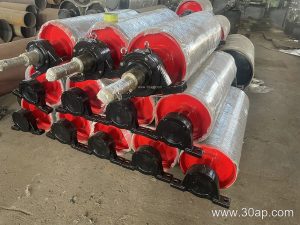
A high-friction lagged pulley is a conveyor pulley whose shell is covered with a rubber or ceramic lagging layer to raise the coefficient of friction between the drum face and the belt. On a conveyor, the pulley that transmits drive torque must grip the belt without slipping; when the surface is smooth steel, moisture, fine dust, or oil film can reduce that grip quickly. The lagging creates a rougher, more resilient contact surface, so the same wrap angle can transfer more pull before slip begins. This is why the component is often specified as a high-friction rubber lagged pulley or a grip-enhanced lagged drum, especially on inclined and high-torque installations.
It is a surface-treated version of a standard conveyor pulley, not a different machine class. The core remains a welded or cast steel shell with shafts, hubs, and bearing housings; the lagging is the functional layer that changes how the belt behaves at the contact zone.
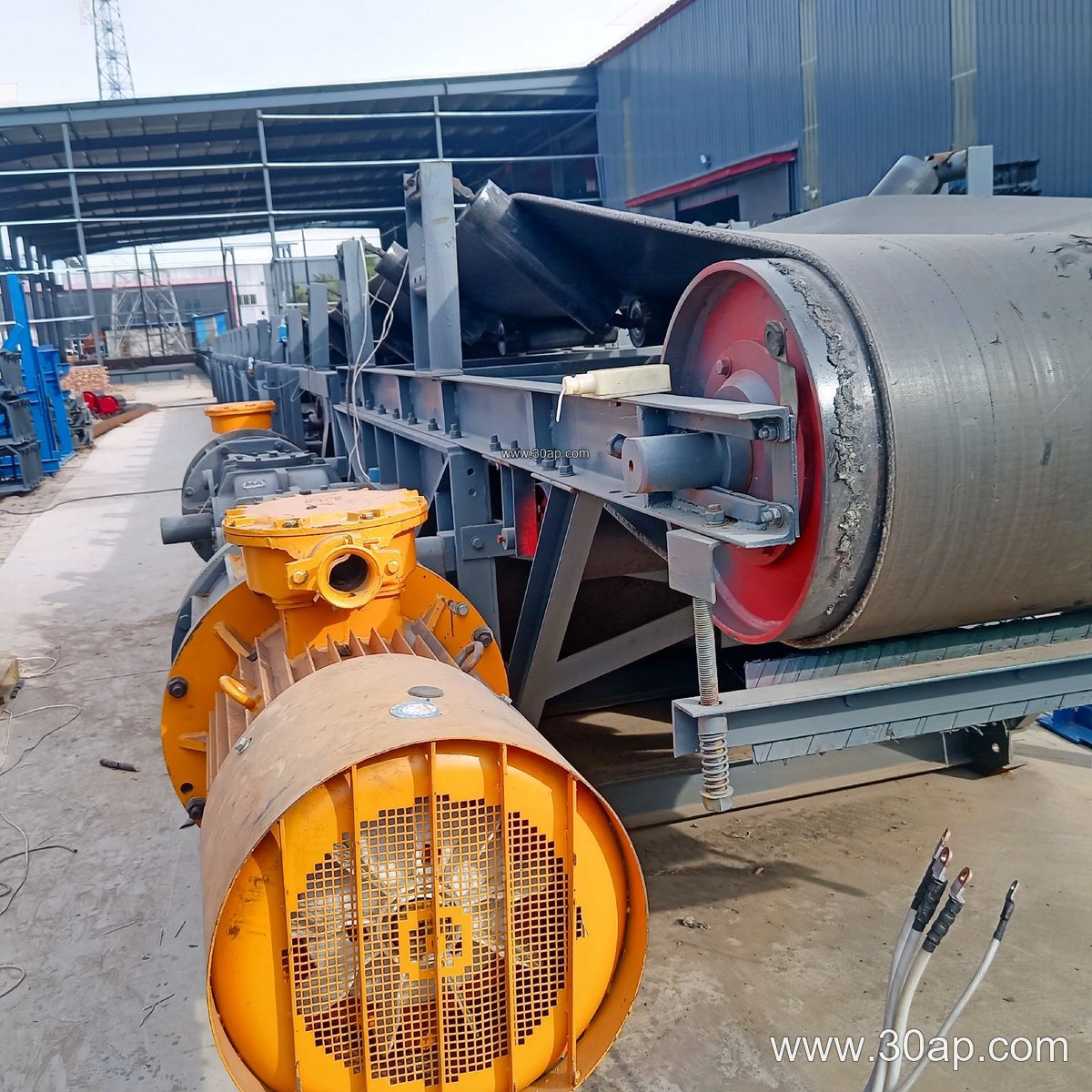
Construction and Surface Options
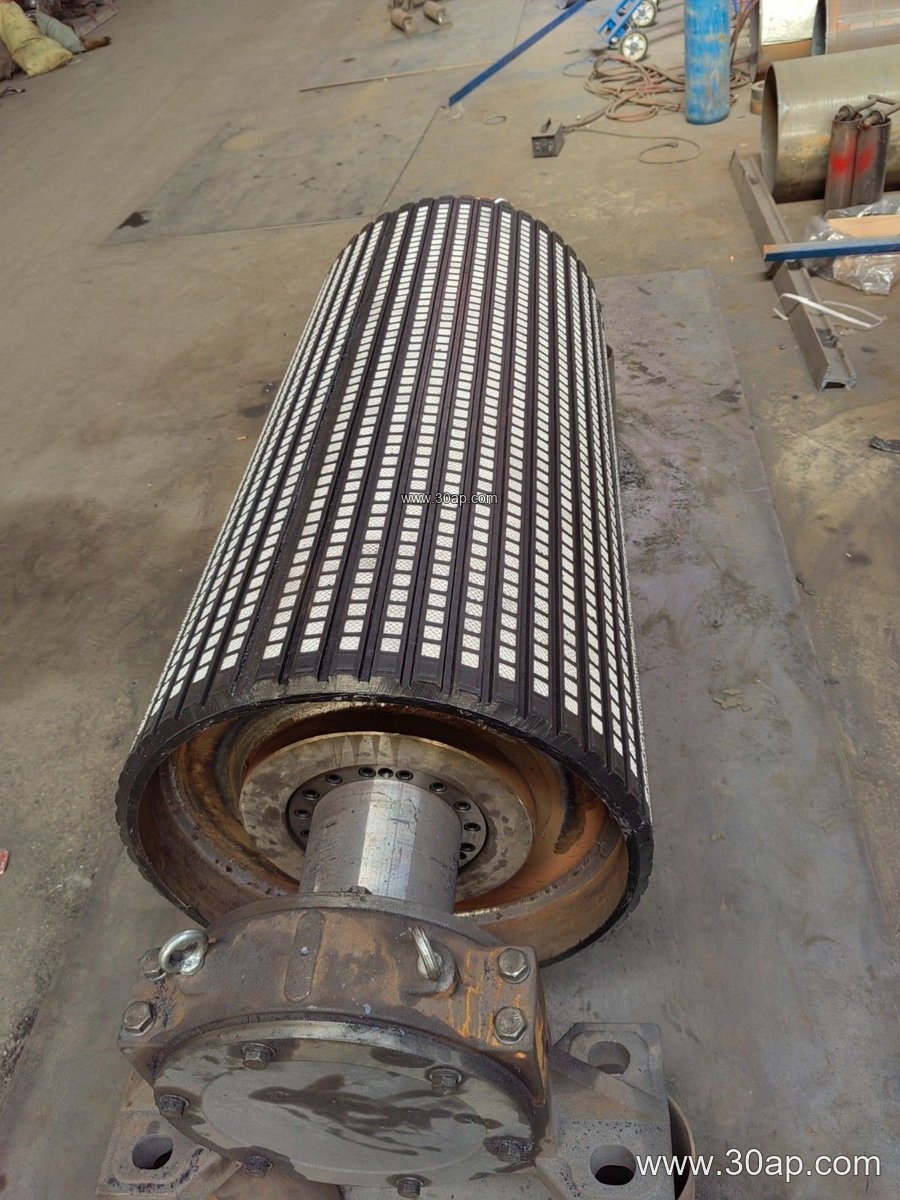
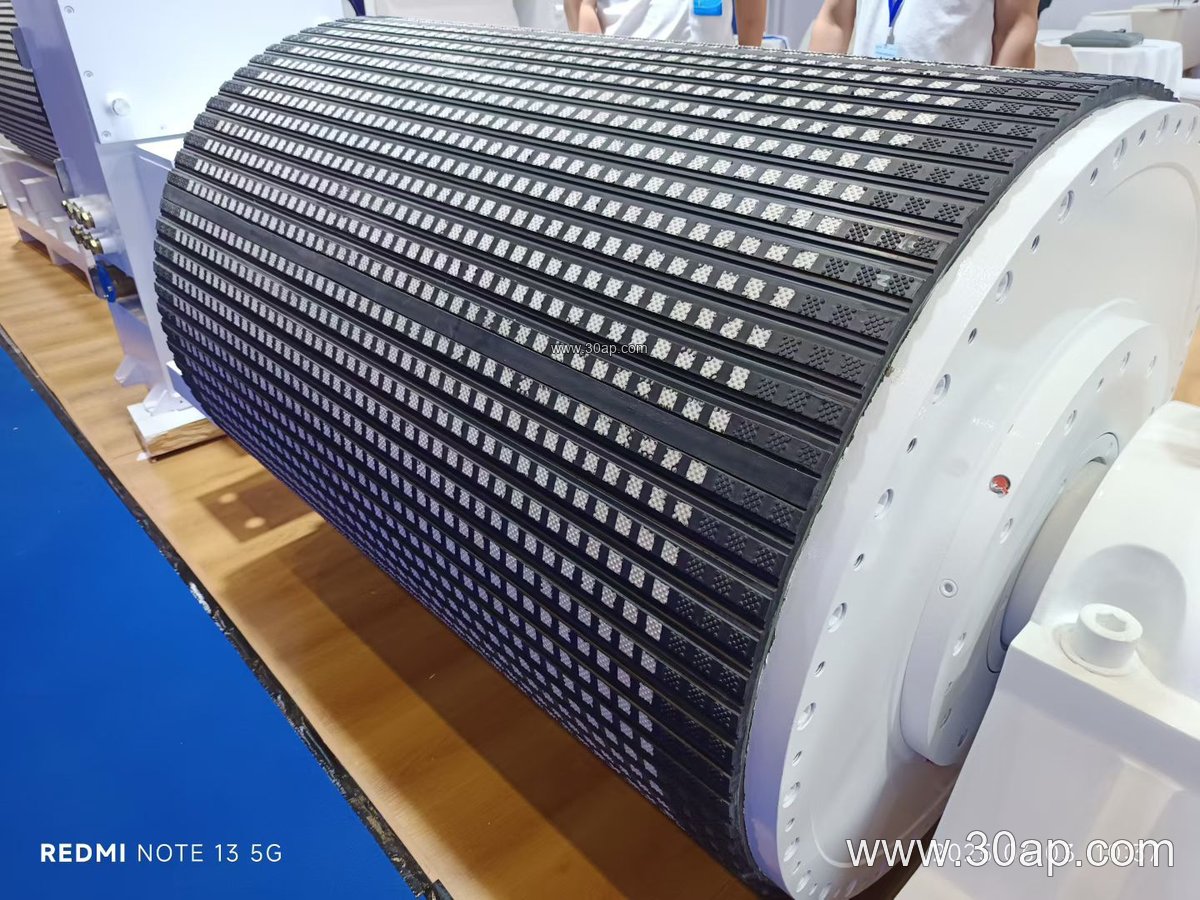
The shell is usually machined before lagging so the rubber sits evenly across the face. Lagging can be applied by hot vulcanization, cold bonding, or cast-on methods, and the surface pattern is chosen for the duty. Common forms include plain sheet rubber, diamond grooved rubber, herringbone rubber, and ceramic tile lagging for the most abrasive or wet conditions.
- Plain lagging: general grip improvement, easy to clean
- Diamond or herringbone grooving: better water and fines evacuation
- Ceramic lagging: high wear resistance where slurry or sharp material is present
- Lagging thickness: commonly 8, 10, 12, 15, or 20 mm depending on belt tension and pulley diameter
Face width normally exceeds belt width so the belt is fully supported. For example, a B800 belt typically runs on a pulley face of about 950 mm, while a B1200 belt may use a face near 1400 mm. Diameter is matched to torque and belt wrap rather than to width alone; a B800 × Ø500 unit and a B1400 × Ø800 unit are both plausible combinations in different duty levels.
Where the Grip Matters Most
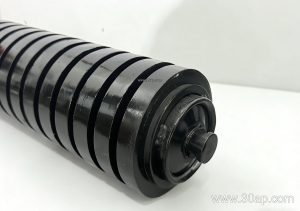
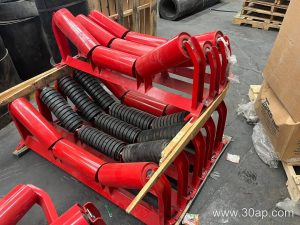
The most common location is the drive position, where the motor torque must pass into the belt. In a quarry or aggregate line, a high-friction lagged pulley on the head drive helps a heavily loaded incline start without belt slip. In a coal preparation plant or power plant coal yard, wet fines can polish a plain shell, so a grooved lagging surface keeps friction more stable. Cement plants handling clinker and limestone often pair this pulley with an abrasion resistant conveyor belt and a heavy-duty idler roller set to keep the whole transfer stable.
Tail and bend positions can also use lagging, but the purpose shifts: at a tail pulley the lagging mainly protects the shell from abrasive material build-up, while at a bend pulley it helps maintain belt tracking under wrap. A drive pulley, tail pulley, and bend pulley are not interchangeable, and each should be specified for its own load case.
Matching the Pulley to the Belt and the Line
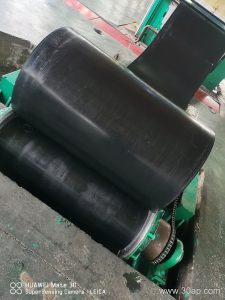
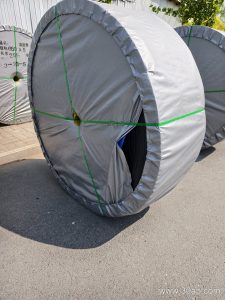
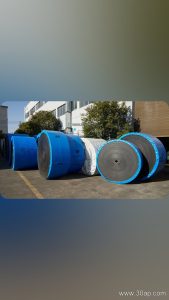
Belt construction affects the friction requirement. A multi-ply fabric core conveyor belt or an EP conveyor belt with a smooth cover may need a different lagging pattern than a steel cord conveyor belt running at high tension. On long overland or underground mining conveyor systems, a high-friction lagged pulley is often combined with a flame retardant conveyor belt and a properly sized take-up to control slip during starting.
| Parameter | Typical reference |
|---|---|
| Belt width | B400 to B2400 |
| Pulley diameter | Ø200 to Ø1800 |
| Lagging thickness | 8, 10, 12, 15, 20 mm |
| Surface form | Plain, diamond, herringbone, ceramic |
| Shaft diameter | Ø50 to Ø200, set by torque and load |
These are reference ranges, not fixed rules. A buyer should confirm the actual belt tension, wrap angle, starting torque, and environmental conditions with the pulley supplier before fixing the diameter and lagging grade.
Buyer Checklist
- Confirm the pulley position, since drive and tail duty call for different lagging choices.
- State the belt type and cover grade, including whether it is an abrasion resistant or oil resistant conveyor belt.
- Provide the operating environment: wet, dusty, oily, or high temperature.
- Check face width against belt width and confirm shaft size from the torque calculation.
- Ask how the lagging is bonded and whether it can be re-lagged in the field.
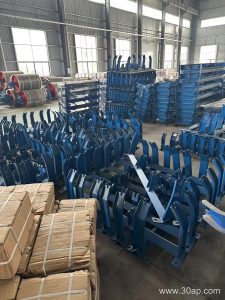
- Verify balance, bearing type, and mounting interface with the conveyor bracket.
For more conveyor components and matching belt options, visit www.hnconveyorbelt.com to compare pulley, belt, and idler configurations. A correctly specified high-friction lagged pulley reduces slip, protects the belt cover, and keeps the drive stable through start-up and peak load.