What a Hot-Dip Galvanized Idler Is
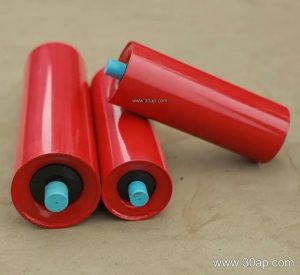
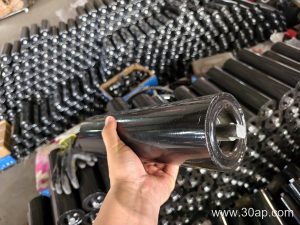
A hot-dip galvanized idler is a conveyor roller whose steel body has been immersed in molten zinc to form a metallurgically bonded coating. This finish is not a paint or an electroplated layer; it is a zinc-iron alloy skin that protects the roller from rust in wet, humid, or chemically exposed service. The product is also known as a hot-dip galvanized conveyor roller, and the two names refer to the same component. In a belt conveyor system, these rollers support the conveyor belt and the material load, and they are mounted on the conveyor bracket or frame at intervals along the carrying and return sides.
The galvanized coating matters most where moisture, salt, or acidic dust is present. A quarry conveyor belt line or a port bulk material conveyor belt may see regular washdown and airborne chlorides, while a cement plant or power plant coal handling system can expose rollers to fine abrasive dust and occasional damp conditions. In these settings, a hot-dip galvanized idler can extend service life compared with an untreated steel roller, provided the coating thickness and the roller design suit the environment.
Construction and Coating Details
A typical hot-dip galvanized idler uses a steel tube shell, a shaft, bearing housings, and a sealing arrangement. Common shell diameters include Ø63, Ø76, Ø89, Ø102, Ø108, Ø127, Ø133, Ø159, Ø178, Ø194, and Ø219 mm, with the final choice depending on belt width, load, and support spacing. The roller length is not fixed by belt width alone; it varies with the trough angle and the idler set form. For example, a three-roll troughing set might use a roller length near 200 mm for B500, 250 mm for B650, 315 mm for B800, 380 mm for B1000, 465 mm for B1200, 530 mm for B1400, 600 mm for B1600, 670 mm for B1800, and 750 mm for B2000. These are common reference values, not universal specifications, and the side rollers of a troughing set can differ from the center roller.
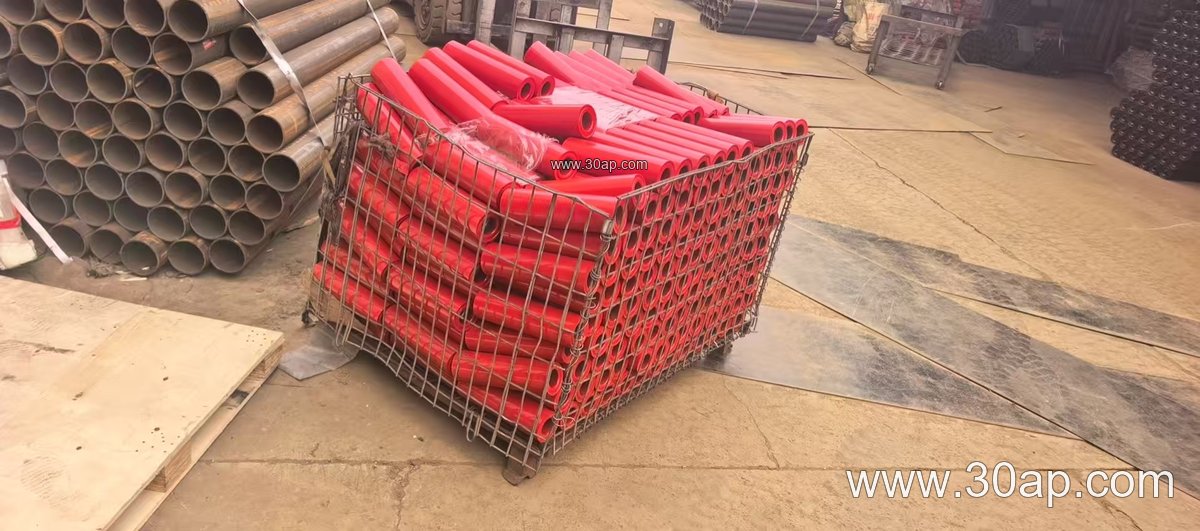
Bearings are usually selected from common sizes such as 6204, 6205, 6305, 6306, 6308, and 6310, and the bearing size should be matched to the shaft and load rather than to the roller diameter alone. The galvanizing process must account for drainage and venting so that zinc does not block bearing seats or seal grooves. Good manufacturers mask or ream critical surfaces after coating. A buyer should confirm that the coating is applied to the shell and end caps as specified and that the bearing cavity remains clean and properly greased.
Where It Fits in the Conveyor
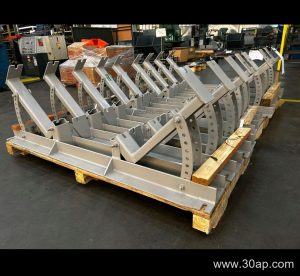
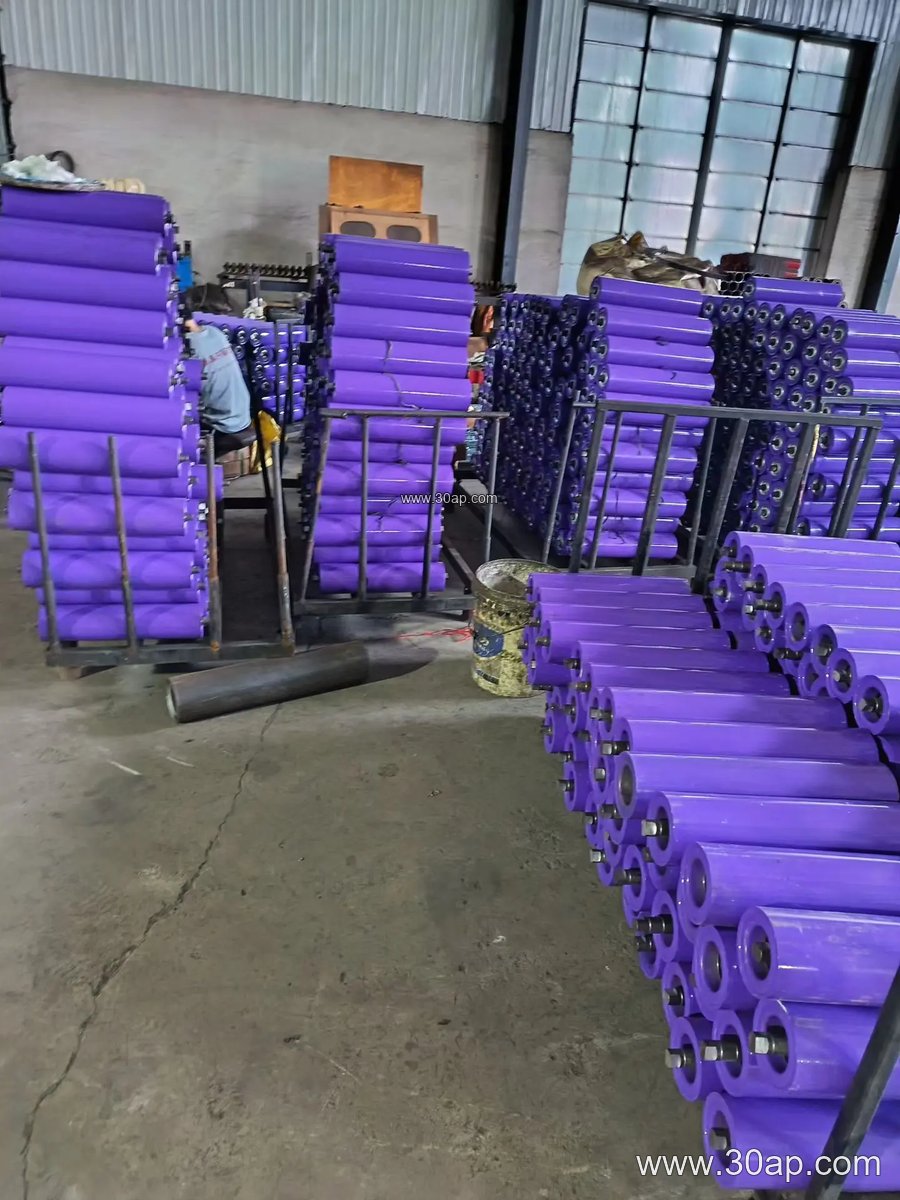
Hot-dip galvanized idlers are used in troughing sets, return sets, and transition positions. A three-roll troughing set with 20, 30, 35, or 45 degree trough angles is common on the carrying side, while a flat return roller or a V-return roller supports the belt on the return run. In a crusher conveyor belt circuit or a screening plant, impact idlers with rubber rings may be needed at the load point, but those are a different subtype and are not interchangeable with the standard galvanized roller. Similarly, a self-aligning idler and a spiral idler serve different functions; the galvanized finish can be applied to many of these forms, but the article subject remains the hot-dip galvanized idler itself.
These idlers appear in sand and gravel lines, limestone and iron ore operations, coal washing plants, cement plants, power station coal conveyors, steel mills, and port loading systems. They are also found in fertilizer and grain handling where washdown and humidity are concerns. In each case, the conveyor belt type and the material being carried influence the roller choice. A heavy-duty mining conveyor belt or a steel cord conveyor belt may require larger roller diameters and closer support spacing, while a fabric core conveyor belt on a shorter run may use smaller rollers.
Selection and Buyer Checklist
Buyers should start with the belt width, the belt speed, the material load, and the environmental exposure. The table below lists common reference dimensions; use it as a starting point, not as a fixed selection table.
| Reference item | Common range or example |
|---|---|
| Roller diameter | Ø63, Ø76, Ø89, Ø102, Ø108, Ø127, Ø133, Ø159, Ø178, Ø194, Ø219 mm |
| Belt width | B400, B500, B650, B800, B1000, B1200, B1400, B1600, B1800, B2000, B2200, B2400 |
| Trough angle | 20°, 30°, 35°, 45° |
| Roller length example (three-roll set) | About 200 mm for B500 up to about 750 mm for B2000 |
| Bearing sizes | 6204, 6205, 6305, 6306, 6308, 6310 |
Check the coating thickness and appearance, the seal type, the shaft end machining, and the balance of the roller. Ask whether the idler is supplied with a conveyor bracket or frame fixing that matches your existing structure. Confirm the load rating and the allowable belt speed. For a conveyor pulley, drive pulley, tail pulley, or bend pulley, the galvanized idler is not a substitute; those are separate components with different design requirements.
Finally, match the roller to the belt. A flame retardant conveyor belt in an underground coal mining conveyor system may require antistatic and fire-resistant properties from the belt, while the roller choice focuses on corrosion protection, sealing, and load capacity. A heat resistant conveyor belt or an abrasion resistant conveyor belt may need a different roller spacing to control sag. For buyers sourcing through a supplier of conveyor belt and idler roller components, request the coating specification, the bearing brand or grade, and the dimensional drawing before ordering.