What a Mining Conveyor Belt Is
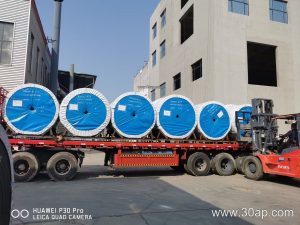
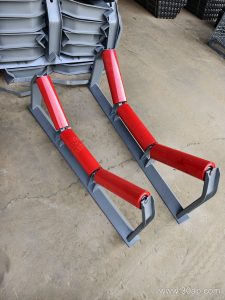
A mining conveyor belt is the load-carrying element of a continuous haulage system built for rock, ore, coal, aggregate and other bulk materials. It runs as an endless loop over a head or drive pulley, a tail pulley and bend pulleys, supported along the route by idler rollers mounted on conveyor brackets and frames. In a quarry, cement works, power plant or sand and gravel yard, this belt is the piece that turns a crusher discharge into a steady, controllable flow toward stockpiles, silos or ship loading points.
The product is not a single recipe. A belt for an underground coal face, an iron ore transfer house and a cement clinker line each carries different demands, so the carcass, cover compound and edge construction are chosen to suit the duty.
Construction and Naming
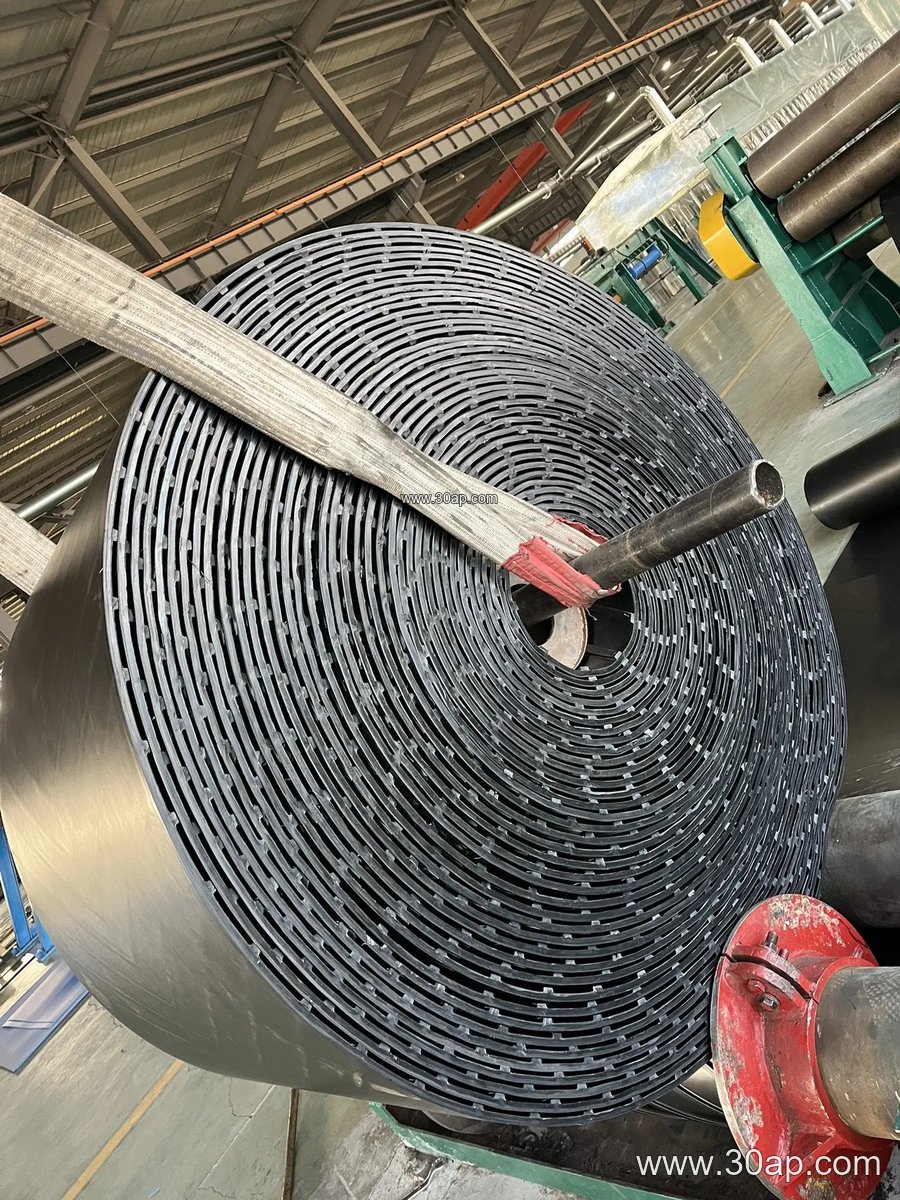
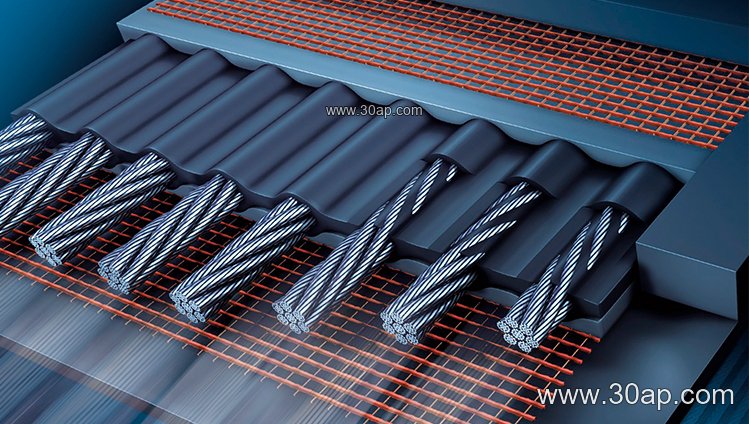
Most belts share a sandwich structure: a tension-bearing carcass, top and bottom cover rubber, and prepared edges. The carcass decides strength and elongation, while the covers decide resistance to cutting, abrasion, heat, oil or flame. Common carcass families include:
- EP conveyor belt with polyester-nylon fabric plies, often written as EP200, EP400, EP630, EP800, EP1000 or EP1250
- NN conveyor belt with nylon-nylon plies, such as NN200 or NN300
- Steel cord conveyor belt, rated by full thickness tensile strength, for long, heavy-duty routes
- PVC and PVG belts, widely used in underground coal mining where flame resistance is required
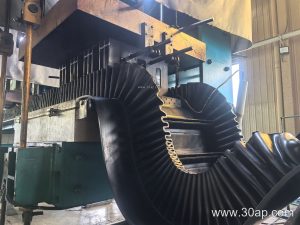
Cover thickness is usually quoted as top plus bottom, for example 4+2 mm, 5+2 mm or 6+2 mm, and fabric belts commonly use two to six plies. Surface forms are selected for the job: a chevron conveyor belt for inclines, a corrugated sidewall belt or skirted belt to contain material, and a pipe conveyor belt where dust control and route flexibility matter.
Where These Belts Work
Haulage duties vary by industry. A coal mining conveyor belt in a power plant or coal preparation plant usually needs flame retardant and anti-static properties. An ore conveyor belt handling sharp, hot or wet material may call for high abrasion resistance and cut-resistant covers. Cement plants favor heat resistant conveyor belt grades for clinker and kiln-related streams, while ports and ship loading terminals need wide, high-strength belts that hold alignment over long spans.
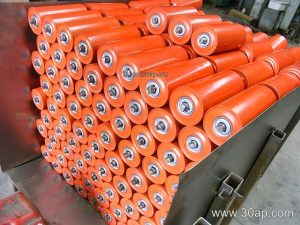
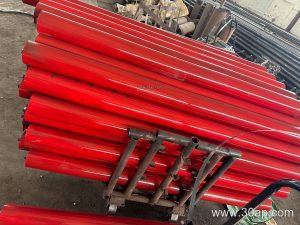
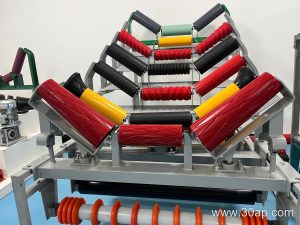
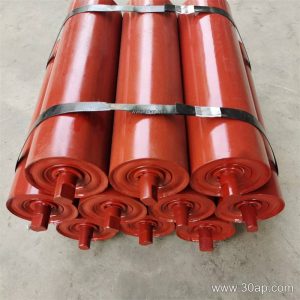
In crushing circuits, an impact resistant belt with extra cover thickness absorbs lump impact at transfer points. Cold resistant compounds help in winter yards, and oil resistant or acid resistant grades serve specialized streams. The equipment around the belt matters too: idler rollers should turn freely, and drive, tail and bend pulleys must be sized to the actual tension and wrap angle rather than assumed from belt width alone.
Common Reference Ranges
The values below are typical reference points for discussion, not fixed supply promises. Final specifications depend on the conveyor design, material lump size, drop height, ambient conditions and required safety class.
| Parameter | Common Range | Notes |
|---|---|---|
| Belt width | B500, B650, B800, B1000, B1200, B1400, B1600, B1800, B2000 mm | Wider belts suit high tonnage and large lump size |
| EP strength grades | EP200 to EP1600 | Higher grades for longer centers and heavier loads |
| NN grades | NN100 to NN400 | General fabric carcass options |
| Steel cord grades | ST1000 to ST3150 | Long overland and high-tension routes |
| Cover thickness | 3+1.5, 4+2, 5+2, 6+2, 8+3 mm | Thicker covers for abrasion and impact |
| Fabric plies | 2 to 6 | Depends on required strength |
Buyer Checklist
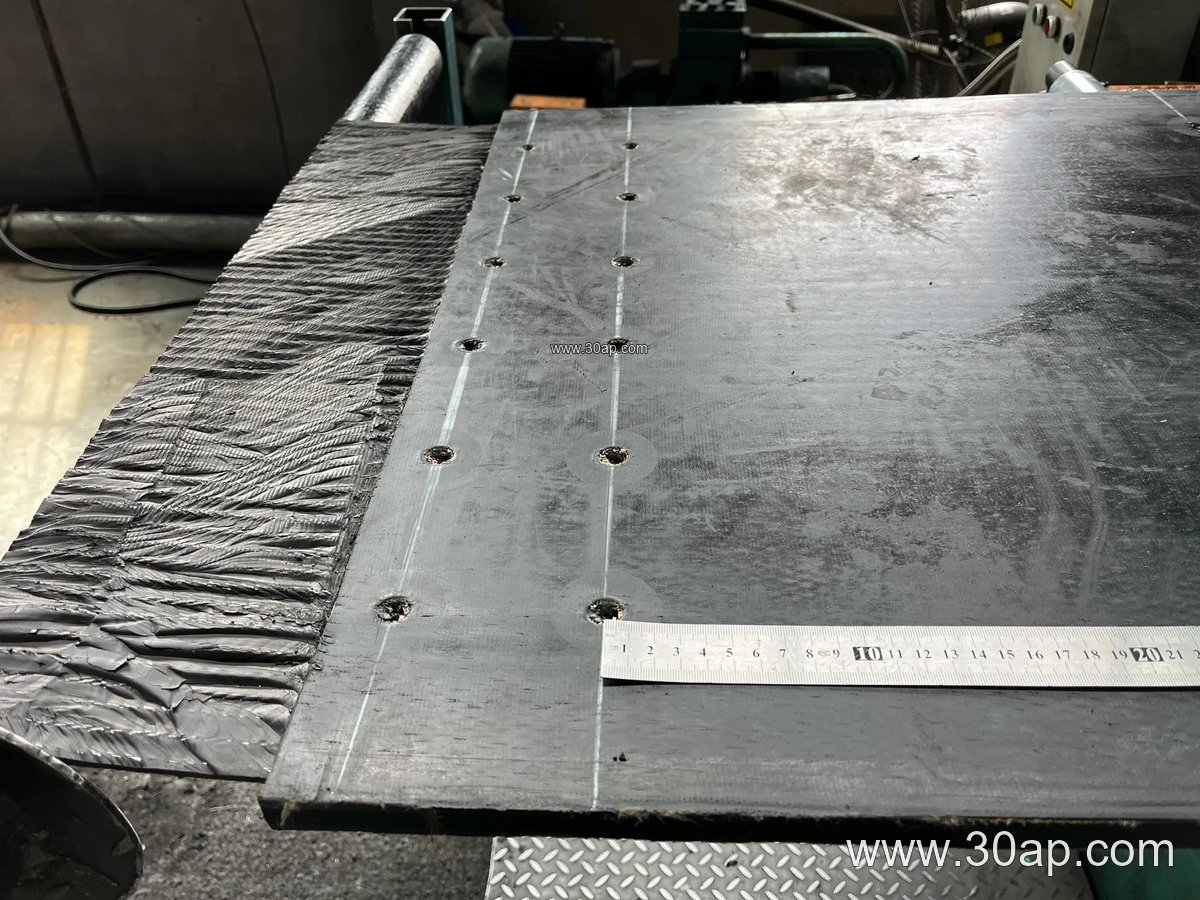
Start with the duty: material type, maximum lump size, tonnage per hour, incline angle, loading method and operating temperature. Then confirm the carcass grade, cover compound and cover thickness, and decide whether features such as flame retardant, anti-static or cold resistance are needed. Ask how the belt will be joined, since an endless conveyor belt spliced on site behaves differently from an open-length belt with mechanical fasteners.
Check the interface with the rest of the machine. Pulley diameters, trough angle, idler spacing and take-up travel all influence belt life, and a heavy-duty mining conveyor belt still fails early if the structure is misaligned or the loading point is poorly designed. Request the manufacturer’s data sheet for the exact grade, verify splice instructions, and keep spare length and fasteners for planned maintenance. With the right carcass, cover and installation practice, a mining conveyor belt becomes a predictable, low-attention part of the haulage chain.