What a Conveyor Belt Self-Aligning Idler Does
A conveyor belt self-aligning idler is a tracking device installed along the carrying or return side of a conveyor to correct belt drift before it becomes a problem. Instead of sitting square to the frame like a standard troughing set, this idler is mounted on a pivot or a friction-sensitive base so that when the belt edges touch a vertical guide roller, the whole assembly swings slightly. That small rotation steers the belt back toward the center line. In a quarry or a coal handling plant, where material loading is rarely perfectly centered, this correction happens continuously and without operator input.
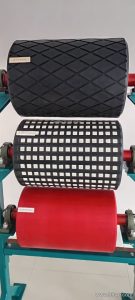
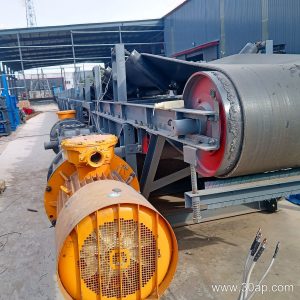
The same product is also sold as a self-aligning roller or self-tracking idler, and those names describe the same function. It should not be confused with a drive pulley, tail pulley, or bend pulley; those are drums that transmit power or change belt direction, while a self-aligning idler only guides the belt.
How the Assembly Is Built
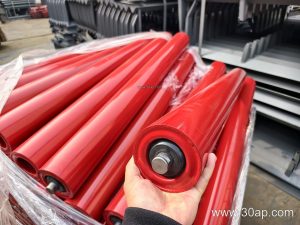
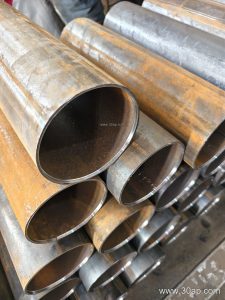
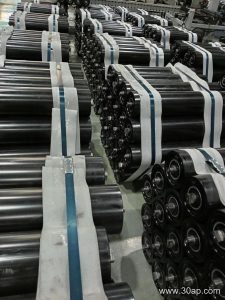
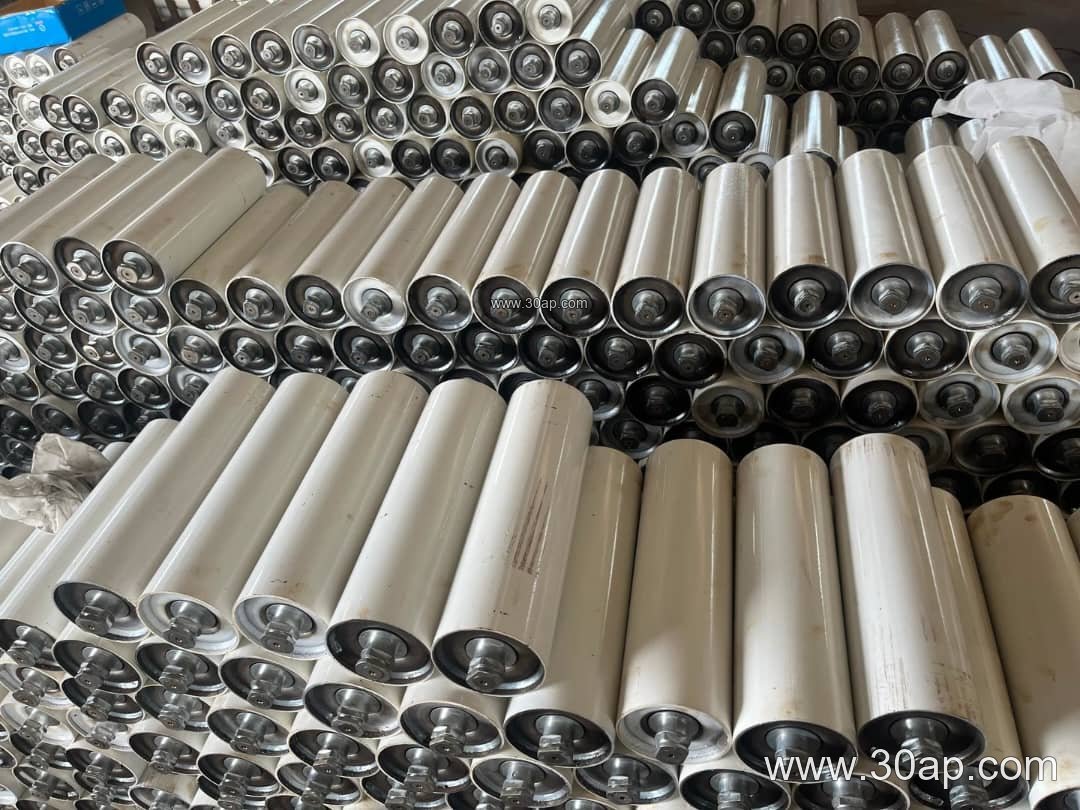
Most designs combine a steel frame, two or three idler rollers, and a pair of vertical guide rollers mounted at the ends. The frame rests on a swivel base with a bearing or a friction ring, allowing a few degrees of rotation. The rollers themselves usually use a steel tube shell with sealed ball bearings. Common bearing sizes include 6204, 6205, 6305, 6306, 6308, and 6310, matched to the shaft and load rather than to belt width alone.
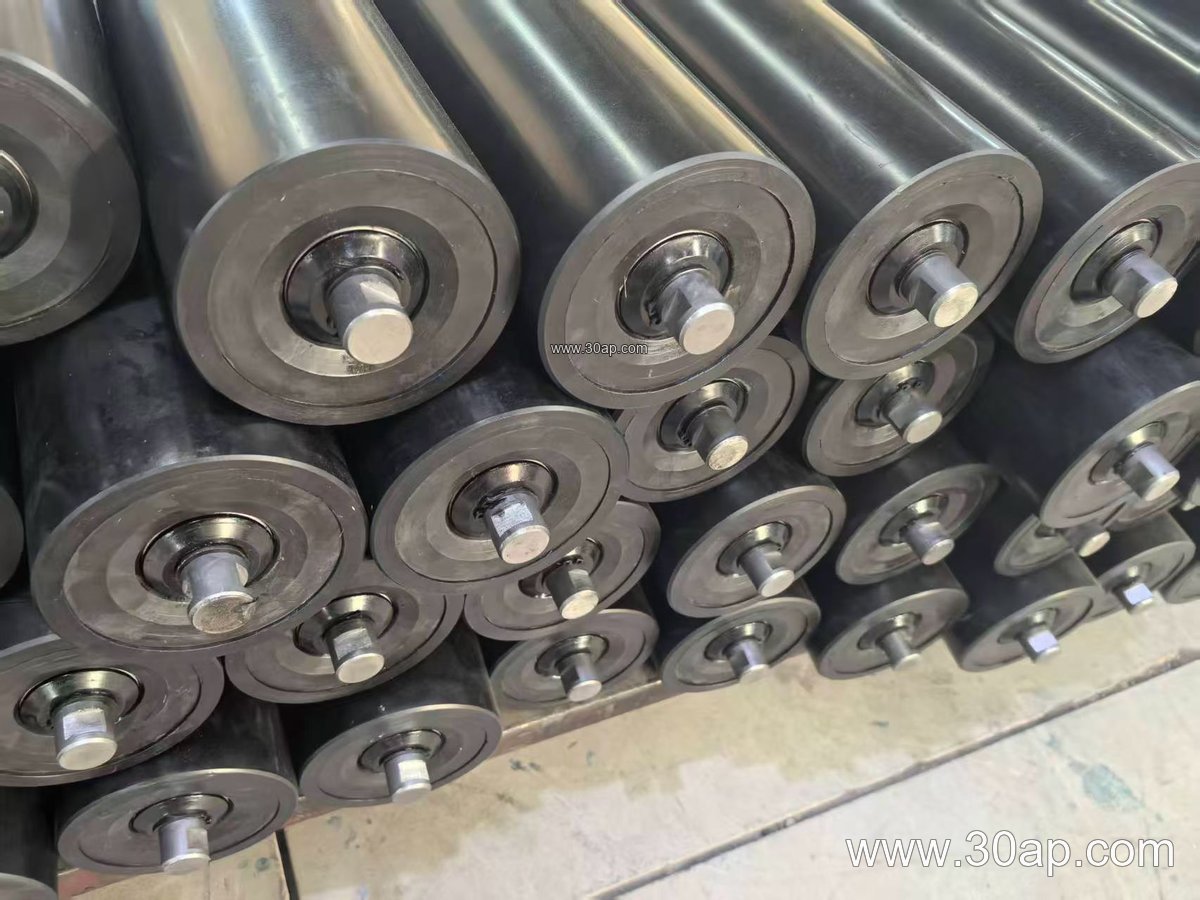
Roller diameter is selected from a range such as Ø89, Ø108, Ø127, Ø133, Ø159, and Ø178 mm. The surface can be plain steel, nylon, ceramic, or rubber rings. Rubber-covered rollers are useful in dusty aggregate lines because they grip the belt edge without scuffing it. In a coal mining conveyor, flame retardant and anti-static properties of the belt often drive the choice of nearby components, so the idler’s rubber parts are usually specified to suit the same environment.
Where It Fits on the Conveyor
Self-aligning idlers are typically placed at intervals along straight runs and just after loading points, where a belt is most likely to shift. On the carrying side they are often built as a three-roll troughing set with a 20, 30, 35, or 45 degree trough angle. On the return side, a V-type or two-roll arrangement is common. A slight forward tilt of about 1.5 to 2 degrees is sometimes used to help the roller steer the belt.
Typical roller lengths follow belt width in a general way, for example about 200 mm for B500, 250 mm for B650, 315 mm for B800, 380 mm for B1000, 465 mm for B1200, 530 mm for B1400, and 600 mm for B1600. These are common examples, not fixed pairings, and side rollers may differ from the center roller.
| Reference item | Common range |
|---|---|
| Roller diameter | Ø63 to Ø219 mm |
| Belt width | B400 to B2400 |
| Trough angle | 20°, 30°, 35°, 45° |
| Bearing | 6204, 6205, 6305, 6306, 6308, 6310 |
| Roller surface | Steel, nylon, ceramic, rubber ring |
Applications Across Bulk Handling
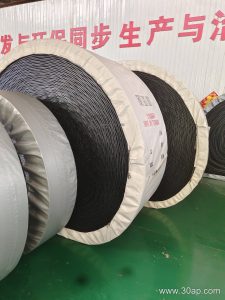
In a limestone quarry or a sand and aggregate line, a self-aligning idler keeps a loaded belt centered after a crusher discharge. In a coal washing plant or a power plant coal yard, it reduces edge wear on the conveyor belt and limits spillage along the transfer points. The same principle applies in cement plants, steel sinter lines, and port ship-loading conveyors. Because the belt itself may be an EP conveyor belt, an NN conveyor belt, or a steel cord conveyor belt, the idler must be matched to the belt’s stiffness and weight; a heavy steel cord belt needs a sturdier frame than a light fabric core belt.
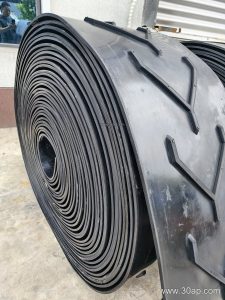
Where the belt is a chevron conveyor belt or a corrugated sidewall conveyor belt, the guide rollers must clear the raised profiles, so the mounting position is checked carefully. For abrasive duty such as iron ore or copper ore, abrasion resistant conveyor belt grades are common, and the idler’s shell and seals should be chosen to resist the same grit.
Buyer Checklist
- Confirm belt width and trough angle before ordering, since roller length and frame geometry change with both.
- State the belt type, whether EP, NN, steel cord, or a specialty belt, so the idler load rating fits.
- Check the guide roller clearance for chevron or skirted belts.
- Ask about bearing sealing for dusty or wet conditions.
- Plan inspection intervals; a worn swivel base or seized bearing stops the self-aligning action.
For more on matching idlers with conveyor belt, idler roller, conveyor pulley, and conveyor bracket choices, the selection should always follow the actual conveyor design rather than a single catalog number. A well-chosen self-aligning idler is a low-cost way to protect the belt and keep a bulk handling line running straight.