What a Custom Conveyor Bracket Does on a Real Line
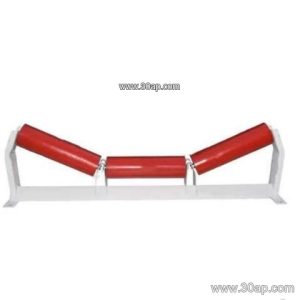
A custom conveyor bracket is the fabricated support that holds idlers in the correct position under a moving belt. Standard brackets cover common widths and trough angles, but quarry, cement, and power plant layouts rarely follow a catalogue. When the frame geometry, the belt width, or the transition zone does not match a stock part, the bracket is made to the drawing so the idlers sit exactly where the belt needs them.
Because the bracket carries the idler roller and sets the belt profile, small errors show up quickly as edge wear, spillage, or tracking problems. That is why the part is usually treated as a designed component rather than a generic fitting.
How the Bracket Is Built
Most units are fabricated from angle steel, channel steel, or folded steel plate. The choice depends on load and span: light aggregate lines often use angle, while wider belts on a crusher discharge or a steel plant transfer point tend to use channel or folded plate for stiffness.
- Cutting and drilling to the mounting hole spacing required by the frame
- Forming the trough angle so the wing idlers sit at the intended slope
- Welding gussets or end plates where the bracket meets the main frame
- Surface treatment suited to the site, such as painting or galvanizing
Hole spacing and crossbeam length change with belt width and trough angle, so they are confirmed per project rather than taken as fixed numbers. A bracket that fits a B800 frame will not fit a B1200 frame without redesign.
Where These Brackets Are Used
Two common settings illustrate the range. In a limestone quarry, trough brackets on the primary discharge keep a heavy abrasion resistant conveyor belt centred while it carries blasted rock. In a coal handling plant feeding a power station, flame retardant conveyor belt runs over brackets that must hold alignment through long galleries and transfer towers.
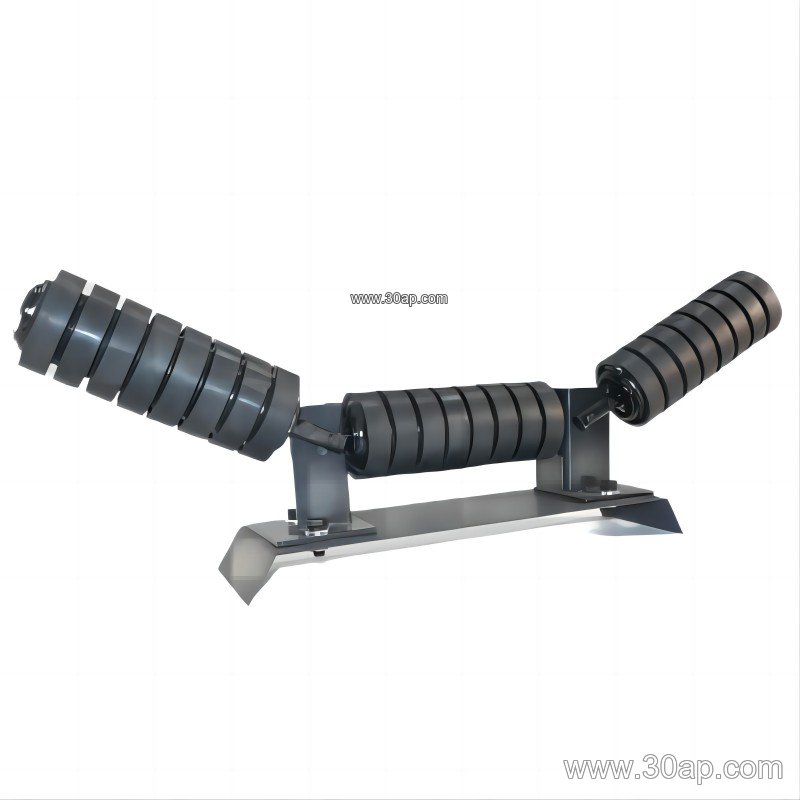
The same principle applies on a cement plant clinker line, a port ship loading boom, or a tunnel spoil conveyor. The bracket is always matched to the belt, the idler roller, and the pulley arrangement around it. Note that a conveyor pulley at the drive, tail, or bend position is a separate component with its own support structure; brackets serve the carrying and return idlers, not the pulleys.
Common Bracket Positions and Their Job
Carrying Side
Trough brackets and transition brackets shape the belt into a stable trough. Trough angles of 20, 30, 35, and 45 degrees are common, and adjustable brackets let crews fine-tune within that range during commissioning.
Return Side
Return brackets and V-return brackets support the empty strand. A V-shaped return arrangement helps centre the belt and shed loose material before it reaches the tail.
Special Duties
Impact brackets sit under loading points to absorb drop energy. Self-aligning brackets correct minor drift, and forward-leaning versions, usually around 1.5 to 2 degrees, help keep the belt tracking. Hanging brackets suit frames where floor-mounted supports are impractical.
Matching Bracket, Belt, and Idler
Selection starts with belt width, then trough angle, then idler diameter. Typical idler diameters include Ø89, Ø108, Ø133, Ø159, and Ø194. A narrow B650 line with a 30 degree trough often runs Ø89 idlers, while a B1200 transfer with a 45 degree trough may use Ø133. These are common pairings, not rules, and final sizing follows the conveyor design.
| Belt width | Trough angle | Idler diameter | Typical bracket role |
|---|---|---|---|
| B500 to B650 | 20 to 30 degrees | Ø89 | Trough or return support |
| B800 to B1000 | 30 to 35 degrees | Ø108 | Trough, transition, impact |
| B1200 to B1400 | 35 to 45 degrees | Ø133 | Trough, self-aligning |
| B1600 to B2000 | 35 to 45 degrees | Ø159 | Heavy trough, impact |
| B2200 and above | By design | Ø194 | Engineered support frames |
The belt construction matters too. A steel cord conveyor belt is stiff and needs generous transition geometry, while a multi-ply fabric core belt bends more easily. On a chevron or corrugated sidewall belt, bracket height and clearance must be checked so cleats and walls do not foul the idlers. Visit beltconveyorparts.com for related conveyor bracket drawings and matching components.
What Buyers Should Confirm Before Ordering
A clear specification avoids rework. Useful items to settle with the fabricator include:
- Belt width and required trough angle
- Idler diameter and mounting hole spacing
- Frame attachment method and available space
- Material grade and surface finish
- Whether the bracket is fixed or adjustable
- Expected load, including impact at the loading point
Ask for dimensioned drawings before production. Check that the bracket clears the belt edge, the return strand, and any nearby structure. On retrofit work, confirm that the new bracket matches the existing conveyor bracket bolt pattern, or plan for adapter plates.
Installation and Maintenance Notes
Mount brackets square to the centreline and at consistent height along the run; a low bracket creates a dip that collects material and wears the belt. After the first weeks of operation, recheck bolt torque, since vibration on a crusher conveyor belt or an ore conveyor belt can loosen fasteners. Keep spare brackets for the highest-wear positions, usually the loading zone and the transition from the tail pulley. For more on idler and bracket combinations, see beltconveyorparts.com.
A well-made custom bracket is a small part with a large influence on belt life, dust control, and uptime across mining, cement, power, and port operations.