What an Ore Conveyor Idler Does
An ore conveyor idler is the rotating component that supports and guides the conveyor belt on a bulk handling line. In hard rock mining, quarrying, and mineral processing, these idlers carry heavy, abrasive loads and must keep the belt tracking smoothly. The idler roller turns on bearings inside a stationary shaft, and the frame holds it at a set angle. While a conveyor pulley drives or redirects the belt, the idler simply provides support along the carry and return sides.
On a typical ore conveyor, you will find several idler positions. The carrying side often uses three-roll troughing sets, while the return side uses flat or V-shaped return idlers. Impact idlers with rubber rings sit under the loading point to absorb fall energy. Transition idlers ease the belt from flat to troughed. Self-aligning idlers help correct misalignment on long runs. Each position has a distinct job, and mixing them up can lead to belt damage or spillage.
Construction and Materials
A standard idler roller consists of a steel tube shell, bearing housings, a through shaft, and seals. The shell may be plain steel, nylon-coated, ceramic-lined, or fitted with rubber rings for cushioning. Bearing sizes vary with load and diameter; common bearing numbers include 6204, 6205, 6305, 6306, 6308, and 6310. The seal design matters in dusty ore operations, as fine particles can destroy bearings quickly if they enter the housing.
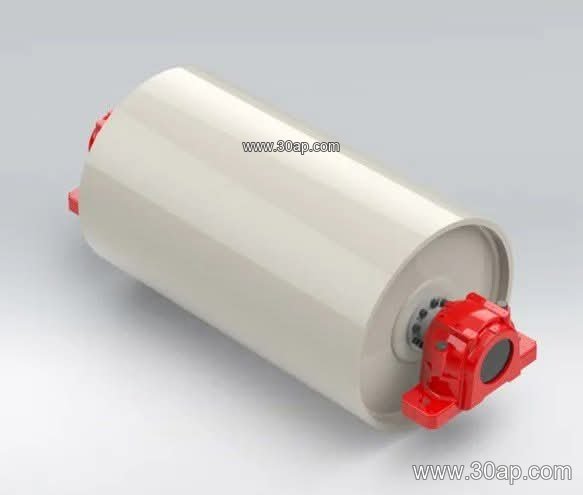
Roll diameters typically range from Ø63 mm up to Ø219 mm. Smaller diameters suit light-duty or return positions, while larger diameters handle high belt tensions and heavy ore loads. The idler length depends on belt width, trough angle, and the number of rolls in the set. For example, a three-roll troughing set on a B800 belt often uses rolls around 315 mm long, while a B1200 set may use rolls near 465 mm. These are common references, not fixed rules; side rolls and center rolls can differ.
Matching Idlers to Belt Width and Trough Angle
Belt width and trough angle directly affect idler selection. Trough angles of 20, 30, 35, and 45 degrees are common. A deeper trough contains the ore better on high-capacity lines, but it also increases the load on the side rolls. The belt width itself ranges from B400 up to B2400 in many plants. A wider belt needs longer idler rolls and often a heavier frame.
Below is a reference table of common idler roll lengths for three-roll troughing sets. Treat these as typical examples, not mandatory matches.
| Belt Width | Common Roll Length (approx.) | Typical Trough Angle |
|---|---|---|
| B500 | 200 mm | 20–30° |
| B650 | 250 mm | 20–35° |
| B800 | 315 mm | 30–35° |
| B1000 | 380 mm | 30–35° |
| B1200 | 465 mm | 35–45° |
| B1400 | 530 mm | 35–45° |
| B1600 | 600 mm | 35–45° |
| B1800 | 670 mm | 35–45° |
| B2000 | 750 mm | 35–45° |
Do not assume that a given belt width can only work with one pulley diameter or one shaft size. The conveyor designer calculates shaft load from belt tension, idler spacing, and ore weight.
Where Ore Conveyor Idlers Are Used
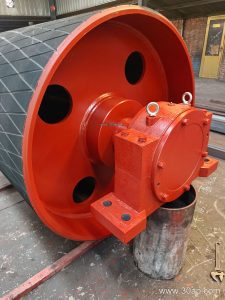
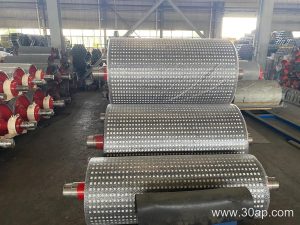
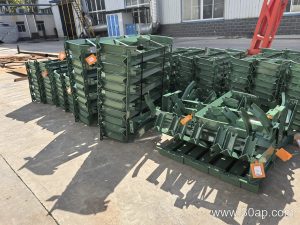
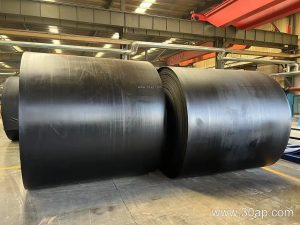
These idlers appear in iron ore mines, copper concentrators, gold mining operations, coal preparation plants, and quarry lines. In a crusher circuit, impact idlers protect the belt under the discharge chute. In a cement plant, troughing idlers carry clinker and raw meal. Power plant coal handling and port ship-loading systems also rely on idler sets to keep long belts stable. The surrounding equipment may include a heavy-duty conveyor belt, a conveyor pulley at the head, and sturdy conveyor brackets welded to the stringer.
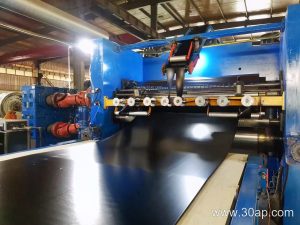
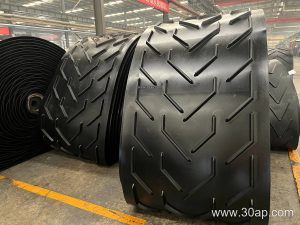
For abrasive ore, a high abrasion resistant conveyor belt is often paired with sealed idlers to reduce maintenance. In underground coal mining, flame retardant conveyor belt and anti-static conveyor belt requirements may apply, and idler selection should follow the same safety logic. A belt such as an EP conveyor belt or steel cord conveyor belt will have different tension characteristics, which influences idler spacing and load rating.
Buyer Checklist
- Confirm the belt width (e.g., B800, B1000, B1200) and trough angle before choosing roll length.
- Check the ore size and drop height to decide whether impact idlers or rubber-ring idlers are needed.
- Review the bearing number and seal type for dusty or wet conditions.
- Verify the shaft diameter and frame mounting dimensions against the existing conveyor bracket.
- For long overland runs, consider self-aligning idlers to reduce belt edge damage.
An ore conveyor idler is a small part of the total conveyor cost, but it has a large effect on uptime. Matching the idler roller to the belt, the load, and the environment is the most reliable way to keep ore moving.