What Is an EP300 Conveyor Belt
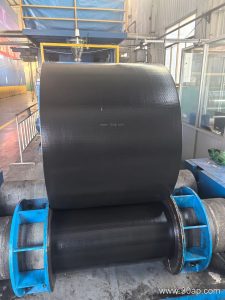
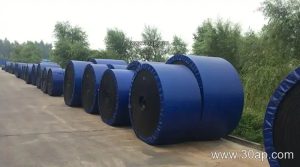
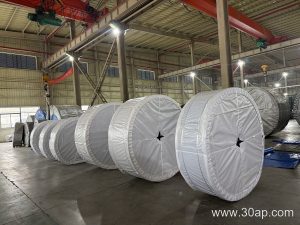
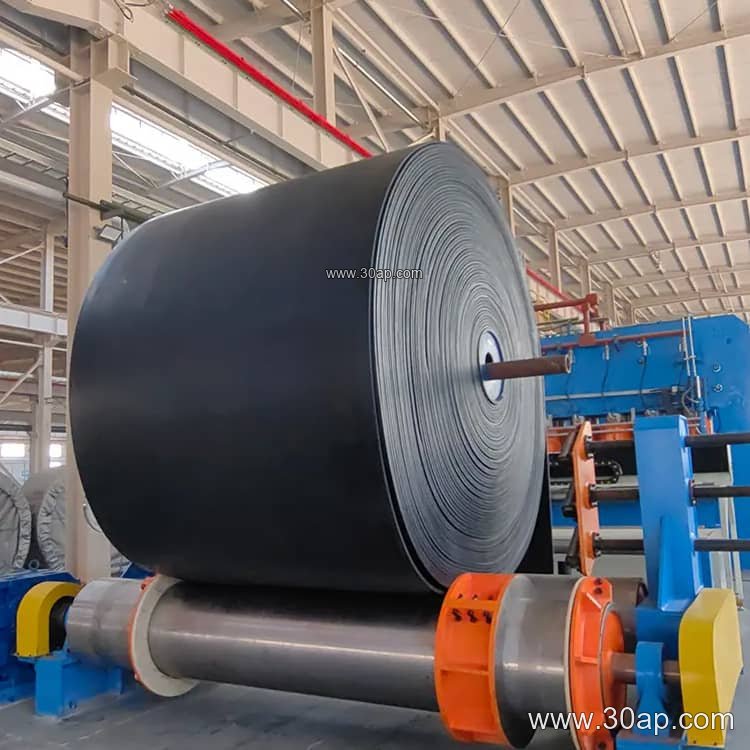
An EP300 conveyor belt is a fabric-reinforced rubber belt built around a polyester (E) and nylon (P) carcass rated for a nominal breaking strength of 300 N/mm. It sits in the middle of the EP range, above lighter EP200 and EP250 constructions and below EP400, EP500 and the high-strength EP630, EP800 and EP1000 belts. Because the carcass stretches less than an all-nylon NN belt, an EP300 conveyor belt holds its training on long centres and troughs well under a load. In practice, this EP fabric core conveyor belt is the workhorse of a crushing circuit, a cement clinker line or a coal preparation plant.
The belt is often simply called an EP conveyor belt or an EP rubber conveyor belt. It is not a steel cord belt, and it should not be confused with NN conveyor belts, PVC belts or PVG belts, which serve different duty levels. For very high tension or very long overland routes, a steel cord conveyor belt is the correct comparison, but for most in-plant conveying the EP300 construction is the practical choice.
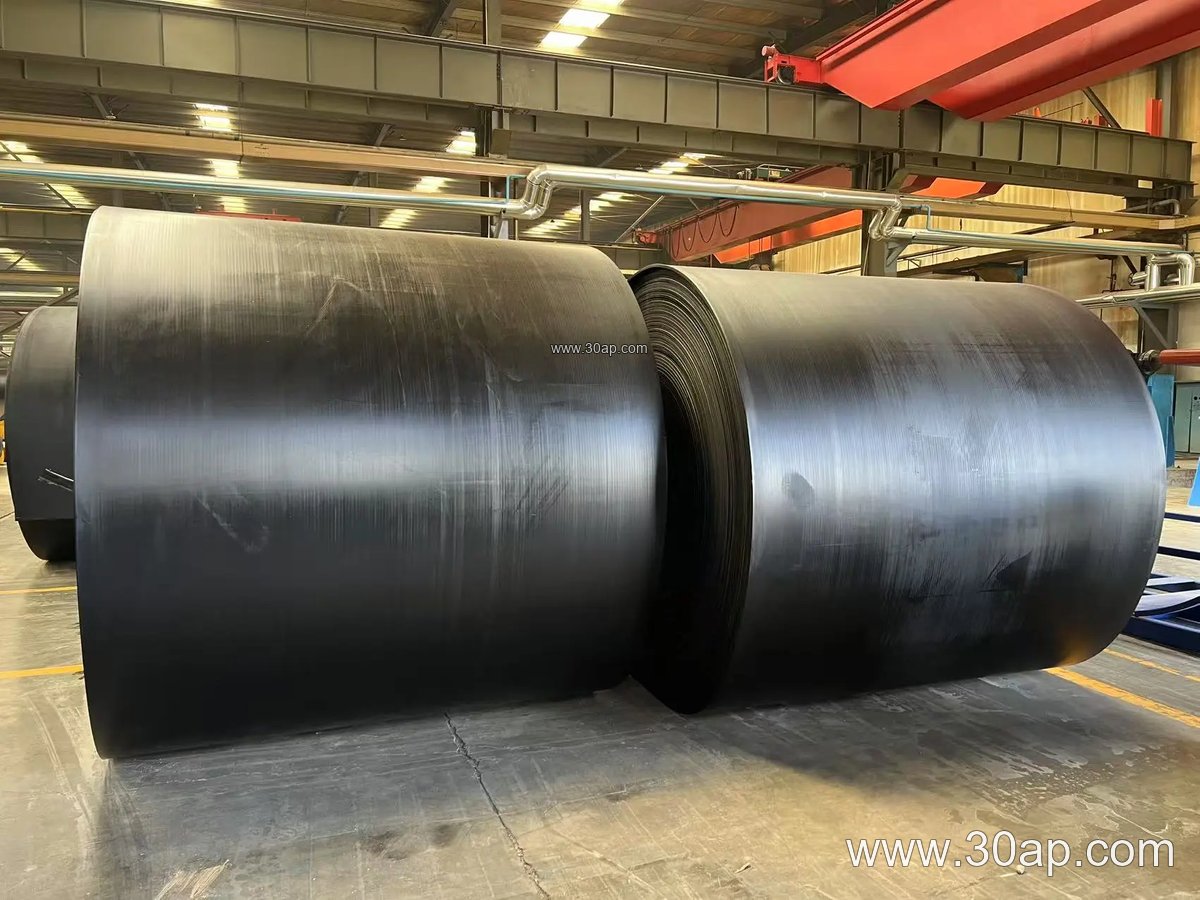
Construction and Cover Compounds
The carcass is made from multiple plies of EP fabric, commonly two to six layers depending on belt width and duty. Skim rubber bonds the plies, and top and bottom covers protect the carcass from abrasion, impact and moisture. A typical specification might read 5+2 mm covers on a three-ply carcass, but cover thickness, ply count and total belt thickness are always set by the conveyor design, not by the belt width alone.
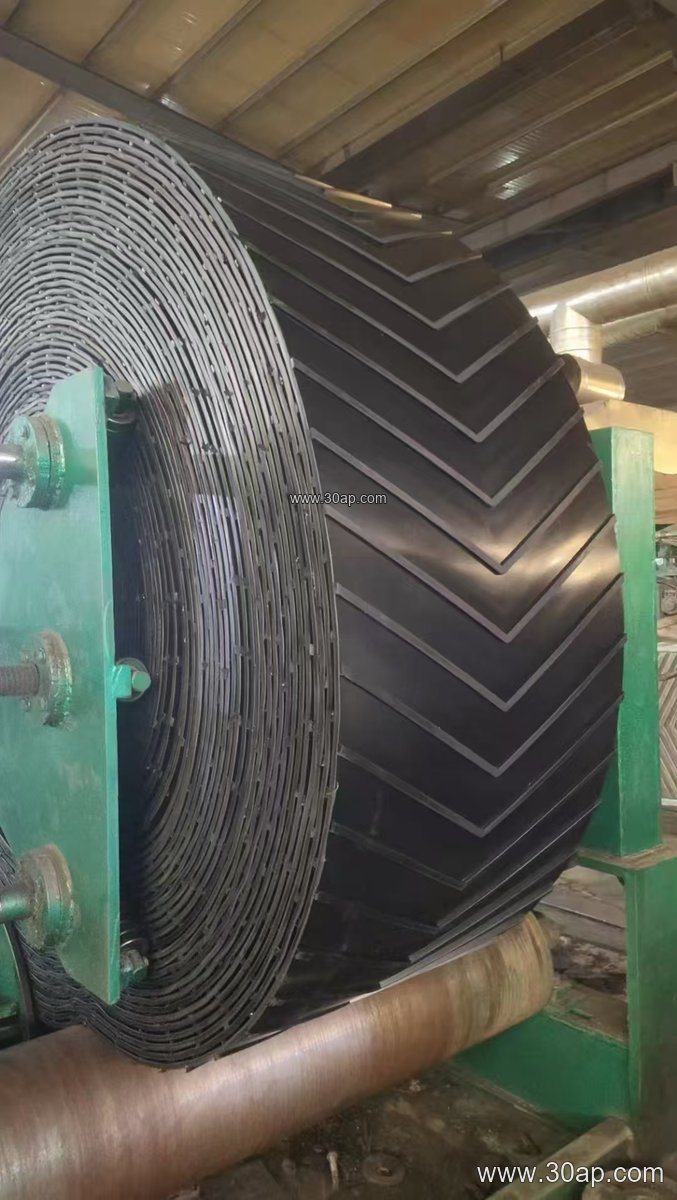
Cover compounds change the belt’s behaviour in the field. An abrasion resistant conveyor belt (often a high abrasion resistant grade) suits quarry conveyor belts, aggregate conveyor belts, crusher conveyor belts and rock conveyor belts. A heat resistant conveyor belt is used where clinker, sinter or hot ash is present. A flame retardant conveyor belt or fire resistant conveyor belt is common in coal mining conveyor belts and underground coal mining conveyor belts, where anti-static conveyor belt behaviour is also required. Oil resistant, cold resistant, acid resistant and chemical resistant grades are available for specific plants. In coal mines, PVG conveyor belts and PVC mining conveyor belts are separate solid-woven products, not EP belts.
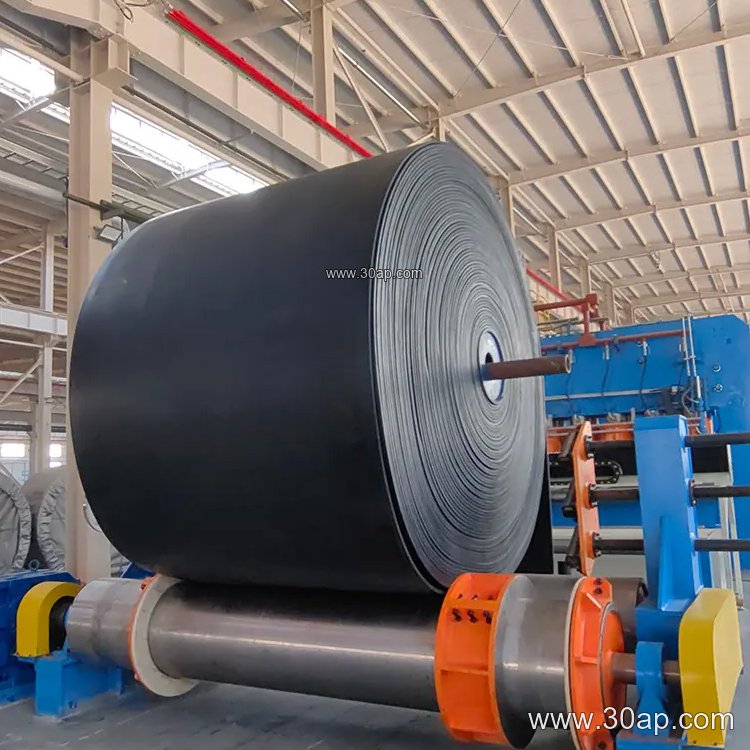
Where EP300 Belts Are Used
Mining conveyor belts, cement plant conveyor belts, power plant conveyor belts, steel plant conveyor belts and port conveyor belts all use EP300 fabric belts on primary and secondary circuits. A quarry conveyor belt feeding a crusher, a cement conveyor belt moving limestone or clinker, and an ore conveyor belt in an iron ore or copper ore operation are typical installations. The belt also appears in sand making plants, stone crushing lines, recycling lines and ship loading systems.
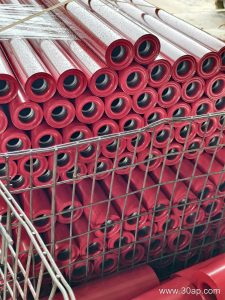
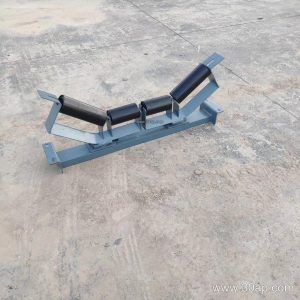
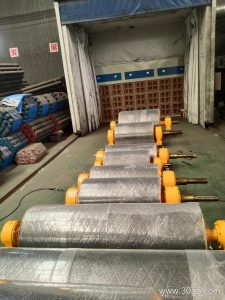
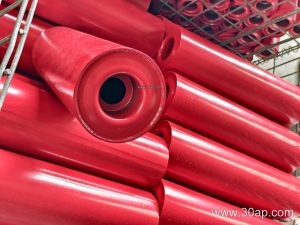
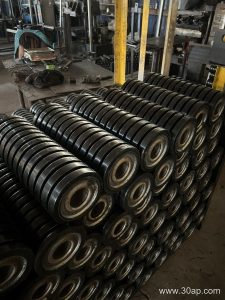
On the conveyor frame, the belt runs over a drive pulley, tail pulley and bend pulleys, none of which are interchangeable in function. Idler rollers support the carrying and return strands, and conveyor brackets hold the idlers and pulleys in alignment. A misaligned or worn idler roller can damage any EP fabric core conveyor belt, so mechanical condition matters as much as belt grade.
Common Sizes and Strength Grades
The table below shows reference data for EP conveyor belt construction. Values are indicative only; final specifications are confirmed by the manufacturer for each order.
| Parameter | Common Reference Range |
|---|---|
| Strength grades | EP200, EP315, EP400, EP500, EP630, EP800, EP1000, EP1250, EP1600, EP2000 |
| Nominal belt width | B500, B650, B800, B1000, B1200, B1400, B1600, B1800, B2000 |
| Cover thickness (top + bottom) | 3+1.5, 4+2, 5+2, 6+2, 8+3 mm |
| Carcass plies | 2 to 6 layers, by design |
A 1200mm wide EP300 belt on a three-ply carcass is a common mid-range configuration, but the same width can also carry EP400 or EP500 fabric. Belt width and pulley diameter are matched through the conveyor’s tension and wrap calculations, not by a fixed rule.
Buyer Checklist
- Confirm the required strength grade (EP300 or another EP class) from the conveyor’s calculated maximum tension, not from an old belt’s marking.
- State the application environment: abrasion, heat, oil, flame retardance, cold or static, so the cover compound is correct.
- Give belt width, cover thickness and ply count as a complete specification.
- Check pulley diameters, idler roller condition and conveyor bracket alignment before fitting a new belt.
- Ask how the belt will be joined; an endless conveyor belt splice must suit the EP carcass and the duty.
For chevron, skirted, corrugated sidewall or pipe conveyor belt designs, the EP300 carcass can be adapted, but those are separate belt types and should be specified as such. Buyers comparing fabric and steel cord options should treat EP300 and ST grades as different product families, each with its own design rules.