What a Spiral Return Idler Does
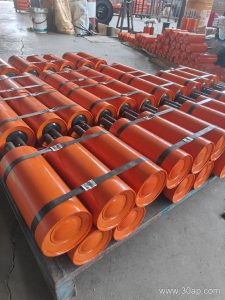
A spiral return idler is a rotating return-side roller whose shell carries a continuous helical flight instead of a plain cylindrical surface. Mounted under the carrying run, it supports the returning conveyor belt while the spiral profile constantly sweeps the belt’s bottom cover. That sweeping action knocks off fines, dust and sticky carryback before they reach the tail pulley, which keeps tracking steadier and reduces buildup on components further down the line.
In many plants the spiral return idler is simply called a helical return roller. Both names describe the same component, and neither should be confused with a bend pulley or a tail pulley, which are driven or redirecting wheels rather than free-turning support rollers.
Construction Details That Matter
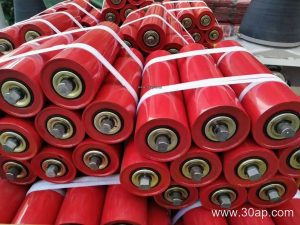
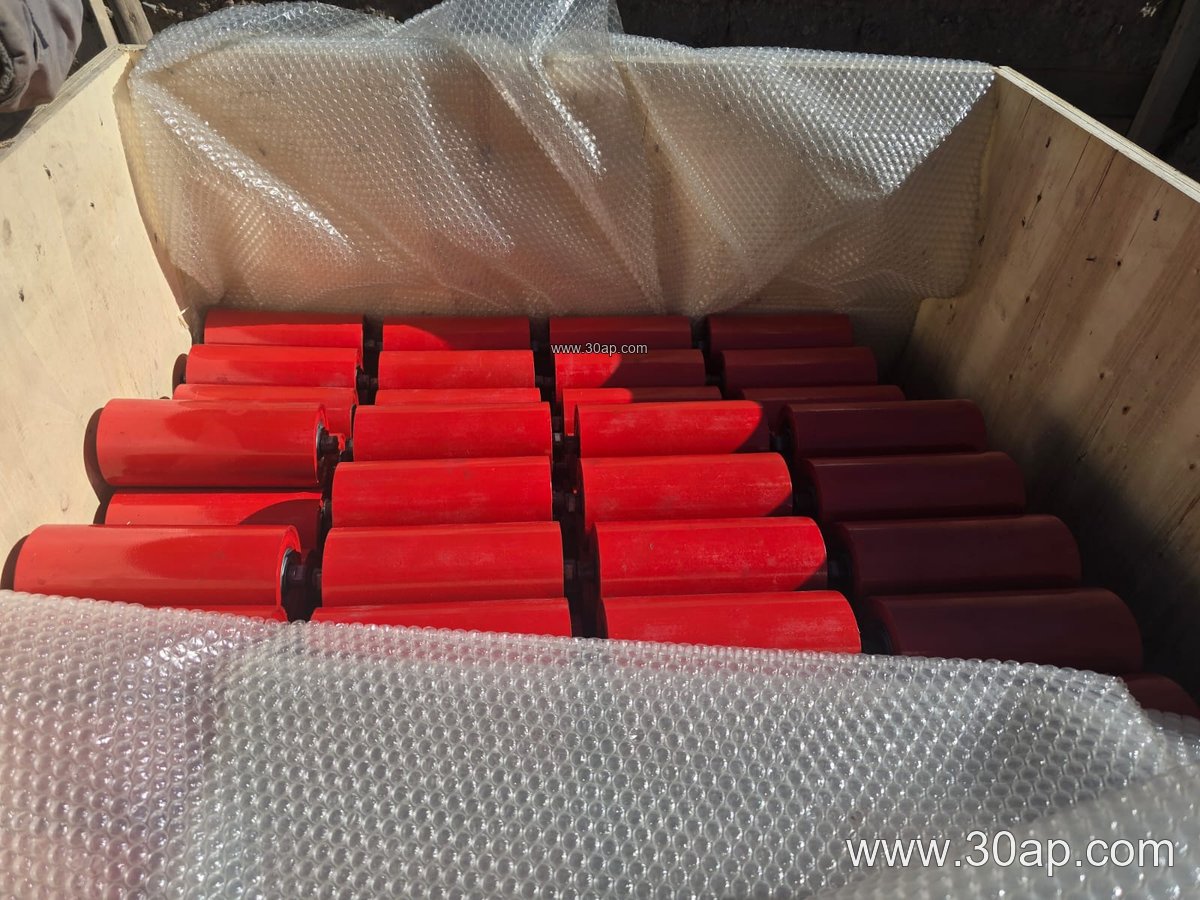
The body is usually a steel tube with a welded spiral flight formed from round bar or flat strip. Ends are fitted with bearing housings, and the shaft runs through sealed bearings that suit dusty service. Common bearing sizes include 6205, 6305 and 6308, matched to shaft and load requirements rather than to a single roll diameter. Shell surfaces may be painted steel or supplied with a rubber or nylon covering where abrasion is severe.
Typical roll diameters for return positions include Ø89, Ø108, Ø127, Ø133 and Ø159, with larger sizes used on wide, heavy belts. Roll length follows belt width and frame design. As a general reference, a return roller under a B800 belt might be around 950 mm long, while a B1200 installation often uses something near 1400 mm. These are examples only; the actual length is confirmed by the conveyor design.
Common Reference Dimensions
| Belt width | Typical return roll diameter | Typical roll length (reference) |
|---|---|---|
| B500 | Ø89 / Ø108 | about 600 mm |
| B650 | Ø89 / Ø108 | about 750 mm |
| B800 | Ø108 / Ø127 | about 950 mm |
| B1000 | Ø108 / Ø133 | about 1150 mm |
| B1200 | Ø127 / Ø133 | about 1400 mm |
| B1400 | Ø133 / Ø159 | about 1600 mm |
| B1600 | Ø133 / Ø159 | about 1800 mm |
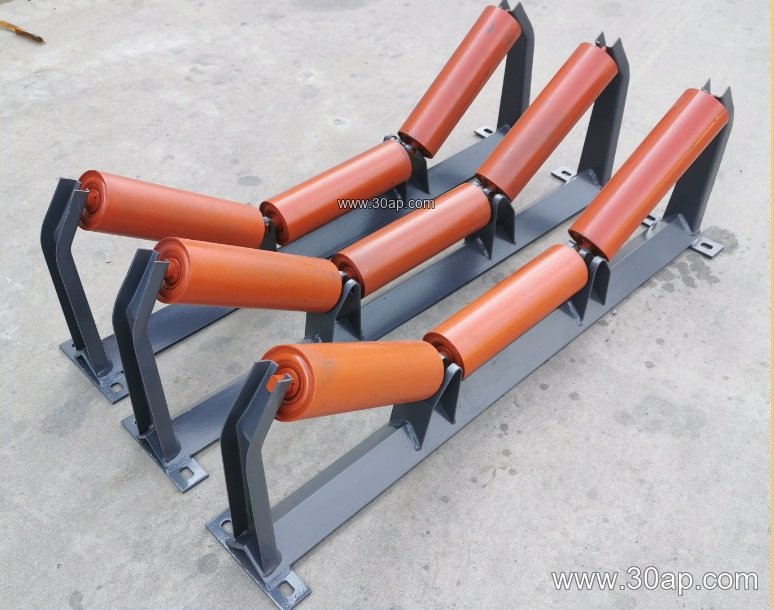
Frame height, bracket spacing and shaft ends are set by the conveyor maker. A conveyor bracket that fits one roller brand may not accept another, so matching the mounting interface is as important as matching the diameter.
Where It Fits on the Conveyor
Spiral rollers are most often installed on the return strand of troughed conveyors handling wet or dusty bulk materials. In a coal mining conveyor belt system, carryback mixed with moisture can cake onto plain return rollers and cause belt misalignment. The helical surface breaks that crust loose as it turns. Aggregate and quarry conveyor belt lines see similar benefits when crushed stone dust and fines cling to the belt after washing or rain.
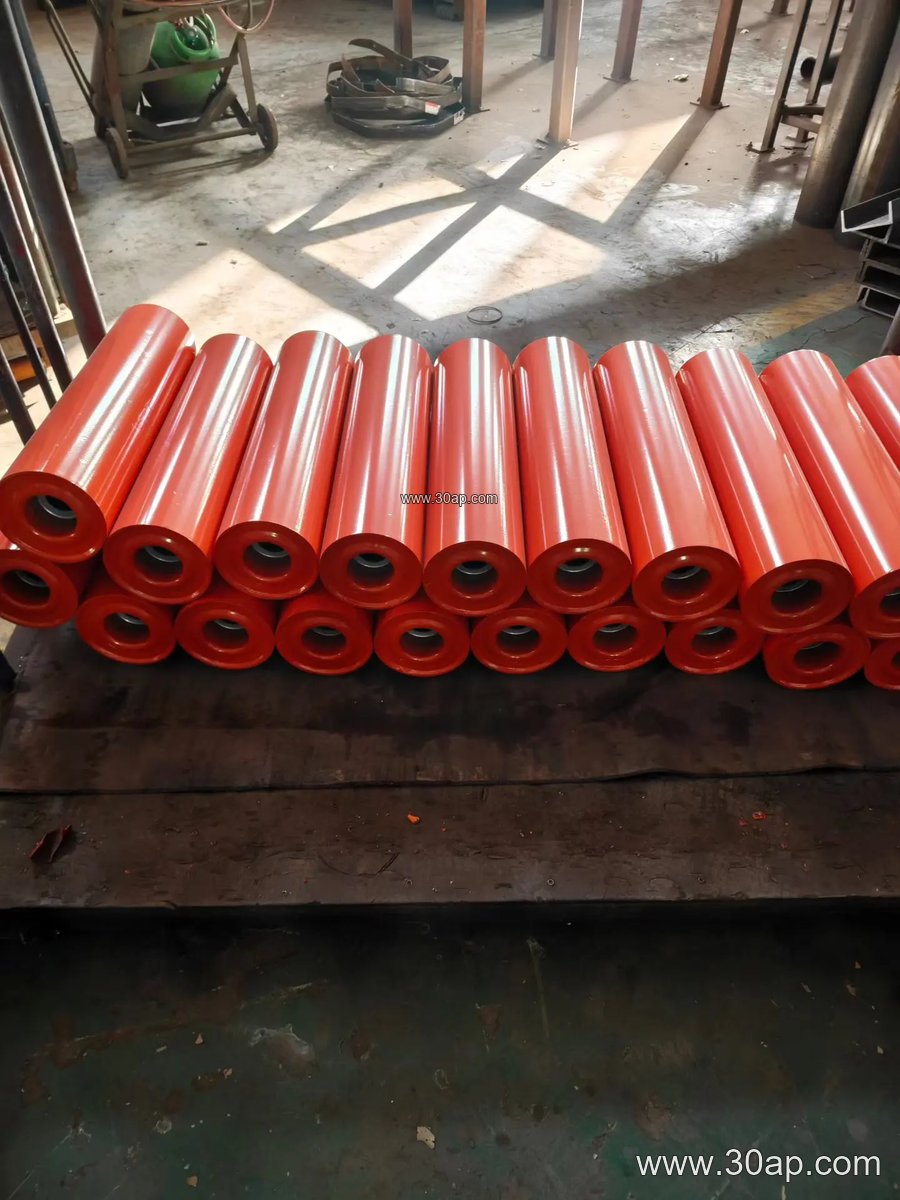
The component also suits cement plant clinker and raw meal circuits, power plant coal handling, and fertilizer or grain terminals where spillage needs to be controlled. On lines carrying an abrasive bulk material conveyor belt, a spiral roller can reduce the labor spent cleaning the return side, although it does not replace proper belt scrapers and skirt rubber.
It is not a substitute for a bend pulley or drive pulley, and it is not a load-bearing carrying roller. Its job is support plus light cleaning on the empty run.
Selection and Maintenance Notes
- Check whether the spiral is right-hand or left-hand wound; direction affects how material is pushed toward the discharge side.
- Confirm shaft diameter, bearing type and bracket bolt pattern before ordering.
- Use sealed bearings in dusty service and regrease only where fittings are provided.
- Inspect for bent flights and worn bearing seats during scheduled shutdowns.
- Keep the roller square to the belt; a skewed frame causes edge wear even on a good roller.
For a complete return-side assessment, plants often review the spiral idler together with the conveyor pulley condition, skirt rubber and belt cleaner settings. Buyers comparing options should ask for the drawing, the bearing designation and the surface treatment, then check those details against the existing conveyor bracket and frame.