What a Trough Idler Bracket Set Does on a Conveyor
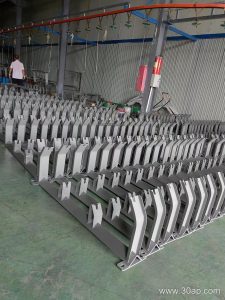
A trough idler bracket set is the steel framework that holds the carrying-side idler rollers in a troughed profile, so the conveyor belt forms a stable channel for bulk material. It is a familiar component in quarry lines, coal handling plants, cement kilns, and power station coal yards, where a belt must stay centered and supported between the head and tail of the system. The set usually includes the crossbeam, the angled mounting plates or brackets, and the fixing points for the idler roller shafts. It is not a pulley and should never be confused with a conveyor pulley at the drive, tail, or bend position; those are separate rotating drums with their own support structures.
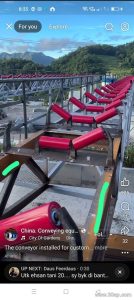
In practice, the bracket set is the interface between the conveyor bracket structure and the rotating idler roller. A well-matched assembly keeps the belt line true, reduces spillage, and lets the rollers turn freely under load. Anyone sourcing belt conveyor components should understand this part as a system item, not a single piece of steel.
Construction and Common Configurations
Most bracket sets are fabricated from angle steel, channel steel, or folded steel plate. The crossbeam carries the load, while the end brackets set the trough angle. Fixed brackets are welded or bolted to a single angle, whereas adjustable brackets allow the operator to change the trough angle to suit the material and belt width. Common trough angles are 20 degrees, 30 degrees, 35 degrees, and 45 degrees; adjustable versions can be shifted among these positions. Forward-tilted designs, often around 1.5 to 2 degrees, help keep the belt tracking.
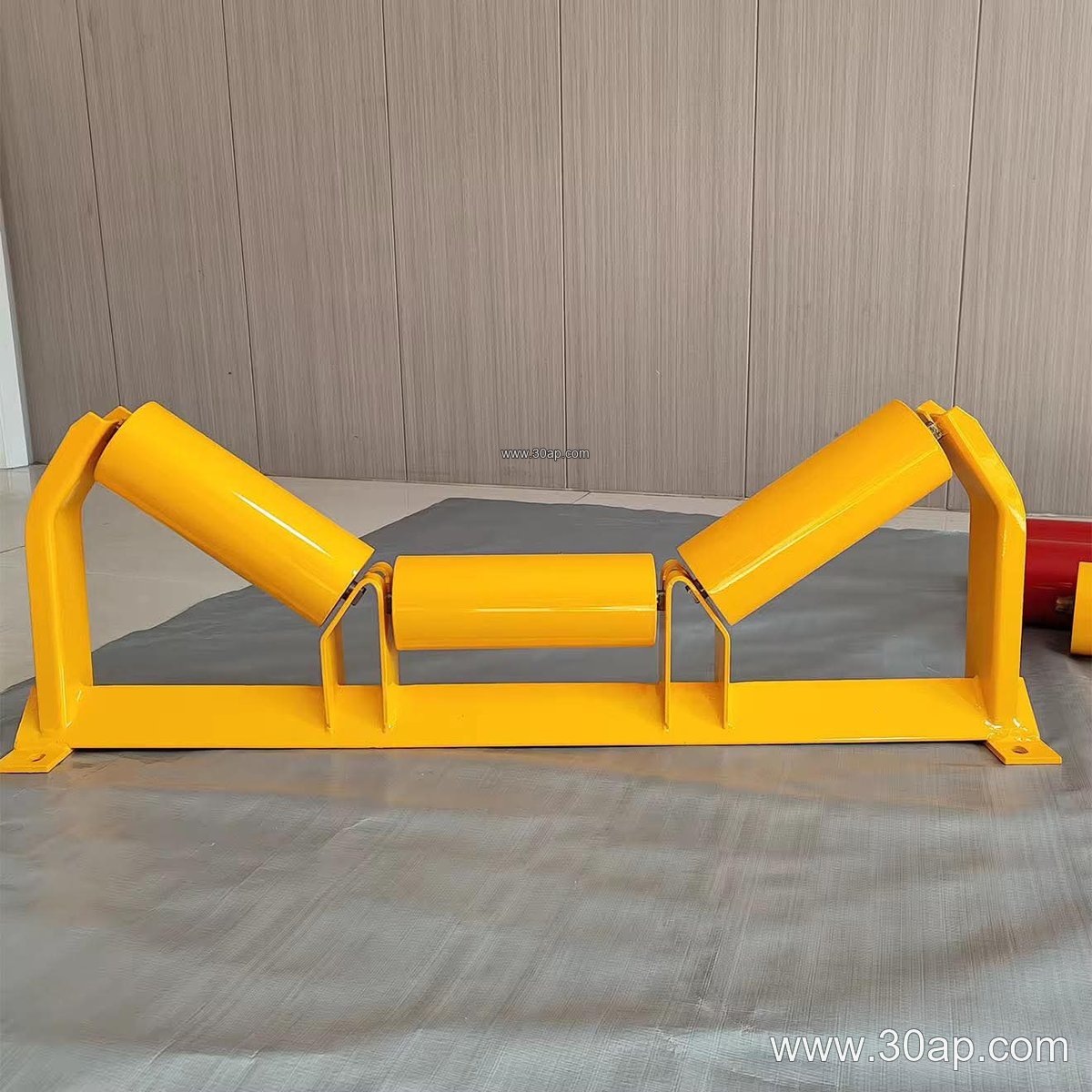
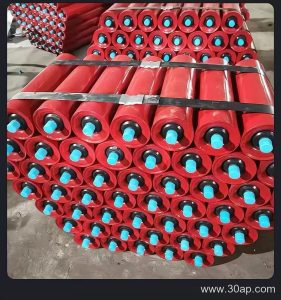
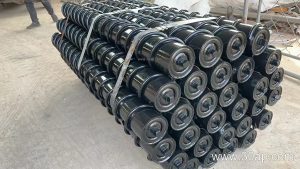
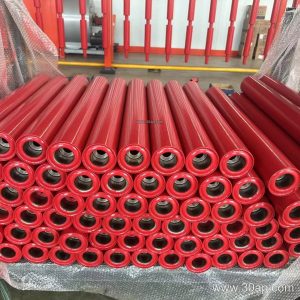
Roller diameter is matched to the bracket opening and the belt load. Typical idler roller diameters include Ø89, Ø108, Ø133, Ø159, and Ø194. A bracket set for a B800 belt at 35 degrees might use Ø108 rollers, while a B1200 line at 45 degrees may run Ø133 rollers. These are common examples rather than fixed rules, because mounting hole spacing and crossbeam length change with belt width and trough angle.
| Belt Width | Trough Angle | Typical Roller Diameter |
|---|---|---|
| B500 | 20–30 degrees | Ø89 |
| B650 | 30 degrees | Ø89 |
| B800 | 35 degrees | Ø108 |
| B1000 | 35–45 degrees | Ø108–Ø133 |
| B1200 | 45 degrees | Ø133 |
| B1400 | 35–45 degrees | Ø133–Ø159 |
| B1600 | 35–45 degrees | Ø159 |
| B1800 | 35–45 degrees | Ø159–Ø194 |
Note that belt width does not dictate a single trough angle or roller diameter. The final selection depends on material lump size, belt speed, and the load carried by each idler station.
Where the Set Fits in Different Industries
In a limestone quarry or aggregate crushing circuit, the trough idler bracket set supports the belt that carries blasted rock from the primary crusher to the screening deck. The same component appears in a coal washing plant, where a flame retardant conveyor belt and anti-static conveyor belt are common, and in a cement plant where heat resistant conveyor belt grades handle clinker-adjacent sections.
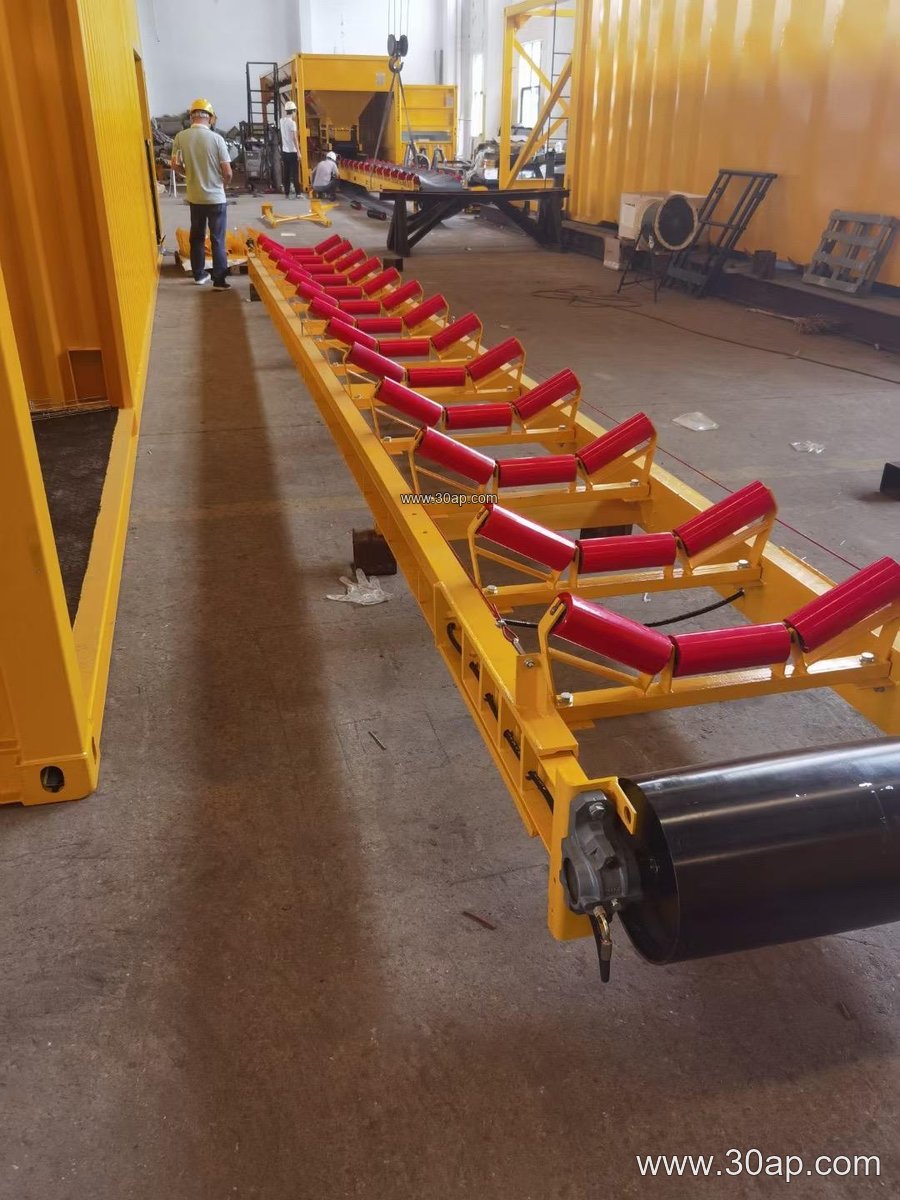
On a power plant coal yard, the bracket set works alongside the conveyor pulley at the head drive and the bend pulley at the transfer point, but each keeps its own role. The bracket set carries the belt; the pulleys pull and redirect it. In a port ship-loading line, wide belt widths such as 1800mm or 2000mm often call for heavy-duty bracket sets with larger rollers. A food-grade or oil resistant conveyor belt application, by contrast, may use a lighter bracket set where hygiene and cleanability matter more than raw strength.
Buyer Checklist Before Ordering
- Confirm the belt width, such as B650, B1000, or B1400, and the required trough angle.
- Match the bracket opening to the idler roller shaft and diameter, for example Ø108 or Ø133.
- Decide between fixed and adjustable brackets, and check whether forward tilt is needed.
- Verify the mounting hole spacing and crossbeam length against the existing conveyor bracket frame.
- Consider the environment: a quarry or iron ore plant may favor abrasion resistant conveyor belt and sturdy steel, while an underground coal mine needs flame retardant and anti-static grades.
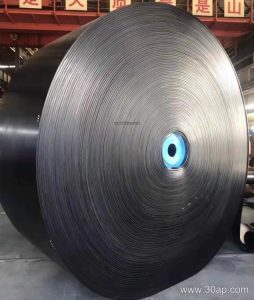
Buyers often compare a trough idler bracket set with a return bracket or a V-return bracket to make sure the full idler station is covered. Those are different positions on the same conveyor, and each needs its own bracket type. It also helps to review the belt specification, whether EP conveyor belt, steel cord conveyor belt, or multi-ply fabric core conveyor belt, because belt stiffness affects how well the trough is maintained. For large projects, an EP1000 or EP1250 belt on a 1200mm or 1500mm wide frame will usually need a bracket set rated for that load, and a fabric core conveyor belt in a smaller sand making plant may use a lighter set.
Finally, confirm the steel finish and bolt grade, and ask for a dimensional drawing before production. Small differences in hole spacing can slow installation on site, so a clear drawing is worth more than a verbal description. Check that the bracket set is compatible with the idler roller supplier’s shaft ends, and plan spare sets for high-wear zones such as loading points and transitions.