What a Terminal Conveyor Pulley Does
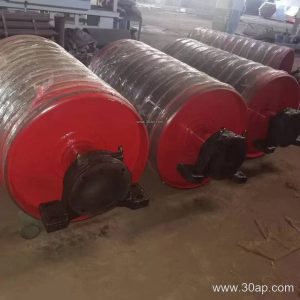
A terminal conveyor pulley is the drum positioned at the discharge or tail end of a belt conveyor, where material is either transferred off the belt or the belt loop is closed. In many layouts this is the head pulley at the delivery point, and in others it is the tail pulley that supports the return side and helps maintain belt alignment. Because it sits at the boundary of the conveyor, its condition directly affects belt tracking, spillage, and the service life of the conveyor belt.
Buyers often use the term interchangeably with head pulley or tail pulley, but the location and duty must be confirmed before ordering. A drive pulley that transmits torque is a different component from a bend pulley that only changes belt direction, and neither should be substituted for the terminal drum without checking the layout.
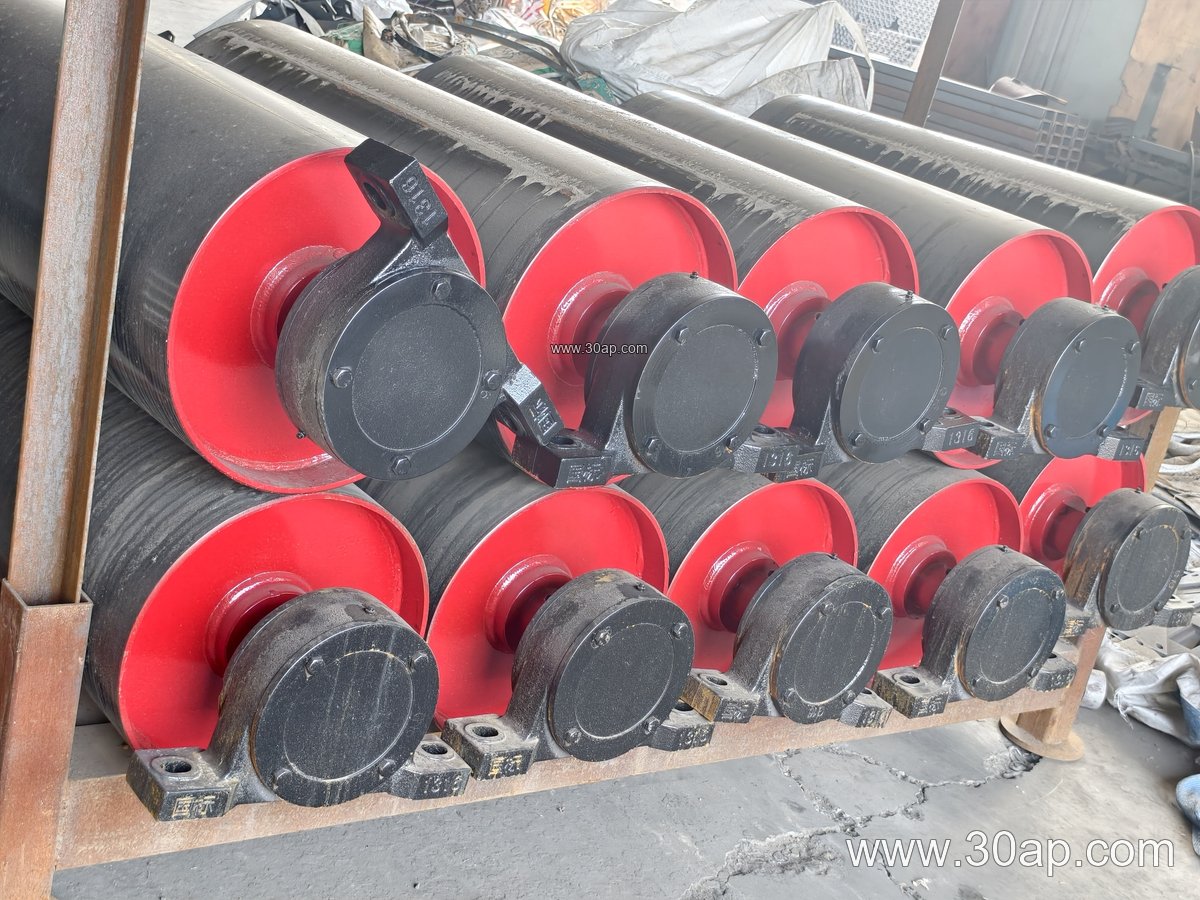
Construction and Surface Options
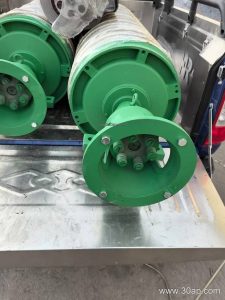
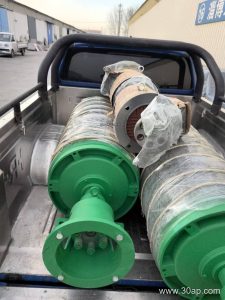
The drum body is usually a welded steel shell with machined end discs, mounted on a shaft through bearing housings. Shaft diameter is determined by torque and radial load rather than belt width alone, so a B800 conveyor may use a different shaft than another B800 line with heavier tension.
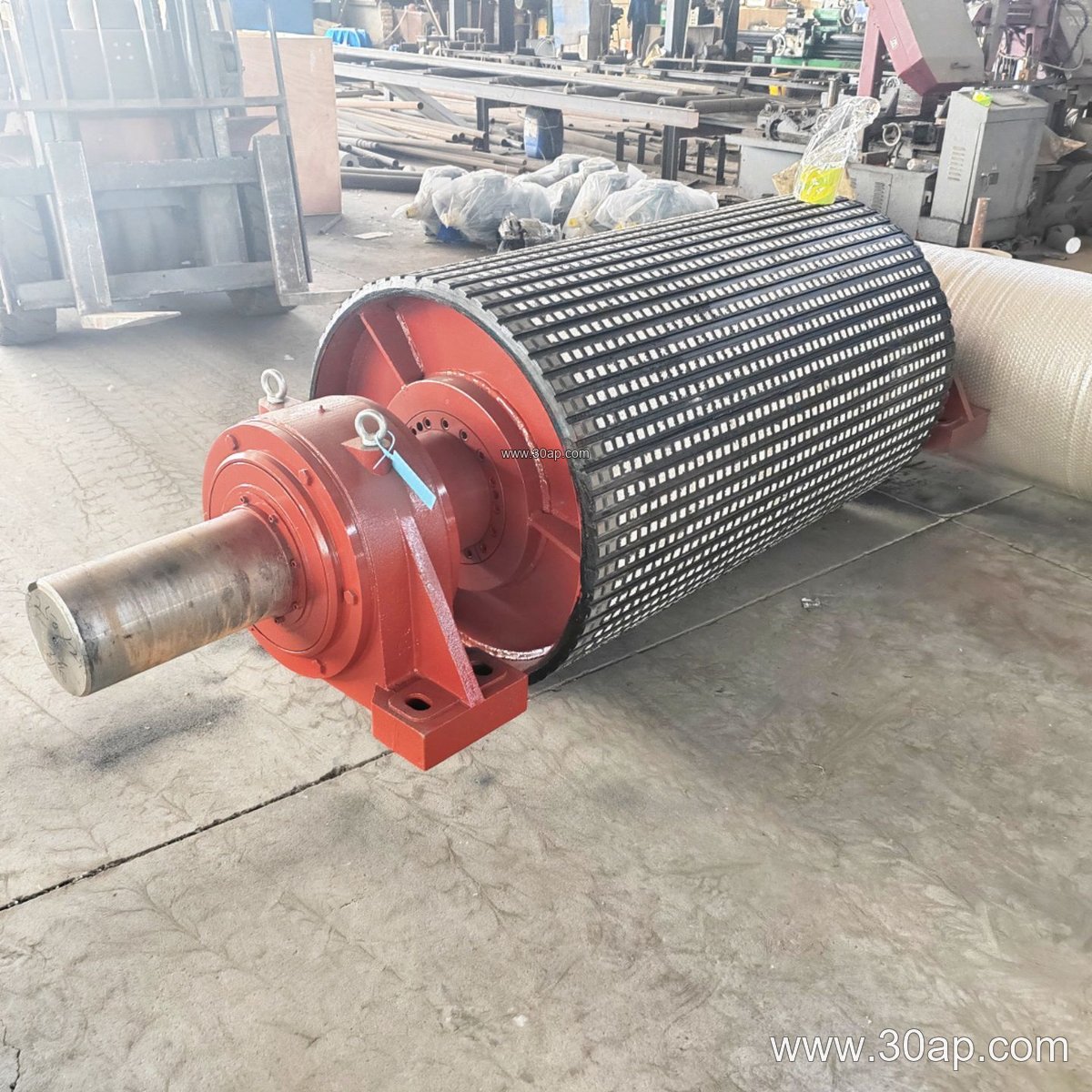
Surface treatment matters at the terminal position, especially on the discharge side where fines and moisture accumulate. Common options include plain finish, cold-bonded rubber, hot-vulcanized rubber, diamond grooving, herringbone grooving, and ceramic lagging. Lagging thickness is often 8, 10, 12, 15, or 20 mm depending on grip requirements and abrasion severity.
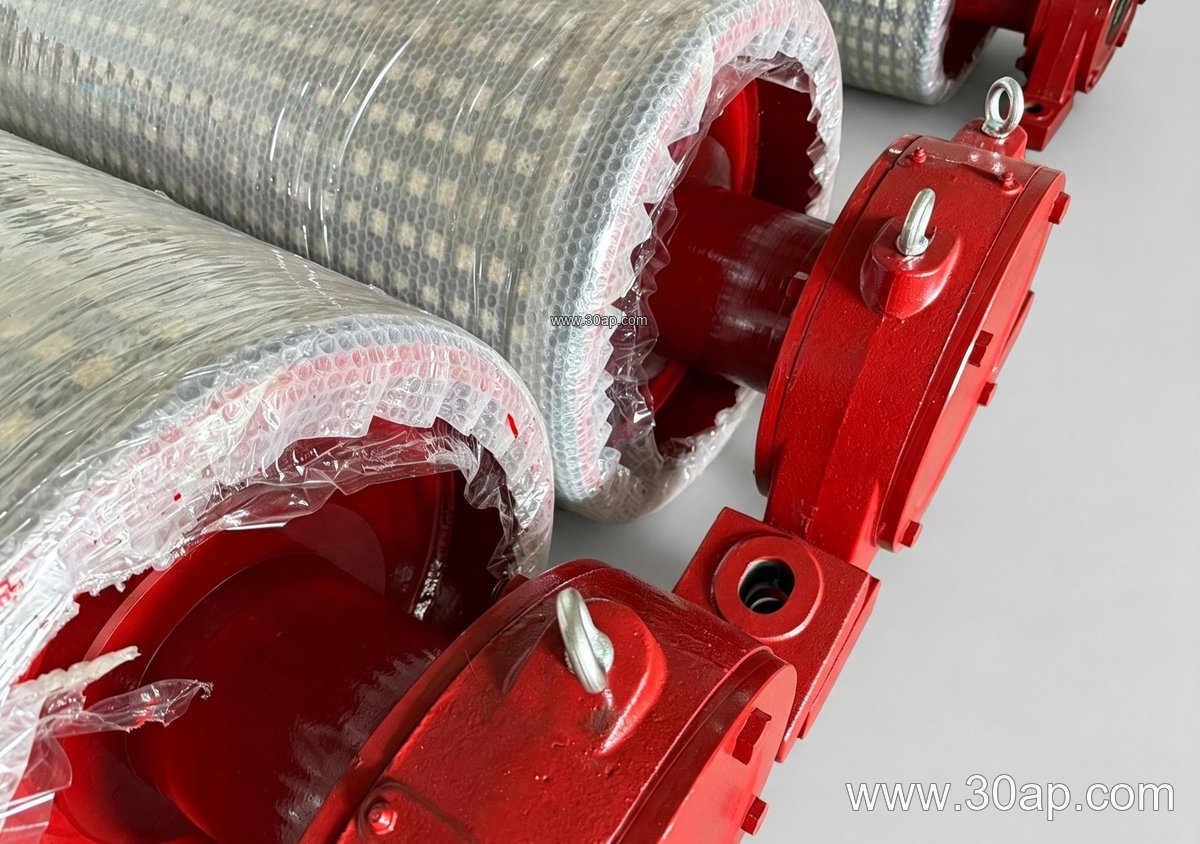
Typical Reference Dimensions
- Belt widths: B400, B500, B650, B800, B1000, B1200, B1400, B1600, B1800, B2000
- Diameters: Ø200, Ø250, Ø315, Ø400, Ø500, Ø630, Ø800, Ø1000, Ø1250
- Face width: usually wider than the belt, for example B800 around 950 mm and B1200 around 1400 mm
- Common combinations: B800 × Ø500, B1200 × Ø1000, B1400 × Ø800
These are reference values, not fixed pairings. Final diameter and face width are set by belt tension, wrap angle, and the space available at the transfer point.
Where It Fits in the Plant
In a quarry or aggregate line, the terminal drum at the head end often discharges onto a screen or stockpile conveyor. In a coal handling circuit, the same component may work with a flame retardant conveyor belt and anti-static requirements. Cement plants use it at clinker transfer points where dust and heat demand careful lagging selection, while power plant coal yards rely on stable tracking to avoid belt edge damage.
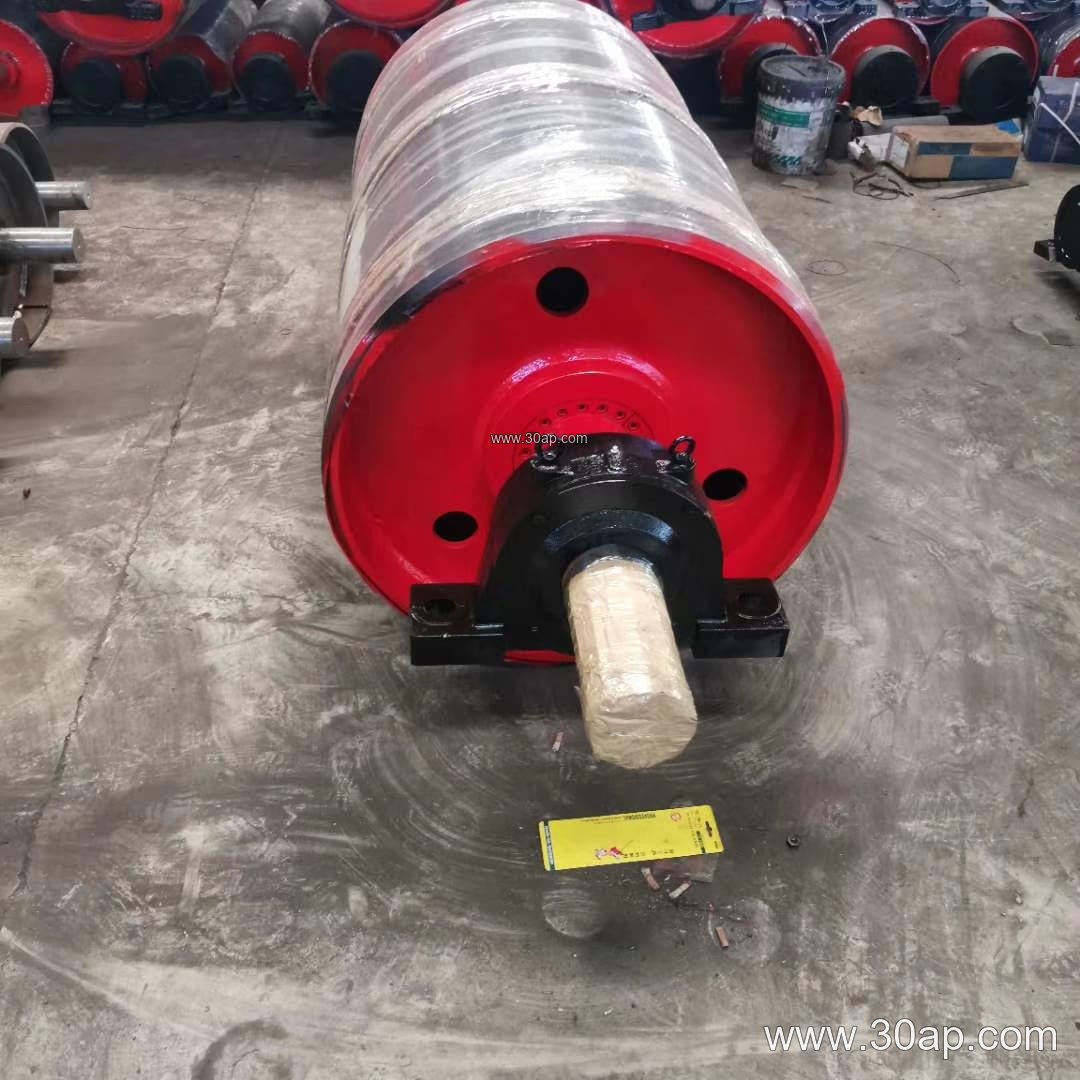
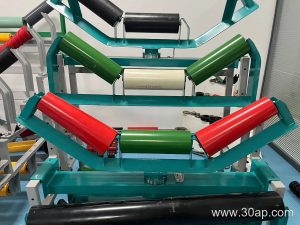
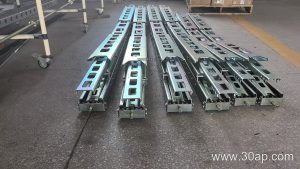
At a port bulk terminal, a terminal conveyor pulley may handle high tonnage with a steel cord conveyor belt, while a smaller sand and gravel operation might pair an EP conveyor belt with a lighter drum. The surrounding hardware, including conveyor brackets and idler roller sets, should be checked together with the pulley to keep the belt centered.
Selection Points for Buyers
Start with the belt width, belt type, and expected tension. A multi-ply fabric core conveyor belt and a steel cord belt distribute load differently, which influences shell thickness and bearing choice. Confirm whether the pulley is fixed, tensioned, or self-aligning, and specify the lagging pattern only after checking the material being carried.
Ask for the shaft diameter calculation basis, bearing type, and balancing grade. For abrasive duty, a ceramic or diamond lagging may last longer; for oily or wet conditions, groove patterns can help shed water. Do not assume one belt width matches one pulley diameter, and do not accept a shaft size chosen only from belt width.
Maintenance and Inspection
Check lagging wear, shell runout, and bearing temperature at regular intervals. Misalignment at the terminal drum often shows up as edge wear on the conveyor belt or as material build-up on the return side. Keep the scraper and conveyor bracket hardware tight, and verify that the pulley remains square to the belt centerline after any realignment work.
Replacement planning should record the original diameter, face width, shaft size, and lagging type. A like-for-like swap is safer than matching only the belt width, particularly on conveyors handling abrasive ore, cement clinker, or wet coal.