What a Three-Roll Idler Bracket Does
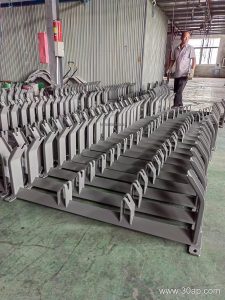
A three-roll idler bracket is the steel support that holds three troughing idler rollers in the shape of a trough. The two outer rolls are angled upward, and the centre roll sits flat. This arrangement lifts the edges of the conveyor belt so bulk material stays centred during transport. The bracket is often called a troughing idler frame or troughing idler support, and those names refer to the same component throughout this article. It is a structural part rather than a rotating part, so its job is to keep the idler rollers at the correct angle and spacing while carrying the weight of the belt and its load.
In a quarry conveyor line or a cement plant transfer point, a poorly aligned bracket shows up quickly as belt edge wear, spilled material, and uneven roller loading. That is why the frame deserves the same attention as the conveyor belt and the idler roller it carries.
How the Bracket Is Built
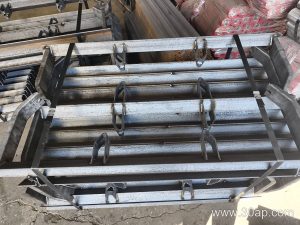
Most three-roll idler brackets are fabricated from angle steel, channel steel, or folded steel plate. The two inclined arms are welded or bolted to a cross beam, and each arm ends in a mounting slot or hole pattern for the idler shaft. Common workshop practice includes drilling the mounting positions after the frame is squared, so the three rollers line up in one plane. A powder coating or hot-dip galvanised finish is typical for outdoor installations such as a port or a power plant coal yard, while painted frames are common indoors.
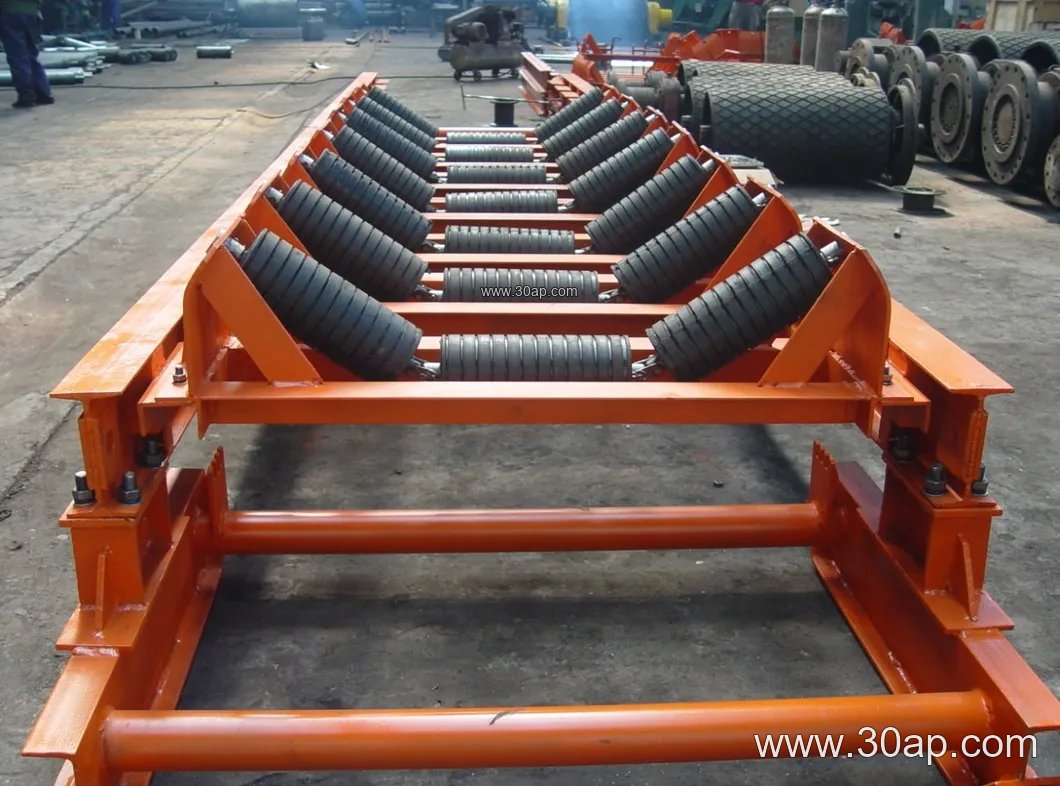
- Material: angle steel, channel steel, or bent plate
- Finish: painted, powder coated, or galvanised
- Mounting: fixed slots, bolted arms, or adjustable arms
- Roller seats: usually three, matching the centre and side rolls
The bracket must be stiff enough that the outer arms do not deflect when a fully loaded belt passes. Thin arms can twist under load, which changes the trough angle and lets material migrate to one side.
Trough Angle and Belt Width Considerations
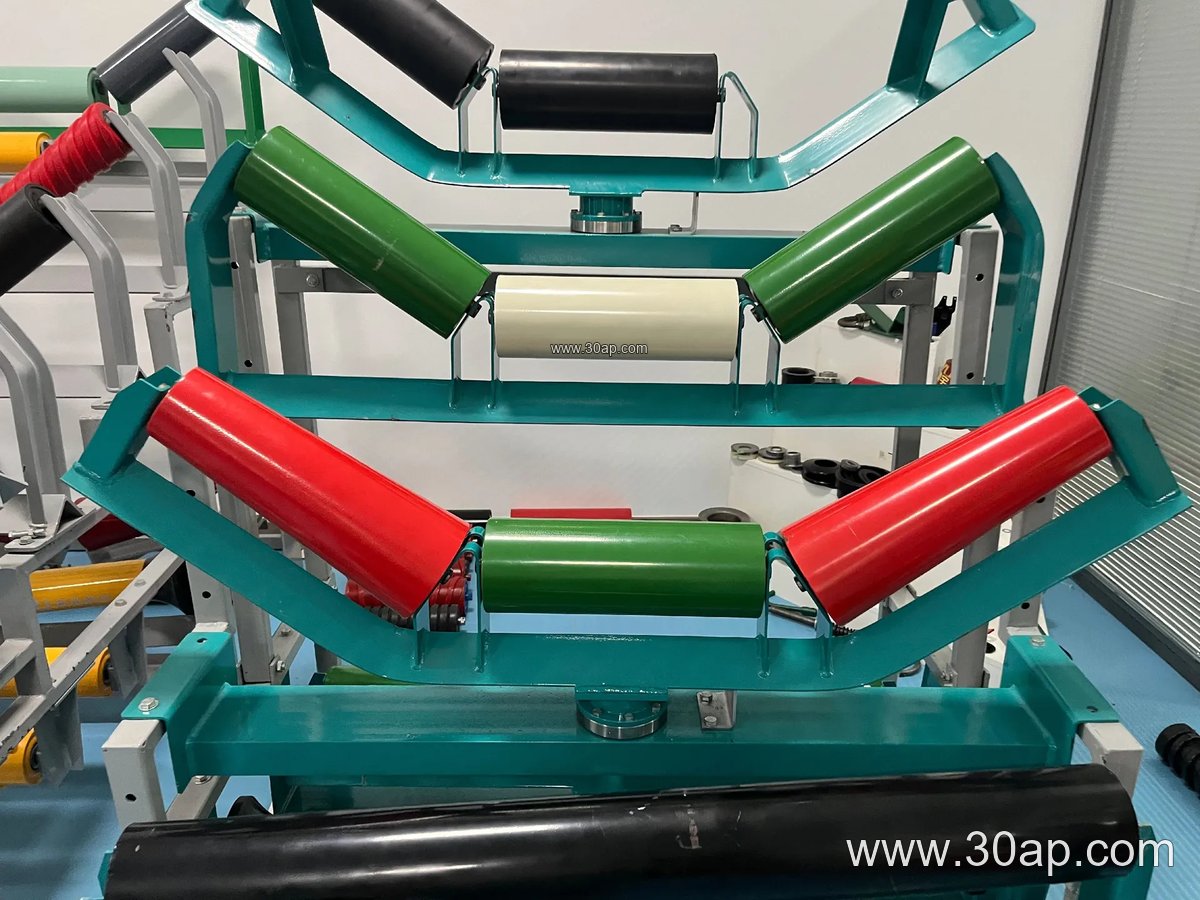
The trough angle is the main design choice. A 20 degree frame suits flat, wide belts and light material; 30 and 35 degrees are the most common choices for general bulk handling; 45 degrees gives a deeper trough for high-capacity loading but puts more stress on the belt edges. Adjustable brackets let maintenance teams move between these angles without replacing the frame.
Belt width and roller diameter are selected together with the frame, not independently. Typical combinations seen in catalogues include B800 with a 35 degree trough and Ø108 rollers, or B1200 with a 45 degree trough and Ø133 rollers. A narrower B650 frame may use Ø89 rollers. These are examples only; the correct match depends on belt tension, material density, and the conveyor design.
| Belt Width | Trough Angle | Roller Diameter | Typical Use |
|---|---|---|---|
| B500 | 20-30 degrees | Ø89 | Light duty, small plants |
| B650 | 30 degrees | Ø89 | Aggregate and sand lines |
| B800 | 35 degrees | Ø108 | General bulk material |
| B1000 | 35-45 degrees | Ø108-Ø133 | Cement and coal handling |
| B1200 | 35-45 degrees | Ø133 | Mining and port conveyors |
| B1400-B1600 | 35-45 degrees | Ø133-Ø159 | Heavy duty ore transport |
| B1800-B2000 | 35-45 degrees | Ø159-Ø194 | Large tonnage systems |
Installation hole spacing and cross beam length change with belt width and trough angle, so these dimensions are always confirmed against the conveyor drawing rather than assumed.
Where These Frames Are Used
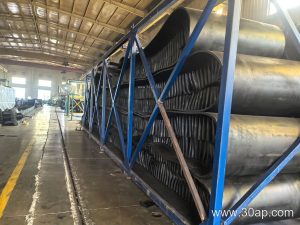
Three-roll idler brackets appear along the carrying side of almost every troughed conveyor. In a limestone mine, they support the belt through the crushing and screening section. In a steel plant sinter line, heat-resistant rollers are paired with sturdy frames to handle hot material. A coal-fired power plant uses them on the coal conveying route, often together with flame retardant conveyor belt to meet site safety requirements. Sand and gravel plants rely on them at every transfer point where the belt must stay troughed.
Some sites use a rubber conveyor belt or an EP conveyor belt on the same frame series, so the bracket is selected to suit the belt stiffness and the load profile rather than the belt brand. In dusty or wet conditions, a self-aligning or forward-leaning bracket variant can help the belt track straighter.
Fixed, Adjustable, and Other Variants
A fixed bracket is welded to one trough angle and is the simplest, lowest-maintenance option. An adjustable bracket has slotted or pivoting arms that allow the trough angle to be changed on site. Impact brackets with resilient supports are used under loading points, and return brackets support the belt on its way back. These are different components from the three-roll carrying frame, and each has its own mounting pattern.
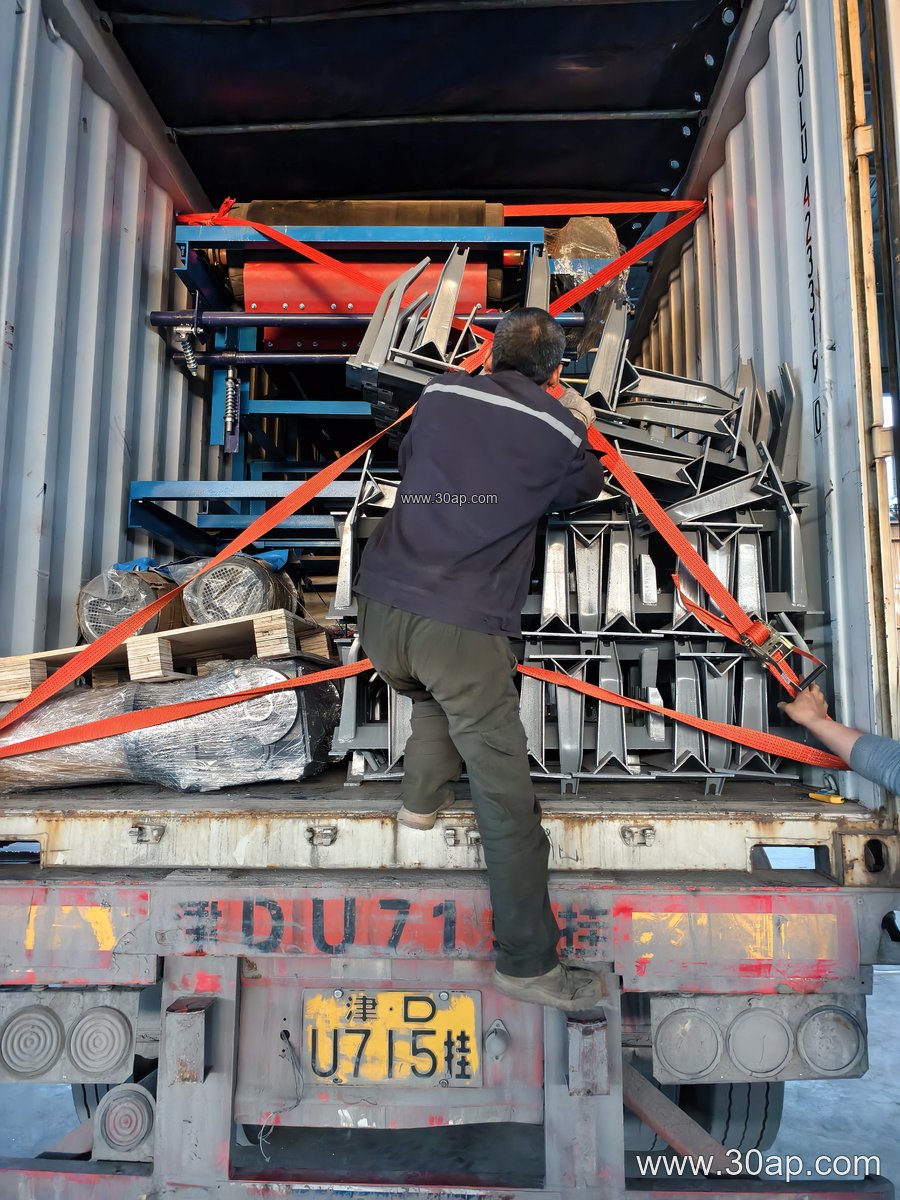
Buyers should confirm the belt width, required trough angle, roller diameter, shaft end type, and mounting hole spacing before ordering. It also helps to state the environment, since a galvanised frame may be preferred at a port while a painted frame is adequate in a covered cement plant building.
Maintenance Points for Buyers
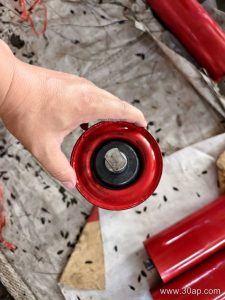
Check the bracket arms for bending or cracked welds during routine inspections, and confirm that all three idler rollers sit firmly in their seats. Loose rollers on a three-roll idler bracket cause belt misalignment, and misalignment accelerates wear on the conveyor belt. Replacing a worn frame early is usually cheaper than replacing the belt edge it damages.