What a Surface Belt Conveyor Idler Does
A surface belt conveyor idler is the rotating roller assembly that supports the conveyor belt on the load-carrying or return side of an above-ground conveyor. In a quarry or a cement plant, these idlers carry the weight of the belt and the material, keep the belt in a stable trough shape, and reduce friction so the drive system does not have to drag the belt over a fixed surface. The idler roller turns with the belt rather than against it, which is the whole point of the component.
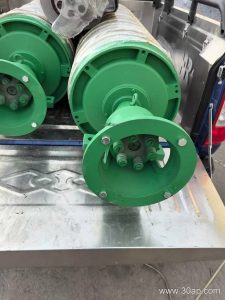
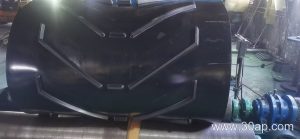
People sometimes use the shorter name “carrying idler” or “belt idler” for the same part. Those are acceptable synonyms for a surface belt conveyor idler, but they should not be confused with a conveyor pulley. A conveyor pulley is a larger drum at the head, tail, or bend of the conveyor, while an idler is a small-diameter roller mounted on a frame between pulleys. The two are different components and are not interchangeable.
How the Idler Is Built
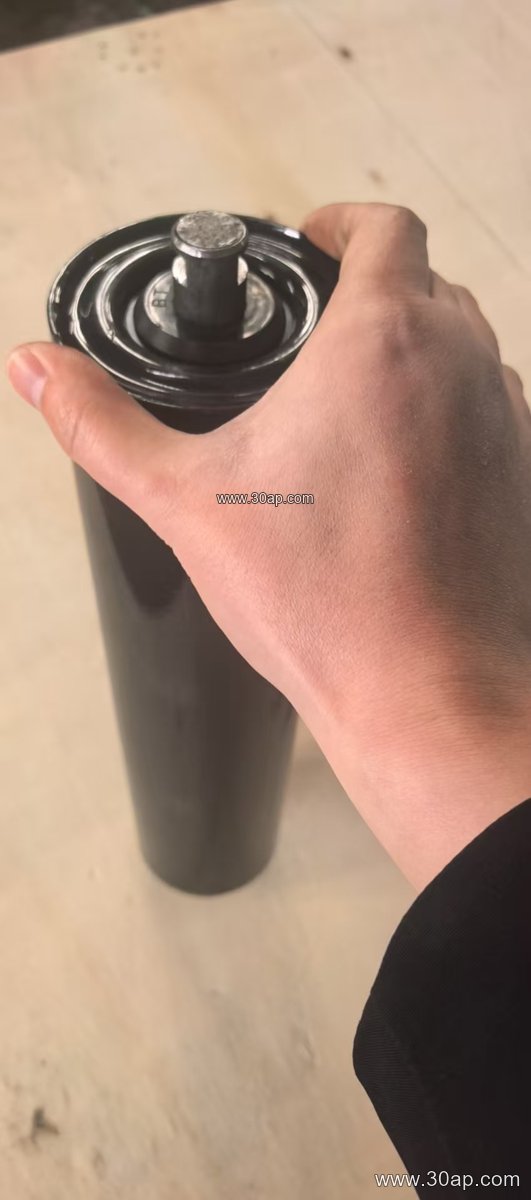
A typical unit has a steel tube shell, a shaft through the center, two bearing housings, and a sealing arrangement at each end. The shell may be plain steel, nylon-coated, ceramic-covered, or fitted with rubber rings for impact absorption. Bearings are usually deep-groove ball bearings, with common sizes such as 6204, 6205, 6305, 6306, 6308, and 6310 appearing across different roller diameters. The bearing size is matched to the load and the shaft, not to the belt width alone.
The seal is often the detail that decides service life. Dust, fine grit, and moisture are constant companions in a stone crushing line or a cement plant, and a worn seal lets abrasive particles reach the bearing. A well-built idler uses a labyrinth or multi-stage seal, and the end cap should resist water ingress during washdown or rainy weather.
Common Forms on a Surface Conveyor
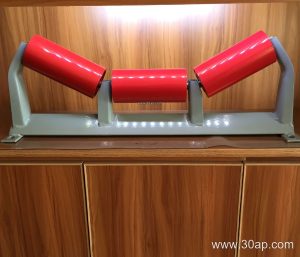
The troughing idler is the most familiar form, usually arranged as a two-roller or three-roller set with a trough angle of 20, 30, 35, or 45 degrees. A three-roller set at 35 degrees is common on bulk material conveyors, while a 45-degree trough is sometimes chosen where the material must be contained more deeply. Return-side idlers are often flat or V-shaped, and impact idlers with rubber rings are placed under the loading point to cushion falling rock.
- Troughing idlers for the carrying side
- Flat or V-return idlers for the empty belt
- Impact idlers with rubber rings at transfer points
- Self-aligning idlers to correct belt wander
- Spiral or comb idlers where sticky material builds up
Roller diameters commonly range from about 63 mm to 219 mm, and belt widths from B400 to B2400 are seen across different plants. On a three-roller troughing set, a typical roll length might be around 200 mm for B500, 250 mm for B650, 315 mm for B800, 380 mm for B1000, 465 mm for B1200, and 530 mm for B1400, but side rolls and center rolls can differ, and the final figure is set by the conveyor designer. These values are examples, not a fixed pairing rule.
Where It Fits in the Plant
In a limestone quarry, surface idlers support the belt that carries run-of-quarry rock from the primary crusher to the stockpile. In a cement plant, they appear on clinker and raw meal conveyors, where heat and fine dust both matter. A coal handling system at a power plant uses them on the coal conveyor feeding the bunkers. The components look similar across these sites, but the surface treatment and seal class should follow the duty.
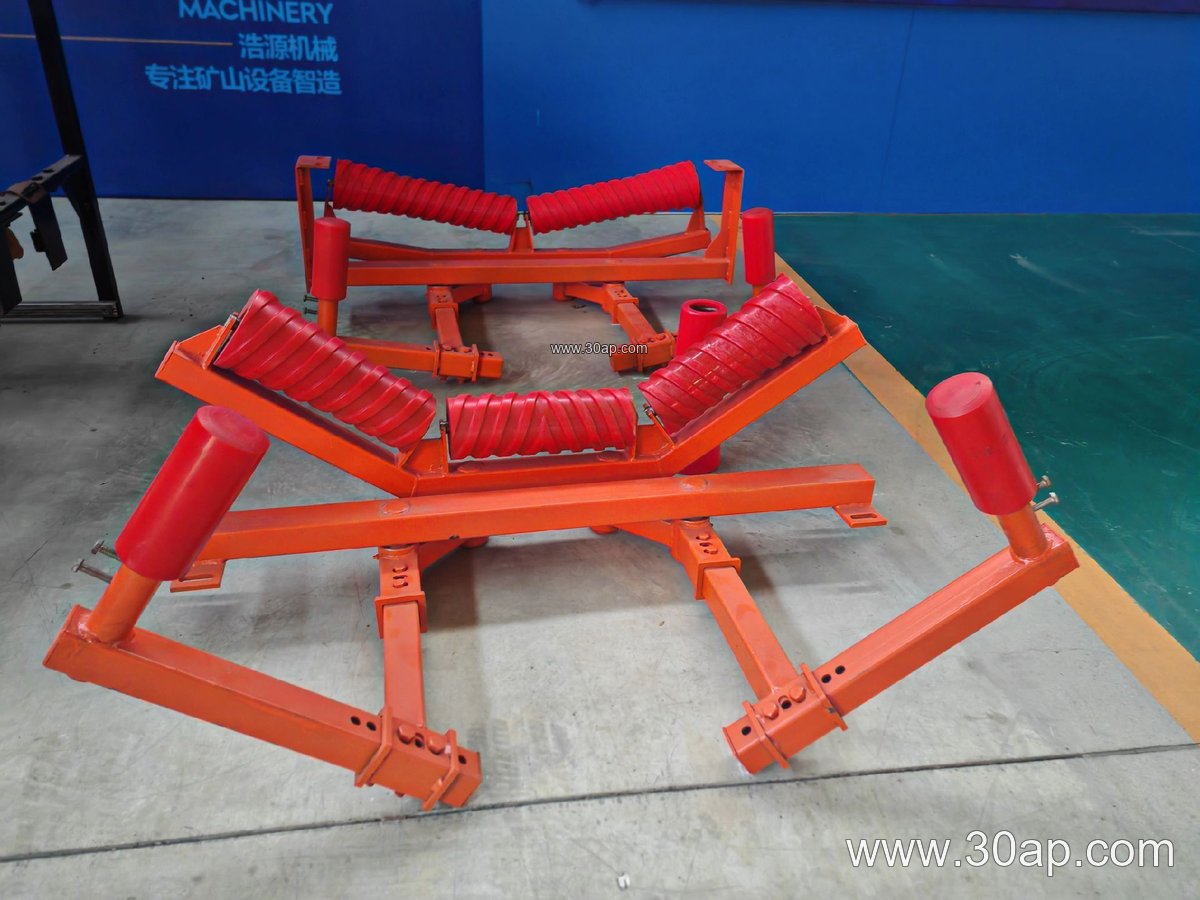
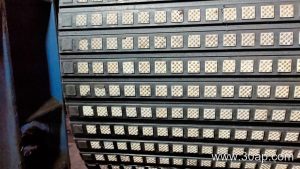
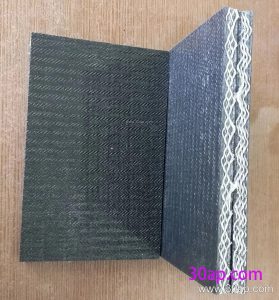
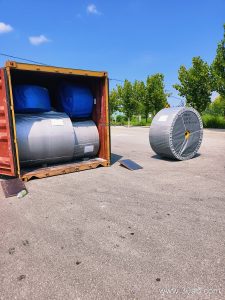
The conveyor belt itself also shapes the choice. A heavy-duty rubber conveyor belt with a thick cover needs a robust roller and a strong frame, while a lighter EP conveyor belt on a long overland run may call for low-friction, well-balanced rollers to keep power draw down. Where a steel cord conveyor belt carries high tension, idler spacing and roll quality become more critical because belt sag and edge stress increase. Matching the idler to the belt and the load is the practical rule.
What a Buyer Should Check
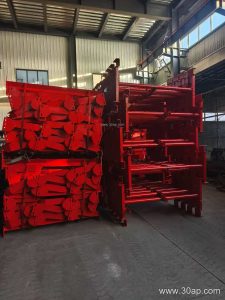
Before ordering, confirm the belt width, the trough angle, the roller diameter, the roll length, the shaft ends, and the mounting bracket style. The conveyor bracket must match the frame, and a mismatched bracket is a common cause of installation delay. Ask about the bearing brand or grade, the seal type, and the shell thickness. For dusty or wet locations, request a sealed-for-life design and confirm the end cap material.
Also think about the environment. In a fertilizer or grain facility, corrosion resistance and cleanliness may matter more than raw strength. At a port or ship loading conveyor, salt air can attack unprotected steel. A surface belt conveyor idler that suits a dry aggregate line may be a poor choice beside a wash plant, so state the conditions clearly when requesting a quote.
Finally, keep a small stock of the most-used roller sizes on site. Idlers wear, and a seized roller can damage the belt cover quickly. Replacing a failed idler early is far cheaper than replacing a section of conveyor belt.