What a Conveyor Idler Does
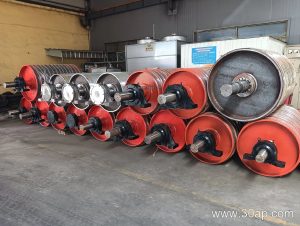
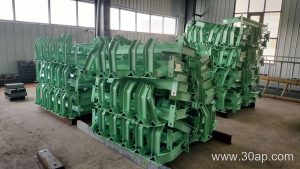
A conveyor idler is the rotating roller assembly that supports the conveyor belt along its carrying and return runs. It is the most numerous component on a belt conveyor, and its condition directly affects belt life, energy draw, and spillage. In a quarry, a cement plant, or a power plant coal yard, replacing a seized idler roller early costs far less than replacing a damaged belt. The idler works together with the conveyor bracket system and the conveyor pulley at each end, but it is a distinct assembly: drive, tail, and bend pulleys are not interchangeable with idlers, and each serves a different function in the conveyor layout.
Construction and Main Parts
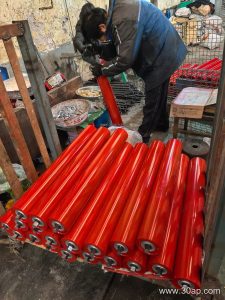
A typical idler roller consists of a steel tube shell, a shaft, bearing housings, and a sealing arrangement. The shell is often a steel pipe with machined ends; nylon, ceramic, or rubber-covered shells are also used where wear or material build-up is an issue. Bearings are commonly 6204, 6205, 6305, 6306, 6308, or 6310, chosen to match load and speed rather than a fixed rule tied to one diameter. Sealing is the detail that often decides service life in dusty plants: labyrinth seals, felt seals, and multi-stage dust seals are common, and a well-sealed idler roller keeps grit away from the bearing race.
Where Idlers Sit on the Conveyor
On the carrying side, idlers are normally arranged in sets of three to form a trough that keeps bulk material centered. Common trough angles are 20, 30, 35, and 45 degrees; a steeper trough suits fine, free-flowing material, while a shallower one helps with large lumps. Transition idlers are placed near the loading point to ease the belt from flat to troughed. On the return side, flat return idlers or V-return idlers support the empty belt.
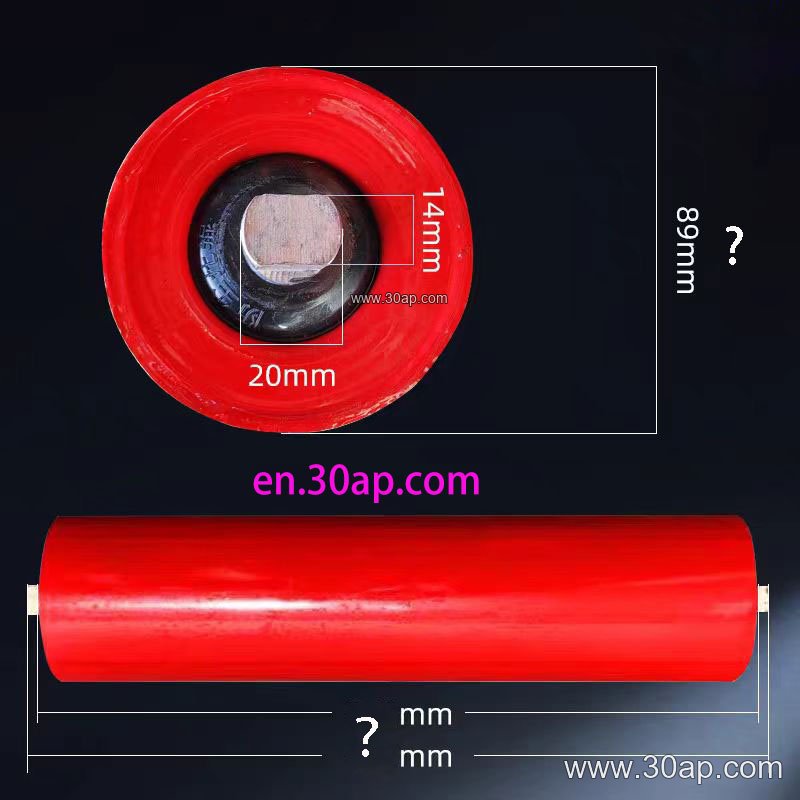
Impact idlers with rubber rings are used under the loading chute in a crusher conveyor, and self-aligning idlers with tapered rollers help correct belt drift. Spiral idlers are chosen where sticky material would otherwise build up on a plain shell. These are idler variants, not substitutes for the main assembly.
Typical Working Environments
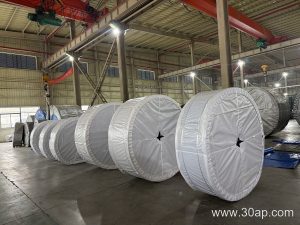
In a limestone quarry or an aggregate line, dust and abrasive rock set the main demand, so abrasion-resistant shells and good sealing pay off. In a coal washing plant or a power station coal yard, flame-retardant and anti-static properties of the belt matter, and the idler must tolerate fine coal dust that works into every gap. Other common sites include iron ore and copper ore handling, cement kiln feed lines, port ship loading, and tunnel spoil removal. In each case the idler is selected together with the belt: a heavy-duty mining conveyor belt with a steel cord conveyor belt carcass carries different loads than a fabric core conveyor belt on a short transfer.
Matching Diameter, Belt Width, and Roll Length
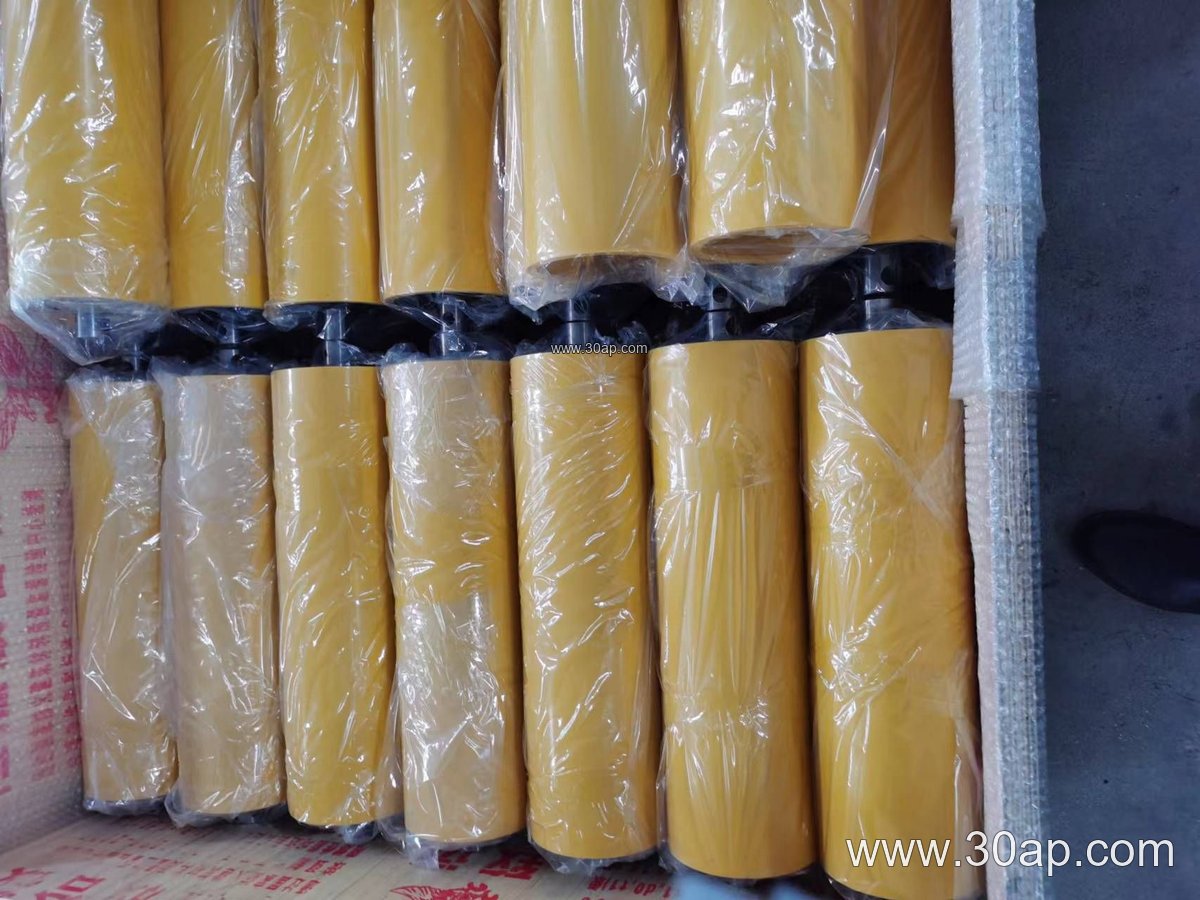
Roller diameter and belt width are related by design, not by a fixed table. The belt width sets the idler set span and the roll length, while the diameter is chosen from load, belt speed, and available space. Typical diameters run from about 63 mm to 219 mm, and belt widths from B400 to B2400. The following values are common examples only, and side rollers or center rollers in a three-roll set may differ.
| Belt width | Common roll length (three-roll trough set) |
|---|---|
| B500 | about 200 mm |
| B650 | about 250 mm |
| B800 | about 315 mm |
| B1000 | about 380 mm |
| B1200 | about 465 mm |
| B1400 | about 530 mm |
| B1600 | about 600 mm |
| B1800 | about 670 mm |
| B2000 | about 750 mm |
Do not assume one belt width pairs with only one pulley diameter or one shaft size; both are calculated from the actual conveyor duty. A 1200 mm wide belt with an EP conveyor belt carcass on a medium-duty line is a different case from a 1800 mm wide steel cord conveyor belt on a main haulage drive.
What Buyers Should Check
- Confirm the belt width, trough angle, and idler set form before ordering.
- State the material, lump size, and whether the belt is a heat resistant conveyor belt or an oil resistant conveyor belt, since temperature and oil affect seal and bearing choice.
- Check the sealing class for dusty service in a cement plant or coal yard.
- Ask for the bearing number and shell thickness, and keep spare idler rollers for critical drives.
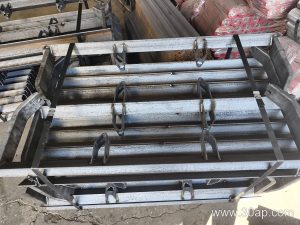
- Review the conveyor bracket dimensions so the new idler fits the existing frame.
A planned idler inspection route, with free rotation checks and alignment checks, prevents most belt edge damage and tracking problems.