What Conveyor Pulley Welding and Machining Covers
A conveyor pulley is a rotating drum that drives, tensions, or redirects a conveyor belt. Its two core manufacturing stages are welding and machining. Welding joins the hub, shaft, end discs, and shell into one load-bearing structure. Machining then cuts the journal, keyway, and end faces to the tolerances the bearings and gearbox coupling require. Together, conveyor pulley welding and machining decide whether a drum runs true, holds its balance, and survives years of dusty, high-load service in a quarry, cement plant, or coal handling system.
This article focuses on those two processes. Drive, tail, and bend pulleys all go through them, but each position places different demands on the finished drum.
How a Pulley Is Built Up by Welding
Fabrication usually starts with the shell, rolled from steel plate and closed with a longitudinal seam. End discs are then fitted and welded to both ends, followed by the hub and the shaft. A well-planned welding sequence controls distortion: balanced passes, preheating where the steel grade needs it, and gradual cooling all reduce the risk of a warped shell or a cracked heat-affected zone.
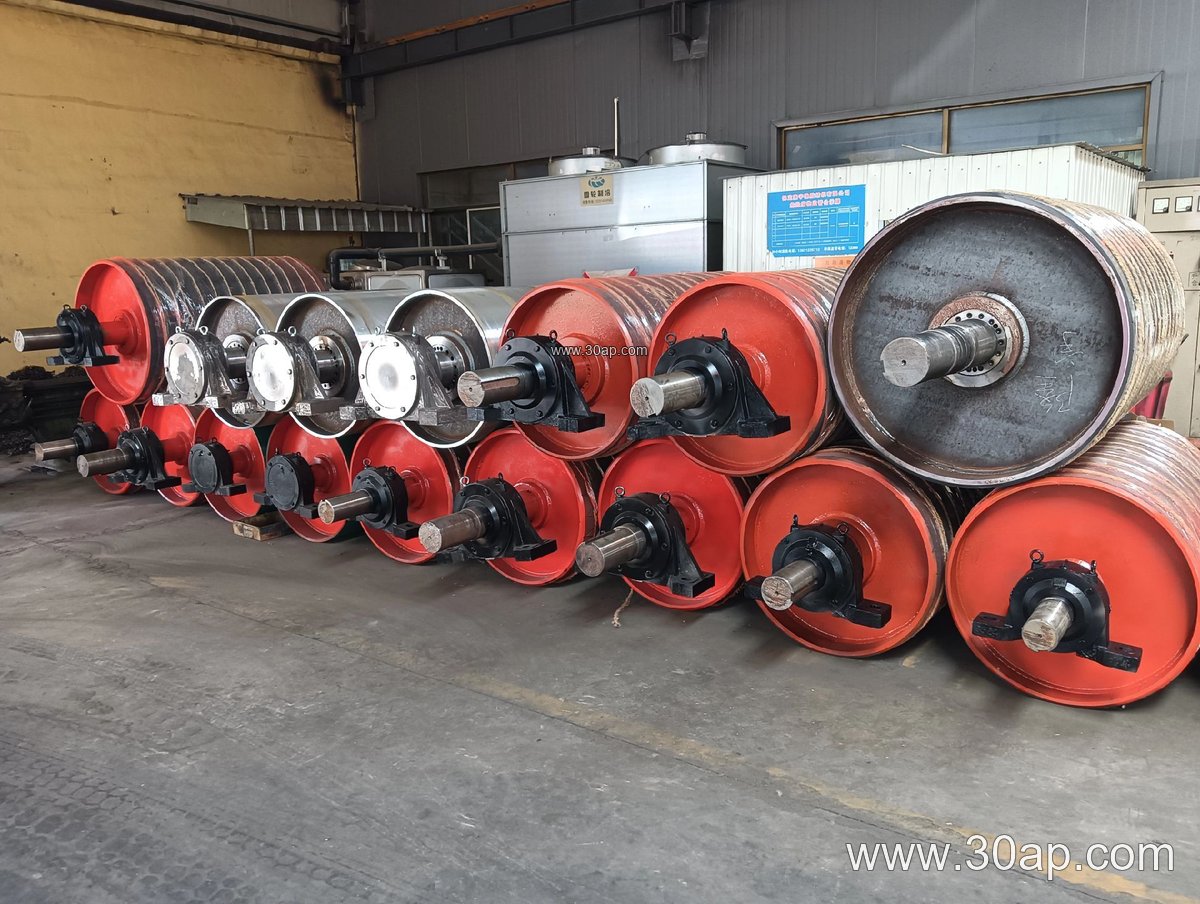
Weld quality matters most at the shaft-to-hub and hub-to-disc joints, where torque from the conveyor belt load is transferred. Common checks include visual inspection, dye penetrant or ultrasonic testing on critical seams, and dimensional checks before the drum moves to the lathe.
Machining the Journal, Keyway, and Faces
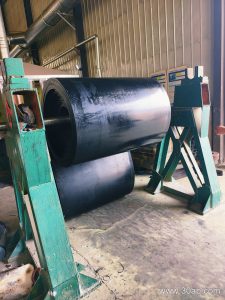
After welding, the pulley is set up on a lathe or boring mill. The shaft journals are turned to fit the bearing bores, the keyway is cut to the coupling or drive arrangement, and the end faces are squared so the drum sits correctly against the bearing housings. Machining also corrects any residual runout left by welding.
Typical acceptance points include:
- Journal diameter and tolerance against the bearing drawing
- Total indicated runout of the shell surface
- Concentricity between shaft, hub, and shell
- Keyway width, depth, and position
Shaft diameter is chosen from torque and load, not from belt width alone — common journals run from Ø50 to Ø200 mm depending on the drive duty.
Surface Preparation and Lagging
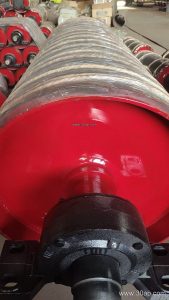
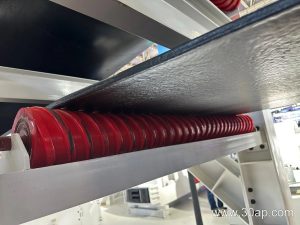
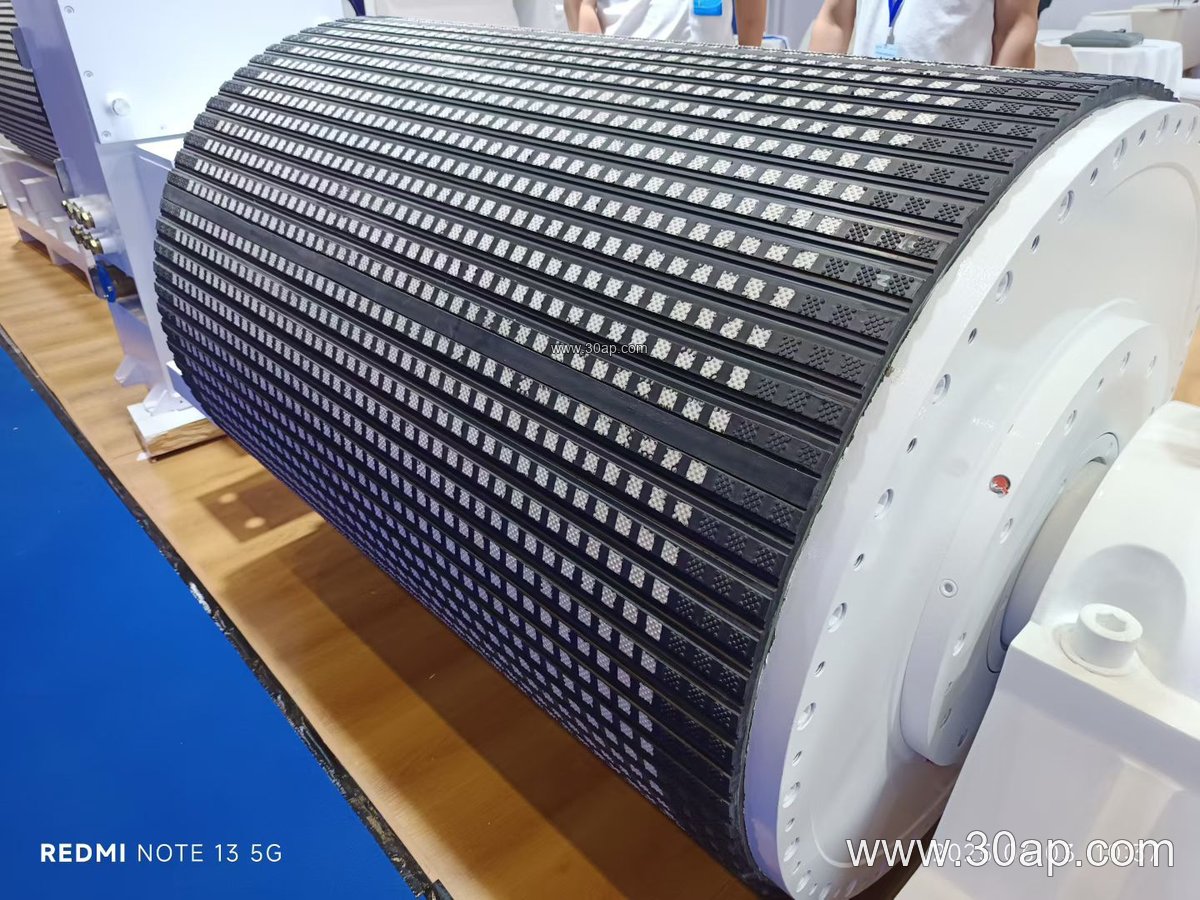
Many pulleys receive lagging after machining. Plain, cast rubber, cold-bonded rubber, hot-vulcanized rubber, diamond groove, herringbone, and ceramic lagging are all common surface options, usually 8 to 20 mm thick. The lagging improves grip on the belt and protects the shell from abrasion. On a heavy-duty mining conveyor carrying abrasive ore, ceramic or diamond lagging on the drive pulley is a frequent choice; a bend pulley may run plain or lightly lagged because it only redirects the belt.
Where These Pulleys Are Used
Welded and machined pulleys sit at the head, tail, tension, and bend positions of a belt conveyor. In a limestone quarry or aggregate line, the drive pulley pulls a multi-ply fabric or steel cord belt through the crusher circuit. In a coal preparation plant, flame retardant belting runs over lagged drums in dusty conditions. In a power plant coal yard, large drums handle high tension and continuous duty. The same welding and machining discipline applies in each case, though the shell thickness, shaft size, and lagging type change with the load.
Matching the Pulley to the Belt and the Job
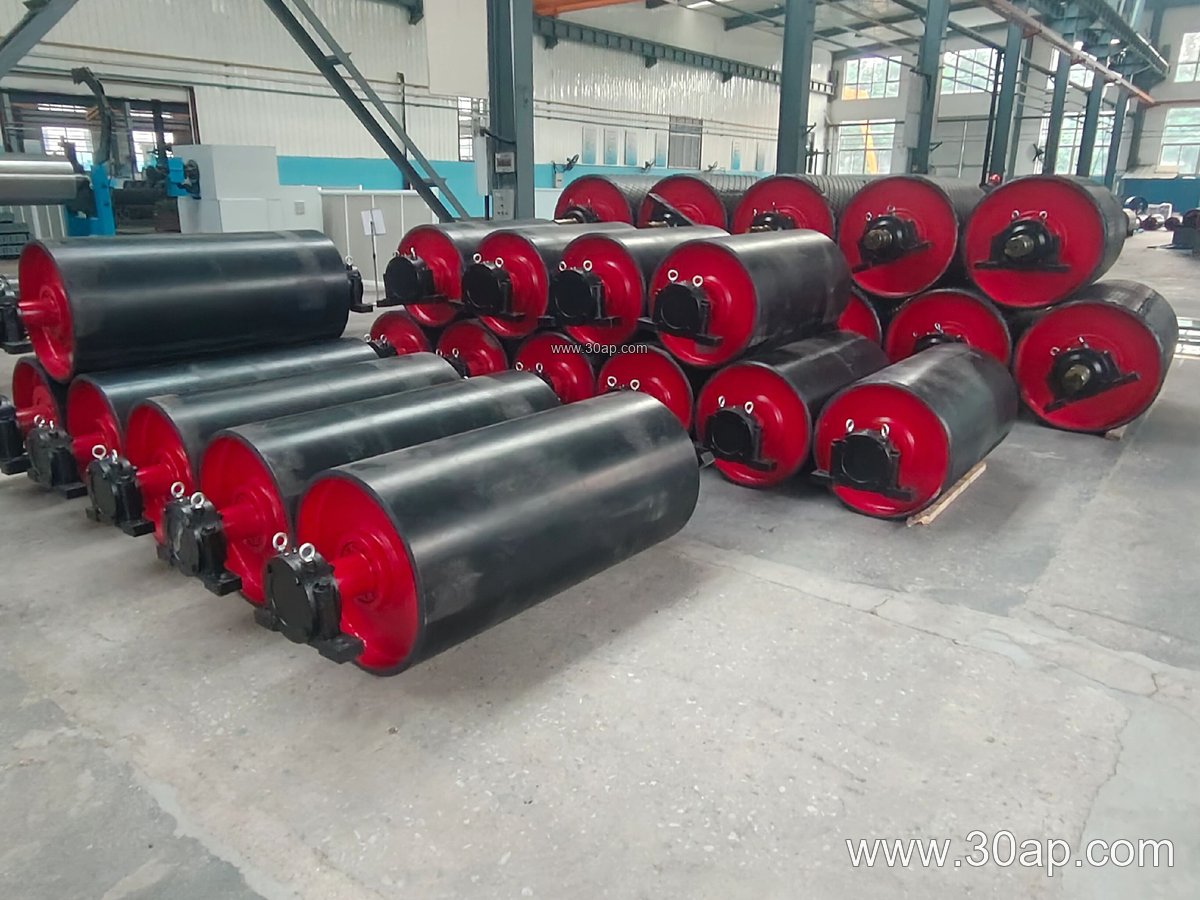
A pulley is not selected in isolation. Its face width usually exceeds the belt width so the belt is supported across its full span; B800 belts often run on roughly 950 mm faces, and B1200 belts on about 1400 mm faces. Diameter is chosen from belt tension, wrap angle, and the belt’s minimum bend radius — a B1200 belt might run on a Ø1000 drive pulley, while a lighter B800 line may use Ø500. These are common pairings, not fixed rules.
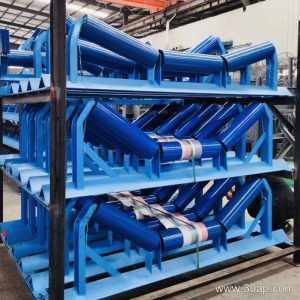
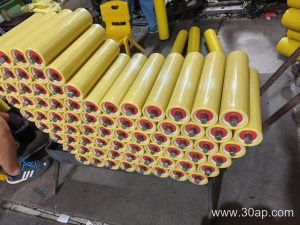
The surrounding hardware matters too. conveyor idler roller spacing, conveyor bracket alignment, and belt tracking all affect how evenly the pulley is loaded. A well-machined drum on a misaligned frame will still wear its lagging unevenly.
What Buyers Should Check
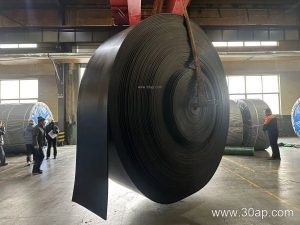
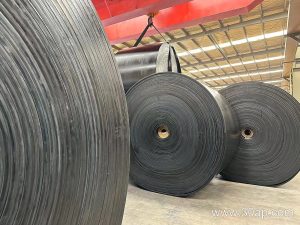
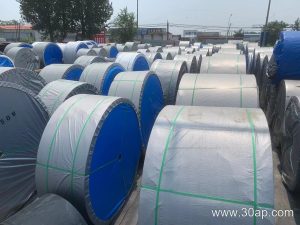
When specifying a pulley, ask for the welding procedure, the machining tolerances, the shaft material, and the lagging specification. Confirm the face width against the belt, and confirm the journal size against the bearing and coupling drawings rather than assuming a standard. For abrasive or high-tension duties, discuss whether a Steel Cord Conveyor Belt or a heavy-duty fabric belt such as an EP Conveyor Belt will run on the drum, because belt stiffness affects the minimum pulley diameter. A short FAT report covering runout, journal dimensions, and weld inspection gives confidence before the drum ships.
Good welding and careful machining are what turn a steel shell into a dependable pulley. Get those two stages right, and the drum will keep the belt tracking straight through the quarry, the coal yard, or the cement kiln line for years.