What a Head Pulley Does on a Conveyor
The head pulley is the drive component at the discharge end of a belt conveyor. It transmits torque from the drive unit to the conveyor belt, pulling the loaded belt forward and throwing material off at the head. Because it handles the highest tension in the system, its design and condition directly affect throughput and belt life. In quarry and aggregate circuits, a well-matched head pulley keeps production steady even when feed rates vary.
Construction and Key Components
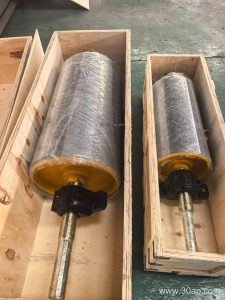
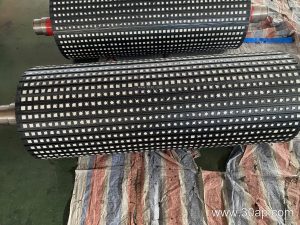
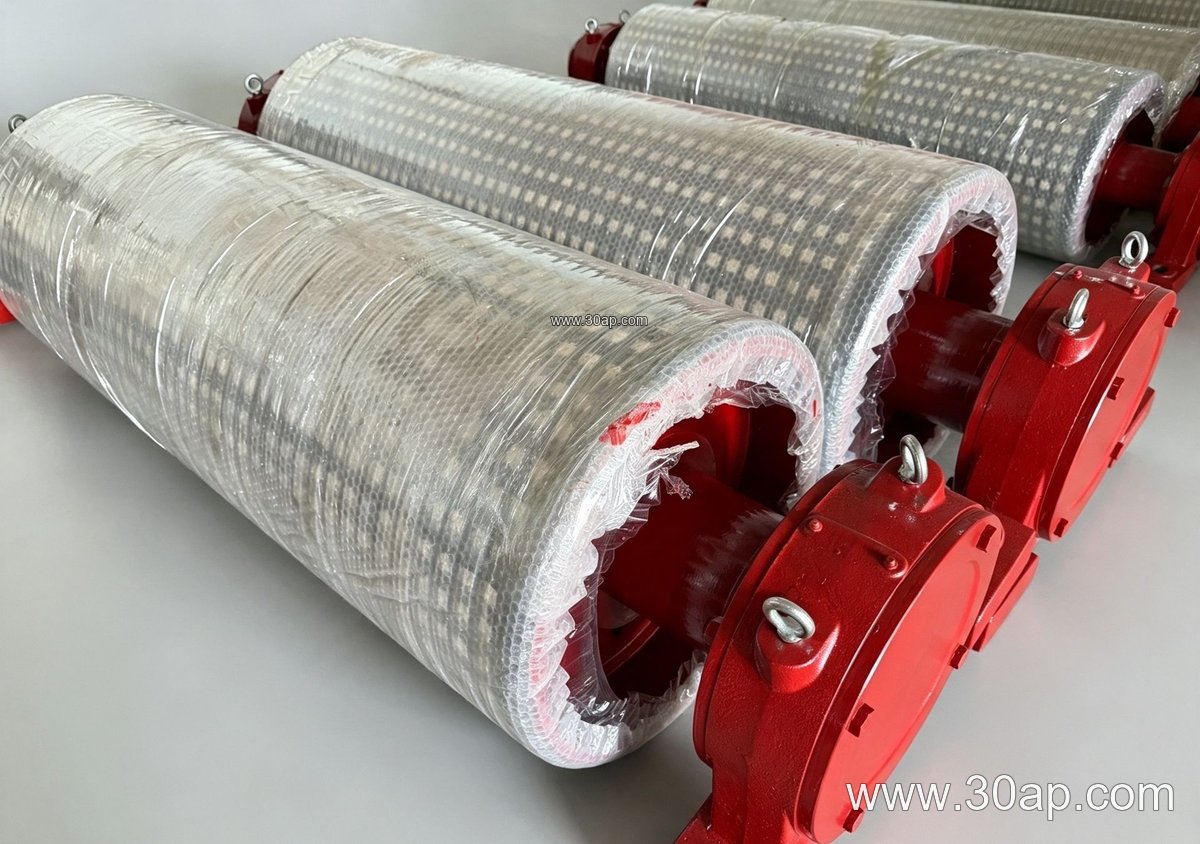
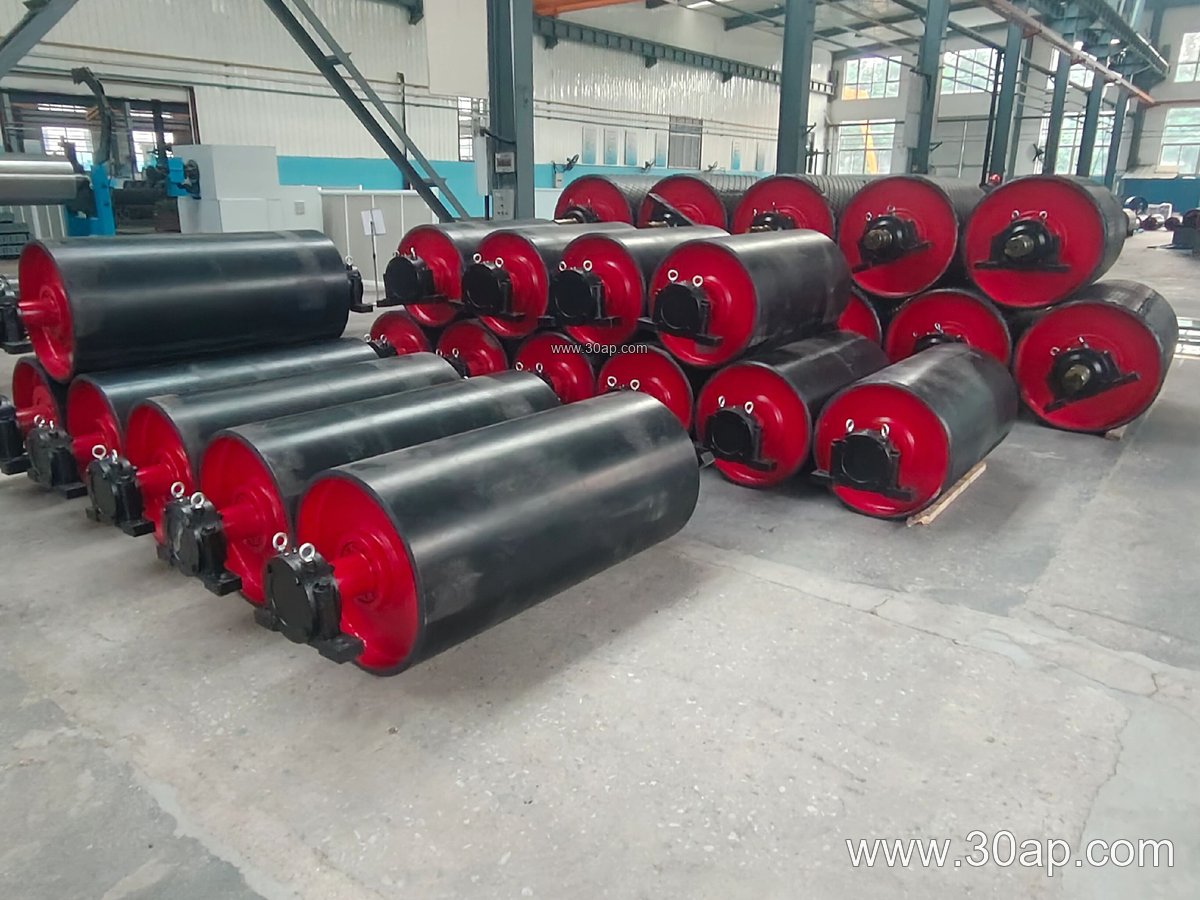
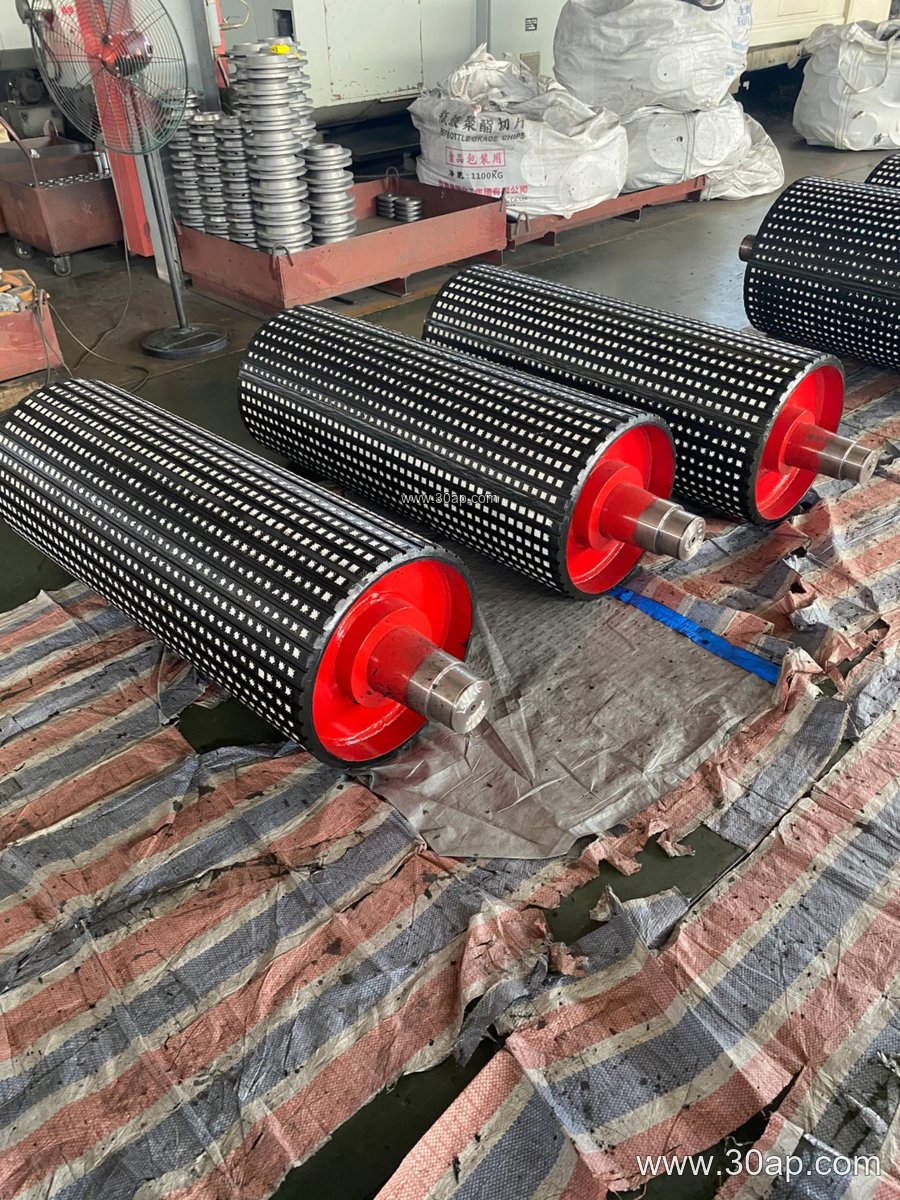
A typical head pulley consists of a cylindrical shell, end discs, a shaft, and bearing housings. The shell is often machined from steel tube or plate, with welded hubs that connect to the shaft. Lagging is applied to the shell surface to improve grip and protect the belt. Common surface options include plain steel, hot vulcanized rubber, cold-bonded rubber, diamond lagging, herringbone lagging, and ceramic lagging. Lagging thickness commonly ranges from 8 mm to 20 mm depending on duty. Shaft diameter is determined by torque and load, not by belt width alone; common shaft sizes include Ø50, Ø60, Ø70, Ø80, Ø90, Ø100, Ø120, Ø140, Ø160, Ø180, and Ø200 mm.
Where It Fits in the Conveyor Layout
The head pulley sits at the discharge point. It is not interchangeable with a tail pulley, bend pulley, or take-up pulley, each of which serves a different function. In a typical arrangement, the belt passes over the head pulley, returns under the troughing idlers, and wraps around a bend pulley or take-up pulley before returning to the tail. The head pulley is often the largest pulley in the system because it carries the full working tension. In cement plant clinker lines and power plant coal handling, the head pulley must cope with abrasive dust and continuous operation.
Sizing and Selection Notes
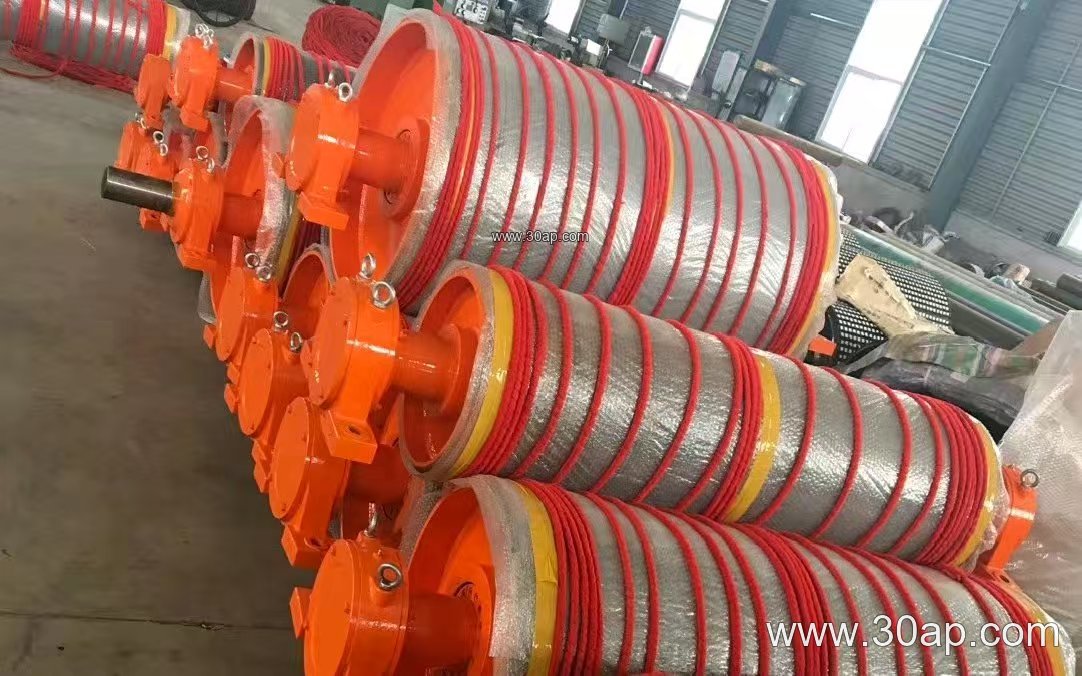
When specifying a head pulley, buyers should consider belt width, pulley diameter, shaft size, lagging type, and bearing arrangement. Pulley face width is usually greater than belt width; for example, a B800 belt often uses a pulley face around 950 mm, while a B1200 belt may use about 1400 mm. Diameter and belt width are not locked in a one-to-one relationship—a B1200 conveyor might use Ø800 or Ø1000 depending on tension and space. Common combinations include B800 × Ø500 and B1400 × Ø800, but these are design choices, not fixed rules. The table below lists reference values that are often used in industrial applications.
| Parameter | Common Reference Values |
|---|---|
| Belt width (B) | B400, B500, B650, B800, B1000, B1200, B1400, B1600, B1800, B2000, B2200, B2400 |
| Pulley diameter (Ø) | Ø200, Ø250, Ø315, Ø320, Ø400, Ø500, Ø630, Ø800, Ø1000, Ø1250, Ø1400, Ø1600, Ø1800 |
| Lagging thickness | 8, 10, 12, 15, 20 mm |
| Shaft diameter | Ø50, Ø60, Ø70, Ø80, Ø90, Ø100, Ø120, Ø140, Ø160, Ø180, Ø200 mm |
| Surface options | Plain, hot vulcanized rubber, cold-bonded rubber, diamond, herringbone, ceramic |
These values are for reference only; final selection should be based on calculated tension, belt speed, and material characteristics. For high-abrasion service such as iron ore or copper ore, ceramic or thick rubber lagging may be preferred. In coal mining, flame retardant conveyor belt and anti-static properties are often required, and the head pulley lagging should be compatible with those belt specifications.
Installation and Maintenance Tips
Proper alignment is critical. The head pulley should be square to the conveyor frame so the belt tracks centrally. Check bearing lubrication regularly and monitor lagging wear. Worn lagging reduces traction and can cause belt slip, especially in wet or dusty conditions. When replacing lagging, match the surface pattern to the application—diamond lagging for general service, herringbone for higher grip, ceramic for extreme abrasion. Keep the pulley face clean and ensure that the conveyor bracket and idler roller frames are secure to avoid vibration.
For more information on compatible conveyor components, visit head pulley or explore our range of conveyor belt and idler roller solutions. Our conveyor pulley lineup includes tail and bend types for complete system support.