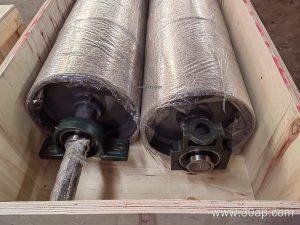
What Conveyor Pulley Machining Covers
Conveyor pulley machining is the set of turning, boring, keyway cutting, welding and surface finishing operations that turn a steel shell, shaft and end disc assembly into a true-running component for a belt conveyor. A machined pulley is not simply a drum that spins; it is the part that transfers torque to the conveyor belt, holds belt tension at the tail end, or redirects the belt around a bend. How well the shaft shoulders, hub bores, end discs and shell runout are machined determines how long the bearings and the belt splice last.
This work serves plants in quarrying, coal washing, cement clinker handling, power station coal yards, iron ore and copper ore concentrators, port bulk terminals and crushing and screening lines. Whether the conveyor carries a 500mm belt or a 2000mm belt, the pulley underneath it must be round, balanced and correctly keyed.
How a Machined Pulley Is Built
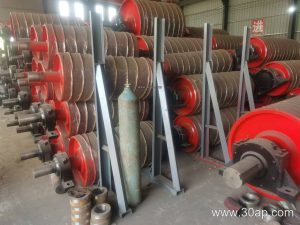
Most industrial pulleys start as a rolled steel shell welded to end discs, with a through shaft or stub shafts pressed and welded in place. Machining then proceeds in stages:
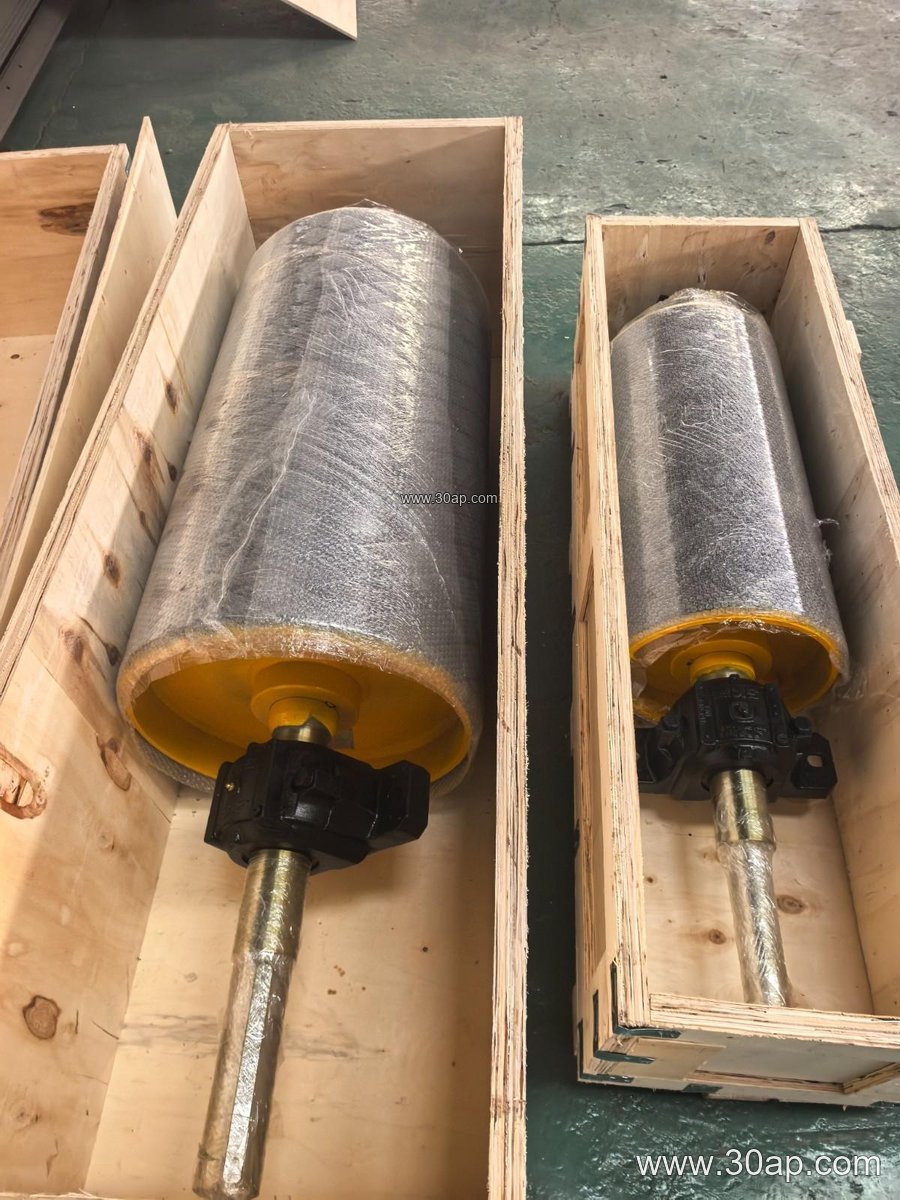
- Rough turning of the shell outside diameter and facing of the end discs
- Boring of the hub bores to the shaft fit, usually with a slight interference for shrink fitting
- Keyway broaching or milling on the shaft and hub
- Final finish turning of the shell to the specified diameter and crown, if any
- Dynamic balancing, especially for wider and heavier pulleys
- Surface preparation before lagging, painting or rust-preventive coating
Typical shell diameters run from Ø200 and Ø250 up to Ø1250, Ø1400, Ø1600 and Ø1800 for large tonnage installations. Shaft diameters commonly fall between Ø50 and Ø200, but the correct value comes from torque and bending load calculations, not from belt width alone. A B800 conveyor might use a Ø500 shell in one layout and a larger diameter in another with different wrap angles.
Drive, Tail and Bend Pulleys Are Not Interchangeable
A drive pulley, sometimes called the head pulley, is machined for torque transmission: the shaft is sized for the drive coupling or gearbox, the hub keyways are heavier, and the surface is often lagged for grip. A tail pulley at the loading end is machined for alignment and belt tracking, and may be plain-faced. A bend pulley only changes belt direction and usually carries lower load, so its shaft and bearing housings are lighter. Machining tolerances and inspection points differ across these roles, which is why a shop drawing should state the pulley position, not just the diameter.
Related hardware on the same conveyor includes the conveyor bracket that mounts the bearing housing, the idler roller that supports the belt between pulleys, and the conveyor pulley lagging that protects the shell. All of them need to line up with the machined pulley centerline.
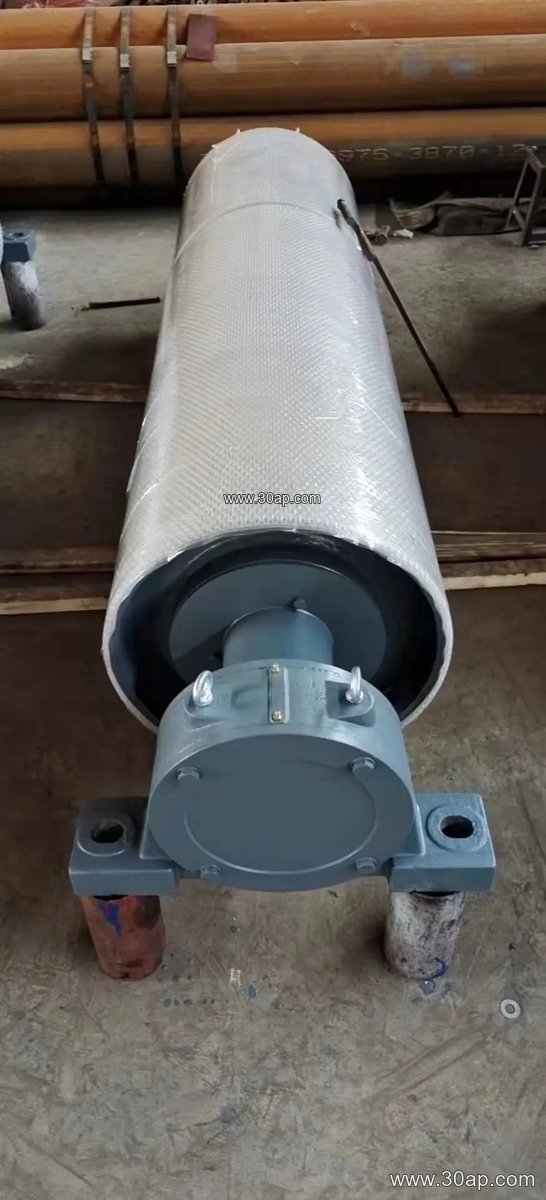
Sizes, Surfaces and Reference Combinations
The table below gives common reference ranges. Values are typical design references, not fixed matches, and final dimensions are confirmed by the conveyor designer.
| Item | Common reference values |
|---|---|
| Belt width B | B400, B500, B650, B800, B1000, B1200, B1400, B1600, B1800, B2000, B2200, B2400 |
| Shell diameter | Ø200, Ø250, Ø315, Ø320, Ø400, Ø500, Ø630, Ø800, Ø1000, Ø1250, Ø1400, Ø1600, Ø1800 |
| Face width, usually wider than belt | B400 about 500 mm, B650 about 750 mm, B800 about 950 mm, B1000 about 1150 mm, B1200 about 1400 mm, B1400 about 1600 mm, B1600 about 1800 mm |
| Lagging thickness | 8, 10, 12, 15, 20 mm |
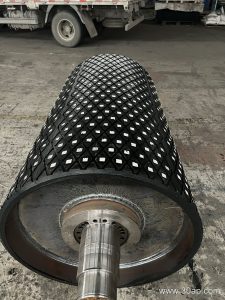
| Surface form | Plain, hot vulcanized rubber, cold bonded rubber, diamond groove, herringbone, ceramic lagging, flat rubber |
| Shaft diameter | Ø50 to Ø200 typical range, set by torque and load |
Example callouts such as B800 × Ø500, B1200 × Ø1000 or B1400 × Ø800 are useful shorthand on drawings, but they describe one design choice, not a rule. A wider belt does not force one specific pulley diameter, and a shaft size should never be copied from a belt width table.
Where Machined Pulleys Matter Most
In a limestone quarry or aggregate line, abrasive dust works into every bearing, so a pulley with accurate shaft shoulders and good sealing seats lasts longer. In a coal handling plant, flame retardant conveyor belt and anti-static properties are specified for the belt, while the pulley lagging is chosen for friction and wear; underground coal mining conveyor belt systems also demand careful static control around rotating parts. In a cement plant, heat resistant conveyor belt may run near clinker coolers, and the pulley bearings need heat-tolerant grease and correct expansion allowances.
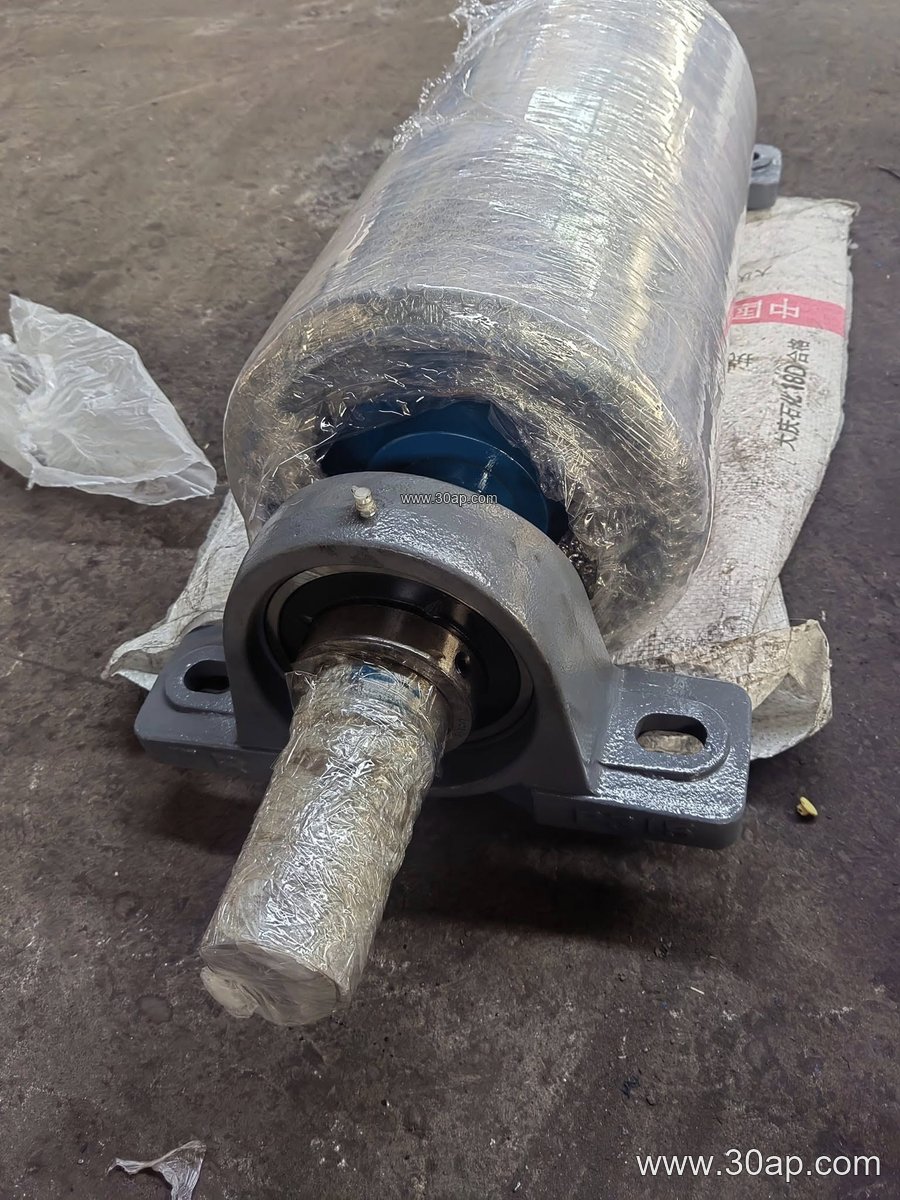
Heavy-duty mining conveyor belt installations with steel cord conveyor belt or high strength EP conveyor belt put high tension into the shell, so end disc welds and shaft fits deserve extra inspection. At a port or ship loading terminal, long conveyors use many bend pulleys, and consistent machining keeps belt tracking stable across the whole run.
What a Buyer Should Confirm Before Ordering
- Pulley role: drive, tail, bend, take-up or snub, with the duty clearly stated
- Belt width and pulley face width, plus shell diameter and shaft diameter from the design
- Lagging type and thickness, and whether grooves or ceramic tiles are required
- Bearing type, housing style and the conveyor bracket interface dimensions
- Balancing class, runout tolerance and surface protection
- Inspection records for keyways, weld quality and final diameter
Ask for a dimensional drawing before machining starts. Confirm that the shaft material and keyway size suit the actual torque, and check that the lagging thickness will not foul the belt cleaner or the chute. For replacement work, measure the existing bearing centers and the conveyor bracket bolt pattern rather than relying on the old nameplate alone.
Maintenance Notes After Installation
Check lagging wear at the drive pulley and look for polished or glazed rubber that reduces grip. Listen for bearing noise and check shell runout after the first weeks of operation, since a loose key or a shifted hub shows up as vibration. Keep the belt cleaner adjusted so that carryback does not build up on the return side and wear the tail pulley. When a pulley is re-lagged, the shell should be re-machined or at least cleaned to a true surface so the new rubber bonds evenly.
Good conveyor pulley machining is quiet work: it does not show on the plant floor until something goes wrong. Specifying it accurately at the drawing stage is the cheapest way to keep a conveyor belt running straight in a quarry, a coal preparation plant or a cement kiln line.