What a Sand and Gravel Production Line Idler Does
A sand and gravel production line idler is the rotating roller assembly that supports the conveyor belt along the length of the machine. In a quarry, crushing circuit, or aggregate yard, the belt carries heavy, abrasive rock and sand from the primary crusher to the screens and stockpiles. The idler roller is what keeps that belt tracking smoothly, holds the trough shape, and reduces friction between the belt and the steel structure. Without a properly chosen idler, an aggregate conveyor belt will sag, spill material, and wear out far too quickly.
The sand and gravel production line idler is often called a conveyor roller or carrying idler in day-to-day plant language. It is a distinct component from the conveyor pulley, which drives or redirects the belt at the head and tail. Drive, tail, and bend pulleys are not interchangeable with idlers, and each has its own role in the conveyor.
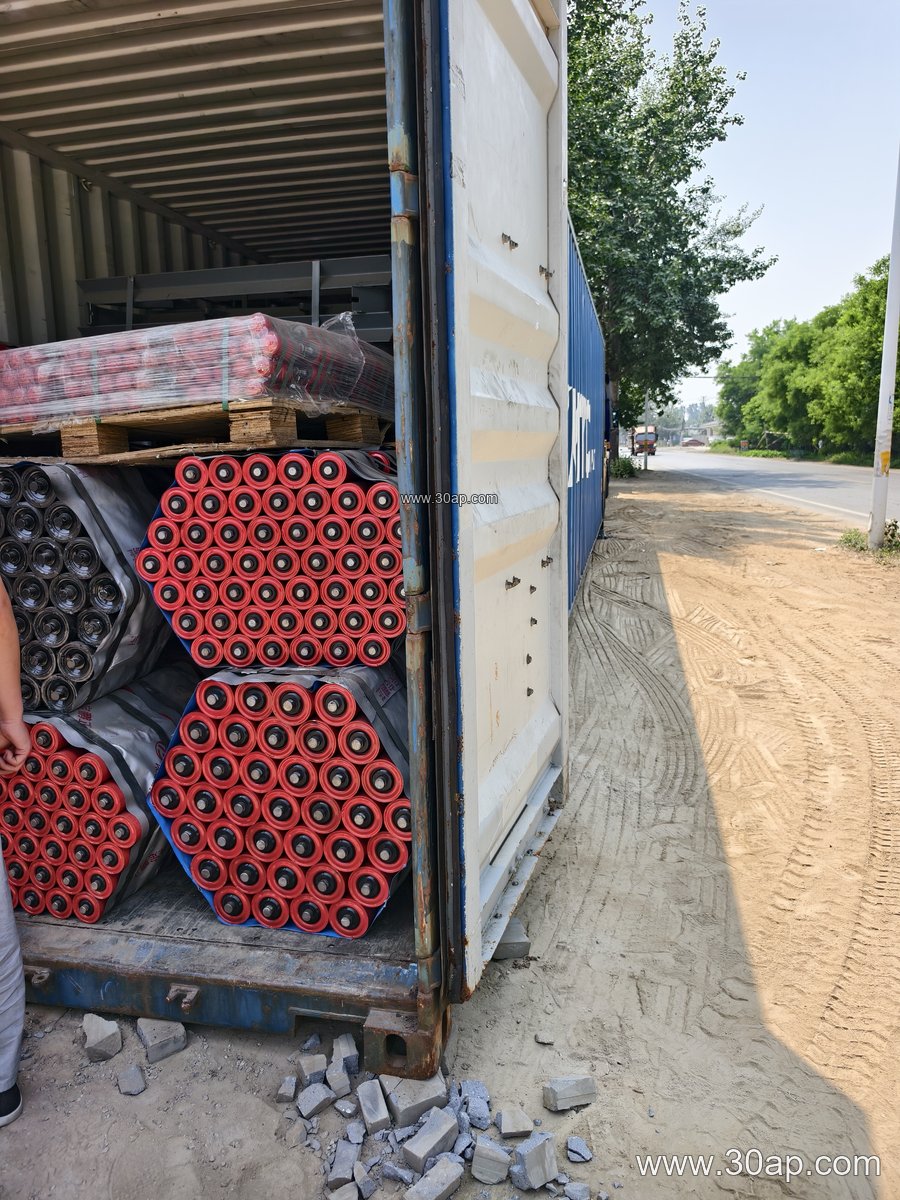
How the Idler Is Built
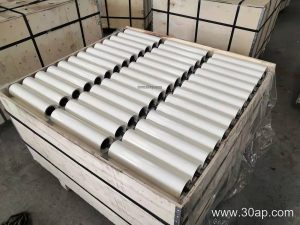
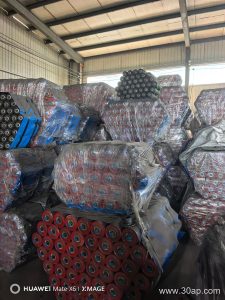
Most idlers share a common structure: a steel tube shell, bearing housings at both ends, a shaft, a sealing arrangement, and a mounting bracket. In sand and gravel service, the shell is usually a steel tube, and some plants choose rubber rings or ceramic surfacing where impact and abrasion are heavy.
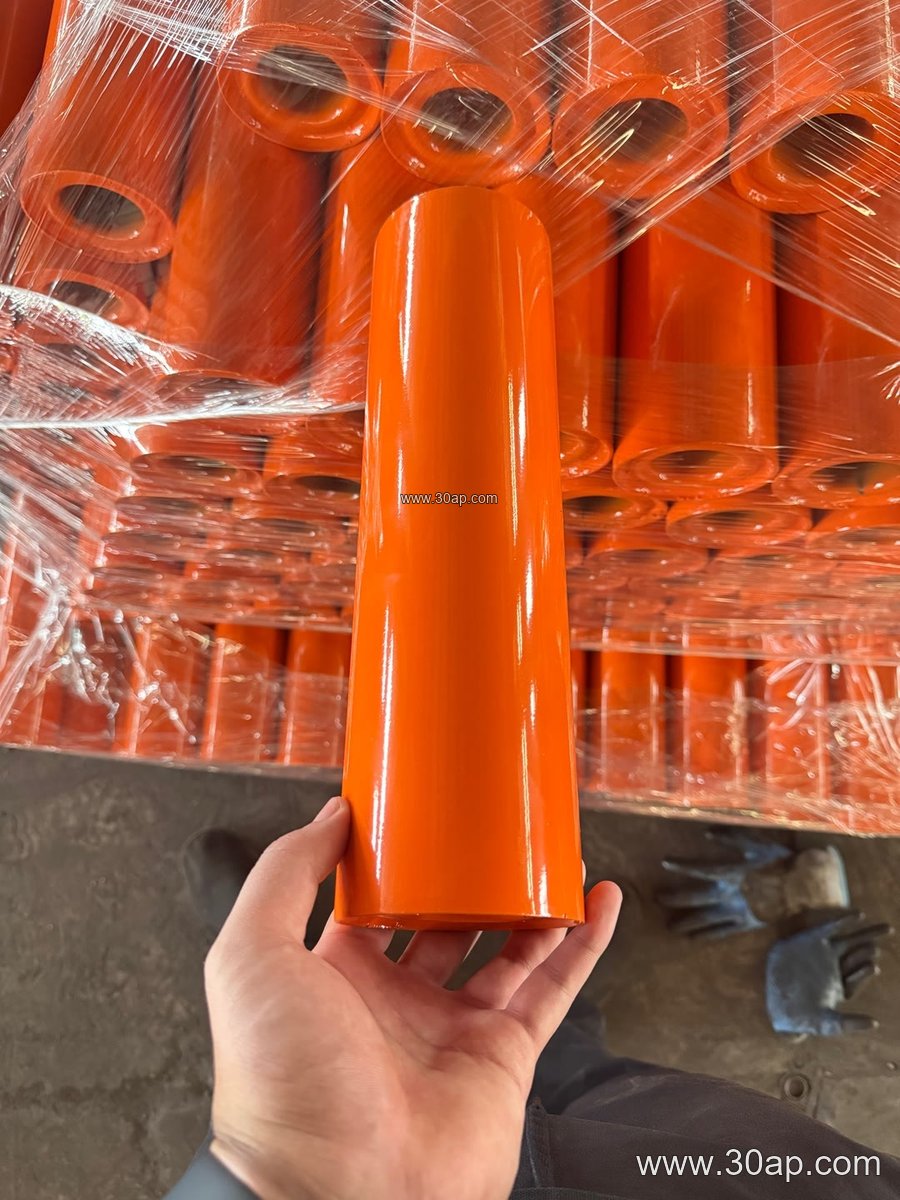
Common roller diameters in aggregate work include Ø89, Ø102, Ø108, Ø127, and Ø133 mm. Larger diameters such as Ø159 or Ø178 mm may appear on wider, heavier belts. The correct diameter depends on belt speed, load, and the surrounding structure, so buyers should treat these as reference values rather than fixed rules.
| Idler Type | Typical Position | Notes |
|---|---|---|
| Troughing idler | Carrying side | Three-roll sets hold the belt in a trough |
| Impact idler | Below the loading point | Rubber rings absorb falling rock |
| Return idler | Return side | Flat or V-shaped, supports the empty belt |
| Self-aligning idler | Where belt drift occurs | Helps correct tracking |
Idlers in the Conveyor Layout
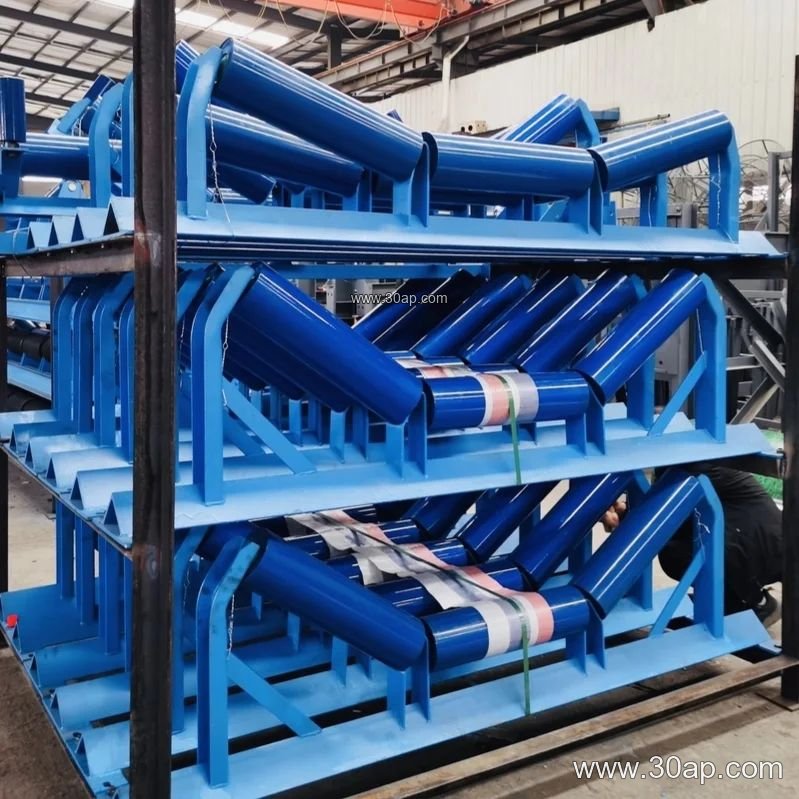
Troughing idler sets are the workhorses on the carrying side. Three-roll sets with trough angles of 20, 30, 35, or 45 degrees are common, and the angle affects how much material the belt can hold. At the transfer point below the crusher, impact idlers with rubber rings protect the belt from sharp, falling stone. On the return side, flat or V-shaped return idlers support the empty belt and reduce sag.
Idler length follows belt width, trough angle, and roll arrangement. As a rough guide, a three-roll troughing set might use a roll length near 315 mm on B800, 380 mm on B1000, 465 mm on B1200, and 600 mm on B1600. Side rolls and center rolls can differ, so these figures should be confirmed against the actual conveyor design.
Bearings such as 6204, 6205, 6305, 6306, 6308, and 6310 are common in idler assemblies. No single bearing is tied to one roller diameter; the bearing is selected with load and sealing in mind.
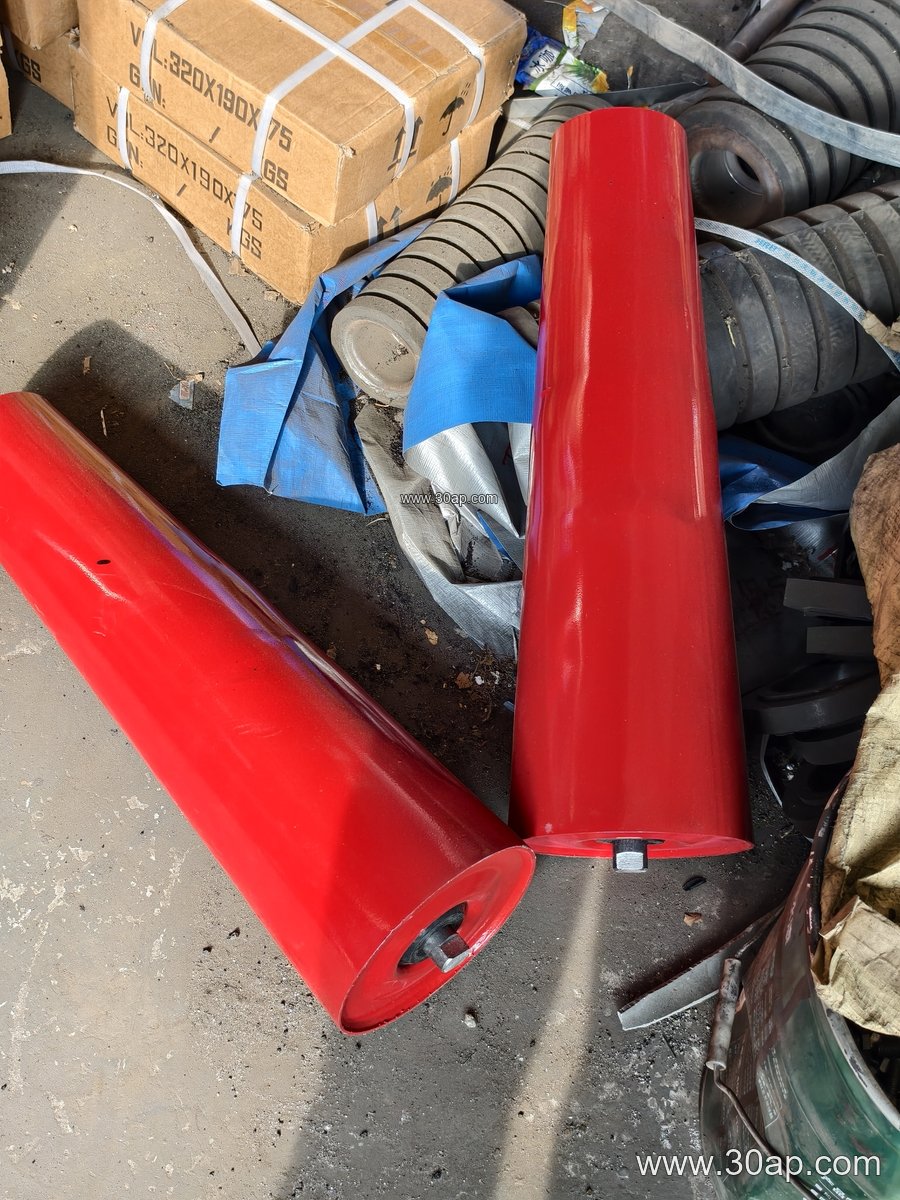
Where These Idlers Are Used
You will find sand and gravel production line idlers in quarry conveyors, crushing and screening plants, concrete batching stations, and stockyard belts. The same roller design also appears in cement plants, power plant coal handling, and port bulk terminals. The belt itself may be an EP conveyor belt or an NN conveyor belt for general aggregate duty, while a flame retardant conveyor belt is more typical in coal handling. In dusty, wet, or outdoor conditions, sealing quality matters as much as roller thickness.
For heavy abrasive rock, an abrasion resistant conveyor belt paired with well-sealed rollers gives longer service. Where material is hot, a heat resistant conveyor belt may be needed, but the idler still has to handle the load and alignment.
What Buyers Should Check
- Confirm belt width and trough angle before ordering any idler set.
- Match roller diameter to load and belt speed rather than copying another line.
- Ask about bearing size, seal type, and shell thickness.
- Check that brackets and frames match the existing conveyor bracket spacing.
- Specify impact idlers at transfer points and self-aligning idlers where tracking is a problem.
A well-matched idler set keeps the belt centered, cuts spillage, and protects the conveyor belt from edge damage. Buyers who compare roller diameter, bearing, seal, and mounting together usually get a smoother-running aggregate line.