What an Idler Bearing Does on a Conveyor
An idler bearing is the small rotating element inside an idler roller that lets the roller shell turn freely while the stationary shaft stays fixed to the conveyor bracket. On a loaded belt line, dozens or hundreds of these bearings carry the weight of the belt and the material at low rolling resistance. When a bearing seizes, the roller stops turning, the belt slides over it, and the result is a flat spot, a worn shell, and eventually a belt edge that starts to track badly. In this sense the bearing is the least visible but most repetitive wear part in a conveyor frame.
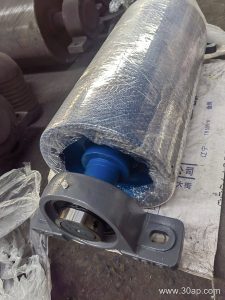
The term is used loosely in the field. Some buyers mean the complete bearing unit, others mean the bearing plus its housing and seal arrangement as fitted into the roller end. Both uses refer to the same component, so a purchase enquiry should state whether the bearing alone, a pressed-in bearing housing, or a complete roller is required.
Construction of a Typical Idler Bearing Assembly
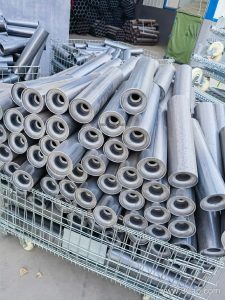
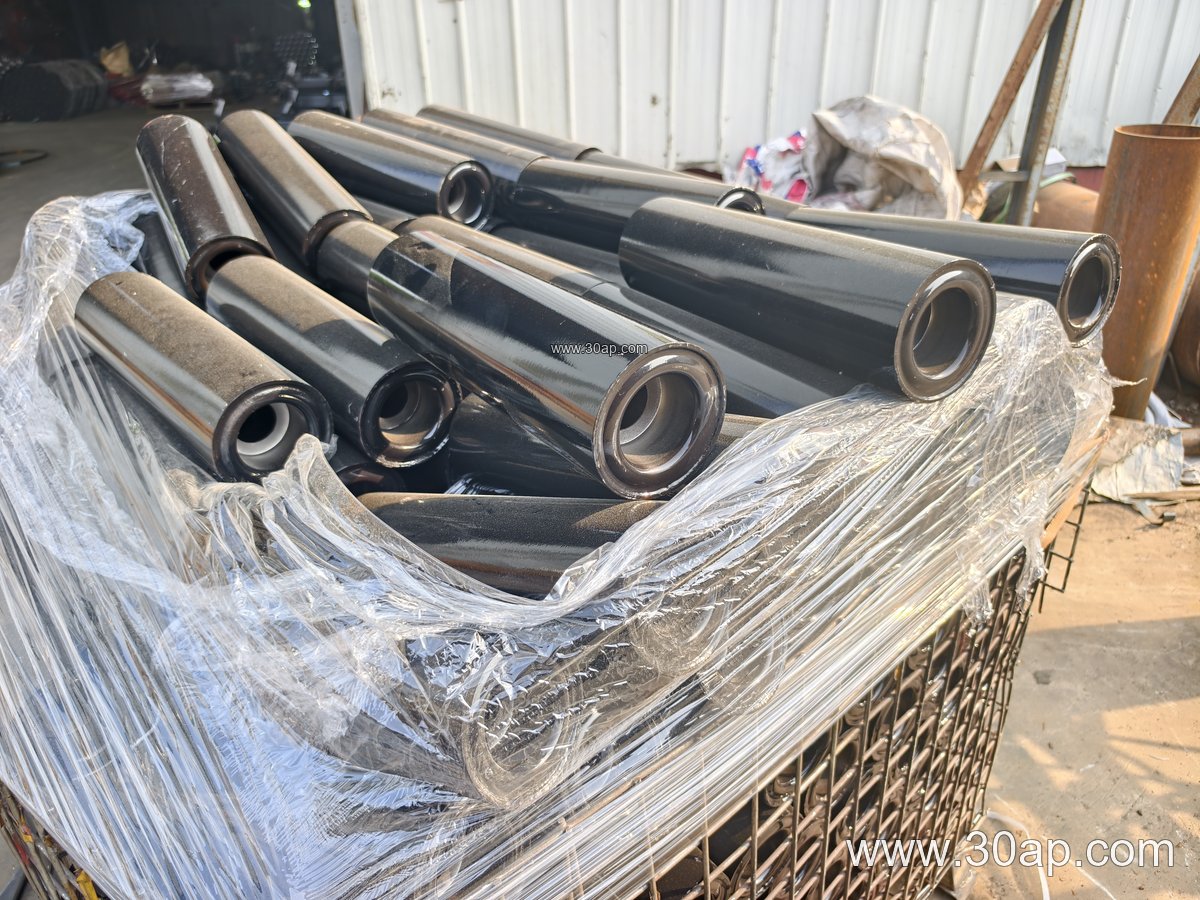
A standard troughing idler uses a deep-groove ball bearing, usually a 6200-series unit, pressed into a stamped or machined end cap. The shaft passes through the inner ring; the outer ring sits in the housing. Between the two sits a seal package, often a combination of a labyrinth ring, a felt or rubber lip seal, and grease that fills the cavity. The roller shell, usually a steel tube, is welded to the end disc, and the bearing housing is fitted into that disc.
Typical bearing references seen in conveyor idlers include 6204, 6205, 6305, 6306, 6308, and 6310. These are common examples rather than fixed pairings; the bearing selected depends on the shaft diameter, the radial load, the belt speed, and the expected service life. A larger roller diameter does not automatically dictate one bearing size, and a given belt width does not fix a single shaft diameter. Selection is a design decision based on load and life targets.
Sealing matters as much as the ball race
Dust, grit, and moisture kill more idler bearings than fatigue does. In a quarry or a cement plant, fine abrasive dust works past a poor lip seal and grinds the raceway. A labyrinth seal with grease purge is common in dirty duty. In a coal preparation plant or an underground coal mining conveyor, flame retardant and anti-static properties are usually specified for the belt, while the idler bearing itself is chosen for dust exclusion and, where relevant, for operation in gassy atmospheres.
Where Idler Bearings Fit in the Conveyor Layout
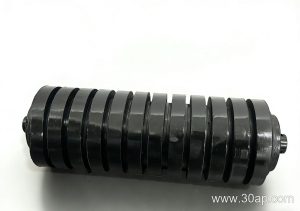
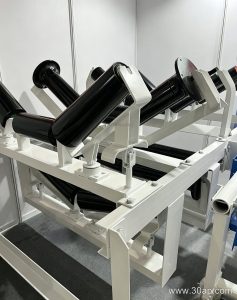
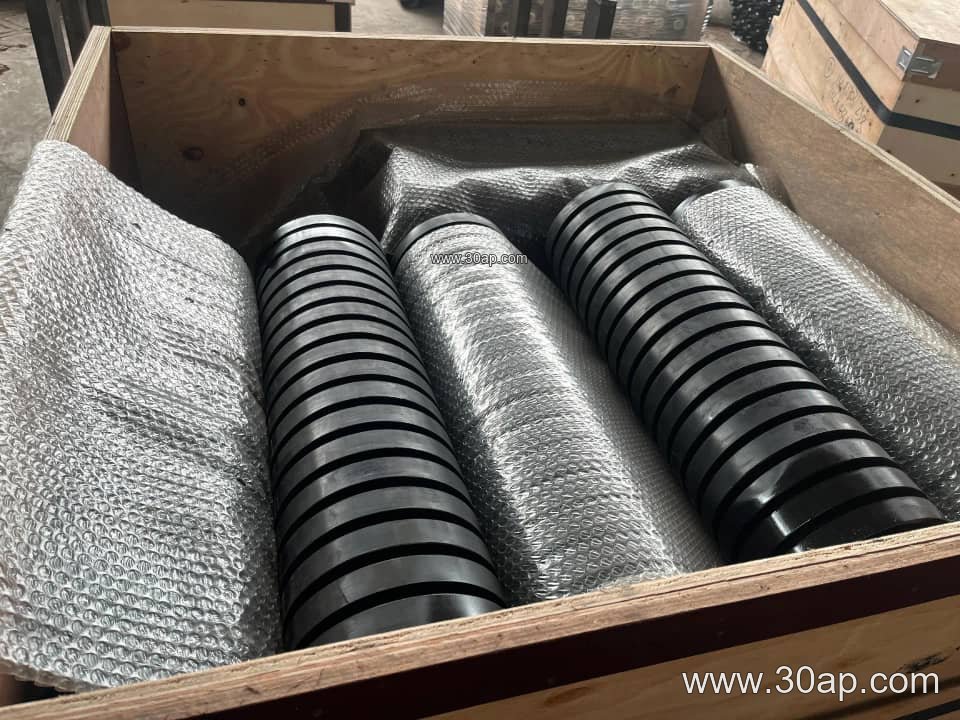
Carrying-side idlers and return idlers use the same basic bearing principle but see different loads. Troughing sets on the load side take impact and bulk weight; return rollers under the belt run light but turn fast. Impact idlers with rubber rings absorb lump energy at a transfer point, and their bearings must tolerate shock rather than steady load. Self-aligning idlers add friction or taper geometry that pushes the belt back to center, and that side load also reaches the bearing.
Belt width and roller geometry influence the bearing duty indirectly. Common belt widths run from B500 through B2000 and beyond, and a three-roll troughing set at B1000 might use roughly 380 mm rollers, while a B1400 set might use around 530 mm. These are typical figures for orientation only; side rollers and center rollers differ, and each layout should be confirmed by design. What matters for the bearing is the resulting radial load, the speed, and the environment.
Matching the Bearing to the Material Being Conveyed
The material on the belt shapes the maintenance regime. A steel cord conveyor belt on a long overland run in an iron ore mine carries high tension and heavy loads, so idler bearings work under sustained radial force. A fabric core belt such as an EP conveyor belt or NN conveyor belt on a shorter aggregate line may see lighter but more variable loading. In a power plant coal yard, a flame retardant conveyor belt is paired with idlers whose bearings must survive washdown and coal dust. At a port ship loader, salt air makes corrosion resistance in the seal and housing a practical concern.
Heat is another factor. Near a sinter plant or a cement kiln discharge, a heat resistant conveyor belt may run over idlers exposed to radiant heat, and standard grease can soften or carbonize. High temperature bearing arrangements, heat shields, or extended grease lines are then considered. Similarly, an oil resistant conveyor belt in a recycling or chemical handling area may shed oil mist that attacks ordinary rubber seals, so seal compound selection deserves attention.
Buyer Checklist for Idler Bearings and Rollers
- Confirm whether the requirement is a bare bearing, a bearing and housing insert, or a complete idler roller.
- State the roller diameter and shaft diameter separately; do not assume one follows from the other.
- Describe the duty: belt width, belt speed, material lump size, and whether the location is a load point, carry run, or return run.
- Specify the environment, including dust, moisture, washdown, temperature, and any flame retardant or anti-static requirement.
- Ask about seal type and grease fill, since these often determine service life more than the bearing brand.
- Match the bearing to the conveyor bracket and frame so the shaft fits without shimming.
A bearing that is correctly sized but poorly sealed will fail early; a well-sealed bearing in the wrong load class will also fail. Buyers get the best result when they treat the idler bearing as part of a system that includes the roller shell, the shaft, the seal, and the mounting bracket, and when they give the supplier the actual operating conditions rather than a part number alone.