What a Ceramic Lagged Pulley Does on a Conveyor
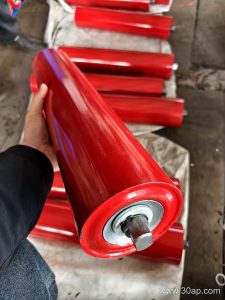
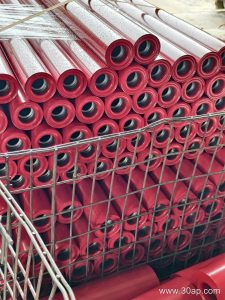
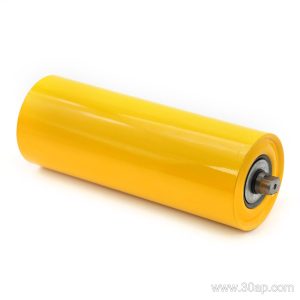
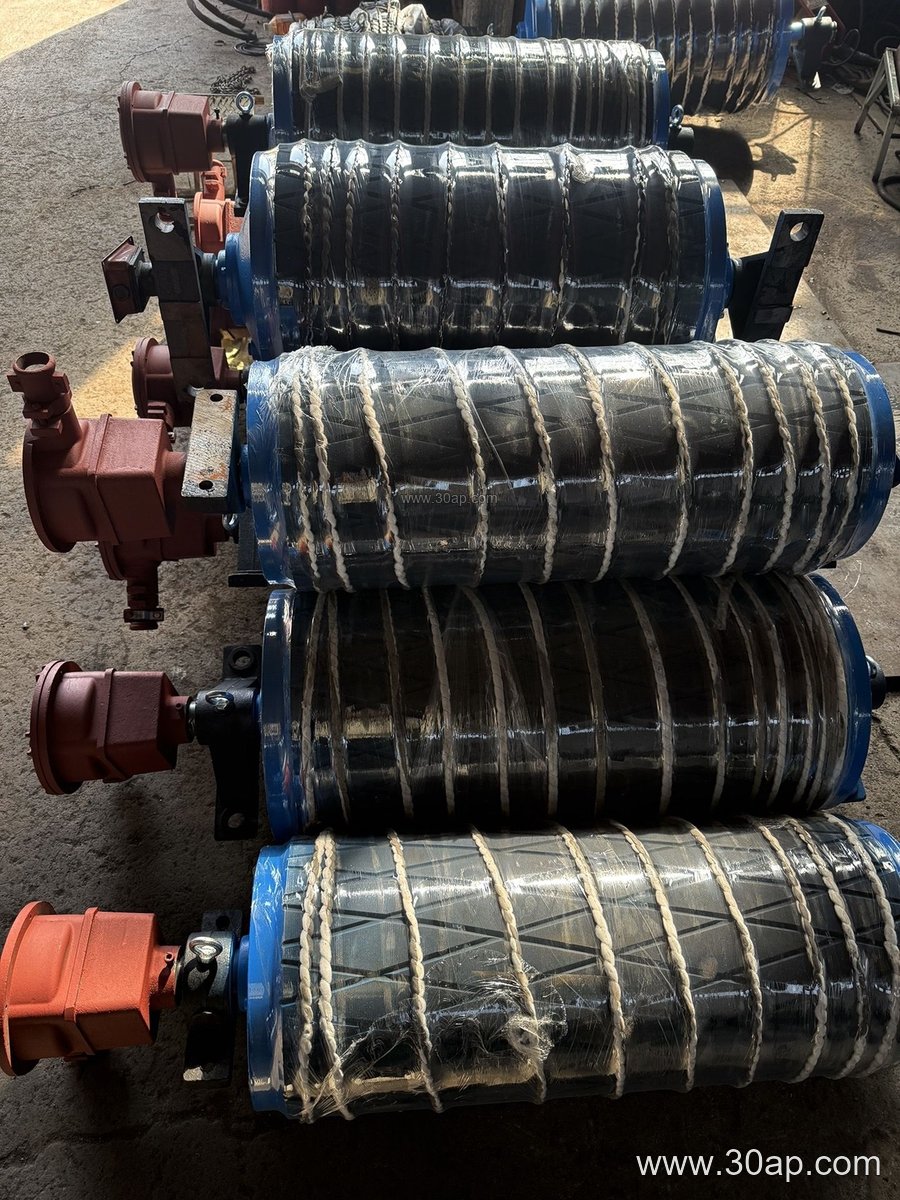
A heavy-duty ceramic lagged pulley is a conveyor pulley whose outer shell carries a vulcanized rubber layer embedded with small ceramic tiles. In practice, this product is also called a ceramic rubber lagged drum or ceramic-coated pulley. The ceramic studs sit slightly above the rubber surface and bite into the conveyor belt cover, which raises friction at the drive position. That extra grip matters most where the belt is wet, muddy, dusty, or oily — conditions common in coal handling, cement clinker lines, iron ore concentrators, and port bulk terminals.
It is important to remember that drive, tail, and bend pulleys are not the same component. A drive pulley transmits torque to move the belt, a tail pulley returns the belt at the loading end, and a bend pulley only changes belt direction. Ceramic lagging is usually chosen for the drive drum, though a tail or snub position may also use it when slip risk is high.
How the Ceramic Lagging Is Built
The pulley body is normally a welded steel cylinder with machined end discs and a shaft. After stress relief, the shell receives an elastomeric layer — often 8, 10, 12, 15, or 20 mm thick — and ceramic tiles are pressed into it before curing. The tiles are arranged in a staggered pattern so that water and fines can escape instead of forming a slippery film. A common surface form is diamond or herringbone grooving around the ceramic pads, but plain rubber lagging without ceramic is also available for lighter duties.
Because the ceramic layer is hard and abrasive, it resists wear from sharp aggregate and sinter. However, it is not a universal fix. If a conveyor runs a very soft or thin belt cover, a smooth or plain rubber lagged surface may be a better match. The ceramic pattern should be selected to suit the belt, not copied from another line.
Typical Sizes and Arrangements
Ceramic lagged drums are built around standard belt widths and face widths. The face width is usually a little wider than the belt, as shown in the table below. These are common reference values, not a fixed rule for every project.
| Belt width | Typical pulley face width | Common diameter range |
|---|---|---|
| B400 | about 500 mm | Ø200–Ø400 |
| B650 | about 750 mm | Ø315–Ø500 |
| B800 | about 950 mm | Ø400–Ø630 |
| B1000 | about 1150 mm | Ø500–Ø800 |
| B1200 | about 1400 mm | Ø630–Ø1000 |
| B1400 | about 1600 mm | Ø800–Ø1250 |
| B1600 | about 1800 mm | Ø1000–Ø1400 |
Do not assume that one belt width must pair with one diameter. A B1200 system may use Ø800, Ø1000, or another size depending on torque, wrap angle, and belt tension. Shaft diameter is also calculated from load and torque — common shaft sizes include Ø80, Ø100, Ø120, Ø140, Ø160, and Ø180, but the final value comes from the drive design, not from the belt width alone.
Where It Fits in a Plant
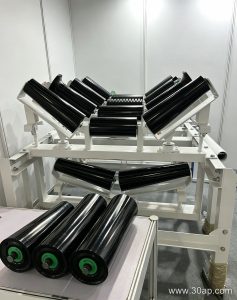
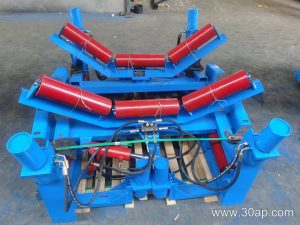
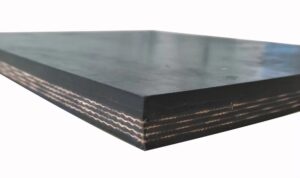
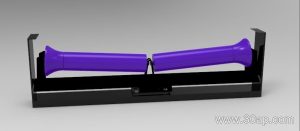
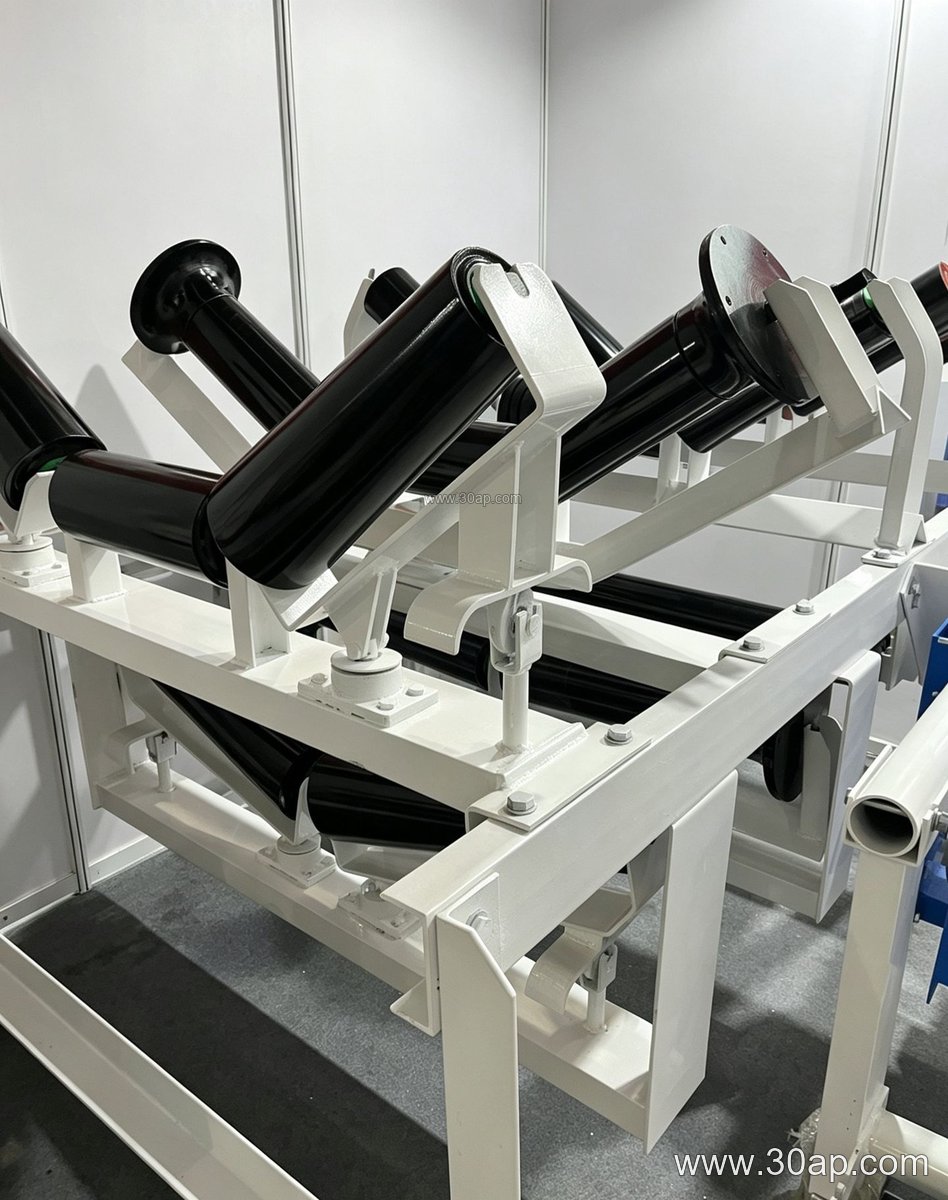
These pulleys appear in crushing and screening circuits, washed coal plants, power station coal yards, and limestone quarries. A typical installation uses a conveyor belt running over a series of idler rollers, supported by a conveyor bracket, with the ceramic drum at the head or drive station. A snub or bend pulley nearby may use plain rubber lagging, while the main drive gets the ceramic version. In a tunnel muck line or a fertilizer granulation plant, the same logic applies: use ceramic lagging where grip is the bottleneck.
Buyer Checklist Before Ordering
- Confirm the pulley role — drive, tail, or bend — because the lagging requirement differs.
- Specify belt width, pulley face width, shell diameter, and shaft diameter together.
- State the lagging thickness and surface pattern, such as ceramic diamond or ceramic herringbone.
- Describe the material and moisture: wet coal, dry clinker, or abrasive ore changes the choice.
- Check that the ceramic tile pattern matches the belt cover grade and pulley wrap direction.
- Ask for the balancing grade and runout tolerance if the drum runs at high speed.
A ceramic lagged pulley is not automatically the right answer for every conveyor. It earns its place where slip, wear, and moisture would otherwise shorten belt life. Matching it to the actual duty — not just to a catalogue page — keeps the drive reliable and the maintenance interval predictable.