What a Custom Conveyor Bracket Does
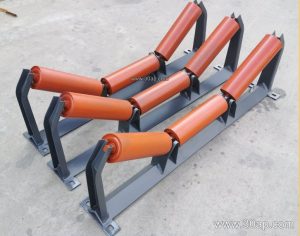
A custom conveyor bracket is a fabricated support component that holds idler rollers in the correct position under or over the conveyor belt. Unlike off-the-shelf brackets, it is made to match a specific frame, belt width, and loading condition. In a quarry or a coal handling system, the bracket is often the part that determines whether the belt tracks smoothly or wanders. It is not a pulley, and it does not replace a drive pulley, tail pulley, or bend pulley; those components serve different roles in the conveyor drive and return circuit.
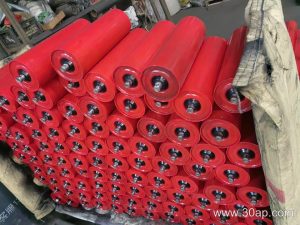
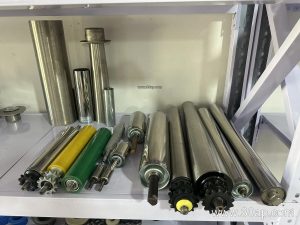
The bracket carries the idler roller, which in turn supports the conveyor belt. A well-built bracket keeps the roller axis aligned and maintains the chosen trough angle. When the bracket is weak or poorly fitted, the belt can sag, the idler roller can wear unevenly, and the whole conveyor line suffers.
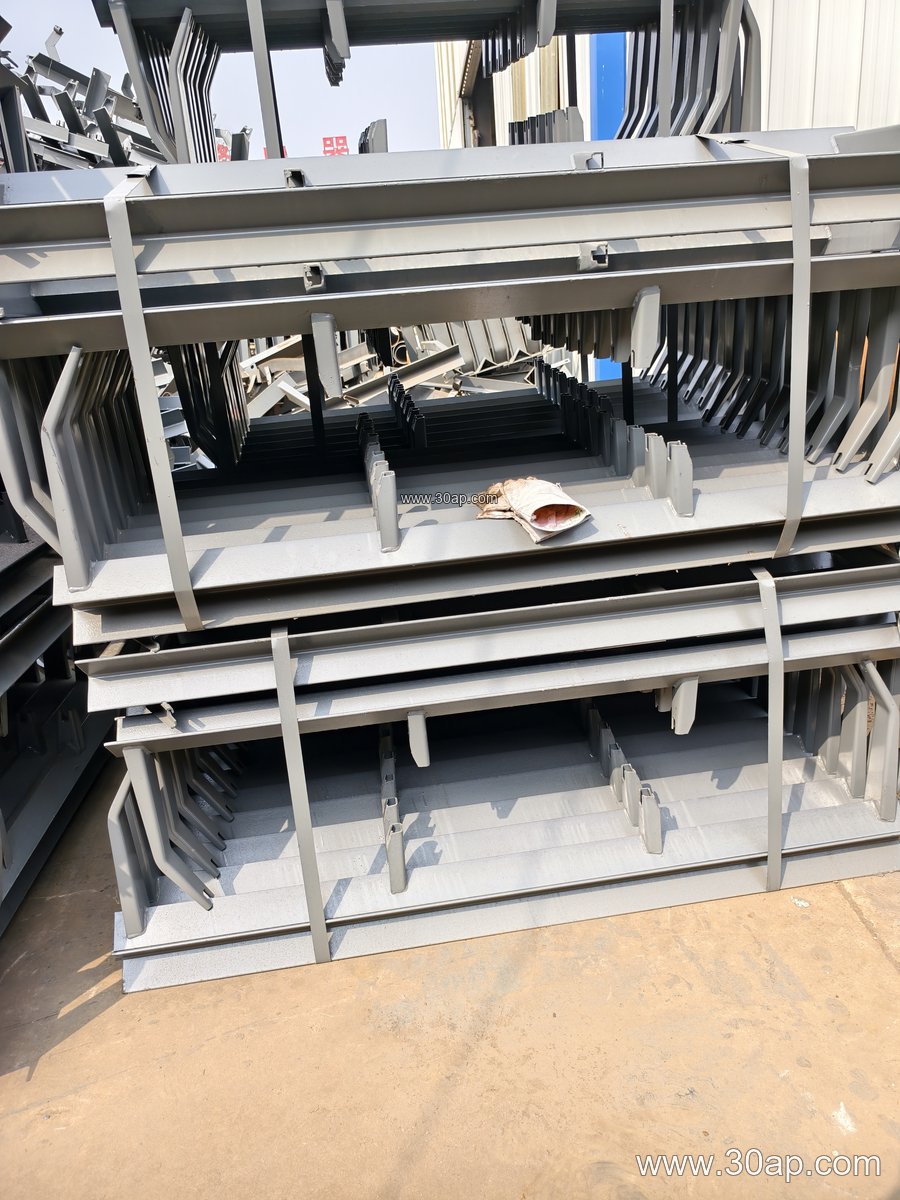
Construction and Common Forms
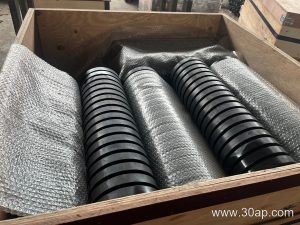
Most brackets are made from angle steel, channel steel, or folded steel plate. The fabrication method affects stiffness and corrosion resistance. A folded plate bracket is often lighter, while a channel steel bracket may suit heavy-duty mining conveyor lines. The bracket may be fixed or adjustable. Adjustable types allow the trough angle to be set between common values such as 20, 30, 35, and 45 degrees. Forward-leaning brackets, usually around 1.5 to 2 degrees, are used to help center the belt.
Common bracket types include trough brackets, transition brackets, return brackets, V-return brackets, impact brackets, self-aligning brackets, and suspended brackets. Each has a specific mounting position. For example, a transition bracket is placed near a pulley to gradually change the belt from flat to troughed. A return bracket supports the empty side of the belt. These are not interchangeable with drive, tail, or bend pulleys, which are rotating drum components.
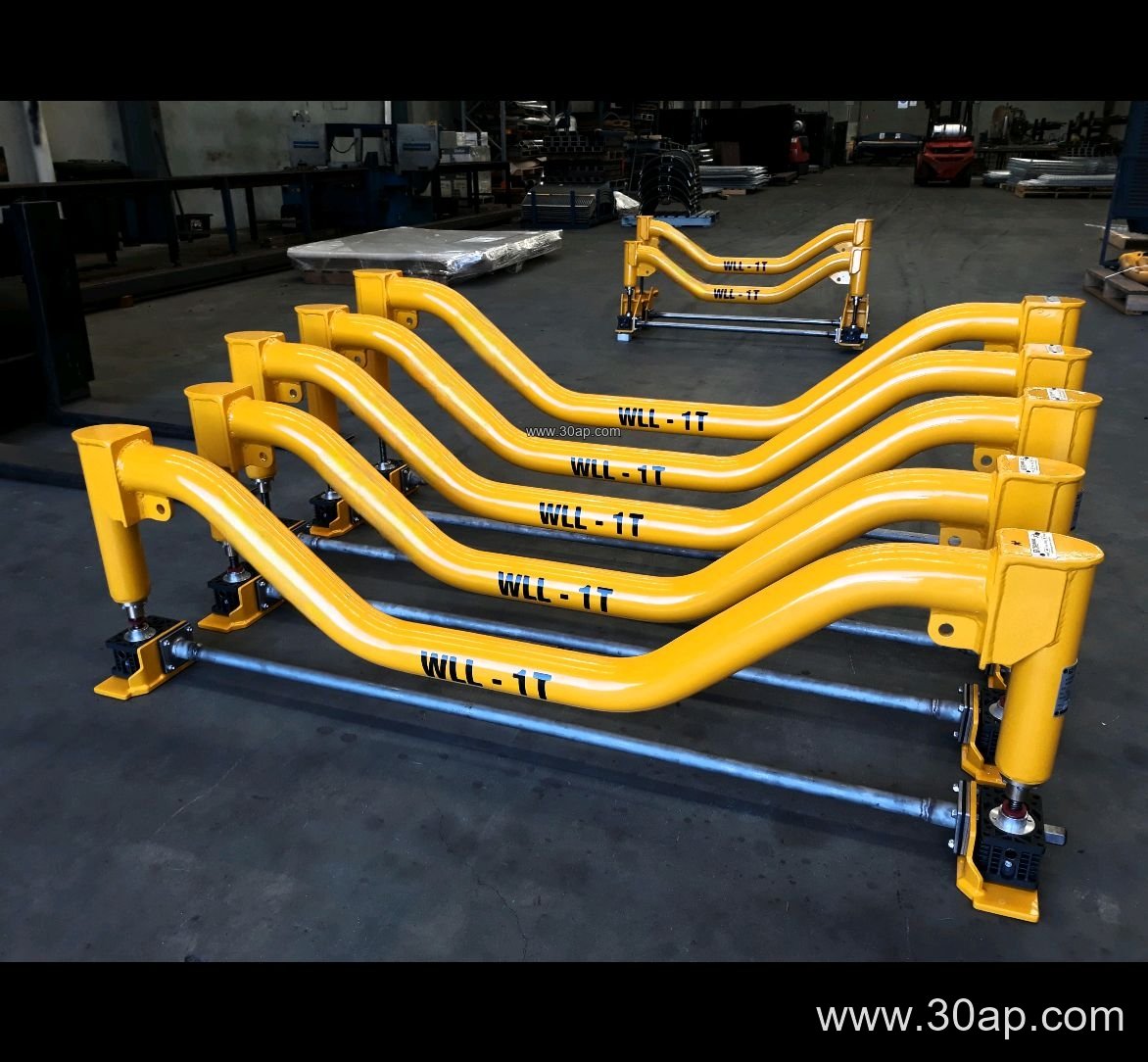
Typical Reference Combinations
The table below shows common bracket and roller references. These are examples, not fixed rules. Actual mounting hole spacing and beam length depend on the conveyor design.
| Belt Width | Trough Angle | Roller Diameter | Typical Bracket Form |
|---|---|---|---|
| B500 | 20° | Ø89 | Trough bracket |
| B650 | 30° | Ø89 | Transition bracket |
| B800 | 35° | Ø108 | Trough bracket |
| B1000 | 35° | Ø108 | Impact bracket |
| B1200 | 45° | Ø133 | V-return bracket |
| B1400 | 45° | Ø133 | Trough bracket |
| B1600 | 35° | Ø159 | Self-aligning bracket |
| B1800 | 45° | Ø159 | Trough bracket |
| B2000 | 35° | Ø194 | Return bracket |
These combinations are for reference only. A B800 belt does not have to use a 35-degree trough angle, and a B1200 belt does not have to use a Ø133 roller. The bracket must be selected with the belt, load, and frame in mind.
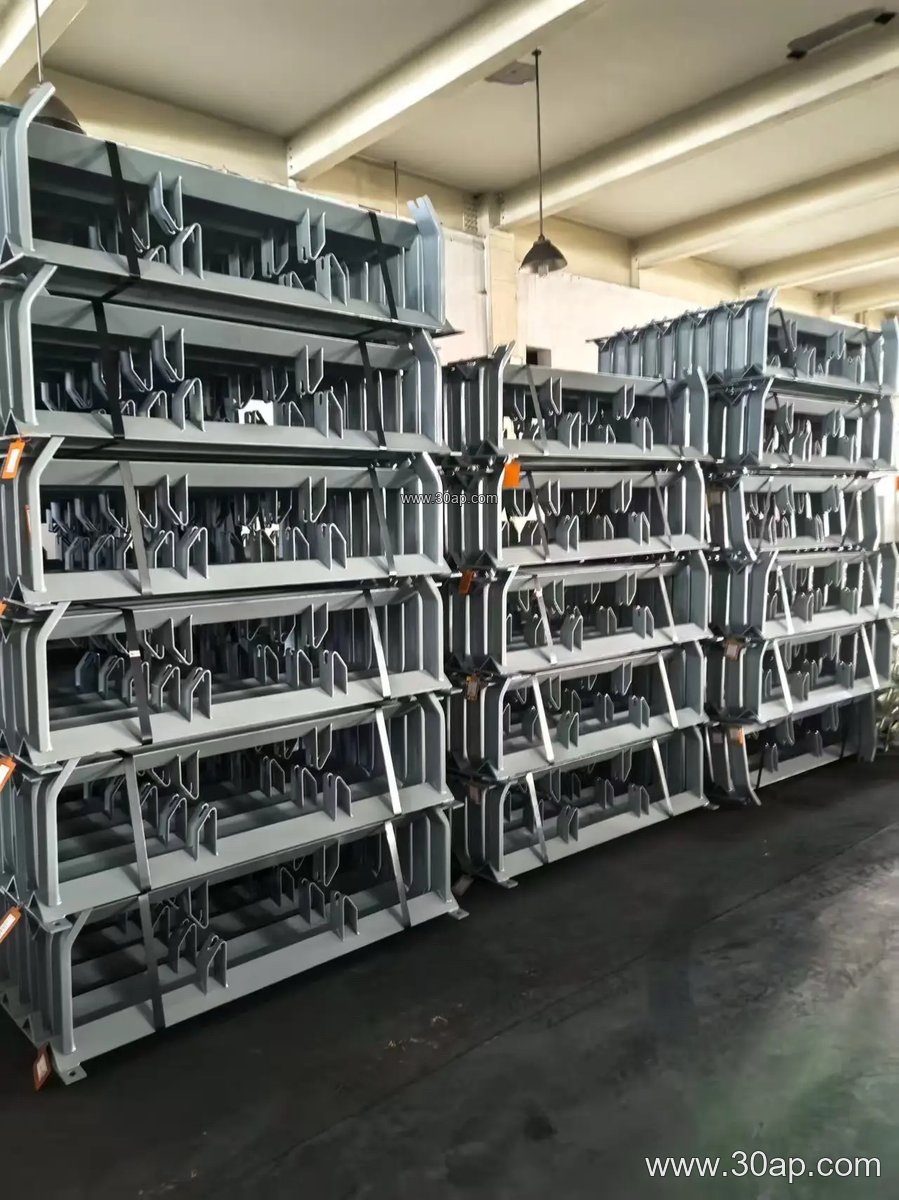
Where Custom Brackets Are Used
Custom brackets appear in many bulk handling environments. In a limestone quarry, they support idler rollers on a primary crushing line. In a coal-fired power plant, they hold rollers under a coal conveyor belt that may be a flame retardant conveyor belt or a fire resistant conveyor belt. In a cement plant, they keep the clinker belt aligned through transition zones. In a sand and gravel yard, they are often paired with an abrasion resistant conveyor belt and a sturdy idler roller.
Other users include iron ore mines, copper ore concentrators, and port ship loading systems. A heavy-duty mining conveyor belt or a steel cord conveyor belt places higher loads on the bracket, so the steel grade and weld quality matter. In underground coal mining, brackets may be used with a PVG conveyor belt or a PVC mining conveyor belt. In food or chemical plants, the bracket material and coating may need to suit washdown or corrosive conditions.
Buyer Checklist
- Confirm the belt width, such as B650, B1000, or B1800, and the frame dimensions.
- State the required trough angle and whether the bracket must be adjustable.
- Specify the roller diameter, for example Ø89, Ø108, Ø133, or Ø159.
- Choose the bracket type by mounting position: trough, transition, return, impact, or self-aligning.
- Match the material and finish to the site: dusty quarry, wet coal plant, or corrosive chemical area.
- Check that the bracket is designed for the actual conveyor belt and idler roller load, not a nominal size alone.
At www.beltconveyorspareparts.com, custom conveyor bracket inquiries are usually reviewed together with the conveyor pulley layout and the conveyor belt specification. A bracket that fits the frame and the roller will do more for belt life than a bracket chosen by width alone.