What an EP300 Conveyor Belt Is
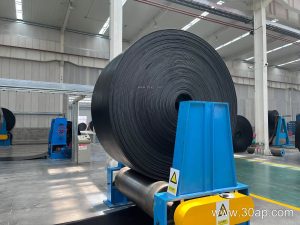
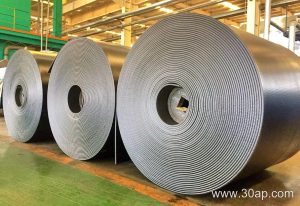
An EP300 Conveyor Belt is a fabric-core belt built on polyester (E) and polyamide/nylon (P) warp and weft yarns, with a nominal tensile strength of 300 N/mm per ply. It sits in the middle-upper range of the EP family, above EP200 and EP250, and below EP400 and EP500. For plants that have outgrown light NN belting but do not need the stiffness of a steel cord carcass, this grade is a common working choice. The product is also described as an EP rubber conveyor belt or an EP fabric core conveyor belt, and those names refer to the same article.
Because the carcass is a multi-ply fabric core, the belt tracks well on conventional troughing idler roller sets, trains around reasonably sized pulleys and tolerates the impact of lumpy feed. The polyester warp limits stretch under load, while the polyamide weft adds flex and resistance to repeated flexing at the tail and drive ends.
Construction and Typical Parameters
An EP300 belt usually combines two to five plies of EP fabric with top and bottom rubber covers. Cover thickness, rubber grade and ply count are selected for the duty, not fixed by the strength class. The figures below are typical reference ranges and vary between manufacturers; final values are confirmed by design for each conveyor.
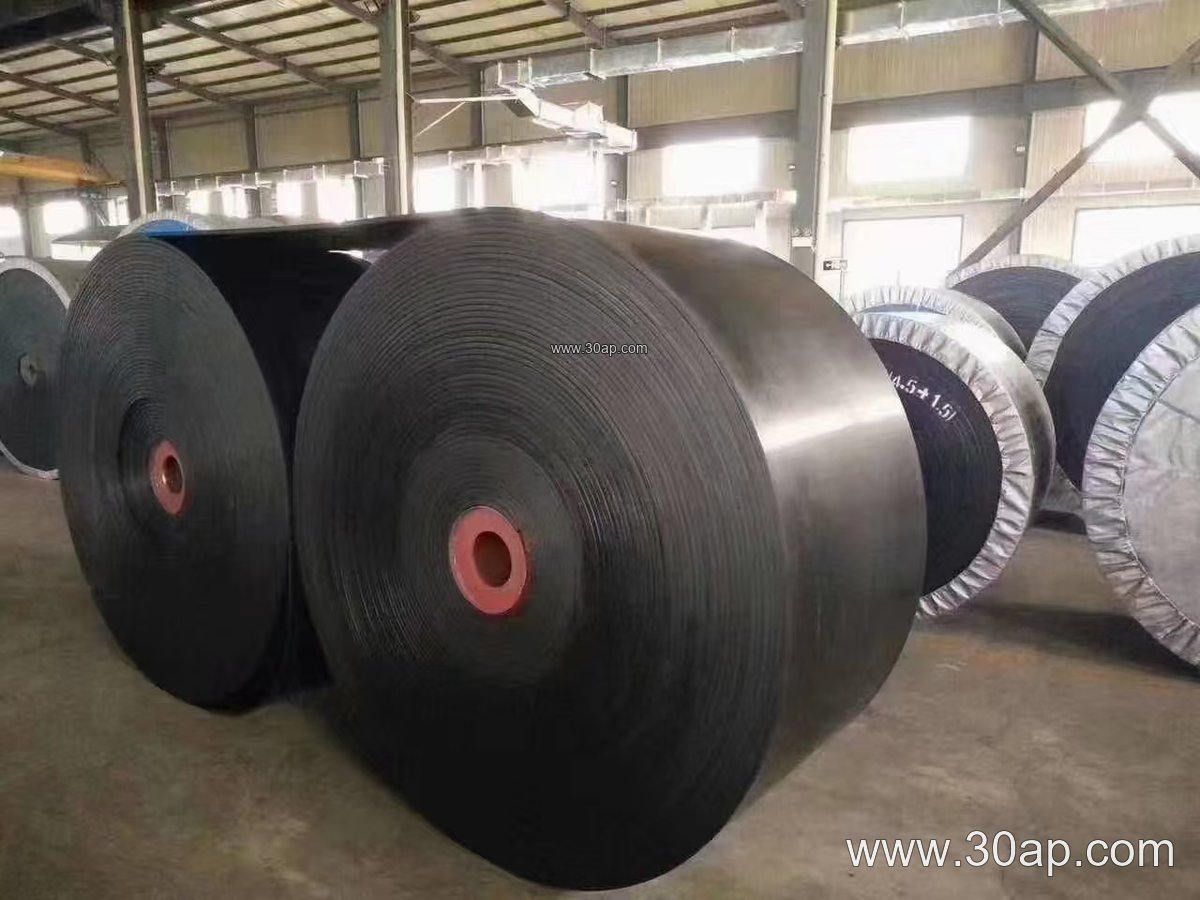
- Strength class: EP300, normally 300 N/mm per ply
- Ply count: commonly 2 to 5 plies, depending on total belt strength required
- Belt width: commonly B650, B800, B1000, B1200, B1400, B1600 and B1800
- Cover thickness: often 4+2 mm, 5+2 mm or 6+2 mm for abrasive bulk materials
- Cover grades: abrasion resistant, heat resistant, oil resistant or flame retardant as the duty requires
Width and strength are independent variables. A 1000 mm wide EP300 belt is not tied to one pulley diameter or one shaft size; those come from the conveyor design, the load and the allowable sag, not from the belt width alone.
Where It Fits in the Plant
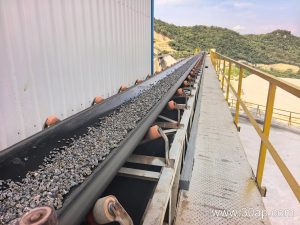
The grade is widely used in quarry conveyor belts, aggregate conveyor belts and crusher conveyor belts handling crushed stone and sand. In cement plants it appears on clinker and raw-material lines, and in power plants on coal conveyor belts feeding stockyards and bunkers. Mining operations use it on surface haulage and on some underground conveyor belts where flame retardant grades are specified, while ports apply it to ship loading and stockpile systems. It is also found in recycling and construction waste lines.
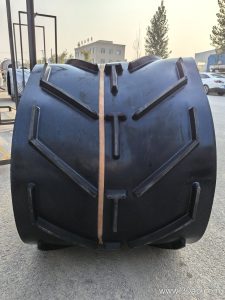
Where the profile of the load needs control, a chevron conveyor belt or a corrugated sidewall belt may be chosen instead; those are different constructions and are not replacements for a flat EP300 belt. On very long, high-tension routes, a steel cord conveyor belt is often the better answer because it offers higher strength with fewer plies.
Choosing the Right Specification
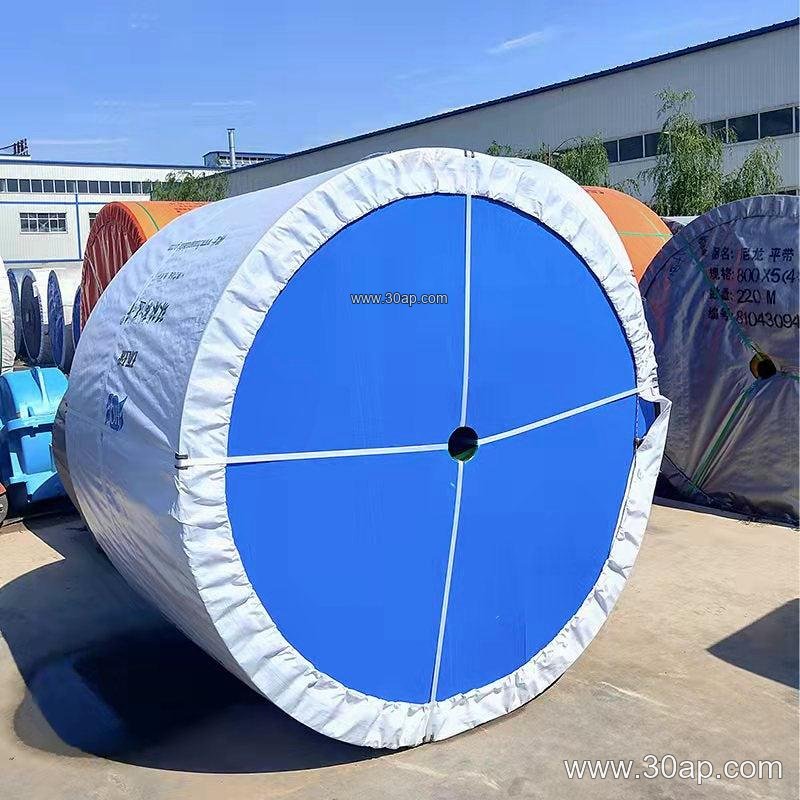
Buyers should start from the duty, not from the strength number alone. Key questions include the material type and lump size, throughput, inclination, pulley diameters, trough angle and ambient conditions. A heavy-duty mining conveyor belt carrying sharp rock usually calls for thicker abrasion resistant covers, while a coal mining conveyor belt in a confined space may need flame retardant and anti-static properties. Hot clinker or sinter points to a heat resistant conveyor belt construction; oily scrap or grain handling may call for oil resistant covers.
Check that the selected EP300 belt is compatible with the smallest pulley on the conveyor, since flex fatigue at the tail pulley is a common cause of early failure. Confirm the splice method as well: vulcanized splices generally suit higher-tension EP belts better than mechanical fasteners.
Installation and Maintenance Notes
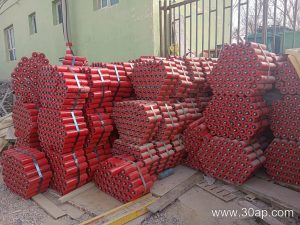
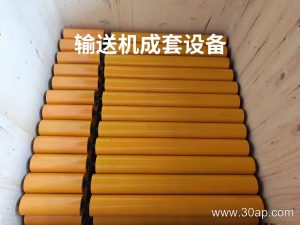
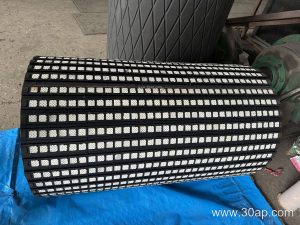
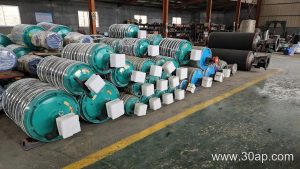
Correct alignment of the conveyor pulley, idler roller frames and conveyor bracket supports protects the belt edges and extends cover life. Keep the belt trained, avoid material spillage at transfer points, and inspect covers for cuts and ply separation. Store spare rolls in a dry, shaded place and rotate stock so the rubber does not age before installation. For more on matching belts with rollers and frames, see https://www.jsconveyorbelt.com/conveyor-pulley/ and https://www.jsconveyorbelt.com/idler-roller/.