What a Conveyor Belt Self-Aligning Idler Does
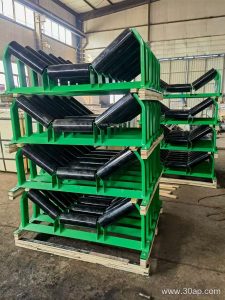
A conveyor belt self-aligning idler is a carrying or return roller assembly designed to correct small tracking errors before they become serious. Instead of sitting square to the frame like a standard troughing idler, the self-aligning roller is mounted on a pivoting base or a steering frame. When the belt drifts to one side, it presses against a vertical guide roller or a tapered end roll, and the resulting force swings the whole assembly slightly. That small rotation steers the belt back toward the center line.
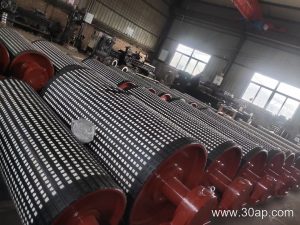
You will also see this component called a self-tracking idler or self-aligning return roller. Those names describe the same product family. It is not a drive pulley, tail pulley or bend pulley, and it does not replace them. The self-aligning idler works with the conveyor belt, the idler roller set and the conveyor bracket, while the pulleys handle power transmission and direction changes.
Construction Details That Matter
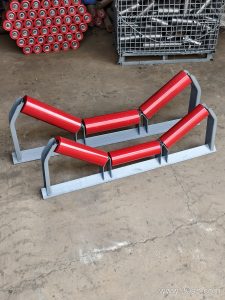
The steering action depends on a few mechanical details rather than on one clever part. A typical unit combines a welded frame, a pivot shaft, sealed bearings and a set of rollers. Friction self-aligning types use the drag of an off-center belt to turn the frame. Positive types use side guide rollers that the belt edge touches directly.
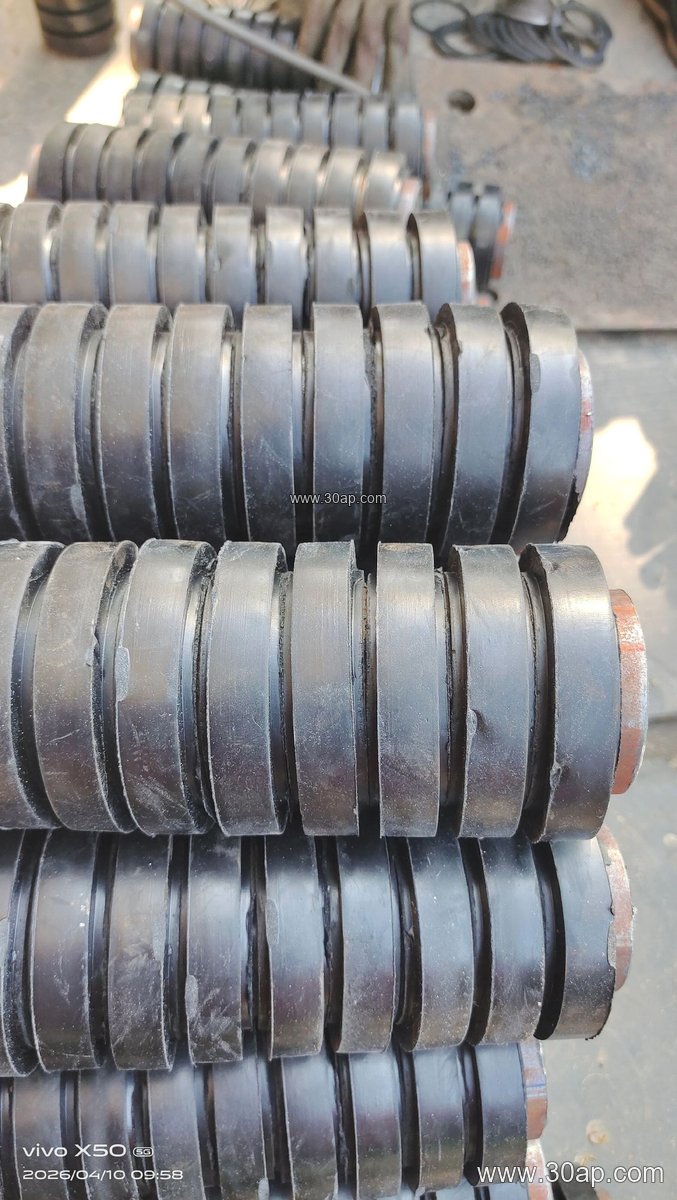
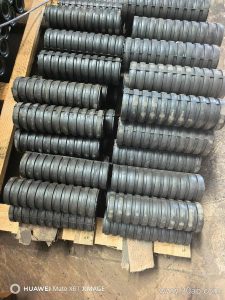
Roller diameters follow the same range used elsewhere on the conveyor, such as Ø89, Ø108, Ø127, Ø133, Ø159 and Ø178, with larger sizes on heavy-duty lines. Bearing selection is matched to load and speed; common choices include 6205, 6305, 6306 and 6308, and no single bearing is tied to one roller diameter. Roll faces may be plain steel tube, nylon, ceramic or rubber rings. Rubber rings help on impact zones, while ceramic or nylon surfaces can reduce buildup in wet, sticky service.
| Item | Common reference values |
|---|---|
| Roller diameter | Ø89, Ø108, Ø127, Ø133, Ø159, Ø178 mm |
| Belt width | B500, B650, B800, B1000, B1200, B1400, B1600 |
| Trough angle | 20°, 30°, 35°, 45° |
| Forward tilt (where used) | about 1.5° to 2° |
| Bearing options | 6204, 6205, 6305, 6306, 6308, 6310 |
These figures are reference data, not a fixed selection table. Roll length changes with belt width, trough angle and roll arrangement. As a rough example, a three-roll troughing set may use rolls of about 250 mm at B650, 380 mm at B1000 and 530 mm at B1400, but side rolls and center rolls can differ, so the final length is set by design.
Where It Earns Its Place
Self-aligning idlers are common on long overland runs and on conveyors that see uneven loading. In a quarry or aggregate line, a crusher discharge belt often shifts sideways when stone lands off center; a self-aligning set near the loading point helps hold the line. In a coal handling system at a power plant, misalignment on a long transfer conveyor can rub the belt edge against the frame, and a tracking idler reduces that wear.
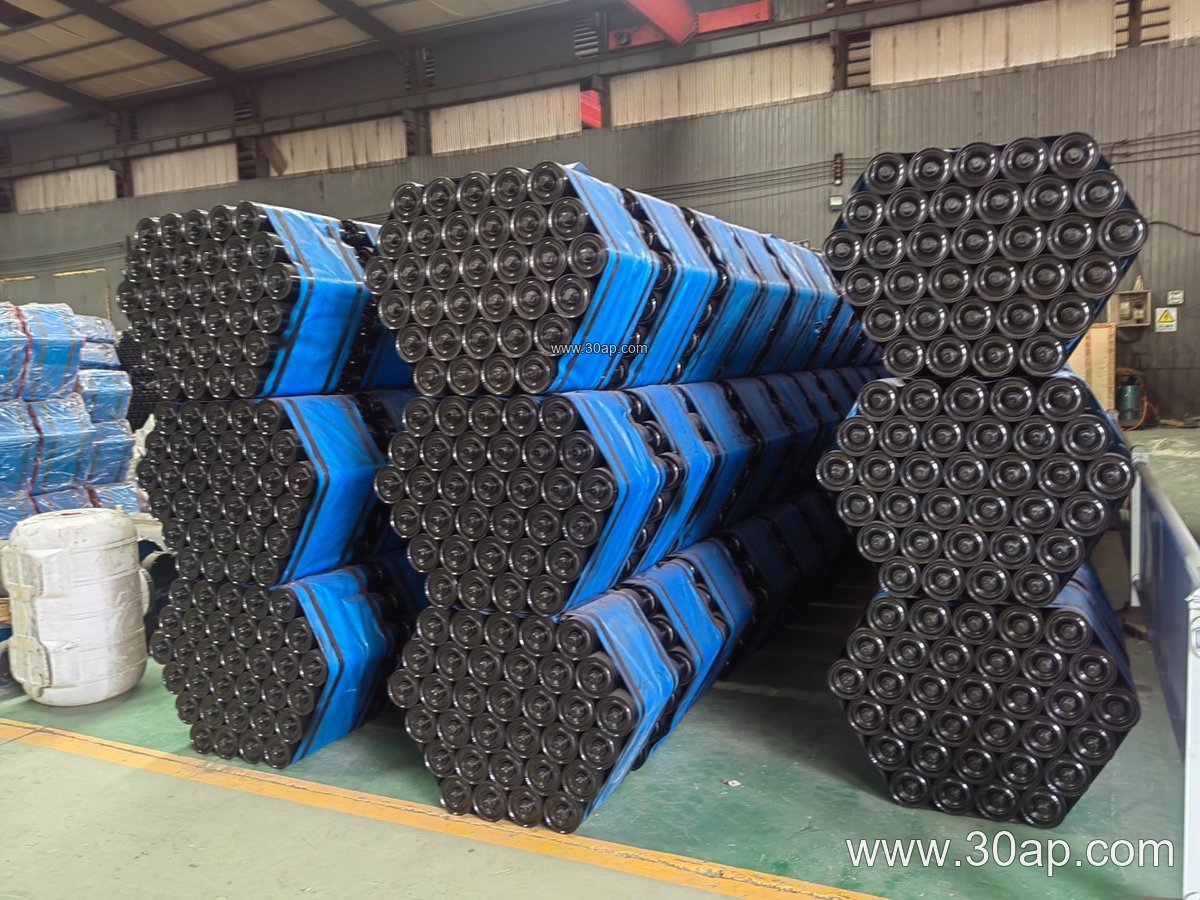
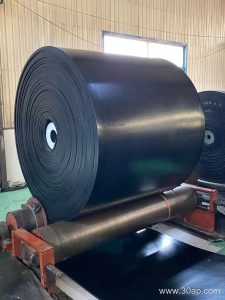
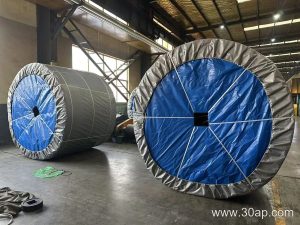
The choice of belt also matters. A heavy steel cord conveyor belt behaves differently from a lighter EP conveyor belt or NN conveyor belt, and a thick abrasion resistant conveyor belt carries more edge stiffness than a thin fabric core belt. On a pipe conveyor belt or a corrugated sidewall conveyor belt, tracking is handled by the pipe or cleat structure, so self-aligning rollers are used mainly on the flat carrying and return sections. Flame retardant conveyor belt and fire resistant conveyor belt grades are common underground, where the idler and its lagging should suit the same environment.
Selection and Maintenance Notes for Buyers
Start with belt width, belt speed, load per meter and the position on the conveyor. A self-aligning idler placed just after the tail pulley sees different forces from one placed on the return strand, and a V-type return self-aligner is often used to keep the empty belt centered. Ask for the pivot design, seal type and roller surface, because dust and moisture decide how long the bearings last.
- Check that the frame swings freely before installation.
- Align the unit square to the belt line, then confirm tracking under load.
- Inspect guide rollers and seals during routine shutdowns.
- Replace worn rubber rings before they damage the belt edge.
Do not treat one roller diameter as mandatory for a given belt width, and do not assume a fixed shaft size from width alone. The reliable approach is to match the self-aligning idler to the conveyor design, the idler roller family already in use, and the actual material being carried, whether that is ore, clinker, coal or sand.