What a Ceramic Lagged Pulley Does on a Conveyor
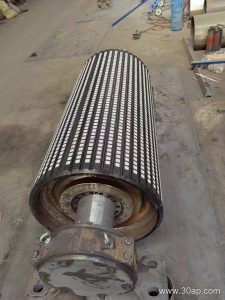
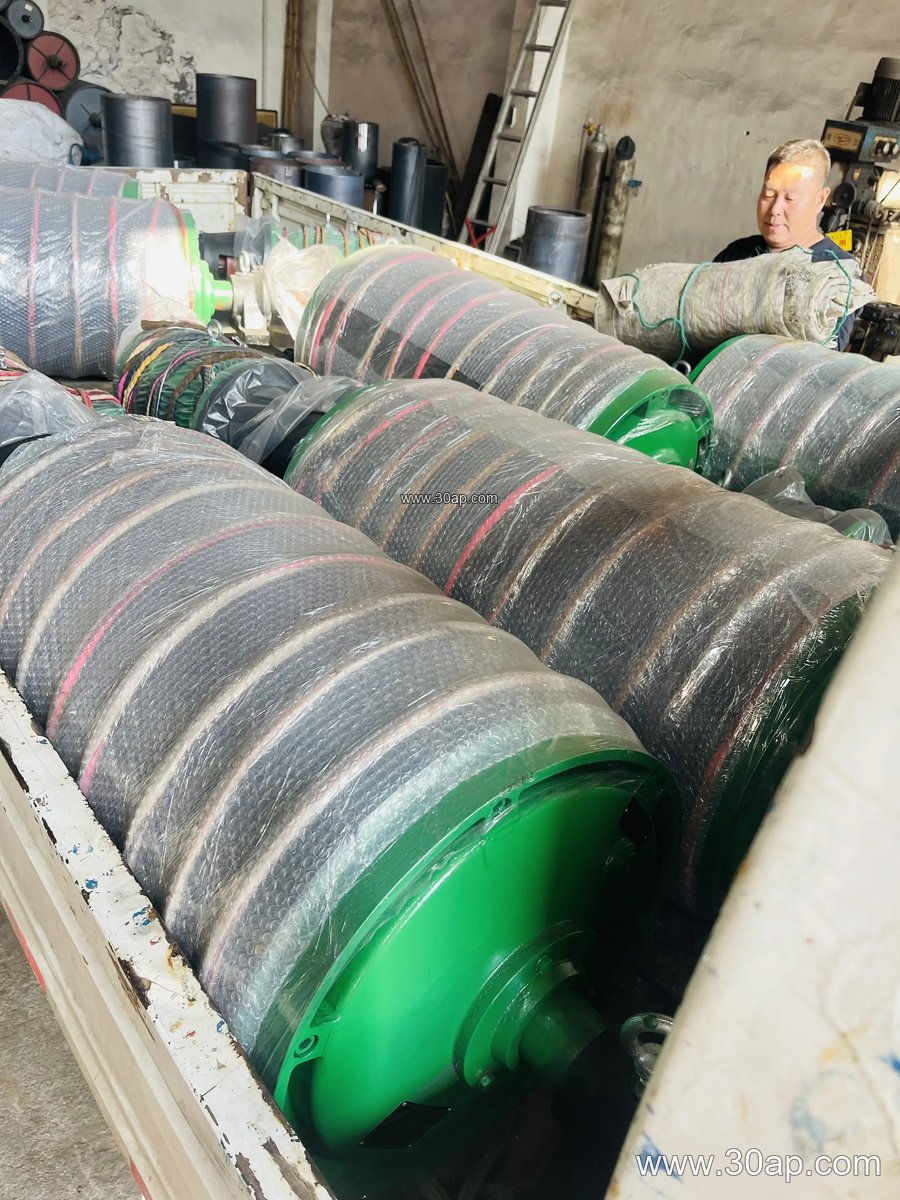
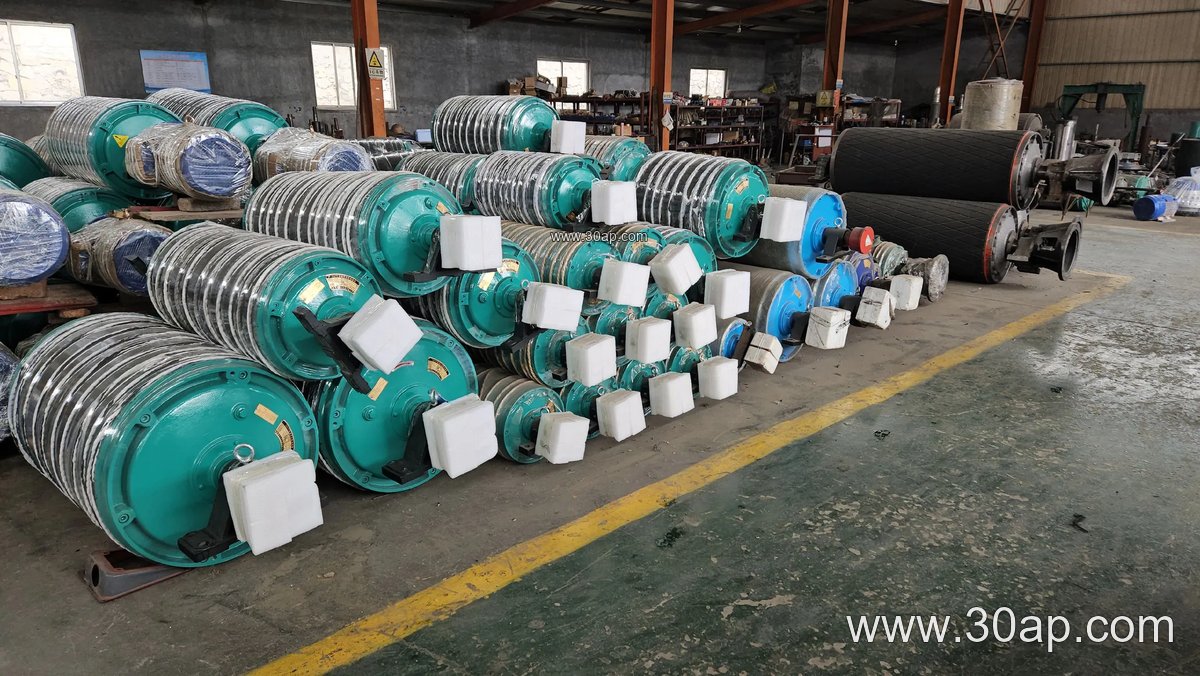
A wear-resistant ceramic lagged pulley is a conveyor pulley whose shell is covered with ceramic tiles set in a rubber or polymer backing. The ceramic surface grips the conveyor belt while resisting the cutting and polishing action of sharp, hard material. In a quarry, a limestone mine or a sand and aggregate line, fines and grit work their way between belt and shell; a plain steel drum soon polishes to a mirror finish and starts to slip. Ceramic lagging keeps a rough, high-friction face far longer, which protects belt tracking and reduces the need to re-tension.
This is a pulley product, not a belt product. It is normally specified as a drive pulley, and in some plants as a tail or bend pulley where abrasion is severe. Drive, tail and bend positions are not interchangeable, so the duty point should be stated clearly when ordering.
How the Ceramic Surface Is Built
The shell is usually a rolled steel tube with welded end discs and a shaft, machined before lagging. Ceramic tiles, often alumina, are bonded in a patterned layout with gaps between them. Those gaps let water and fine dust escape instead of building up under the belt. Tile shape and pattern vary: rectangular tiles, interlocking blocks, and raised stud or diamond layouts are all common. The backing may be cold-bonded rubber or a hot-vulcanised layer, and the whole assembly is usually finished to a consistent diameter.
Because ceramic is brittle in impact, the pulley should not be the first point where large lumps land. An impact-resistant conveyor belt and a well-placed idler roller or impact bed upstream will protect both belt and lagging.
Where It Fits in the Plant
Typical duties include:
- Head or drive pulleys on quarry and crusher discharge conveyors, where slip is costly.
- Tail pulleys on aggregate and ore lines that run wet or dusty.
- Bend and snub positions on long overland conveyors in cement plants and power plant coal handling.
- Transfer points in steel plants and sinter plants where fines are abrasive.
In coal mining and underground mining, flame retardant conveyor belt and anti-static belt requirements usually govern the belt choice; the pulley lagging should be selected to match the same safety intent, and the user should confirm material compatibility with the belt supplier. Ceramic lagging is also seen on bulk material conveyors in ports and ship loading systems, where salt and grit combine.
Matching Pulley Size to the Belt
Pulley diameter is set by belt tension, wrap angle and belt construction, not by belt width alone. A B800 belt may run on a Ø500 drive pulley on a short conveyor and on a much larger drum on a high-tension main line. Shell face width is normally a little wider than the belt, for example B650 with roughly 750 mm face, or B1200 with roughly 1400 mm face. Shaft diameter follows torque and bearing load, commonly in the Ø80 to Ø200 range, and should be calculated rather than copied from a table.
Reference dimensions for early planning
| Belt width | Typical shell face | Common pulley diameter range |
|---|---|---|
| B500 | about 600 mm | Ø250 to Ø500 |
| B800 | about 950 mm | Ø315 to Ø630 |
| B1000 | about 1150 mm | Ø400 to Ø800 |
| B1200 | about 1400 mm | Ø500 to Ø1000 |
| B1400 | about 1600 mm | Ø630 to Ø1250 |
| B1800 | about 2000 mm | Ø800 to Ø1600 |
Lagging thickness is often 8, 10, 12, 15 or 20 mm. Thicker lagging extends wear life but adds weight and changes the pulley OD, so check clearance and belt path.
Buyer Checklist
Before ordering, confirm the duty position, belt width, belt type (for example EP conveyor belt, steel cord conveyor belt or multi-ply fabric core), belt speed, wrap angle and expected tramp material. Ask how the tiles are bonded, what the backing compound is, and whether the lagging can be replaced on site. Check that the conveyor bracket and bearing arrangement suit the shaft. On high-abrasion duties, pair the ceramic pulley with an abrasion resistant conveyor belt and suitable conveyor pulley guards.
For more on matching drums, belts and rollers, see cbconveyorbelt.com conveyor pulley and cbconveyorbelt.com conveyor belt. A ceramic lagged drum is a long-life component, but it still needs periodic inspection of tile edges and backing, especially after the first months of service.