What a Conveyor Bracket Quotation Covers
A conveyor bracket quotation is a structured offer for the steel supports that hold idler rollers and shape the conveyor belt along its route. In a quarry, a coal washing plant, or a cement plant, these brackets are the interface between the conveyor belt and the idler roller, so the quotation must be clear about geometry, material, and installation details. The same product is often called a conveyor support bracket or idler bracket, and the quotation should use consistent naming so buyers can compare offers directly.
Core components and build
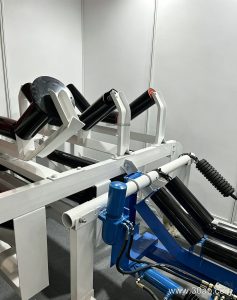
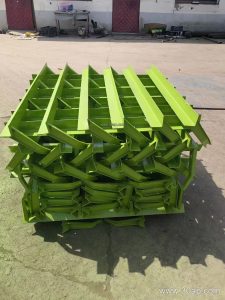
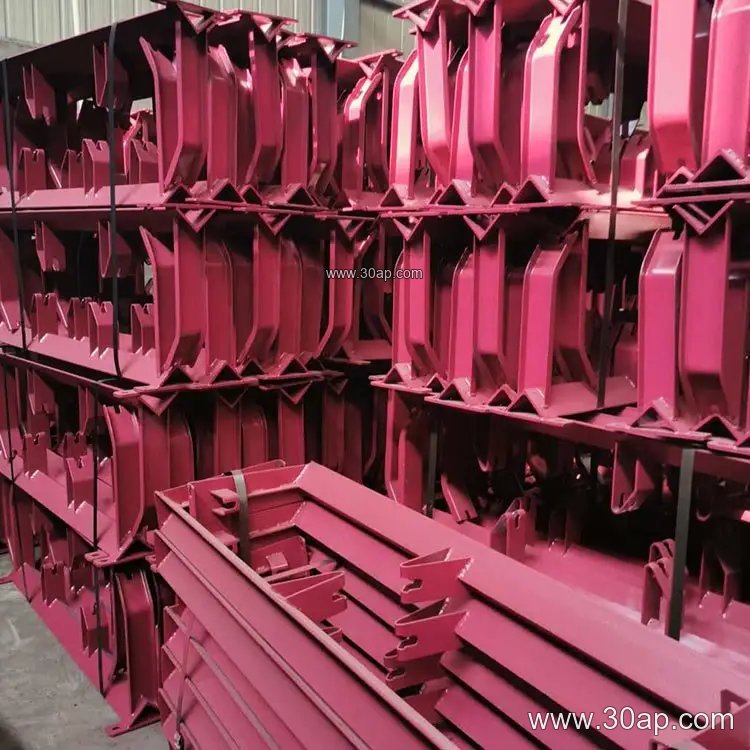
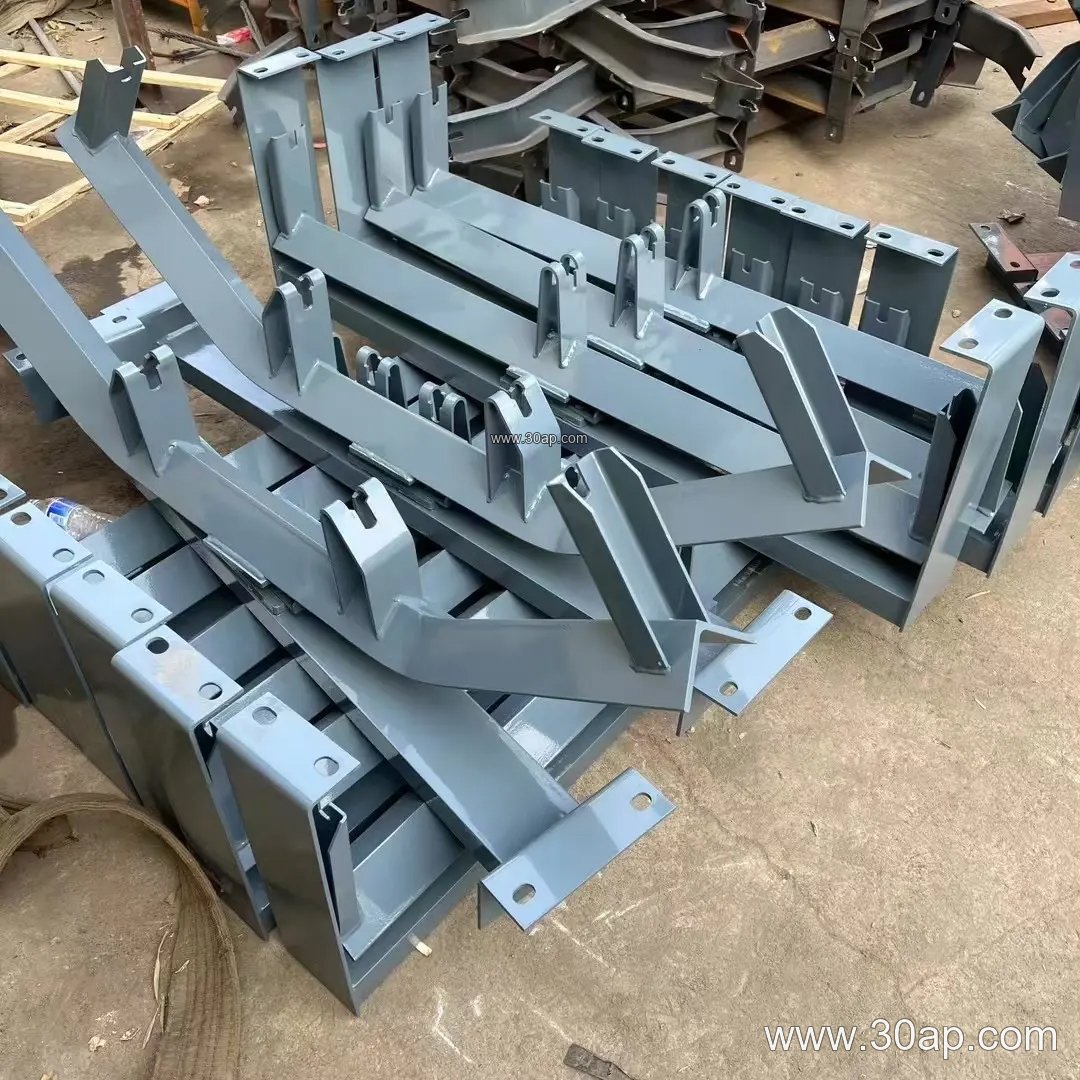
Most brackets are fabricated from angle steel, channel steel, or bent steel plate. A quotation usually describes the bracket type, the belt width it suits, the trough angle, and the roller diameter it accepts. Common types include trough brackets, transition brackets, return brackets, V-return brackets, impact brackets, self-aligning brackets, and adjustable brackets. Each type has a distinct role: trough brackets form the carrying side, return brackets support the belt on its way back, and impact brackets sit under loading points.
How the Quotation Is Structured
A practical quotation separates line items by bracket family and then by size. For example, a B800 trough bracket at 35 degrees for a Ø108 idler roller is a different line item from a B1200 return bracket for a Ø133 roller. The quotation should state the mounting hole spacing and crossbeam length as “per design” because these dimensions change with belt width and trough angle. Buyers should also see the steel grade, surface treatment, and welding standard, even if these are described in general terms rather than as fixed promises.
Sample line-item table
The table below shows how a quotation might present reference data. These are common examples, not mandatory combinations.
- Type: trough bracket — Belt width: B800 — Trough angle: 35° — Roller dia.: Ø108 — Material: channel steel
- Type: transition bracket — Belt width: B1000 — Trough angle: 30° — Roller dia.: Ø133 — Material: bent plate
- Type: V-return bracket — Belt width: B1200 — Return angle: V — Roller dia.: Ø133 — Material: angle steel
- Type: impact bracket — Belt width: B1400 — Trough angle: 35° — Roller dia.: Ø159 — Material: channel steel
- Type: adjustable bracket — Belt width: B650 — Trough angle: 20–45° — Roller dia.: Ø89 — Material: angle steel
For larger installations, such as a B1800 or B2000 conveyor at a port or power plant, the quotation should confirm the crossbeam length and hole pattern against the conveyor drawing. The bracket does not set belt speed or capacity, but it must align with the idler roller and the conveyor belt so the belt trains correctly.
Where These Brackets Are Used
In a limestone mine or a sand and gravel line, trough brackets carry the belt through the loading zone and along the main run. In a coal washing plant, flame retardant and anti-static properties may be relevant for the conveyor belt, while the brackets themselves are selected for dust, moisture, and impact. A cement plant typically uses heavy-duty brackets under clinker and raw meal transfer points. The same bracket families appear in iron ore handling, aggregate crushing circuits, and tunnel muck removal. The quotation should name the site conditions so the buyer can match the bracket to the conveyor belt and idler roller.
Matching bracket to belt and roller
Trough angle and roller diameter are related but not fixed to a single belt width. A B800 conveyor may use 20, 30, 35, or 45 degree troughing depending on material surcharge and belt speed. A B1200 conveyor may run 35 degree troughs with Ø133 rollers, while a B650 conveyor may use 30 degree troughs with Ø89 rollers. Forward-leaning brackets are sometimes set at about 1.5 to 2 degrees to help belt tracking. Adjustable brackets allow the trough angle to be changed within a range, which is useful during commissioning. The quotation should list the selected angle and roller diameter as confirmed by the conveyor designer, not as universal rules.
What Buyers Should Check Before Ordering
First, confirm the bracket type and its position on the conveyor. Drive pulleys, tail pulleys, and bend pulleys are not interchangeable with brackets, and the quotation should not mix them. Second, verify the belt width, trough angle, and roller diameter against the conveyor layout. Third, ask for the mounting hole spacing and crossbeam length as drawing-specific values. Fourth, review the steel section and surface treatment for the environment. Finally, request that the quotation use the same product name throughout so that a conveyor support bracket in one line item is not confused with a different bracket family in another.
For related equipment, buyers often review the conveyor belt specification alongside the bracket quotation, especially where abrasion resistant, heat resistant, or oil resistant covers are needed. The bracket quotation remains the primary document for support frames, and it should stand on its own with clear dimensions and materials.