What the 1800mm Wide Conveyor Belt Is
The 1800mm wide conveyor belt is a heavy-duty bulk handling belt built on a carcass roughly 1.8 metres across. That width sits near the top of common production ranges, so it is usually ordered for high-tonnage trunk lines rather than for short transfer points. In a quarry, a cement plant, a coal preparation facility or a power plant coal yard, a belt this wide can move large tonnages at moderate speed, which reduces wear on the cover and keeps material from spilling over the edges when loading is well controlled.
Buyers often describe it as an 1800mm wide conveyor belt, a B1800 belt or simply an extra-wide belt. These are different ways of naming the same product; the width is the defining feature, while the carcass type and cover compound are selected for the duty.
Carcass and Cover Construction
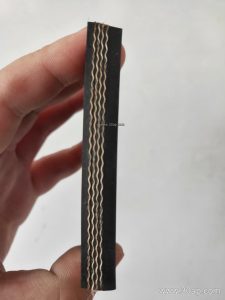
The carcass carries the tension. For an 1800mm wide conveyor belt, common options include multi-ply fabric cores such as EP or NN, and steel cord construction where the duty calls for very high strength over long centres. A multi-ply fabric core conveyor belt is popular in aggregate and cement service because it resists impact and tolerates splicing in the field. Steel cord belts suit long overland lines and high-tension drives.
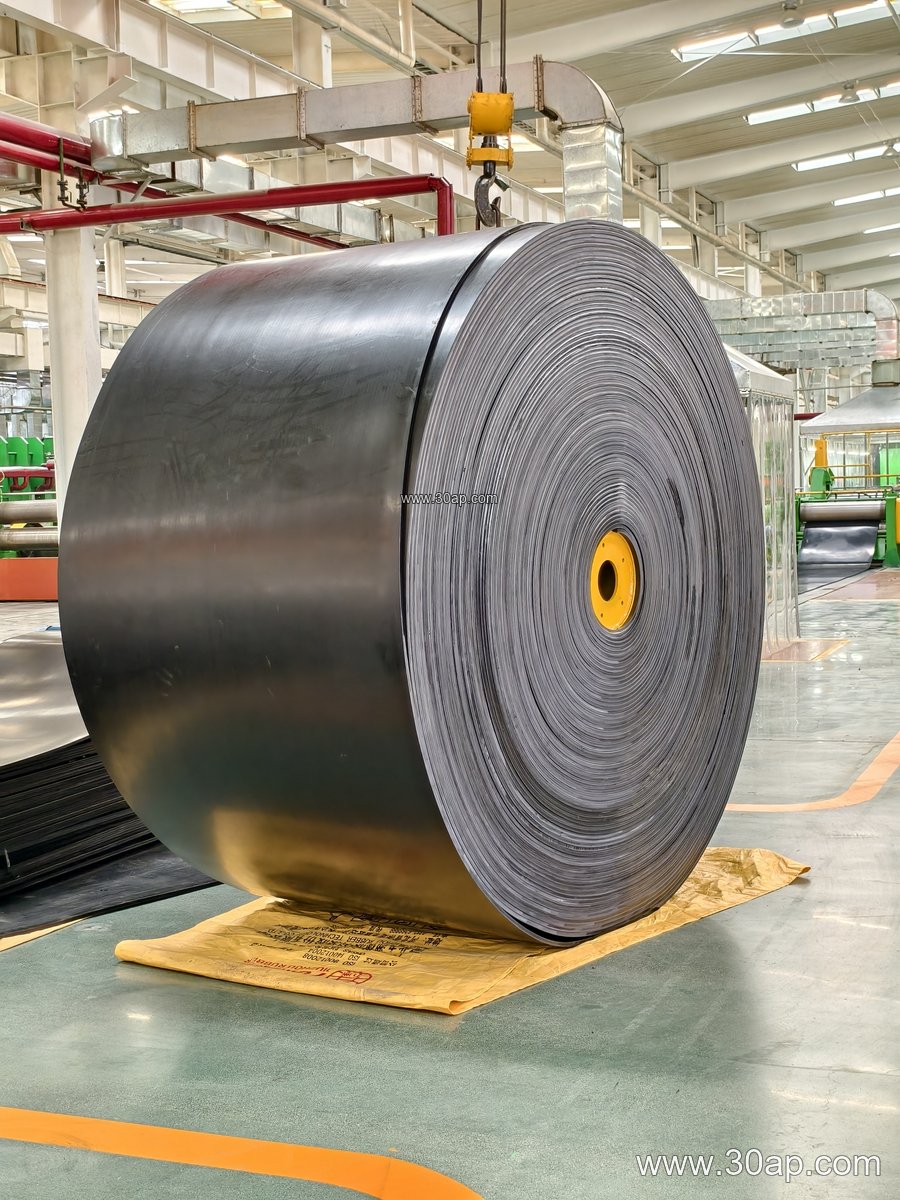
Cover compound is chosen for the material handled: abrasion resistant conveyor belt grades for crushed rock and ore, heat resistant conveyor belt grades for clinker and sinter, oil resistant conveyor belt grades for certain industrial feeds, and flame retardant conveyor belt grades for underground coal mining conveyor systems. Cold resistant and anti-static grades are available for specific climates and hazardous areas.
Typical Reference Data
The values below are common reference ranges, not fixed supply promises. Final construction is confirmed by the belt designer.
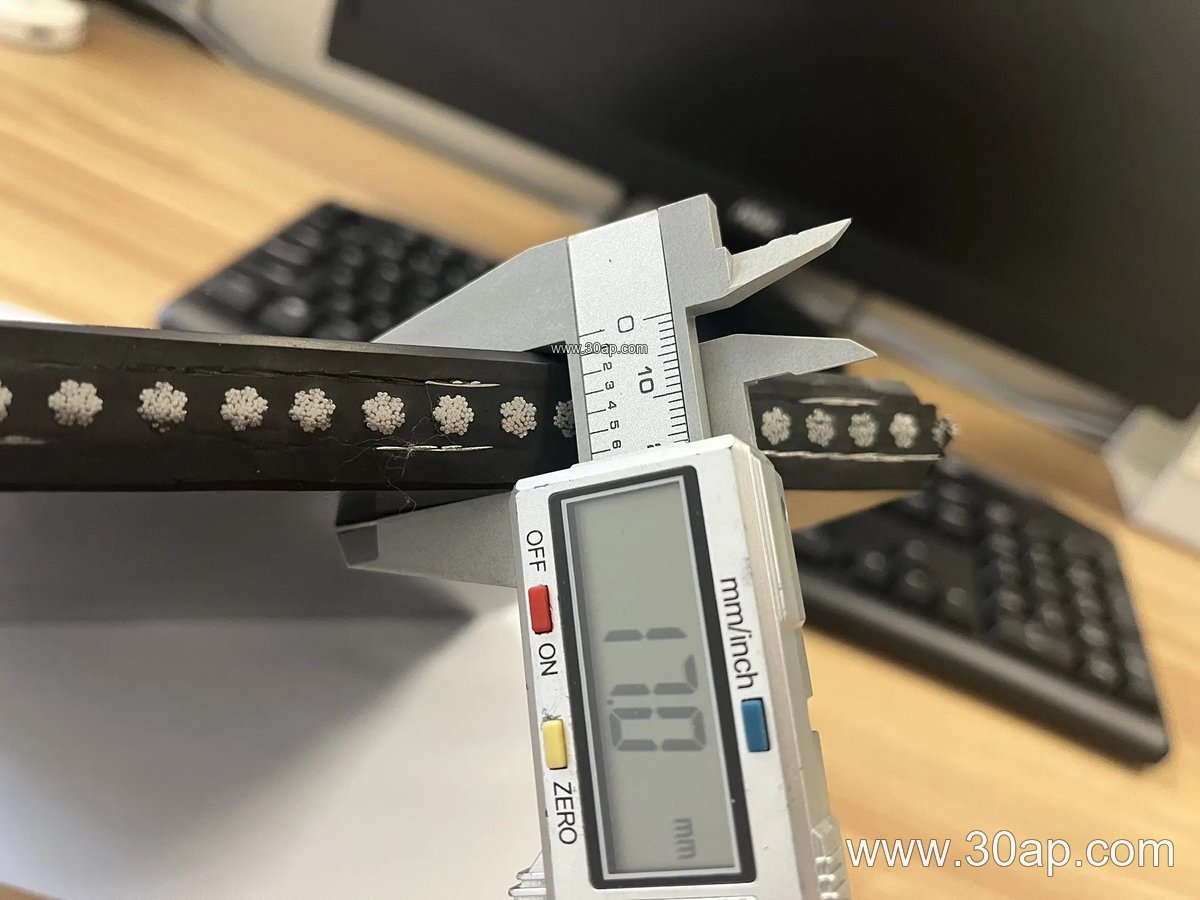
- Width: B1800 (1800mm)
- Fabric strength grades: EP200 to EP1000, with heavier grades possible
- Steel cord grades: ST1000 to ST3150, depending on tension demand
- Ply count: usually 2 to 6 layers in fabric cores
- Cover thickness: 4+2 mm, 5+2 mm, 6+2 mm or 8+3 mm
Where It Fits in the Plant
This width is common on main haulage and plant feed lines. In a sand and gravel operation it may run from the primary crusher to the screening tower. In a coal mining conveyor system it can form part of the surface transport route, while underground coal mining conveyor belts usually follow narrower or flame-rated specifications. Cement plants use wide belts on clinker and raw meal routes, and ports use them on ship loading conveyor lines where high capacity matters.
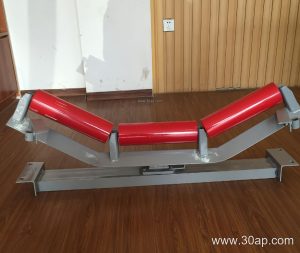
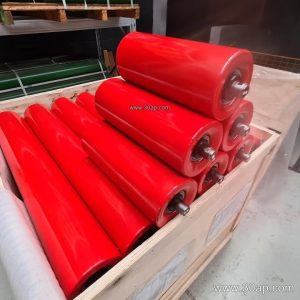
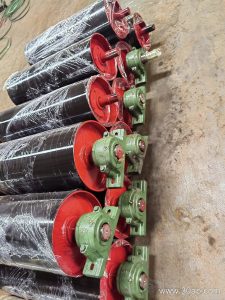
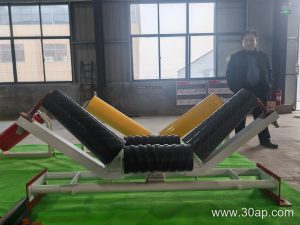
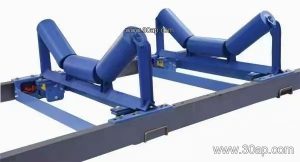
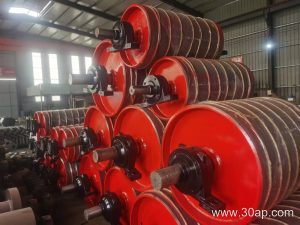
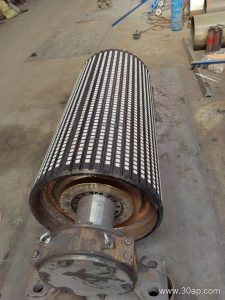
The belt does not work alone. A conveyor pulley at the drive and tail ends, idler roller sets spaced along the carry and return sides, and conveyor bracket assemblies all need to match the belt width and load. Drive pulleys, tail pulleys and bend pulleys each do a different job and are not interchangeable, so the pulley schedule should be checked against the belt tension and wrap angle.
Selection Points for Buyers
Start with the material: lump size, density, moisture, temperature and abrasiveness. Then confirm the required tension, which decides whether a fabric core or steel cord carcass is appropriate. A high strength conveyor belt in EP1250 or EP1600 grade may be enough for a medium-length line, while a long overland route may need ST1600 or above. Check the troughability of the 1800mm wide conveyor belt on the selected idler roller profile; a belt that is too stiff for the trough angle will not centre well.
Also review the loading point. Impact resistant conveyor belt covers and adequate idler roller spacing reduce damage from large lumps. Where dust or flammable gas is present, specify flame retardant and anti-static properties. For cold climates, confirm the cold resistant grade before ordering.
Installation and Maintenance Notes
Wide belts need careful alignment during installation. Check that the conveyor pulley faces are square, that idler roller frames are level, and that the conveyor bracket supports are secure before tensioning. Splicing should follow the belt maker’s method; a poorly made splice on an 1800mm wide conveyor belt concentrates stress and shortens service life.
Routine checks should cover edge wear, cover gouges, splice condition, and tracking. Keep the belt cleaner and return idler roller set functioning, since carryback on a wide belt can cause misalignment. Record cover thickness at fixed points so wear trends are visible.
For plants comparing widths, a 1200mm wide conveyor belt or 1500mm wide conveyor belt may serve lower-capacity branches, while the 1800mm size handles the main flow. Matching each line to its duty keeps both belt and pulley costs sensible.