What a Bend Pulley Does
A bend pulley is a direction-changing component mounted on a belt conveyor to guide the conveyor belt along a different path, usually around a tensioning device or a transfer point. It does not drive the belt and it does not carry the main material load. Instead, it changes the belt’s running direction so the take-up system can work in a compact space. In a typical gravity or screw take-up arrangement, the belt leaves the tail area, passes around a bend pulley, and returns with the required wrap angle. Mining, coal preparation, cement and aggregate plants often use this pulley where layout space is tight.
The bend pulley should not be confused with a drive pulley or a tail pulley. A drive pulley transmits torque from the gearbox to the belt; a tail pulley is the return end that supports the belt at the loading zone. These functions are not interchangeable, and each position has its own load and surface requirements. A bend pulley usually carries lower torque than the drive pulley but still needs a properly sized shaft and bearing assembly.
Construction and Surface Options
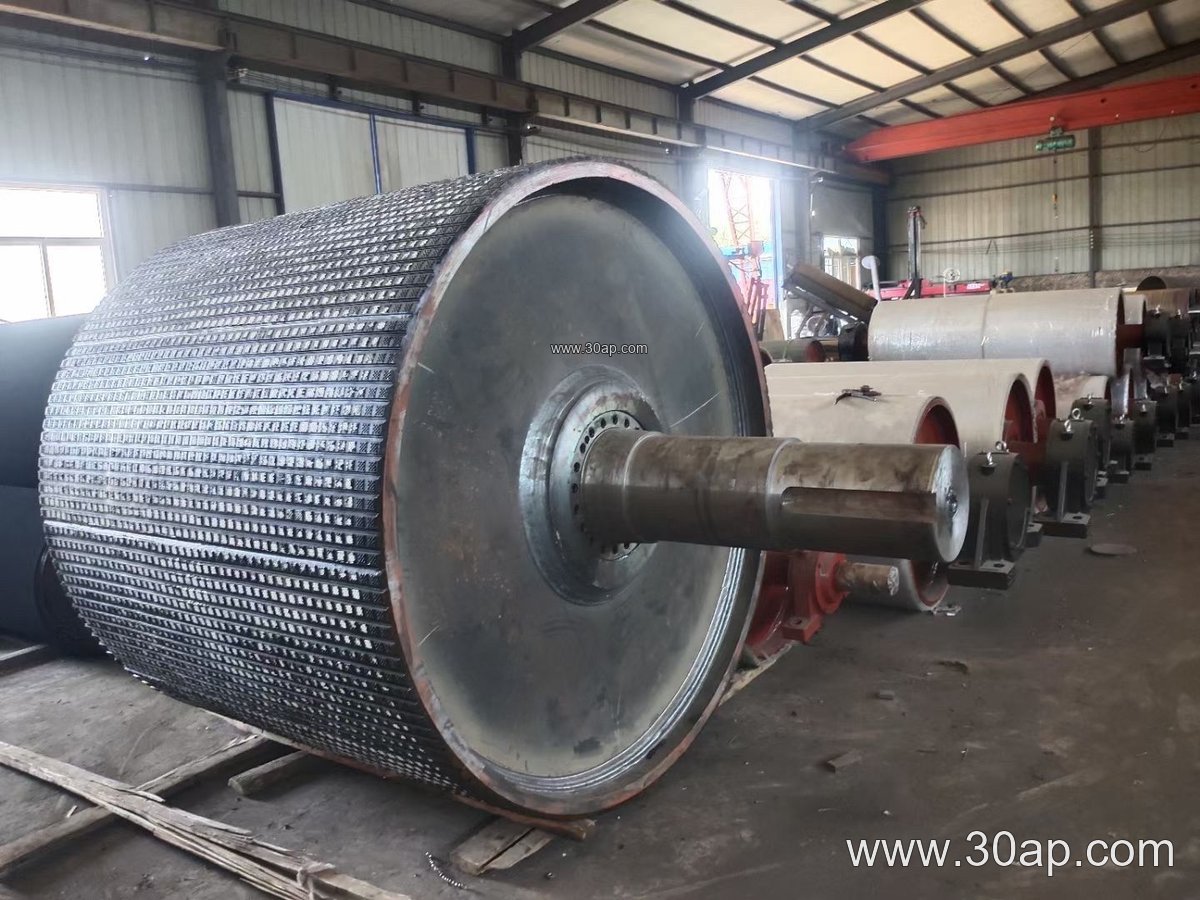
A bend pulley is normally built as a steel drum with welded end discs, a through shaft, bearing housings, and a machined face. The shell thickness and shaft diameter are determined by belt tension, wrap angle, and the load path, not simply by belt width. Common shaft diameters include Ø50, Ø60, Ø70, Ø80, Ø90, Ø100, Ø120, and larger sizes for heavy-duty service. Common diameters range from Ø200 and Ø250 up to Ø630 or more, depending on the layout and belt tension.
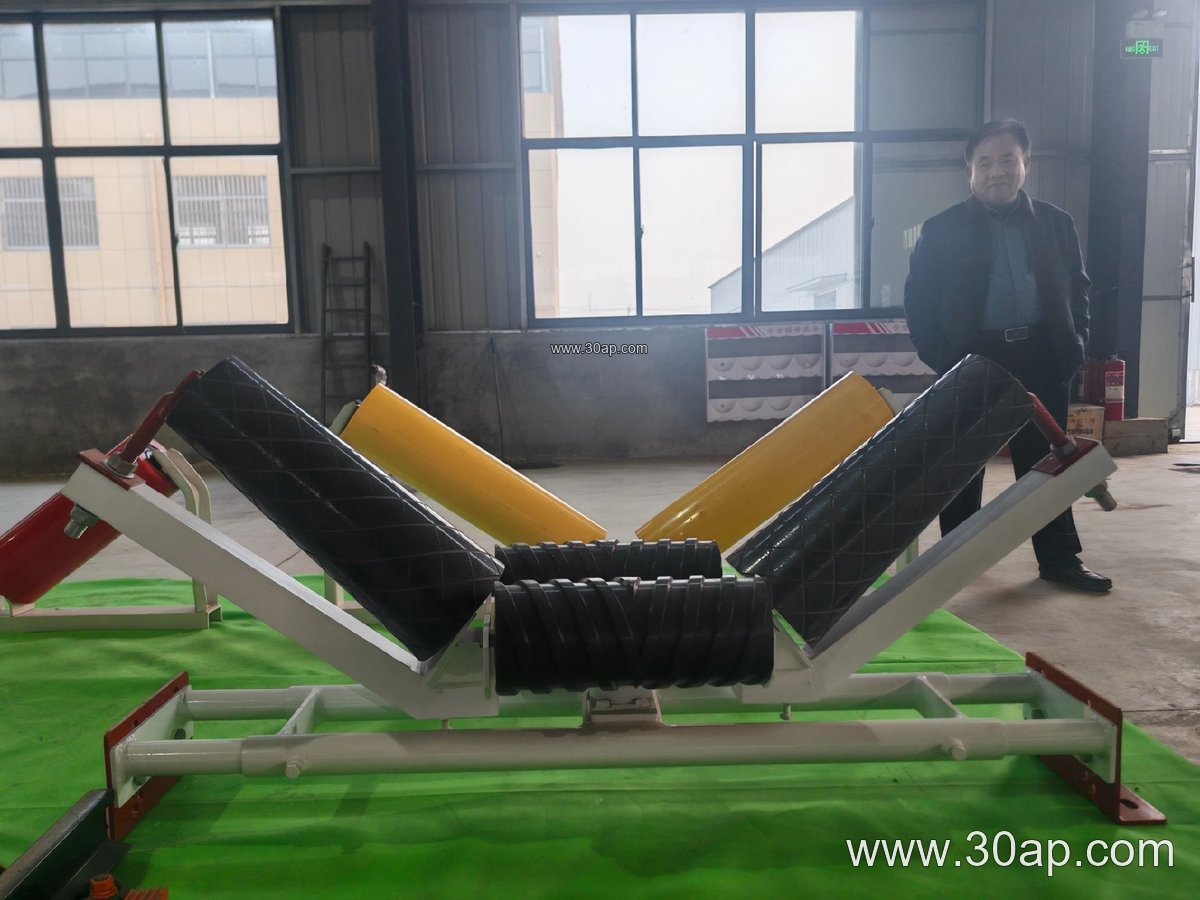
Surface treatment matters for belt life. A plain face is used where friction is adequate and build-up is not a problem. Rubber lagging, either cold-bonded or hot-vulcanized, helps protect the belt and improve traction in wet or dusty conditions. Diamond or herringbone grooving can help with water drainage and material shedding. Ceramic lagging may be chosen for high-wear applications, while plane rubber is a practical general-purpose choice. Lagging thickness is often 8, 10, 12, 15, or 20 mm, selected according to the duty.
Common Reference Dimensions
The table below gives reference combinations only. Actual dimensions follow the conveyor design, and one belt width does not dictate a single pulley diameter.
| Belt Width | Typical Pulley Face Width | Example Diameter Range |
|---|---|---|
| B400 | about 500 mm | Ø200 – Ø315 |
| B650 | about 750 mm | Ø250 – Ø400 |
| B800 | about 950 mm | Ø315 – Ø500 |
| B1000 | about 1150 mm | Ø400 – Ø630 |
| B1200 | about 1400 mm | Ø500 – Ø800 |
| B1400 | about 1600 mm | Ø630 – Ø1000 |
Face width is usually slightly wider than the belt to allow for tracking tolerance. A B800 bend pulley may be built with a face of about 950 mm, and a B1200 unit commonly has a face near 1400 mm. The shaft diameter should be confirmed from torque and bearing load calculations.
Where It Fits in the Conveyor Line
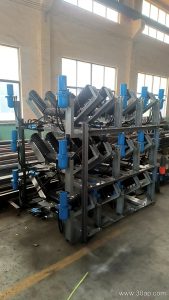
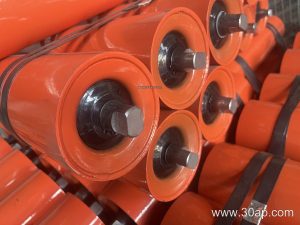
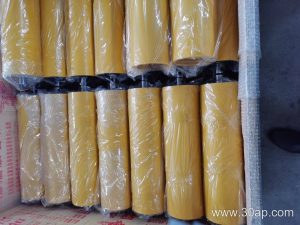
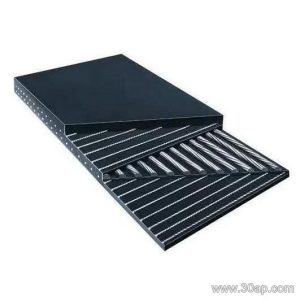
Bend pulleys appear in quarry conveyors, coal handling systems, cement plant clinker lines, power plant coal yards, and port bulk terminals. They are also found in crushing and screening circuits and in tunnel muck removal conveyors. In these systems, the pulley works together with the conveyor belt, idler roller, conveyor pulley, and conveyor bracket. The belt itself may be a heavy-duty mining conveyor belt, an abrasion resistant conveyor belt, or a flame retardant conveyor belt for underground coal mining service. A fabric core conveyor belt or steel cord conveyor belt may need different pulley diameters to control bending stress, so the belt supplier and pulley designer should coordinate.
In a coal mining conveyor, the bend pulley may be positioned close to the take-up counterweight, where the belt makes a 90-degree or 180-degree turn. In a cement plant, it may guide the belt around a transfer tower. In a sand and gravel line, it often sits in a dusty environment where lagging and bearing seals need attention.
Buyer Checklist
- Confirm the pulley position and whether the application is a bend, take-up, or snub duty.
- Provide belt width, belt type, belt tension, and wrap angle to the pulley manufacturer.
- Specify the required face width, diameter, shaft diameter, and bearing type.
- Choose lagging based on material condition: wet, oily, dusty, or high-impact.
- Check that the pulley bracket and bearing housing match the conveyor frame.
- Plan for inspection of lagging wear and bearing lubrication.
For a reliable match, share the conveyor layout and belt data early. A bend pulley is a small part of the total system, but it affects belt tracking, belt life, and maintenance intervals. Using the correct pulley surface and dimensions helps the conveyor belt run smoothly from the loading point to the discharge.