What a Steel Pulley Does on a Conveyor
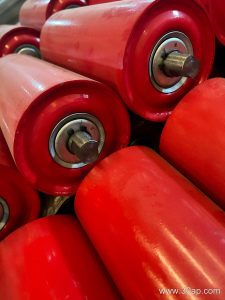
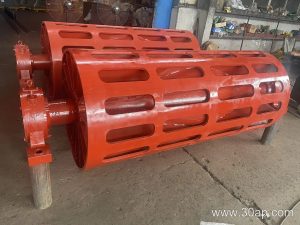
A steel pulley is the rotating drum that carries and guides the conveyor belt at the ends and along the route of a bulk handling system. Its shell is usually fabricated from rolled steel plate, welded to end discs, and machined to accept a shaft through bearing housings. Because the belt wraps around it under tension, the pulley transfers motion, maintains alignment, and absorbs the pull of the loaded belt. In a quarry, a cement plant clinker line, or a power plant coal yard, this component is one of the quiet workhorses that keeps material moving.
How the Drum Is Built
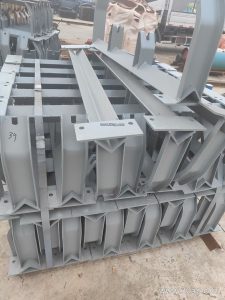
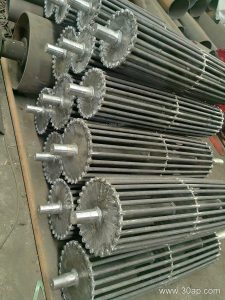
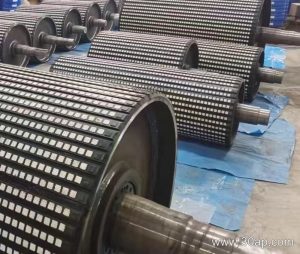
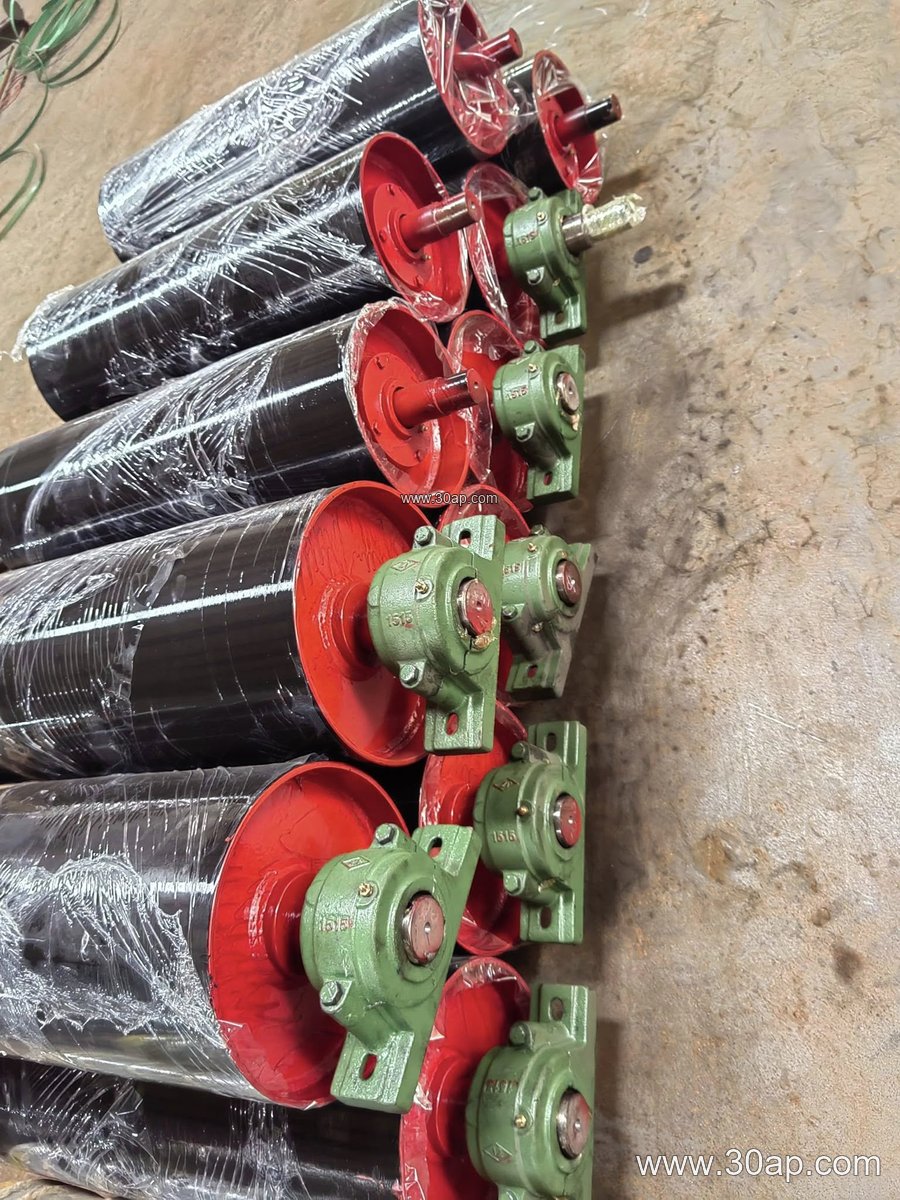
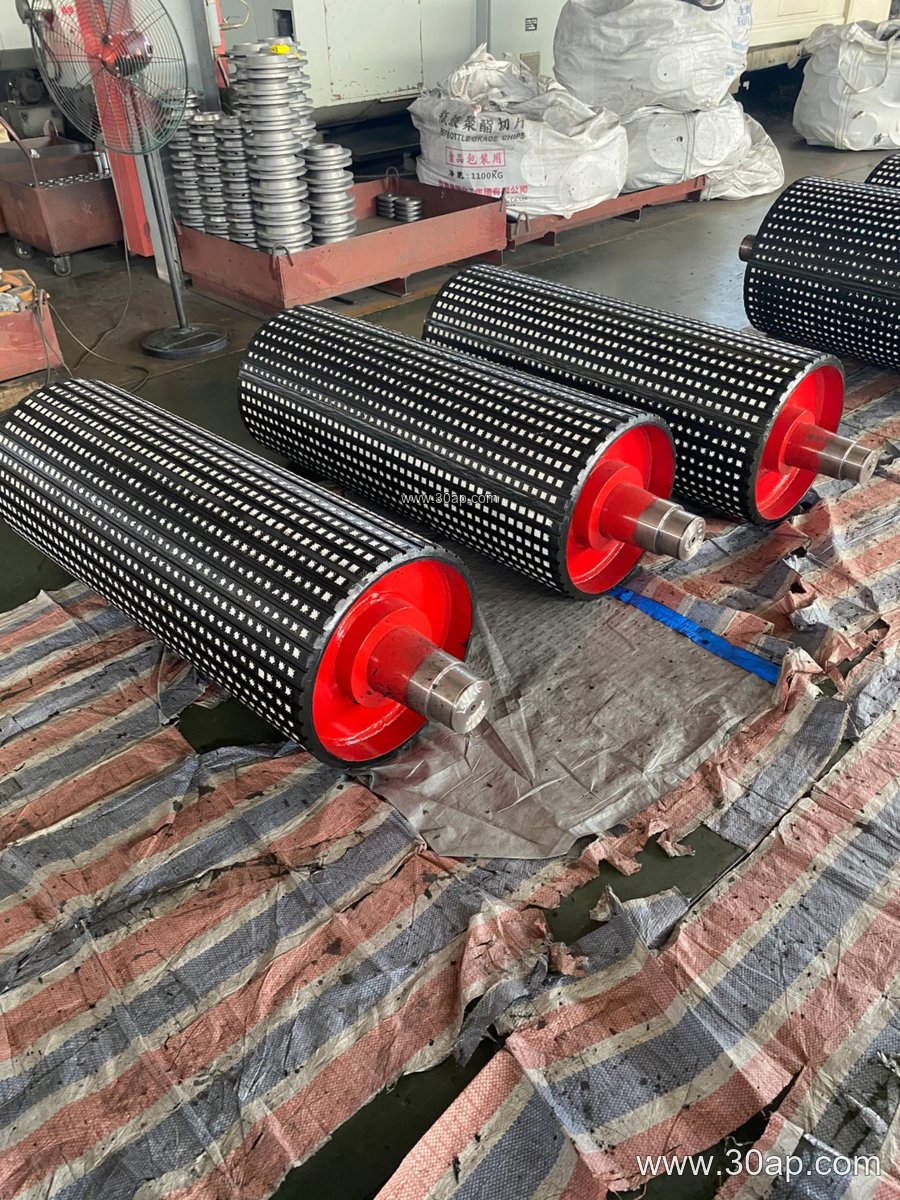
The construction starts with a cylindrical shell, often with a slight crown to help the belt track toward the center. End plates are welded on both sides, and the shaft is keyed and locked into the hub assembly. Bearings sit in housings that can be bolted to a conveyor bracket on the main frame. Surface finish matters as much as the shell: a plain machined face is common for lighter duties, while lagging improves grip. Common lagging options include hot vulcanized rubber, cold bonded rubber, diamond grooved rubber, herringbone rubber, and ceramic tiles, usually in thicknesses of 8, 10, 12, 15, or 20 mm. The right surface depends on whether the pulley is driving, redirecting, or tensioning the belt.
Drive, Tail, and Bend Pulleys Are Different Jobs
These three positions are often confused, yet they are not interchangeable. A drive pulley, also called the head pulley, transmits power to the belt and usually carries the highest torque, so it often gets lagging and a larger diameter. A tail pulley sits at the loading end and turns freely as the belt returns; it may be self-cleaning or fitted with a wing profile to shed sticky material. A bend pulley changes belt direction without driving, and a tension pulley maintains take-up force. Each has its own load case, bearing choice, and surface treatment, so a buyer should never substitute one for another. A bend pulley is not a drive pulley, and a tail pulley is not a bend pulley.
Where It Fits in the Plant
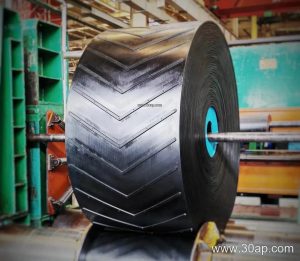
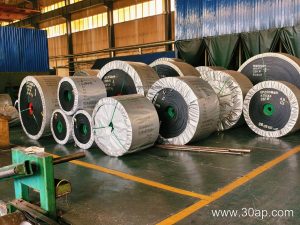
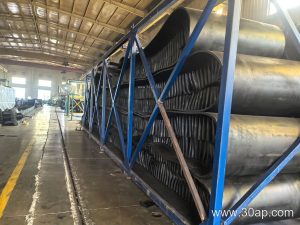
Steel pulleys appear across many material handling routes. In a limestone mine or aggregate line, they guide a heavy-duty mining conveyor belt through crushing and screening stations. In a coal preparation plant, flame retardant conveyor belts run over pulleys that must resist fines and moisture. Cement plants use them on clinker and raw meal circuits, while ports rely on them for ship loading and bulk material transfer. The same drum type also works with an EP conveyor belt in a sand and gravel operation, or with a steel cord conveyor belt on a long overland run where belt tension is high.
Reading the Dimensions
Pulley size is normally described by belt width, drum diameter, face width, and shaft diameter. Face width is usually a little wider than the belt so the belt does not rub the end discs. The table below shows common reference combinations; these are design examples, not fixed rules, and actual sizing follows torque, belt tension, and duty.
| Belt Width | Typical Face Width | Example Diameter |
|---|---|---|
| B400 | about 500 mm | Ø200 to Ø315 |
| B650 | about 750 mm | Ø250 to Ø400 |
| B800 | about 950 mm | Ø315 to Ø500 |
| B1000 | about 1150 mm | Ø400 to Ø630 |
| B1200 | about 1400 mm | Ø500 to Ø800 |
| B1400 | about 1600 mm | Ø630 to Ø1000 |
| B1600 | about 1800 mm | Ø800 to Ø1250 |
| B1800 | about 2000 mm | Ø1000 to Ø1400 |
Shaft diameter is not derived from belt width alone. It is calculated from torque and radial load, with common sizes including Ø50, Ø60, Ø80, Ø100, Ø120, Ø140, Ø160, Ø180, and Ø200 mm. A B1200 × Ø1000 drive pulley and a B800 × Ø500 tail pulley may both be correct on the same plant, because each position has a different job.
Buyer Checklist
- Confirm the pulley position: drive, tail, bend, take-up, or snub, since each has different loads.
- Match face width to the belt and check the lagging type against material conditions.
- Specify shaft size from calculated torque and bearing life, not from belt width alone.
- Check bearing housing fit with the conveyor bracket and frame before ordering.
- For abrasive or wet duty, consider ceramic or grooved lagging to reduce slip.
- Keep spare idler roller and pulley parts consistent with the same belt width family.
For more on matching drums with belting and frame hardware, see the conveyor pulley and conveyor bracket pages on our site. A well specified steel pulley, paired with the right conveyor belt, keeps a line running through long shifts in mining, cement, and power generation.