What Belt Conveyor Pulley Lagging Does
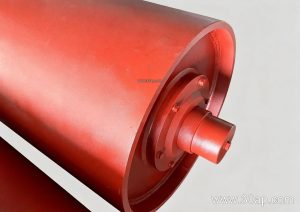
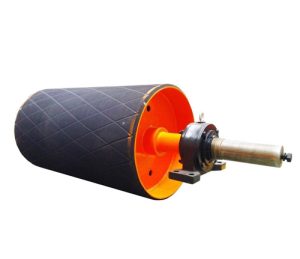
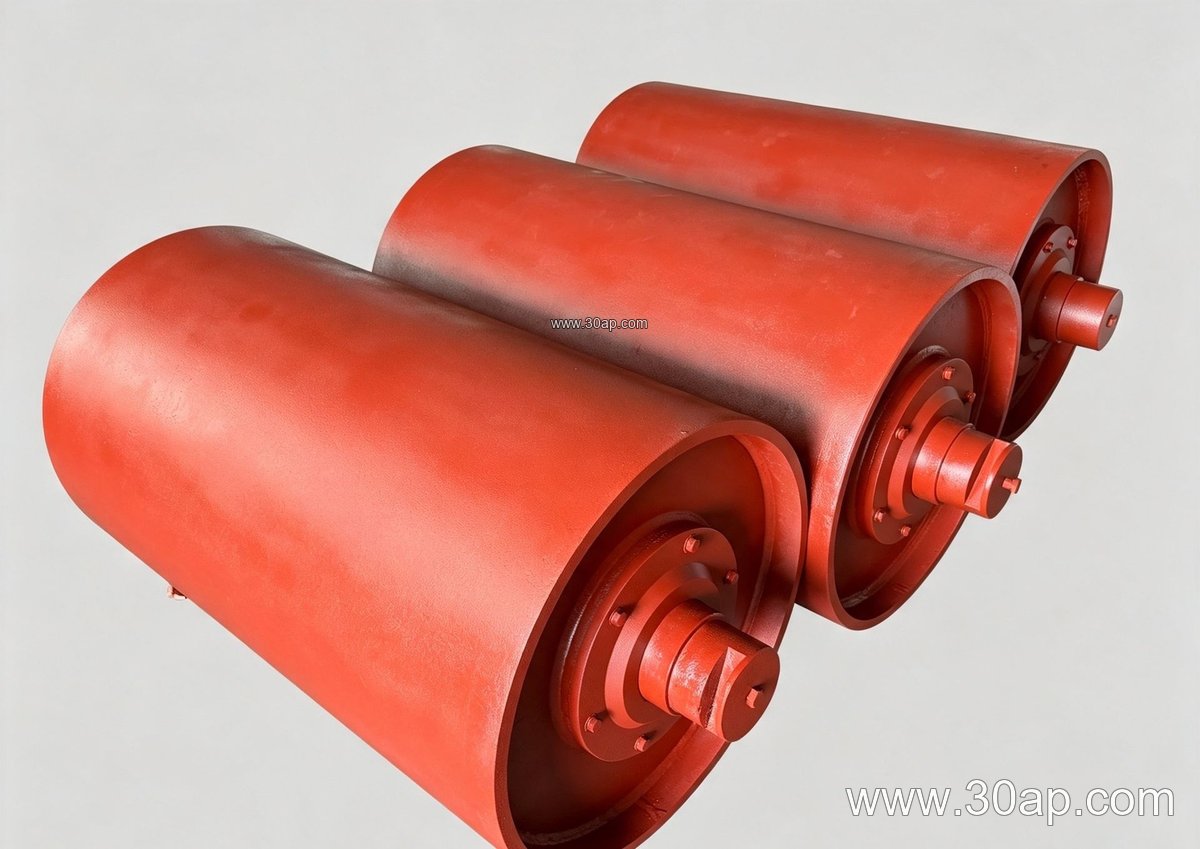
Belt conveyor pulley lagging is the rubber, ceramic or composite layer bonded to the shell of a conveyor pulley where the conveyor belt makes contact. Its job is simple to describe and important to get right: it raises friction between the pulley face and the belt, protects the pulley shell from abrasion and material build-up, and helps keep the belt tracking steadily under load. In a quarry, a coal preparation plant or a cement clinker line, a bare steel shell can polish and slip once it meets dust, moisture or fine grit. A properly specified lagging cover restores grip and absorbs some of the impact and wear that would otherwise reach the shell.
The product is a component of the conveyor pulley, not a substitute for it. Drive pulleys, tail pulleys and bend pulleys each see different loads, and the lagging choice should follow the duty of the position rather than a single universal rule.
How the Lagging Is Built and Fitted
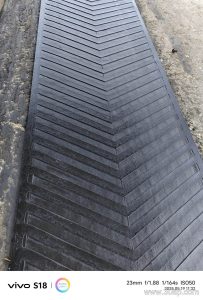
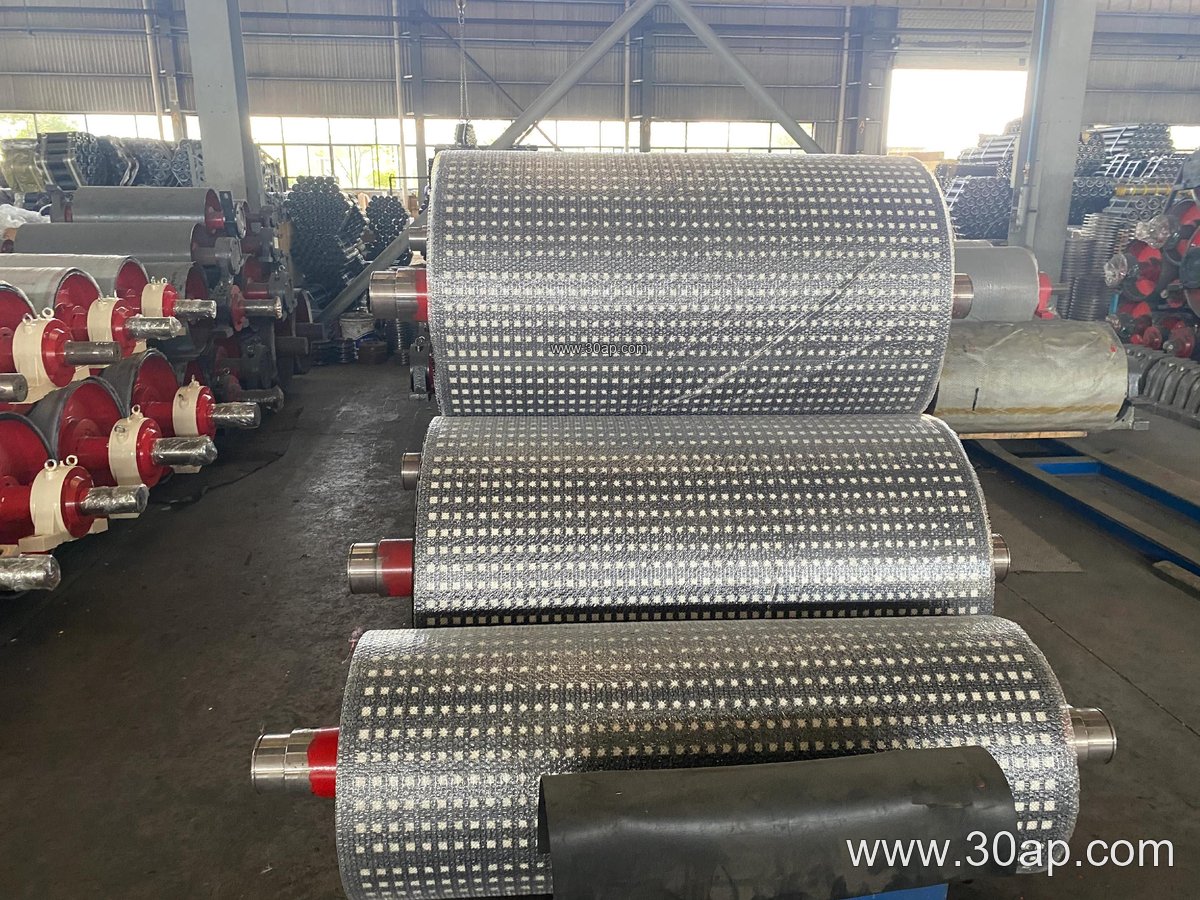
Most lagging is supplied as a rubber sheet or as pre-formed strips that are wrapped around the pulley shell and bonded in place. Common surface forms include plain (smooth) rubber, diamond pattern, herringbone pattern and ceramic tile embedded in rubber. Thickness commonly ranges from 8 mm to 20 mm, with 10 mm and 12 mm often used on general duty and heavier covers reserved for high-torque drives or abrasive service.
Attachment methods matter as much as the compound. Cold-bonded rubber is practical for field replacement, while hot vulcanized lagging gives a more continuous bond in a workshop. Ceramic lagging uses hard tiles to resist slip and cut-through in wet or gritty conditions. Whatever the method, the shell should be clean, true and free of high spots before fitting; a poor bond is a more common cause of failure than the rubber itself.
Matching Lagging to Pulley Position
On a drive pulley, the lagging must transmit torque without slipping, so friction and bond strength are the priorities. Diamond or ceramic surfaces are often chosen where the belt is wet or carries fines. Tail pulleys usually see less torque but more exposure to loose material and belt wander, so a durable plain or patterned cover that sheds build-up works well. Bend and snub pulleys guide the belt through its path and generally need a thinner, smoother cover to avoid unnecessary belt flexing.
Surface choice should also suit the belt. A heavy-duty mining conveyor belt with a thick cover tolerates a more aggressive lagging pattern, while a thin fabric core conveyor belt on a short transfer may be better served by a smoother finish that reduces edge stress. The same logic applies whether the line handles iron ore, sand and gravel, or grain.
Typical Sizes and Reference Data
Lagging is ordered against the pulley shell width, which is usually a little wider than the belt. The table below gives common reference combinations; final dimensions are set by the conveyor design, not by the belt width alone.
| Belt width | Typical pulley face width | Example pulley diameter | Common lagging thickness |
|---|---|---|---|
| B400 | about 500 mm | Ø200 to Ø315 | 8 to 10 mm |
| B650 | about 750 mm | Ø400 to Ø500 | 10 to 12 mm |
| B800 | about 950 mm | Ø500 to Ø630 | 10 to 12 mm |
| B1000 | about 1150 mm | Ø630 to Ø800 | 12 to 15 mm |
| B1200 | about 1400 mm | Ø800 to Ø1000 | 12 to 15 mm |
| B1400 | about 1600 mm | Ø1000 to Ø1250 | 15 to 20 mm |
| B1800 | about 2000 mm | Ø1250 to Ø1600 | 15 to 20 mm |
Shaft diameter is a separate decision based on torque and radial load, commonly falling in the Ø50 to Ø200 range on bulk handling conveyors. A B1200 pulley with a Ø1000 shell, for instance, may carry a shaft sized for the actual drive duty rather than for the belt width. Buyers should supply belt width, pulley diameter, shaft size, duty and ambient conditions when requesting a quote.
What a Buyer Should Check
- Duty and environment: abrasive ore, wet coal, hot clinker and oily scrap each point to a different compound. Heat resistant and oil resistant grades exist, but they must be specified, not assumed.
- Surface pattern: plain for general guidance, diamond or herringbone for wet grip, ceramic for severe slip and wear.
- Bond method: workshop vulcanizing versus field cold bonding, based on downtime tolerance.
- Compatibility: check the conveyor belt cover grade and the pulley position so the lagging does not over-stress a light belt.
- Balance and concentricity: uneven lagging thickness causes vibration and belt wander, especially on high-speed drives.
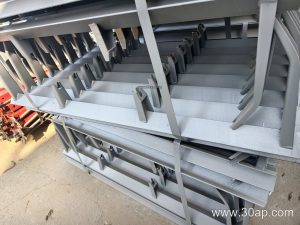
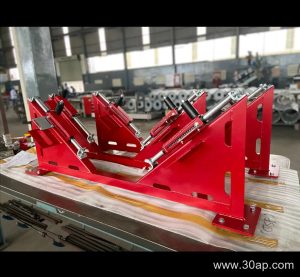
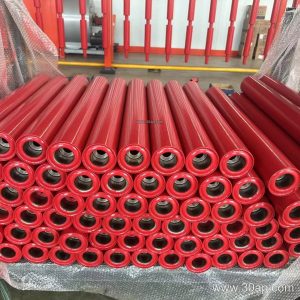
Routine inspection pays off. Look for worn grooves, lifted edges, embedded stone and glazed rubber. Re-lagging a worn drive pulley early is usually cheaper than replacing a slipping belt or a damaged shell. Coordinating lagging checks with idler roller and conveyor bracket inspections keeps the whole transfer point in better condition.
For buyers sourcing conveyor components, it helps to compare lagging together with the belt and pulley package. A coal mining conveyor belt, an EP conveyor belt on a cement plant line or a steel cord conveyor belt on a long overland route all place different demands on the drive pulley surface, and the lagging specification should be written to match that duty.