What a Coal Mine Conveyor Idler Does Underground
A coal mine conveyor idler is the rotating support that carries the belt along the entire run, from the loading point to the transfer tower. In an underground coal mining conveyor belt system, dozens or even hundreds of these rollers sit beneath the belt, holding it in a trough, guiding it on the return strand, and absorbing the shock of falling coal. The idler roller is a small component by weight, but it decides how much friction the drive must overcome and how long the belt itself survives.
This article looks at the coal mine conveyor idler as a product: how it is built, which forms suit which section of the conveyor, how roll diameter and belt width relate, and what a buyer should check before ordering. For broader plant layouts, related items such as the conveyor pulley at the head and tail and the conveyor bracket that anchors each frame are usually specified in the same package.
Construction of a Coal Mine Conveyor Idler
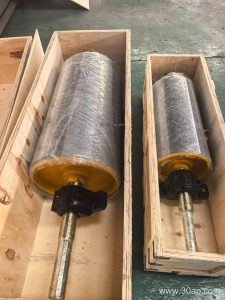
A typical idler roller is built around a steel tube shell, fitted with pressed bearing housings at both ends, sealed bearings, and a shaft that locks into the frame. The quality difference between an ordinary roller and one fit for coal service usually comes down to four details:
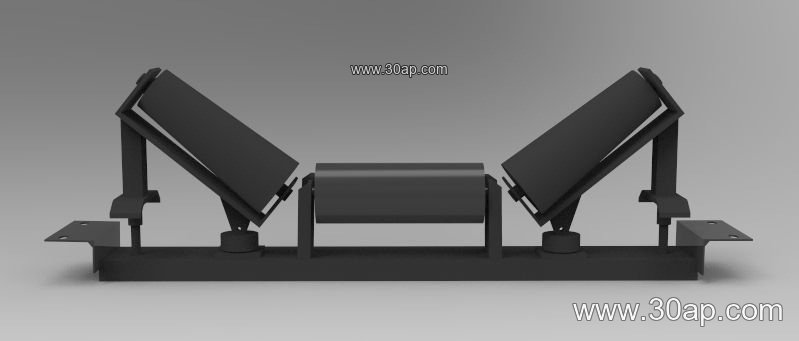
- Shell – steel tube with machined ends; wall thickness and roundness affect runout and noise.
- Bearing – common sizes include 6204, 6205, 6305, 6306, 6308, and 6310, matched to load and roll diameter rather than to belt width alone.
- Seal – labyrinth or multi-stage lip seals keep coal dust and water out; this is the single biggest factor in service life underground.
- Surface – plain steel, nylon, ceramic, or rubber rings, chosen for wear or impact duty.
Because coal dust is abrasive and often damp, a well-sealed roller with a stable bearing clearance will usually outlast a cheaper unit with a thicker shell. Buyers should ask for the seal design and bearing brand/lubrication details rather than judging by appearance.
Matching Roll Diameter, Belt Width and Trough Angle
Roll diameter and belt width are related but not locked together. A 500 mm belt may run on Ø89 or Ø102 rollers in a light frame, while a 1200 mm belt in a main haulage drift might use Ø133 or Ø159. The final choice depends on belt speed, load per meter, trough angle, and the idler group form (single roll, two-roll, or three-roll troughing).
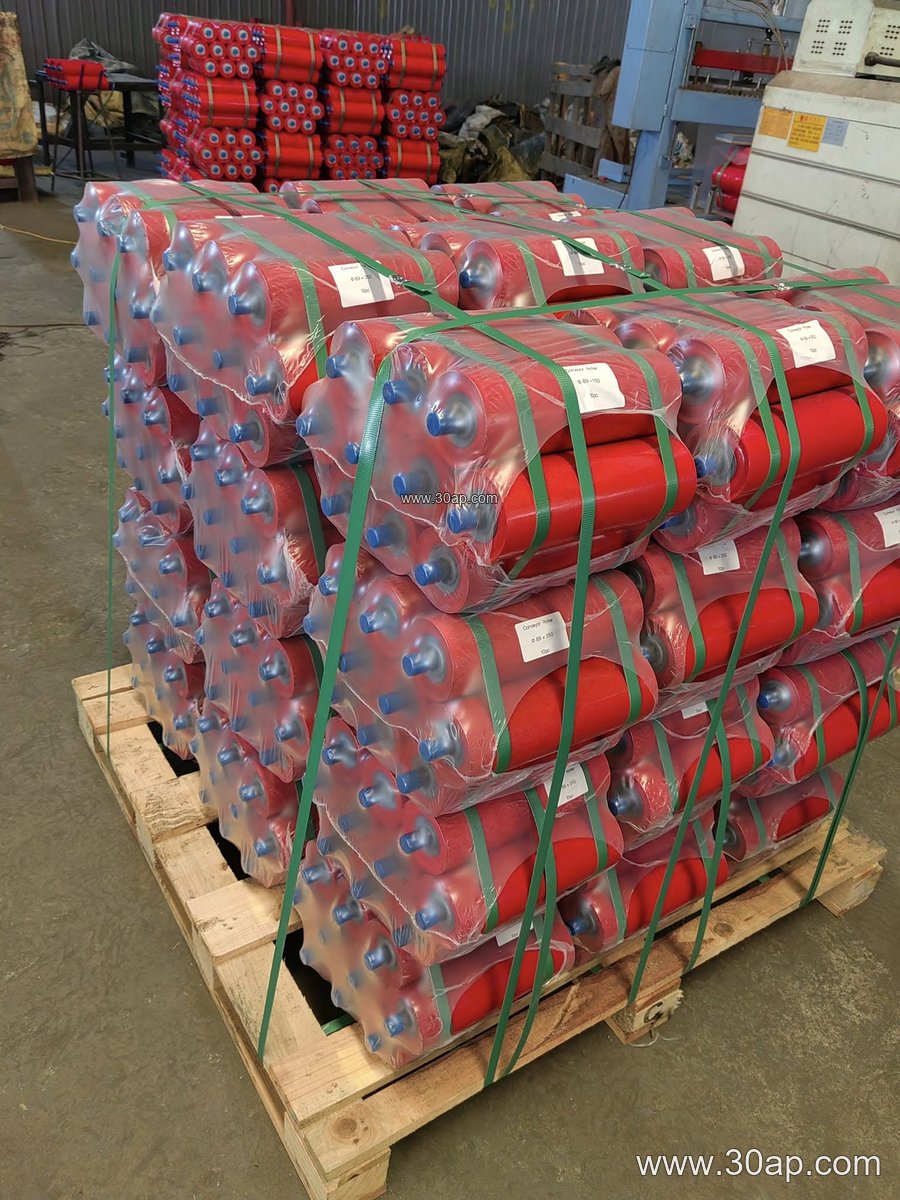
Trough angles of 20, 30, 35, and 45 degrees are common; a steeper trough holds more coal but increases edge pressure on the belt. Roll length also changes with belt width and trough angle. For reference only, a three-roll troughing set commonly uses roll lengths of roughly 200 mm at B500, 250 mm at B650, 315 mm at B800, 380 mm at B1000, 465 mm at B1200, 530 mm at B1400, 600 mm at B1600, and 670 mm at B1800. Side rolls and center rolls may differ, so these are examples, not fixed pairings.
| Parameter | Common options | Notes |
|---|---|---|
| Roll diameter | Ø63, Ø76, Ø89, Ø102, Ø108, Ø127, Ø133, Ø159, Ø178, Ø194, Ø219 | Selected by load and speed |
| Belt width | B400 to B2400 | Roll length follows width and trough form |
| Trough angle | 20°, 30°, 35°, 45° | Deeper angle raises capacity |
| Bearing | 6204, 6205, 6305, 6306, 6308, 6310 | Matched to duty, not to width alone |
| Roll surface | Steel, nylon, ceramic, rubber ring | Rubber ring for impact zones |
Idler Forms Used Along a Coal Conveyor
The carrying strand usually uses three-roll troughing idlers, with transition idlers near the head and tail to ease the belt from flat to troughed. The return strand may run on flat return rollers, V-return idlers, or spiral rollers that shed fines. At the loading point, impact idlers with rubber rings protect both the roller and the conveyor belt from lump coal. Self-aligning idlers, including friction and tapered types, help correct belt wander on long drifts.
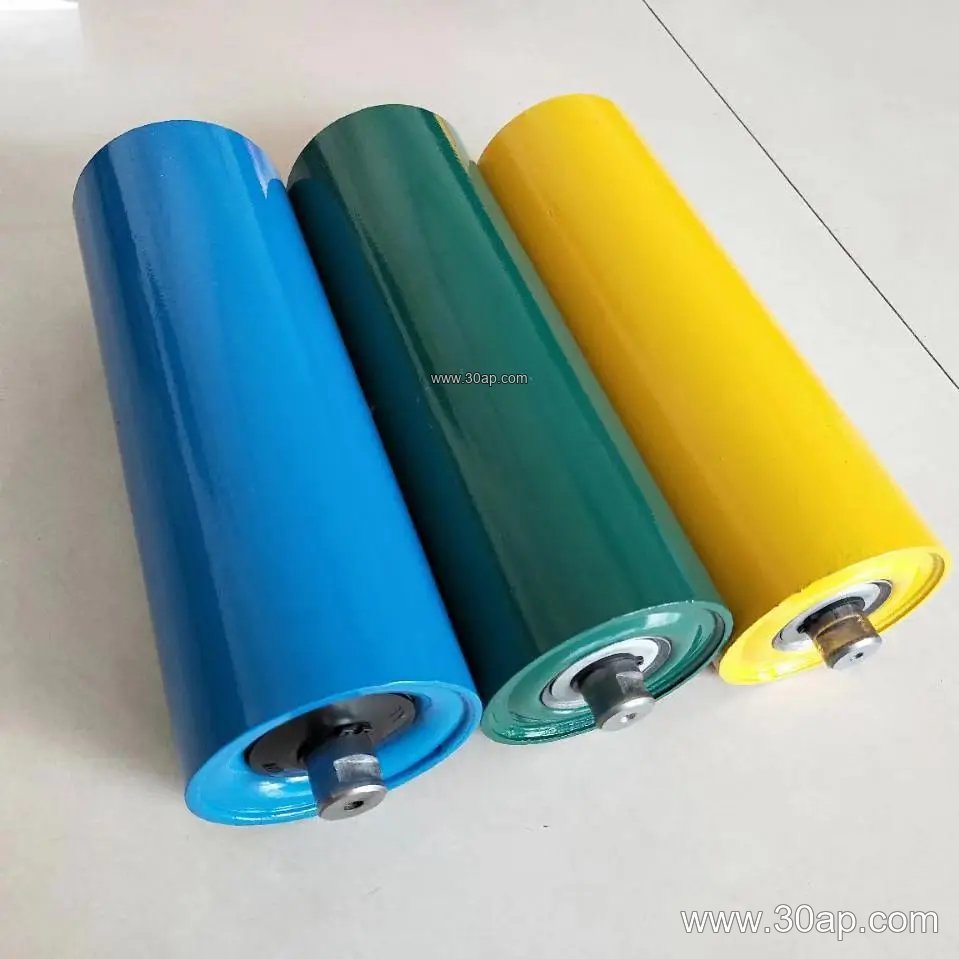
These forms are not interchangeable. A training idler does a different job from a troughing idler, and the drive pulley, tail pulley, and bend pulley at the ends of the conveyor are separate components entirely. In a cement plant or power plant coal yard, the same principles apply, though dust and heat profiles differ from an underground coal face.
Where Coal Mine Conveyor Idlers Are Applied
The most demanding setting is the underground coal mining conveyor, where space is tight, dust is heavy, and flame retardant conveyor belt grades are often required. Idlers here must be compact, well sealed, and easy to replace in a confined walkway. On the surface, the same roller design appears in wash plants, stockyard reclaim tunnels, and drift conveyors feeding a power plant bunker.
In a quarry or aggregate line handling overburden, heavier rollers with thicker shells are common, while a port or ship loading system may favor large-diameter idlers for high belt speeds. The common thread is that the idler must match the belt, the load, and the environment rather than simply the conveyor length.
Buyer Checklist Before Ordering
- Confirm belt width, trough angle, and idler group form before quoting roll length.
- State the duty: carrying, return, impact, or training. Each has its own design.
- Ask for bearing size, seal type, and lubrication so spare parts can be standardized.
- Check shaft end and frame interface against the existing conveyor bracket.
- For underground use, request documentation on flame retardant and anti-static properties of the belt and roller components as applicable.
- Keep a small stock of the most wearing positions, typically the loading impact idlers and the first troughing sets after the feed point.
A coal mine conveyor idler is a low-cost part with a high influence on uptime. Choosing the right diameter, seal, and surface for each position, and keeping the specification consistent across a mine or plant, is usually more valuable than chasing the lowest unit price.