What the carrying trough idler does on a conveyor
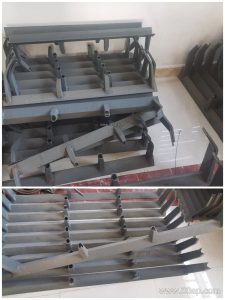
The carrying trough idler is the upper support unit that shapes a flat conveyor belt into a shallow trough, keeping loose material centred along the run. Three rolls are the common form: one horizontal centre roll and two inclined side rolls. The trough angle, usually 20, 30, 35 or 45 degrees, controls how much the belt curves and how much cross-section is available for the load. On a quarry conveyor belt moving crushed stone, or a cement plant line handling clinker and raw meal, this upper idler set is in constant contact with the loaded belt strand and takes the bulk of the vertical load.
The same product is also called a troughing idler or troughing roller. These names describe the same upper carrying assembly; they are not interchangeable with return rollers, impact rollers or self-aligning sets, which do different jobs at other points of the conveyor.
How the assembly is built
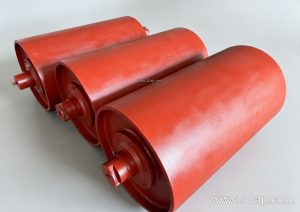
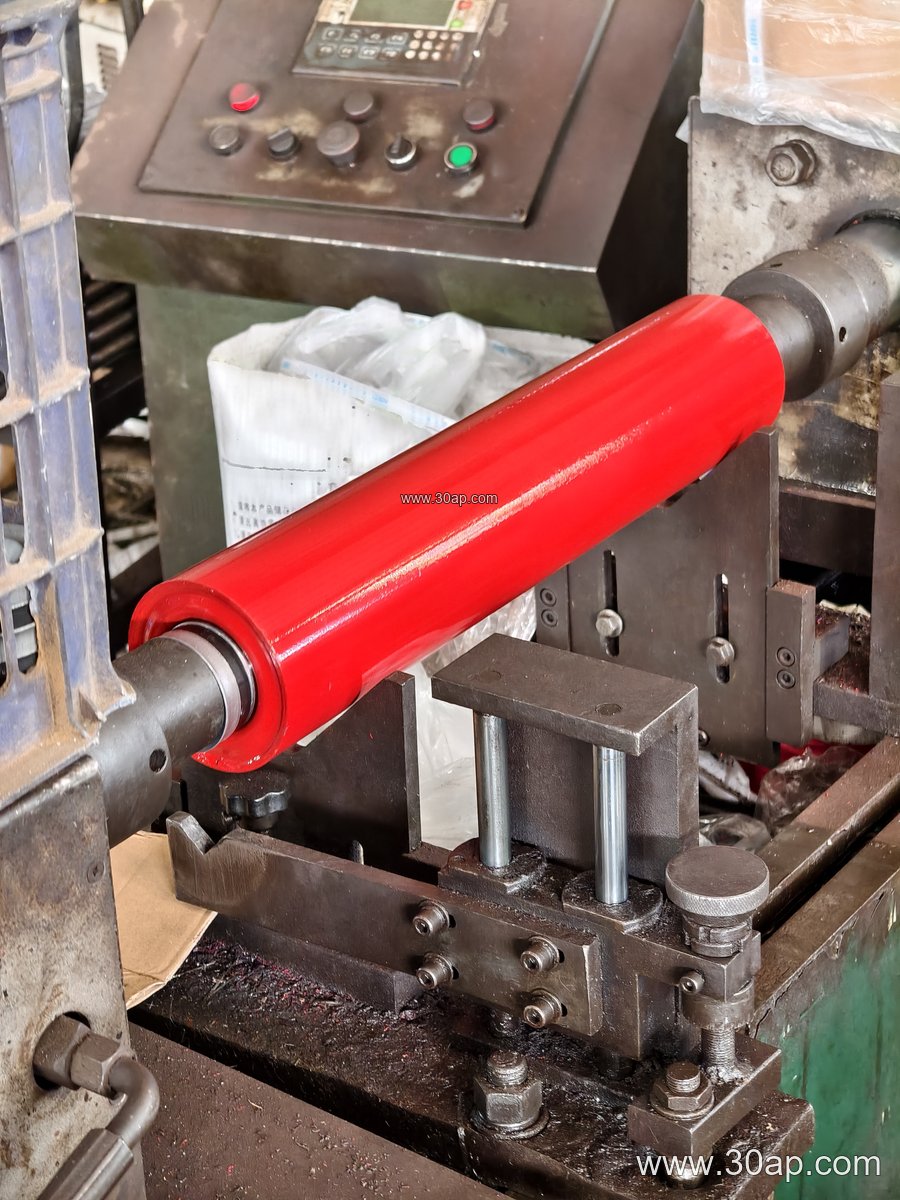
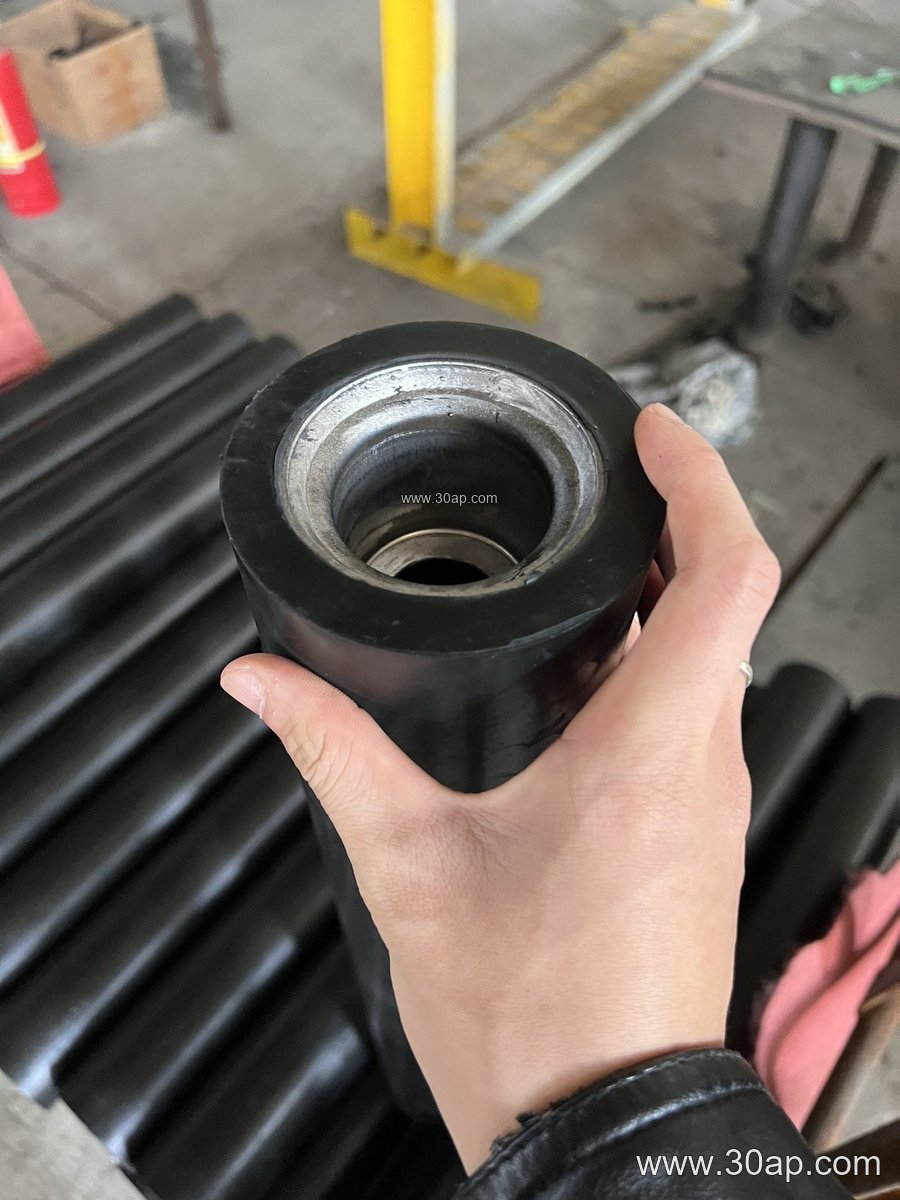
A typical carrying trough idler combines steel tube shells, bearing housings, seals and a shaft, mounted in a frame that fixes the trough angle. Roll diameter is chosen from the load and belt speed rather than from belt width alone. Common shell diameters include Ø89, Ø102, Ø108, Ø127, Ø133, Ø159 and Ø178 mm, with larger sizes used on heavy-duty mining conveyors. Bearings such as 6204, 6205, 6305, 6306, 6308 and 6310 appear across the range; a given bearing is not tied to one roll diameter, and the final match depends on the shaft and housing design.
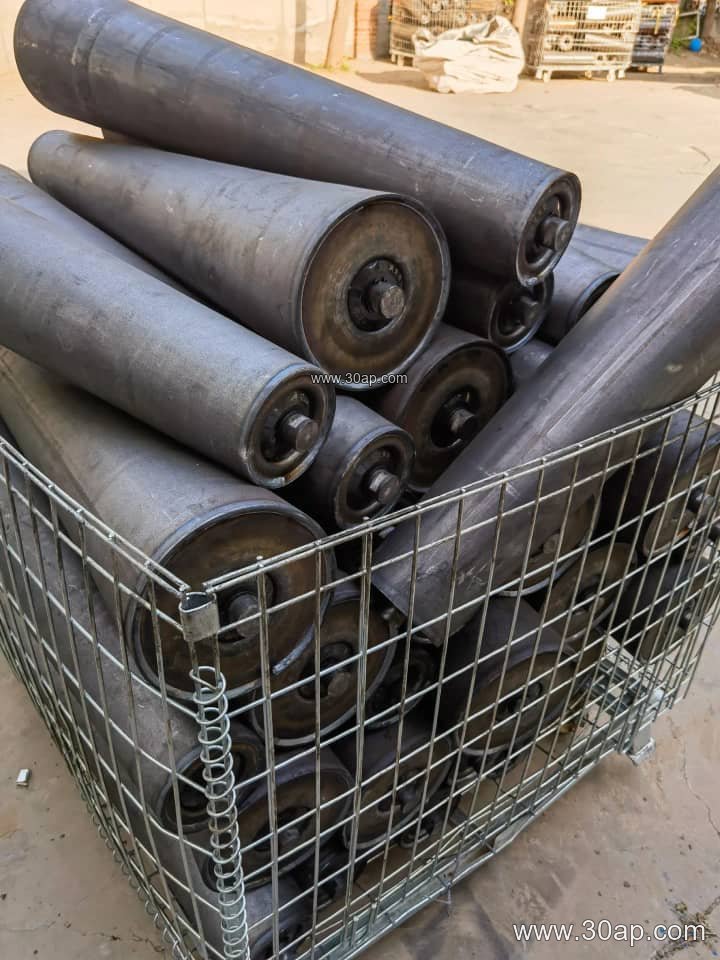
Roll length follows belt width, trough angle and the number of rolls in the set. For a three-roll troughing set, typical centre roll lengths are roughly 200 mm at B500, 250 mm at B650, 315 mm at B800, 380 mm at B1000, 465 mm at B1200, 530 mm at B1400, 600 mm at B1600, 670 mm at B1800 and 750 mm at B2000. Side rolls are usually shorter, and these figures are examples only, not fixed pairings.
| Reference item | Common range | Note |
|---|---|---|
| Trough angle | 20°, 30°, 35°, 45° | Selected by material and capacity |
| Roll diameter | Ø63 to Ø219 mm | Larger sizes for heavy loads |
| Belt width | B400 to B2400 | Roll length set per design |
| Roll surface | Steel, nylon, ceramic, rubber ring | Rubber rings for impact zones |
| Bearing | 6204, 6205, 6305, 6306, 6308, 6310 | Matched to shaft and housing |
Where it fits in different plants
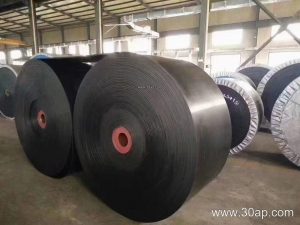
In a coal washing plant or an underground coal mining conveyor, the upper troughing idlers run under a flame retardant conveyor belt and must keep the load steady through long drifts. In a limestone quarry or aggregate line, dust and grit make seal quality the deciding factor, because fines that reach the bearing shorten service life quickly. The same unit sits under a fabric core conveyor belt on a shorter transfer and under a steel cord conveyor belt on a high-capacity trunk line, though the roll diameter and frame strength differ.
Where material drops onto the belt, a rubber-ring impact idler is often used instead of the standard troughing roll, because the resilient rings absorb falling lump energy. That is a comparison, not a substitute: the carrying trough idler still handles the normal loaded run beyond the loading point.
Choosing the right set
- Match trough angle to material: free-flowing bulk needs less angle, lumpy or wet loads usually need more.
- Check roll diameter against load per idler and belt speed, not against belt width alone.
- Confirm shaft and bearing arrangement with the frame supplier before ordering spares.
- Review seal type for dusty or wet conditions; a good seal often matters more than a thicker shell.
- Keep spacing consistent along the run so the belt does not sag between sets.
Buyers should also confirm mounting dimensions, frame height and the connection to the conveyor bracket, since a replacement set that does not match the existing frame will not sit at the correct height. Spacing, roll diameter and trough angle together determine how smoothly the belt tracks; changing one without checking the others can cause edge wear or spillage.
Maintenance points worth watching
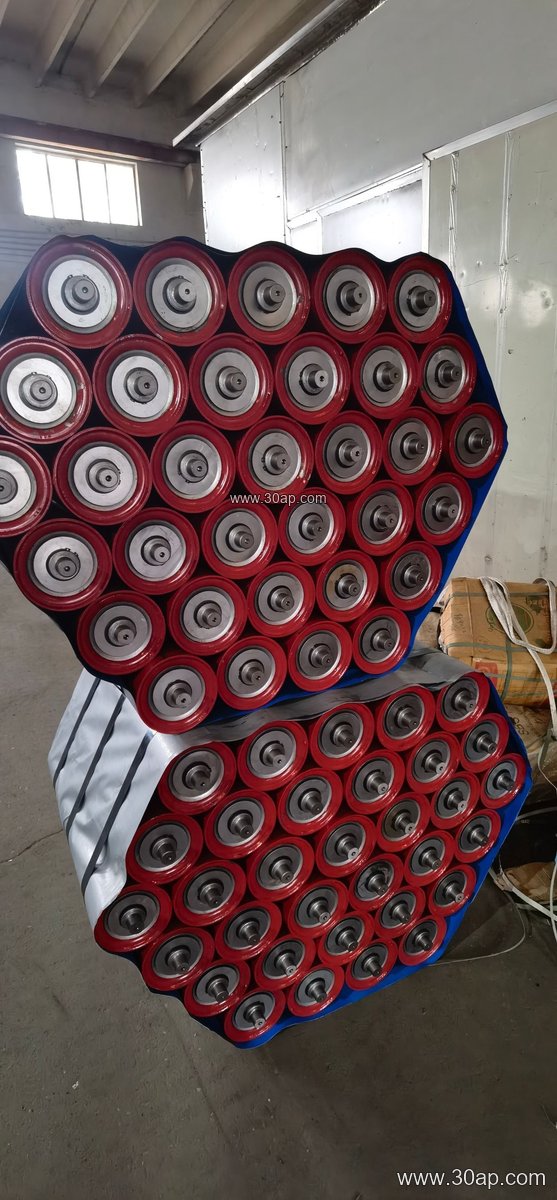
Seized rolls are the most common failure. A roll that stops turning creates a flat spot on the belt and drags on the drive, so a walk along the line to check free rotation is worthwhile. Listen for squealing bearings, look for material build-up on the shell, and check that the frame has not bent after a lump impact. On a power plant coal conveyor or a port ship loading line, where uptime matters, keeping a small stock of complete sets shortens downtime. Replacing individual rolls on a worn frame is often a false saving.
For more on matching belts and rollers, visit www.morningbelt.com for conveyor belt and idler roller reference information. A carrying trough idler that is correctly sized, sealed and spaced will keep the belt profile stable and the material where it belongs.