What the Drive Pulley Does on a Conveyor
The belt conveyor drive pulley is the component that turns motor torque into belt motion. Mounted at the head of the conveyor and connected to the gearbox or motor through a shaft coupling, it grips the conveyor belt and pulls the loaded strand forward. Everything downstream, from the tail pulley to the idler roller sets, follows its lead. If this pulley slips, the whole line slows or stops, which is why engineers treat it as the heart of the drive station.
It is useful to separate the drive pulley from other pulley roles. A tail pulley returns the belt at the rear, and a bend pulley changes direction along the route. They look similar in a workshop photo, yet they are not interchangeable, because only the drive unit is designed to transmit torque through the belt surface.
How a Drive Pulley Is Built
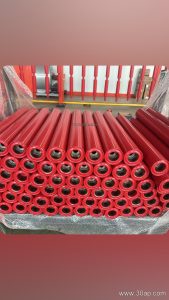
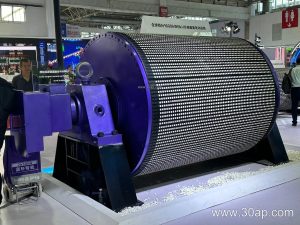
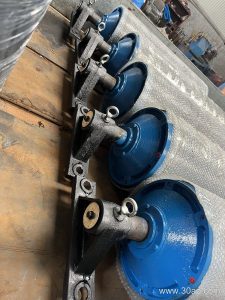
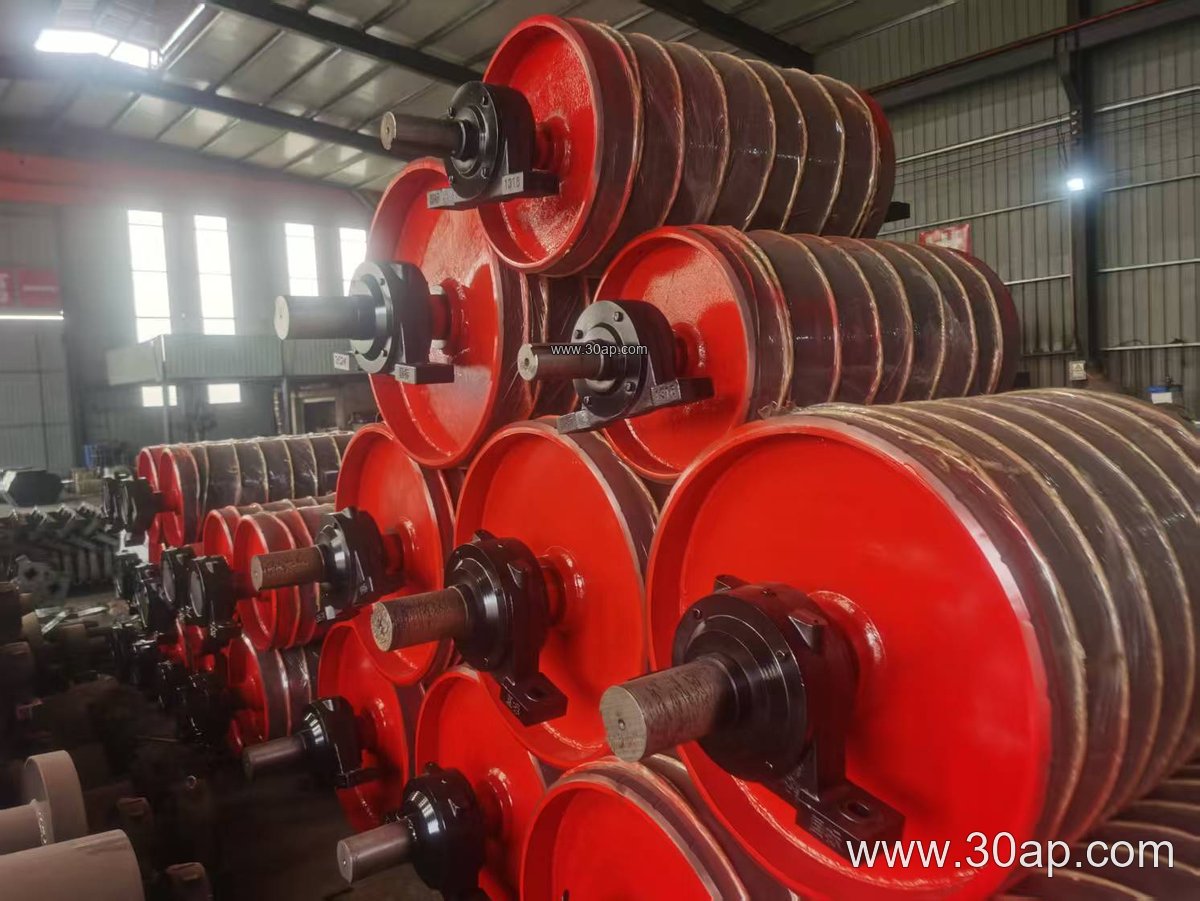
Most units combine a cylindrical shell, two end discs, a hub, and a shaft. The shell is usually rolled from steel plate and machined at the ends so the lagging sits evenly. Larger diameters may use a welded or segmented shell for easier transport into a plant. The shaft is keyed to the hub, and the assembly is balanced before installation to limit vibration at operating speed.
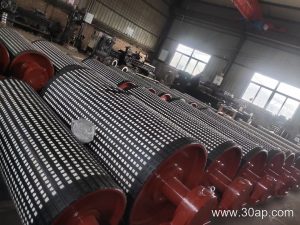
Surface treatment matters as much as the steel. Plain finish suits light duty and low tension. Rubber lagging, applied by cold bonding or hot vulcanizing, raises friction and protects the shell from abrasive dust. Diamond and herringbone patterns help shed water and fines, while ceramic lagging is chosen where slip risk is high and belt tension is limited. Common lagging thicknesses are 8, 10, 12, 15, and 20 mm, selected according to load and environment.
Sizing by Belt Width and Duty
There is no fixed rule that ties one belt width to one pulley diameter. A B800 conveyor may run with a Ø500 drive pulley in a short aggregate line or a Ø800 unit in a long, heavily loaded quarry conveyor. The table below shows typical pairings that engineers use as a starting point, not as a universal specification.
- B400 belt with Ø200 to Ø315 pulley
- B650 belt with Ø315 to Ø500 pulley
- B800 belt with Ø400 to Ø630 pulley
- B1000 belt with Ø500 to Ø800 pulley
- B1200 belt with Ø630 to Ø1000 pulley
- B1400 belt with Ø800 to Ø1250 pulley
- B1600 belt with Ø1000 to Ø1400 pulley
Face width normally exceeds belt width so the belt is fully supported. B650 often pairs with a 750 mm face, B1000 with about 1150 mm, and B1400 with around 1600 mm. Shaft diameter is determined by torque and bearing load, not by belt width alone, so a Ø120 shaft on a B1200 unit is a design outcome rather than a standard recipe.
Where the Drive Pulley Is Used
In a limestone quarry, the head drive pulley on the main haulage conveyor works under constant grit and weather. In a coal washing plant, flame retardant and anti-static requirements shape the choice of lagging and belt, and the pulley must tolerate wet fines. Cement plants often run long inclined conveyors where the drive pulley handles high tension and steady heat from clinker nearby, so heat resistant conveyor belt grades are matched with carefully specified lagging.
Port bulk terminals use wide belts such as 1800 mm or 2000 mm with large diameter drive pulleys to move ore and coal at high tonnage. Power plant coal handling and steel plant sinter lines follow similar logic, while sand and gravel operations favor compact units that are easy to service. Whatever the site, the drive pulley should be checked together with the conveyor bracket and frame alignment, since a small base error becomes belt mistracking over time.
Buyer Checklist Before Ordering
A clear enquiry should state belt width, belt type, motor power, belt speed, shaft diameter, lagging pattern, and mounting position. If the conveyor runs an EP conveyor belt or a steel cord conveyor belt, mention it, because tension affects shell thickness and shaft size. Buyers replacing an existing unit should measure the old face width, shaft, and keyway rather than relying on a nominal size.
Ask about balancing grade, bearing type, and whether the lagging is grooved or plain. For underground coal mining conveyor belt installations, confirm flame retardant and anti-static properties of the belt and the suitability of the lagging compound. Spare parts planning also deserves attention, since a second drive pulley in store shortens downtime during a planned shutdown.
Finally, match the pulley to the belt it serves. A chevron conveyor belt or corrugated sidewall conveyor belt needs clearance and guidance that a plain belt does not, and an endless conveyor belt may require a different installation sequence. When the drive pulley, belt, and idler roller set are specified as one system, the conveyor runs quieter, tracks better, and lasts longer.