What a 630mm Drive Pulley Does
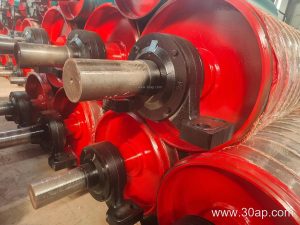
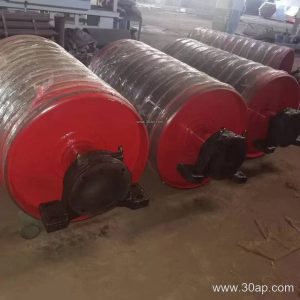
A 630mm drive pulley is the powered drum at the head end of a belt conveyor. Its 630 mm outside diameter gives a large contact arc, which helps transmit torque to the conveyor belt with less risk of slip. In a quarry or a cement plant, this drum is often the single component that decides how much material the line can move and how smoothly it starts under load. The pulley is not a standalone part; it works together with the gearbox, the conveyor bracket, and the belt tension to keep the whole system stable.
Because the drum is a drive pulley, it should not be confused with a tail pulley or a bend pulley. Those parts guide or return the belt and carry much lower torque. A drive pulley is built to accept motor power, so its shaft, hub, and shell are heavier than those of an idler roller of the same diameter.
Construction and Surface Options
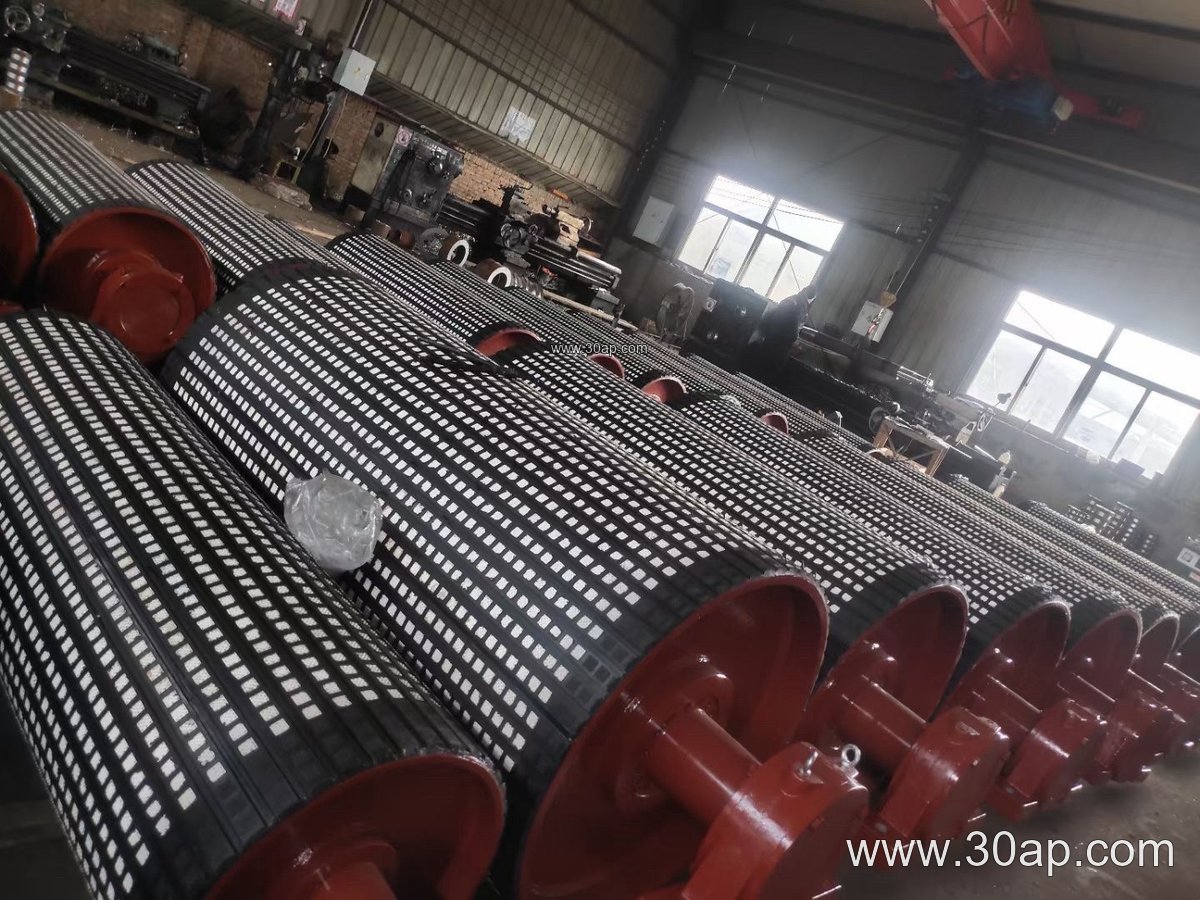
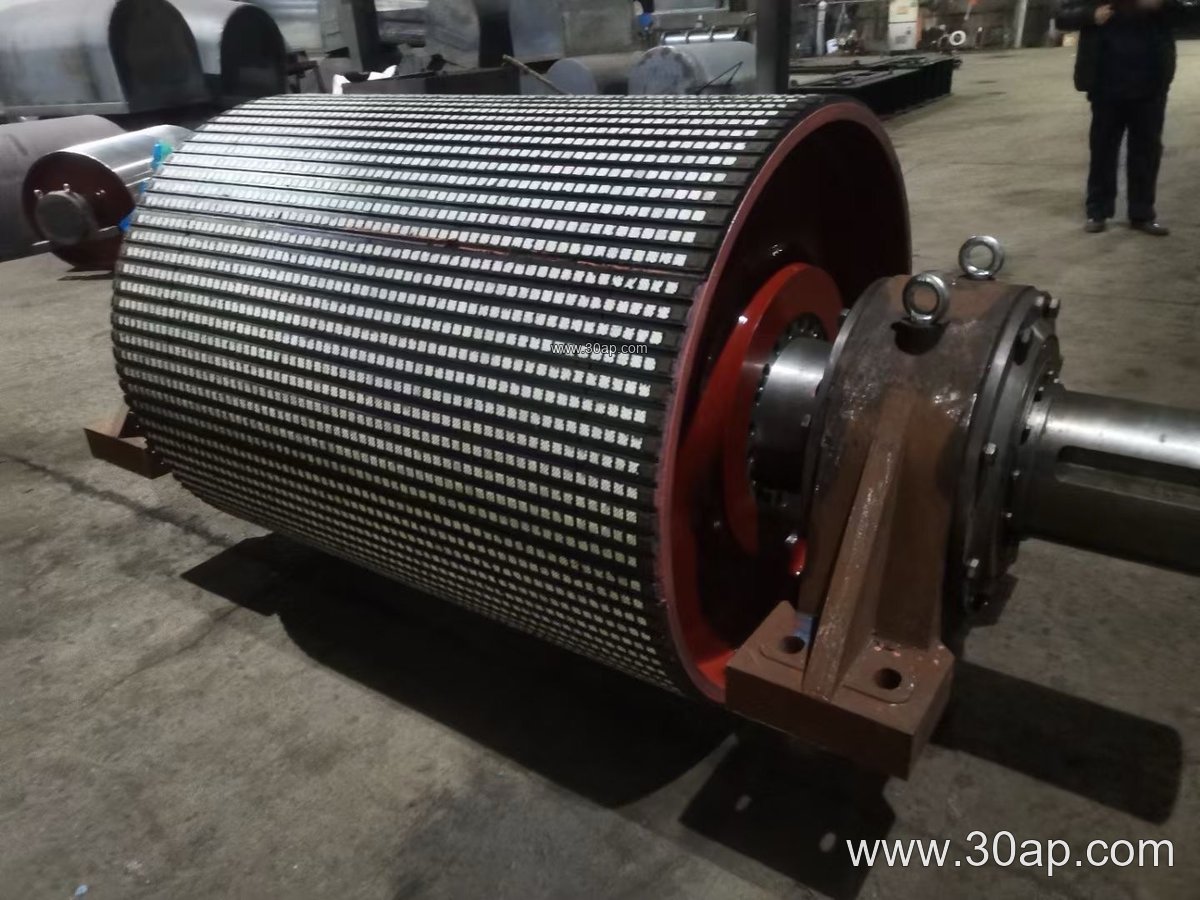
Most 630mm drive pulleys use a welded steel shell with dished or flat end plates, a through shaft, and hub connections that may be keyed, shrink-fitted, or bolted. The shell is machined so the belt runs true, and the surface is then finished according to the duty. Common surface forms include plain, cast rubber, cold-bonded rubber, hot-vulcanized rubber, diamond grooving, herringbone grooving, and ceramic lagging. Lagging thickness is often 8, 10, 12, 15, or 20 mm, chosen by the designer rather than fixed by size alone.
The shaft diameter is determined by torque and bearing load. Typical shaft sizes in this class may range from Ø100 to Ø200, but the exact value must come from the conveyor design. A 630 mm drum does not automatically mean one particular shaft size, and belt width alone cannot define it.
Matching the Drum to Belt Width
The pulley face width is usually a little wider than the belt. For reference, a B650 belt commonly runs on a face of about 750 mm and a B800 belt on about 950 mm. A 630 mm diameter can appear in several combinations, such as B800 × Ø630 or B1000 × Ø630, depending on belt speed, tension, and wrap angle. It is not correct to say that one belt width can only match one pulley diameter.
Reference combinations (examples, not fixed rules)
- B650 belt with a face around 750 mm, often paired with Ø500 or Ø630 drums
- B800 belt with a face around 950 mm, where Ø630 is a common drive size
- B1000 belt with a face around 1150 mm, using Ø630 or Ø800 by design
- B1200 belt with a face around 1400 mm, frequently matched with Ø800 or Ø1000
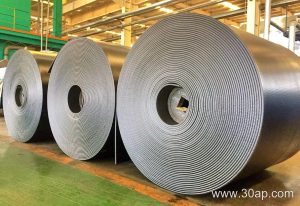
In heavy-duty mining and aggregate lines, a 630 mm drive pulley may be specified with an EP conveyor belt or a steel cord conveyor belt, while a smaller plant might use it with a multi-ply fabric core belt. The belt type affects the required lagging and the minimum wrap angle, so the two should always be selected together.
Where It Is Used
This drum size suits medium to large conveyors in stone crushing plants, cement clinker lines, power plant coal handling, and iron ore or copper ore transfer stations. In a coal mining conveyor, flame retardant and anti-static belt grades are often required, and the drive pulley must be built to match that environment. In a port bulk terminal, the same drum may handle a wide belt at high speed, so balance and bearing quality matter as much as shell strength.
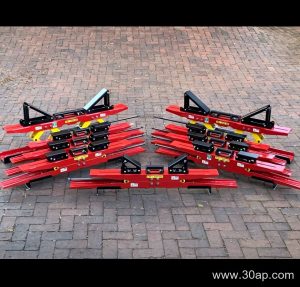
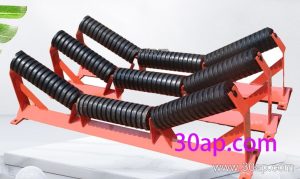
The drum is usually mounted in a head frame or on a conveyor bracket, with the gearbox coupled to one shaft end. Correct alignment between the drive pulley, the tail pulley, and the carrying idler roller set keeps the belt centered and reduces edge wear.
Buyer Checklist
Before ordering, confirm the belt width, the required diameter, the shaft size, the lagging type and thickness, the bearing type, and the direction of rotation. Ask for the balancing grade and the shell runout, since these affect vibration at speed. Also confirm whether the pulley is a drive pulley or a bend pulley, because the load cases are different. A clear drawing with face width, shaft extension, keyway, and bolt pattern avoids most installation problems.
Finally, plan maintenance. Check lagging wear, bolt tightness, and bearing temperature at regular intervals, and keep a spare set of bearings for critical lines. A well-matched 630mm drive pulley, paired with the right conveyor belt and supporting rollers, gives long service in demanding bulk handling work.